Plot Explained Spoilers guaranteed!
Plot Explained

Browse by genre

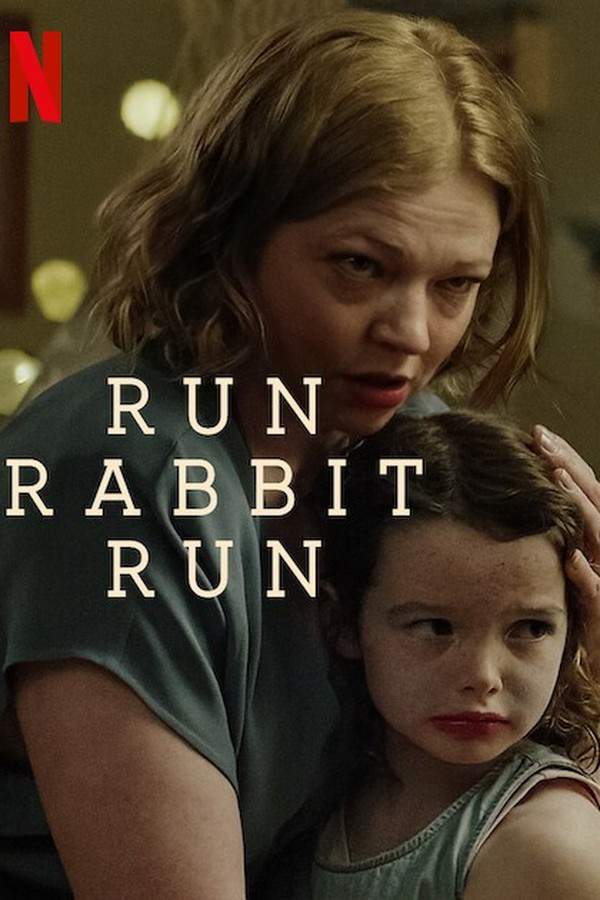
Run (2020) movie poster

Plot Summary

Run (2020) Plot Summary Explained

Release, runtime and language
2020 · 90 min · English
Echo score 74
JustWatch #1,037 73
Directed by
Aneesh Chaganty
Starring
BJ Harrison, Derek James Trapp, Erik Athavale, Sarah Paulson, Pat Healy, Sara Sohn
Budget
$1.7M

Chloe finds herself trapped in an increasingly tense relationship with her overbearing mother, Diane. As she grows older, Chloe begins to question the idyllic world Diane has created, sensing that her childhood has been a carefully constructed illusion. The unsettling truth emerges: Diane’s control is far more restrictive than Chloe ever realized, and she must find a way to break free from her mother’s suffocating grasp.

On this page (6)
  1. 1 Where to watch
  2. 2 What happens: full plot
  3. 3 Plot questions answered
  4. 4 Movie threads
  5. 5 Movies like Run
  6. 6 Every angle

Where to watch

Where to Watch Run (2020)

Where can you watch Run? Stream, rent or buy it in the US, including on Hulu: current JustWatch availability with up-to-date prices.

Streaming availability powered by JustWatch

Full plot summary · contains spoilers

What Happens in Run: Full Plot Summary

The whole story of Run (2020) explained, from the opening scene to the final frame: every key event, every twist and what it all adds up to. Read it as a quick recap before the sequel, to check a scene you missed, or to finally understand what really happened.

Diane Sherman experiences the heart-wrenching trauma of giving birth prematurely, leaving her to gaze at her newborn, confined to an incubator and surrounded by a dedicated team of hospital staff. Fast forward seventeen years to Pasco, Washington, where Diane takes on the role of both mother and caretaker of her daughter, Chloe, who is confined to a wheelchair due to several chronic illnesses, including arrhythmia, hemochromatosis, diabetes, and paralysis. Gifted in technology and engineering, Chloe waits anxiously for an acceptance letter from the University of Washington. Although Diane claims to be enthusiastic about Chloe's potential independence, she is frequently obstructive, preventing Chloe from accessing the mail.

One day, while rummaging through a bag of groceries, Chloe discovers green capsules that were prescribed to her mother. Diane later administers one of these pills to Chloe as part of her daily medication routine, stating it’s Trigoxin that Chloe requires. However, curiosity gets the better of Chloe when she covertly examines the prescription bottle, only to find a label with her name obscuring the one with Diane's. Her attempt to research Trigoxin is thwarted when their home internet is down. Undeterred, she calls a stranger for help, who explains that Trigoxin is typically used for heart issues, distinguishing it as a red capsule, vastly different from what she has.

Chloe requests a trip to the movies with her mother, but her instincts drive her to the pharmacy during their outing, where she inquires about the mysterious green pill. The pharmacist reveals it's a muscle relaxant prescribed for dogs, potentially dangerous to humans, especially given Diane's false claims about its necessity for a non-existent pet. In a moment of crisis, Chloe suffers an asthma attack, leading Diane to intervene with a sedative under less-than-ideal conditions, keeping her actions hidden.

After waking to find herself confined to her bedroom, Chloe discovers she has been isolated—her mother has sabotaged the phones and her wheelchair's mobility. Summoning her strength, she escapes the house but is gravely injured while attempting to signal for help from a passing mailman. Tragically, Diane arrives just in time to prevent her from getting assistance, resorting to violence and killing the mailman.

Chloe regains consciousness in a basement, chained to her wheelchair and surrounded by shocking evidence of her mother’s deception: her college acceptance letter lies discarded in the trash along with photos revealing that Diane’s biological daughter had perished two hours after birth, leading her to abduct Chloe, who had been able to walk years prior. When Diane attempts to mend their relationship and starts offering a clean slate, Chloe confronts her mother about the abuse of a condition known as factitious disorder imposed on another, questioning the sincerity of Diane’s motives. Under pressure, Diane produces a syringe filled with a toxic substance she had been concocting, leading to a tense confrontation.

Fleeing into a storage area, Chloe consumes a bottle of organophosphate that puts both of them at risk and necessitates Diane’s rush to the hospital. Once there, Chloe finds herself trapped in a precarious state, intubated and unable to voice her experience, while Diane manipulates emergency protocols to whisk her away before she can explain her ordeal. As they navigate a tense escape on a stopped escalator, Chloe finds a moment of defiance, exercising her physical capability by moving her feet to halt her chair, just as a vigilant nurse alerts security about Chloe's disappearance.

The tension escalates when Diane brandishes a gun at the arriving officers, culminating in a chaotic shootout that leaves her injured and tumbling down the stairs.

Seven years later, although Chloe still relies on her wheelchair with limited use of her legs, she has forged a new path for herself, achieving marital and professional success in developing prosthetics for children. She regularly visits Diane, who remains bedridden in prison, recounting her life updates. Just as she prepares to leave, Chloe staunchly reveals a cunning ploy by spitting out the very same muscle relaxants Diane had once given her, asserting, > "I love you, Mom; now open wide." This haunting farewell encapsulates the twisted nature of their relationship, combining love, manipulation, and a shared history steeped in deception.
Last updated: November 03, 2024 at 12:36

Was this helpful?

Plot questions answered

Run Plot Explained: Your Questions Answered

The questions people ask most about Run (2020): what happens in the confusing scenes, why the characters do what they do, the twists, hidden details and what the ending means. Each answer contains spoilers.

Q1

Why did Diane abduct Chloe if she already had a daughter?

Diane's biological daughter died two hours after birth. Unable to cope with the loss, she kidnapped Chloe from the hospital, ironically, Chloe was a premature baby who could walk years before Diane confined her to a wheelchair. This explains why Diane created a false medical history and kept Chloe dependent, recreating a caregiving role to fill the emotional void left by her daughter's death.

Foreshadowing: The film opens with Diane grieving over her premature newborn in an incubator, establishing her fragile mental state.

  • diane
  • chloe
  • kidnapping
  • hospital
  • newborn
  • death
Q2

What were the green capsules Diane gave Chloe?

The green capsules were muscle relaxants prescribed for dogs, not medication for humans. Diane falsely claimed they were Trigoxin, a heart medication Chloe needed. In reality, Diane was slowly poisoning her daughter to maintain the illusion of illness and keep her dependent.

Foreshadowing: Chloe notices the prescription bottle has her name obscuring her mother's, raising early suspicion.

  • green capsules
  • trigoxin
  • muscle relaxant
  • pills
  • poison
  • diane
Q3

Why does Chloe use a wheelchair if she could walk?

Chloe could walk before being abducted as an infant. Diane fabricated multiple chronic illnesses, including arrhythmia, hemochromatosis, diabetes, and paralysis, to make Chloe believe she needed the wheelchair. This was part of Diane's factitious disorder imposed on another, keeping Chloe physically dependent so she could maintain control and the illusion of being a devoted caretaker.

Foreshadowing: Chloe's final act of moving her feet on the escalator proves she retained physical capability all along.

  • wheelchair
  • walking
  • paralysis
  • abduction
  • diane control
Q4

What is factitious disorder imposed on another?

Factitious disorder imposed on another (formerly Munchausen by proxy) is a mental health condition where a caregiver fabricates or induces illness in someone under their care to gain attention and sympathy. In the film, Diane deliberately made Chloe sick with harmful pills to create medical emergencies, stealing her acceptance letter and sabotaging her wheelchair to prevent Chloe from leaving.

  • factitious disorder
  • munchausen by proxy
  • mental illness
  • manipulation
  • diane
Q5

Why did Diane kill the mailman who tried to help Chloe?

Diane killed the mailman because he was about to help Chloe escape and discover the truth. When Chloe finally escaped and tried to flag down the mailman for help, Diane intervened violently to protect her years-long deception from unraveling. The mailman became an unintended victim of Diane's desperate need to maintain control.

Foreshadowing: Diane's obstructive behavior with the mail and her refusal to let Chloe check the mailbox hints at her paranoid protection of her secret.

  • mailman
  • pat healy
  • killed
  • diane
  • murder
  • escape
Q6

Why does Chloe still visit Diane in prison after everything?

Despite Diane's abuse and manipulation, Chloe maintains visits because their relationship is deeply complex, she was raised by this woman and still processes trauma bonding. Their final scene reveals Chloe spitting out the muscle relaxants Diane once gave her, showing she's finally in control. Her visits may also be about psychological power, maintaining a connection to her past, or seeking closure.

Foreshadowing: Chloe's final line 'I love you, Mom; now open wide' mirrors the control Diane always exerted over her.

  • prison
  • visits
  • relationship
  • chloe
  • diane
  • closure
Q7

What happened to Chloe's college acceptance letter?

Diane stole Chloe's University of Washington acceptance letter and hid it in the trash. She prevented Chloe from accessing the mailbox and deliberately obstructed her independence to keep her trapped at home. When Chloe finally finds the discarded letter in the basement, it confirms Diane's years of manipulation and lies.

Foreshadowing: Diane consistently blocks Chloe from checking the mail, creating tension around any correspondence.

  • acceptance letter
  • university
  • college
  • trash
  • diane
  • independence
Q8

How can Chloe move her feet if she's paralyzed?

Chloe was never truly paralyzed, Diane fabricated that condition along with her other illnesses. During the hospital escape scene on the stopped escalator, Chloe deliberately moves her feet to halt her wheelchair, proving she retained full mobility all along. This moment represents her first act of defiance and reclaiming physical autonomy.

Foreshadowing: Earlier scenes show Diane claiming Chloe has 'limited leg function,' but no medical evidence supports this.

  • feet
  • moving
  • paralysis
  • escalator
  • defiance
  • mobility
Q9

Why did Diane keep giving Chloe harmful medication?

Diane used medication as a tool of control, not treatment. By giving Chloe muscle relaxants disguised as heart medication, she created symptoms that justified more medical intervention and reinforced Chloe's belief in her own fragility. This kept Chloe dependent and prevented her from pursuing independence or questioning her mother's narrative.

Foreshadowing: Chloe's asthma attack occurs after Diane administers a sedative during the pharmacy scene, raising questions about what Diane is actually giving her.

  • medication
  • drugs
  • control
  • poison
  • ddependence
Q10

Why did Chloe drink the organophosphate bottle?

Chloe drank the organophosphate as a desperate escape strategy. Knowing Diane would have to rush her to the hospital, Chloe used the life-threatening situation to create an opportunity for escape. The hospital visit becomes chaotic, with Diane trying to control the narrative while Chloe attempts to reveal the truth to medical staff and eventually the police.

Foreshadowing: Earlier, Chloe researches ways to expose Diane, showing her growing desperation to break free.

  • organophosphate
  • poison
  • hospital
  • escape
  • desperation
  • chloe
Q11

What was in the syringe Diane threatened Chloe with?

Diane prepared a syringe containing a toxic substance she had been concocting, likely intended to harm Chloe or silence her permanently. During their basement confrontation, Diane threatens Chloe with this syringe when Chloe confronts her about the factitious disorder, representing the ultimate escalation of Diane's control and willingness to do anything to protect her secret.

Foreshadowing: Diane's meticulous control over every aspect of Chloe's life foreshadows her willingness to use lethal force.

  • syringe
  • toxic
  • threat
  • diane
  • confrontation
  • weapon
Q12

Is the ending of Run happy or sad?

The ending is bittersweet. Seven years later, Chloe has built a successful life, marriage, career in prosthetics, but still uses a wheelchair with limited leg function and visits her imprisoned, bedridden mother. Her final act of spitting the pills back to Diane is both a psychological victory and a disturbing affirmation of their twisted bond. She wins independence but remains emotionally entangled with her captor.

Foreshadowing: The film maintains a dark, tense tone throughout with almost no relief, setting up an ending that offers partial resolution rather than pure catharsis.

  • ending
  • finale
  • bittersweet
  • chloe
  • diane
  • resolution

Movie threads

More Movies Like Run, by Mood & Story

Curated lists built around what makes Run tick: the same mood, the same kind of story or the same emotional payoff. Each list explains why these movies belong together.

Claustrophobic Thrillers of Deceptive Domesticity like Run

Stories where a safe haven becomes a terrifying prison built on lies. If you liked the suffocating tension and shocking reveals in Run, this list features movies with a similar vibe. Discover other thrillers and horror films where characters uncover dark secrets and fight for freedom against a manipulative captor in a domestic setting. These stories are perfect for fans of psychological suspense and movies like Run.

  • claustrophobic
  • suspenseful
  • paranoid
  • deceptive
  • oppressive
  • cunning
  • Tone: tense, paranoid, dark
  • Pacing: steady, methodical escalation
Why these movies?

The story pattern: The narrative follows a character who begins to question the idyllic reality presented by a close companion or guardian. Through a series of unsettling discoveries, the domestic sphere transforms from a place of safety into a site of entrapment and control. The story culminates in a high-stakes confrontation where the protagonist must outsmart their captor to break free.

Why they belong together: These movies are grouped by their shared atmosphere of claustrophobic dread, the central theme of a profound personal betrayal, and the narrative structure of uncovering a hidden truth within a confined space. They deliver a consistent feeling of paranoia and the visceral thrill of a survivalist struggle against a cunning adversary.

Movies with Bittersweet Survival Endings like Run

Escapes and triumphs that are forever shadowed by the cost of survival. For viewers who appreciated the complex, emotionally resonant ending of Run. This collection gathers films where characters survive a harrowing experience but their victory is tempered by lasting trauma. If you seek stories with heavy emotional weight and bittersweet conclusions similar to Run, explore these powerful narratives.

  • bittersweet
  • heavy
  • traumatic
  • victorious but scarred
  • melancholic
  • thought-provoking
  • Tone: bittersweet, heavy, melancholic
  • Pacing: steady, character-driven
Why these movies?

The story pattern: The journey focuses on a character enduring extreme psychological or physical hardship. The climax involves a hard-won escape or defeat of the antagonist. However, the resolution acknowledges that the trauma has irrevocably changed the protagonist. The ending often carries a melancholic or contemplative tone, emphasizing the price of survival over a simple celebration.

Why they belong together: These films are united by their emotionally heavy tone and their commitment to portraying the realistic, lasting impact of severe trauma. They share a narrative pattern where survival is the goal, but peace is elusive, resulting in endings that are impactful, thought-provoking, and far from saccharine.

If you liked this

Movies Like Run

Similar movies to Run: the same genre, themes or kind of story. Each one comes with its own plot summary, timeline and ending explained.

Browse all movie summaries

Every angle

Run (2020) Explained: Plot, Timeline & Characters

Everything about Run in one place: what happens in the plot summary, the timeline in chronological order, the characters and meaning and a spoiler-free summary. What's After the Movie adds the cast, box office and post-credit scenes.

Coming soon on iOS and Android

The Plot Explained Movie Summary App

Plot summaries, endings explained and timelines on your phone. Catch up on any movie in minutes, save your favorites and never miss a twist again.

Be the first to know when we launch. Your email stays private, always.

Learn more about the app