Plot Explained Spoilers guaranteed!
Plot Explained

Browse by genre

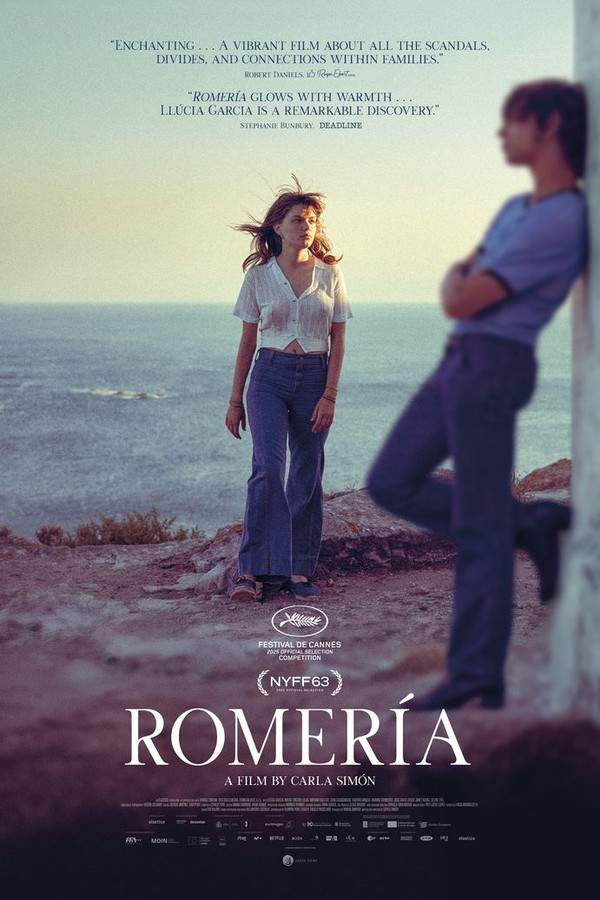
Romería (2026) movie poster

Timeline

Romería (2026) Timeline Explained – Every Event in Order

Release, runtime and language
2026 · 1 h 54 m · Spanish
Echo score 64
Loading streaming availability…
Directed by
Carla Simón
Starring
José Ángel Egido, Tristán Ulloa, Celine Tyll, Miryam Gallego, Alberto Gracia, Sara Casasnovas
Budget
$3.2M

Marina, an 18‑year‑old orphan, travels to Spain’s Atlantic coast to obtain her paternal grandparents’ signature—people she has never met—for a scholarship. Surrounded by unfamiliar aunts, uncles and cousins, she worries whether she will be welcomed or met with resistance, stirring long‑buried emotions, reviving tenderness, and discovering what family truly means.

On this page (5)
  1. 1 Where to watch
  2. 2 Events in order (15)
  3. 3 Timeline questions answered
  4. 4 Movie threads
  5. 5 Every angle
Loading streaming availability…

15 events in order · contains spoilers

Romería Timeline: Events in Chronological Order

Every key event of Romería (2026) in order, scene by scene, with when and where it takes place. Use it to untangle flashbacks, time jumps and parallel storylines, to refresh your memory before the sequel or to find the exact scene you are thinking of.

  1. Scholarship setback and death-certificate requirement

    In 2004, Marina learns she cannot apply for the film scholarship until her father's death certificate is corrected to include her name. The fix can only be done with an attestation from her paternal grandparents. This hurdle sets her on a mission to Vigo to obtain the necessary paperwork and to meet her extended family.

    When
    2004
    Where
    University scholarship office
  2. Trip to Vigo begins: five days to fix papers and meet family

    Marina travels to Vigo for five days with the hope of rectifying the certificate and meeting her paternal relatives for the first time. She is welcomed by her uncle Lois and is eased onto his houseboat, where Denise and their sons live. The journey marks the start of a complicated, emotional family introduction.

    When
    Five days in Vigo, 2004
    Where
    Vigo
  3. First impressions: Lois’s houseboat and a budding connection

    Marina settles into Lois's houseboat where she meets his wife Denise and their sons, including Nuno, with whom she immediately develops a fondness. The setting creates a close, tense dynamic as she begins to learn about her paternal side. Overnight, Vigo feels both welcoming and revealing.

    When
    Days 1-3
    Where
    Lois's houseboat, Vigo
  4. Discrepancies about where her parents lived

    Marina asks where her parents lived, and Lois mentions Playa Samil while Marina insists they lived in Toralla. Her mother's diary and other family notes gradually support the Toralla version. The disagreement highlights the gaps in her memory and the family’s guarded history.

    When
    Days 2-4
    Where
    Vigo
  5. Aunt Olalla, red dress, and a trip to the beach

    Marina visits Aunt Olalla, who makes her a red dress in her boutique and then heads to the beach with Virxinia. The moments are intimate and light, offering Marina a glimpse into a different side of her family. These scenes also deepen the sense of belonging and belongingness she seeks.

    When
    Days 2-4
    Where
    Aunt Olalla's boutique; nearby beach
  6. Cousins’ remark signals family tension

    As the family gathers, young cousins remark that Olalla warned them not to touch Marina, saying she is 'sick because of her blood.' The comment underscores the complex, uneasy atmosphere around Marina's bloodline and lineage. The moment threads into the larger theme of inherited stigma and secrecy.

    When
    Days 2-4
    Where
    Family gathering, Vigo
  7. Iago draws Marina closer and echoes the father’s memory

    Marina grows closer to Iago, a figure the family views with disappointment because he reminds them of Marina's father. Their conversations reveal painful family history and hint at unresolved pasts. The bond between Marina and Iago becomes a focal point for her search for truth.

    When
    Days 3-4
    Where
    Vigo
  8. Aunt Xulia's cabin: a bombshell about her father’s death

    During a visit to Aunt Xulia's cabin, she reveals that Marina’s father died in 1992, contradicting Marina’s long-held belief that he died in 1987. The revelation reframes Marina's understanding of her own past. It intensifies her drive to fix the paperwork and learn the truth.

    When
    Mid-trip
    Where
    Aunt Xulia's cabin
  9. Cold reception and a paternal envelope

    When the relatives meet the grandparents, Marina is greeted coldly, and her grandfather gives her an envelope of money to support her career. She expresses a preference for a scholarship rather than the money, but ultimately accepts the help. The gesture underscores conflicting family dynamics and expectations.

    When
    Evening during visit
    Where
    Grandparents' home
  10. Nuno’s revelation: her father’s isolation due to AIDS

    Nuno reveals that Marina's grandfather kept her father isolated and distant from the family from the time he contracted AIDS until his death. This information reframes Marina's understanding of her father's choices and sacrifices. The disclosure adds emotional weight to her quest for identity.

    When
    Evening
    Where
    Grandparents' home
  11. Escape night and the Fiestas de Vigo

    That night, Marina and Nuno escape the houseboat setting and attend the Fiestas de Vigo. There, Iago meets Marina at a bar and explains that her father did not abandon her, but could not care for her due to heroin addiction. The party atmosphere contrasts with the gravity of the revelations unfolding.

    When
    Night of escape
    Where
    Fiestas de Vigo; bar
  12. A dreamlike journey to 1983: a reunion with her parents

    In a dream-like sequence, Marina travels back to 1983 and reaches Toralla, where she reunites with her parents on a rooftop. Her mother's diary fragments, read in Catalan, show them together in moments of travel, drugs, and survival. The dream crystallizes a longing for connection and a clearer family history.

    When
    1983 (dream sequence)
    Where
    Toralla rooftop
  13. Returning to the present and fixing the documents

    Back in the present, Marina reunites with her grandparents to correct the documentation, proving she is her father’s daughter. The process enables her to apply for a scholarship to study film in Barcelona. The resolution marks a turning point in her identity and future plans.

    When
    Post-trip
    Where
    Grandparents' home
  14. Grandmother’s affirmation and the sea

    Her grandmother confirms Marina’s resemblance to her father as she gazes at the sea from a window. The moment is quiet but emotionally charged, tying together personal history with the broader family narrative. It signals acceptance and a sense of belonging finally forming.

    When
    Post-doc correction
    Where
    Grandparents' home, window overlooking sea
  15. Final sail with Lois’s family and dolphins

    That afternoon, Marina sails on Lois's boat with his family and they encounter dolphins. She films the moment with the video camera she has used throughout her Vigo journey, capturing a peaceful, hopeful close to the trip. The scene folds the trip’s revelations into a forward-looking, cinematic image.

    When
    Afternoon
    Where
    Lois's boat

Last updated: June 27, 2026 at 15:37

Was this helpful?

Timeline questions answered

Romería Timeline Explained: Your Questions Answered

When does it happen, and why in that order? The questions people ask about the chronology of Romería (2026): time jumps, flashbacks, cause and effect between scenes and the correct order of events, each answered with spoilers.

Q1

Why does Marina need her father's death certificate corrected for the scholarship?

Marina cannot apply for the film scholarship until her father's death certificate is corrected to include her name as his child. The university requires this official documentation to verify her identity and eligibility. The correction can only be processed with an attestation from her paternal grandparents, which is why she must travel to Vigo to meet them.

Foreshadowing: The timeline earlier mentions the scholarship office requirement as the initial hurdle that sets Marina on her journey.

  • death certificate
  • scholarship
  • university
  • paperwork
  • father
Q2

Why was Marina's father isolated from his family?

Marina's grandfather kept her father isolated and distant from the family from the time he contracted AIDS until his death. This isolation was due to the stigma surrounding the disease and possibly the family's fear of contamination or shame. The isolation meant Marina's father lived separated from his parents and extended family during his final years.

Foreshadowing: Earlier, young cousins remark that Olalla warned them not to touch Marina because she is 'sick because of her blood,' hinting at inherited stigma.

  • AIDS
  • isolation
  • grandfather
  • family rejection
  • father
Q3

What did Iago tell Marina about her father at the bar?

At the Fiestas de Vigo, Iago explained that Marina's father did not abandon her. Instead, he could not care for her because of his heroin addiction. This revelation reframes Marina's understanding of her father's choices, she thought she was abandoned, but instead he was struggling with addiction that prevented him from being present.

Foreshadowing: The family views Iago with disappointment because he reminds them of Marina's father, suggesting similar patterns of behavior.

  • Iago
  • heroin addiction
  • abandonment
  • father
  • bar
Q4

Why did Marina's grandparents give her an envelope of money?

Marina's grandfather gave her an envelope of money to support her career. While Marina expressed preference for the scholarship, she ultimately accepted the help. The gesture reflects conflicting family dynamics, coldness in their reception but a quiet attempt to provide for her future. It represents the complicated nature of family support that comes with emotional distance.

Foreshadowing: The timeline shows Marina receives a cold reception when meeting the relatives and grandparents, making this gesture somewhat contradictory.

  • grandfather
  • envelope
  • money
  • career
  • support
Q5

What did Aunt Xulia reveal about Marina's father's death?

During a visit to Aunt Xulia's cabin, she revealed that Marina's father died in 1992, contradicting Marina's long-held belief that he died in 1987. This five-year discrepancy significantly reframes Marina's understanding of her own past and timeline of events surrounding her family history.

Foreshadowing: The timeline notes Marina's drive to learn the truth intensifies after this revelation.

  • Aunt Xulia
  • death year
  • 1992
  • 1987
  • revelation
Q6

Why did the cousins say Marina is 'sick because of her blood'?

During a family gathering, young cousins remarked that Olalla warned them not to touch Marina, saying she is 'sick because of her blood.' This comment underscores the complex, uneasy atmosphere around Marina's bloodline and lineage. The stigma appears connected to her father's AIDS and possibly his heroin addiction, creating an inherited prejudice within the family.

Foreshadowing: This comment threads into the larger theme of inherited stigma that runs throughout the family dynamics.

  • cousins
  • blood
  • stigma
  • Olalla
  • sick
Q7

What did Marina's dream sequence reveal about her parents?

In a dreamlike sequence set in 1983, Marina travels back to Toralla and reunites with her parents on a rooftop. Her mother's diary fragments, read in Catalan, show them together in moments of travel, drugs, and survival. The dream crystallizes Marina's longing for connection and a clearer family history, while also revealing the environment her parents lived in during that time.

Foreshadowing: The dream sequence is non-linear and provides backstory that Marina could not otherwise access.

  • dream
  • 1983
  • rooftop
  • parents
  • diary
  • Toralla
Q8

Why does Marina believe her parents lived in Toralla instead of Playa Samil?

When Marina asks where her parents lived, Lois mentions Playa Samil while Marina insists they lived in Toralla. Her mother's diary and other family notes gradually support the Toralla version. The disagreement highlights gaps in her memory and the family's guarded history, suggesting the family may have deliberately obscured or misremembered certain details.

Foreshadowing: This discrepancy connects to the broader theme of family secrets and selective memory.

  • Toralla
  • Playa Samil
  • location
  • parents
  • diary
Q9

What did Marina's grandmother confirm at the end of the visit?

Marina's grandmother confirms that Marina resembles her father as she gazes at the sea from a window. This quiet moment is emotionally charged, tying together Marina's personal history with the broader family narrative. It signals acceptance and a sense of belonging finally forming after all the revelations and tensions of the trip.

Foreshadowing: Earlier, Nuno reveals the painful truth about her father's isolation, which this moment helps partially heal.

  • grandmother
  • resemblance
  • father
  • sea
  • acceptance
Q10

Why does Marina develop a fondness for Nuno?

Marina immediately develops a fondness for Nuno, Lois's son, during her stay on the houseboat. Their connection deepens throughout the trip, culminating in them escaping together to attend the Fiestas de Vigo. Nuno also reveals the truth about her father's isolation, making him both an emotional companion and a source of family information.

Foreshadowing: The timeline marks their immediate connection from the first days on the houseboat.

  • Nuno
  • houseboat
  • connection
  • escape
  • Fiestas de Vigo
Q11

What is the significance of Aunt Olalla making Marina a red dress?

Aunt Olalla makes Marina a red dress in her boutique and takes her to the beach with Virxinia. These intimate, light moments offer Marina a glimpse into a different, warmer side of her family. The red dress symbolizes acceptance and belonging, contrasting with the colder reception she receives from other family members.

Foreshadowing: This warmth contrasts sharply with the cousins' comment about blood stigma.

  • Olalla
  • red dress
  • boutique
  • beach
  • acceptance
Q12

What does Marina plan to do with the scholarship if she gets it?

If Marina obtains the corrected documentation and becomes eligible for the scholarship, she plans to study film in Barcelona. The entire journey to Vigo is motivated by this academic goal, obtaining the necessary paperwork to apply for the film scholarship that will enable her higher education and career in filmmaking.

Foreshadowing: The timeline begins with the scholarship setback and ends with her ability to apply.

  • scholarship
  • Barcelona
  • film
  • study
  • education

Movie threads

More Movies Like Romería, by Mood & Story

Curated lists built around what makes Romería tick: the same mood, the same kind of story or the same emotional payoff. Each list explains why these movies belong together.

Family secret dramas like Romería

Uncovering painful truths buried within complex family dynamics. Discover movies like Romería that explore complex family dynamics and uncover buried secrets. These emotionally resonant dramas feature characters confronting inherited trauma while navigating tense family relationships in atmospheric settings.

  • family dynamics
  • tense
  • melancholic
  • contemplative
  • emotionally resonant
  • atmospheric
  • Tone: melancholic, bittersweet, tense
  • Pacing: slow, contemplative
Why these movies?

The story pattern: These stories typically follow a protagonist entering an unfamiliar family environment, often after a long absence or for the first time. Through gradual revelations and tense interactions, they uncover painful truths about their relatives' pasts, often involving addiction, loss, or rejection. The journey balances discovery with emotional confrontation.

Why they belong together: These films share a focus on family mysteries, emotional revelation, and the weight of inherited trauma. They create similar viewing experiences through slow pacing, melancholic tones, and medium emotional intensity that builds through character interactions rather than dramatic action.

Quiet self-discovery stories like Romería

Emotional journeys where characters find themselves through difficult truths. Find movies similar to Romería about young characters on journeys of self-discovery. These bittersweet dramas feature emotional growth, uncovering painful truths, and finding quiet hope through personal connections and family revelations.

  • coming of age
  • bittersweet
  • nostalgic
  • contemplative
  • quietly hopeful
  • emotionally resonant
  • Tone: bittersweet, nostalgic, quietly hopeful
  • Pacing: slow, reflective
Why these movies?

The story pattern: These narratives follow young protagonists on physical or emotional journeys that force them to confront uncomfortable truths about their identity, family, or past. While the discoveries are often painful, the stories balance this with moments of tenderness, connection, and ultimately hope for the future despite unresolved wounds.

Why they belong together: They share a specific emotional pattern: bittersweet coming-of-age stories where painful discoveries are balanced with hopeful moments. The combination of melancholy nostalgia, medium emotional weight, and ultimately hopeful resolution creates a distinctive viewing experience that resonates with audiences seeking meaningful character growth.

Every angle

Romería (2026) Explained: Plot, Timeline & Characters

Everything about Romería in one place: what happens in the plot summary, the timeline in chronological order, the characters and meaning and a spoiler-free summary. What's After the Movie adds the cast, box office and post-credit scenes.

Coming soon on iOS and Android

The Plot Explained Movie Summary App

Plot summaries, endings explained and timelines on your phone. Catch up on any movie in minutes, save your favorites and never miss a twist again.

Be the first to know when we launch. Your email stays private, always.

Learn more about the app