Plot Explained Spoilers guaranteed!
Plot Explained

Browse by genre

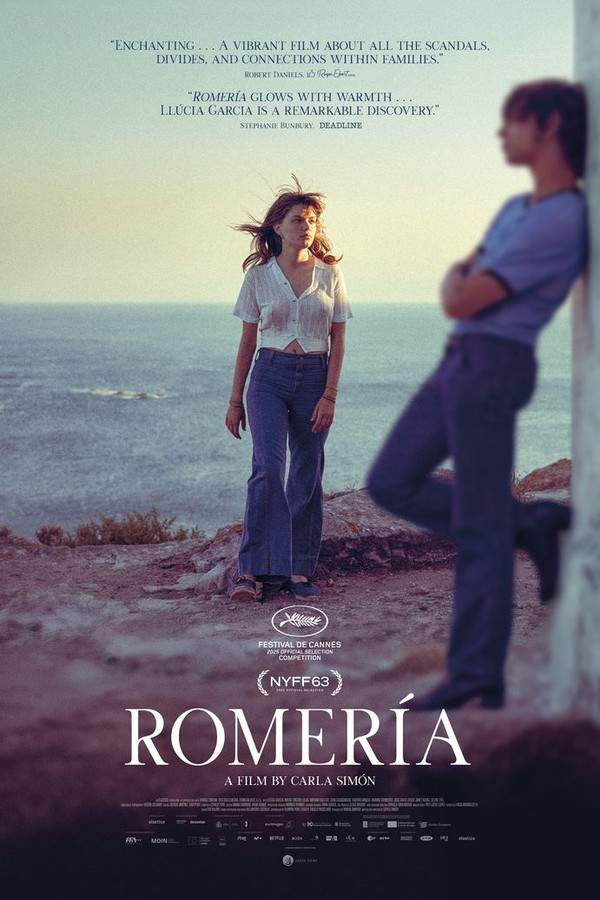
Romería (2026) movie poster

Characters & Themes

Romería (2026) Characters, Setting & Themes Explained

Release, runtime and language
2026 · 1 h 54 m · Spanish
Echo score 64
Loading streaming availability…
Directed by
Carla Simón
Starring
José Ángel Egido, Tristán Ulloa, Celine Tyll, Miryam Gallego, Alberto Gracia, Sara Casasnovas
Budget
$3.2M

Marina, an 18‑year‑old orphan, travels to Spain’s Atlantic coast to obtain her paternal grandparents’ signature—people she has never met—for a scholarship. Surrounded by unfamiliar aunts, uncles and cousins, she worries whether she will be welcomed or met with resistance, stirring long‑buried emotions, reviving tenderness, and discovering what family truly means.

On this page (7)
  1. 1 Where to watch
  2. 2 Characters explained (14)
  3. 3 Where & when it takes place
  4. 4 Themes & meaning (3)
  5. 5 Character & meaning questions
  6. 6 Movie threads
  7. 7 Every angle
Loading streaming availability…

14 main characters · contains spoilers

Romería Characters Explained: Who Is Who

The main characters of Romería (2026), heroes and villains: what drives them, how they change over the course of the story and what each of them reveals about the film's bigger ideas.

  • Marina Piñeiro

    The determined 18-year-old protagonist who travels to Vigo to fix her birth certificate and pursue a scholarship in film. Her quest to uncover her father and family history drives the film, revealing how memory and identity intertwine. She is curious, resilient, and emotionally open to confronting difficult truths. Her journey blends documentary-like observation with a filmmaker's eye.

    • 🎭 Drama
    • 🧬 Identity
    • 🌊 Sea
  • Lois

    played by Tristán Ulloa

    Marina's welcoming uncle who resides on a houseboat with his wife Denise and their sons. He acts as a bridge between Marina and her paternal relatives, offering the first warmth in a tense visit. Lois carries a quiet sense of responsibility and a fascination with his late brother, Marina's father. His presence anchors the family’s Galicia-based setting.

    • 👨‍👦 Family
    • 🧭 Guide
    • ⛵ Boat life
  • Denise

    played by Celine Tyll

    Lois's wife, a supportive yet pragmatic presence in the houseboat household. She helps Marina navigate new family dynamics and the gossip that surrounds her arrival. Denise embodies a blend of affection and caution as the family contends with long-held memories. She provides stability amid shifting allegiances.

    • 👪 Family
    • 🤝 Support
    • 🕊️ Calm
  • Nuno

    Marina's peer and potential romantic interest who shares the sense of kinship she seeks. His age-similar dynamic with Marina creates tender moments during the stay. Nuno represents a link to the life Marina imagines her parents might have had before AIDS and heroin addiction interrupted it. Their connection adds emotional warmth to the Vigo visit.

    • 💞 Connection
    • 🌊 Youth
    • 🕊️ Hope
  • Basilio

    played by León Romagosa

    Lois and Denise's son, a child of the houseboat family who embodies the domestic environment and the younger generation. His interactions with Marina reveal both curiosity and the awkwardness of grown-up family stories. Basilio's presence emphasizes how the past echoes in the next generation.

    • 👶 Family
    • 🧩 Curiosity
    • 👫 Siblings
  • Eugene

    played by Hans Romagosa

    Another cousin who travels with the family, contributing to the lively household dynamics and the crew Marina encounters in Vigo. His behavior reflects the mixed attitudes of youth within a family history bound by secrets. Eugene is a reminder that memory travels through many voices.

    • 👦 Family
    • 🗣️ Voice
    • ⚓ Sea
  • Iago

    played by Alberto Gracia

    A complex figure resembling Marina's father, Iago stands as a focal point of the family’s judgment and Marina's attraction. He embodies the tension between memory and disappointment, mirroring the father’s heroin addiction and absence. His presence drives Marina to confront uncomfortable truths about her parents.

    • 👤 Complex
    • 💬 Memory
    • ❤️ Attraction
  • Virxinia

    played by Sara Casasnovas

    Marina's aunt who shares a close moment with Marina during a seaside visit. She contributes to the family tapestry with warmth and a perspective on the mother's life. Virxinia helps Marina connect with her mother's diaries and the emotional lineage behind her birth.

    • 🌺 Family
    • 🧭 Memory
    • 📝 Diary
  • Olalla

    played by Miryam Gallego

    Marina's aunt who makes her a red dress and accompanies her on the beach, symbolizing care and traditional craft within the family. Olalla's interactions reveal cultural roots and the immediate environment that shapes Marina's early memories. She becomes a conduit for understanding parental history.

    • 🧵 Craft
    • 🧭 Roots
    • 🏖️ Beach
  • Xulia

    played by Janet Novás

    Xulia, Marina's aunt with sensitive family connections, reveals the darker elements of the tale, including the timeline of Marina's father's death. Her cabin visit adds crucial truth vs. myth tension to Marina's understanding of her parents. She acts as another window into the past.

    • 🏠 Family
    • 🕰️ Truth
    • 📜 Diary
  • Abuela Marina

    played by Marina Troncoso

    Marina's paternal grandmother, a cold figure who withholds warmth yet offers a money envelope that symbolizes the old family dynamic. Her interactions with Marina expose the gulf between the desire to help and the stubborn memory of tragedy. Her attitude shapes Marina's sense of belonging in Vigo.

    • 👵 Elder
    • 🗝️ Obstacle
    • 🧭 Legacy
  • Ramón

    played by Toño Casais

    A family member who appears during the Vigo visit, adding to the sense of a bustling Galician clan and the diffuse web of family histories. His presence contributes to the social texture of the setting without distracting from Marina's central quest.

    • 👥 Relative
    • 🗣️ Conversation
    • 🧭 Context
  • Hija Xulia 1

    played by Nerea Martínez

    One of Xulia's daughters who embodies the continuation of family memory and the transmission of stories to a younger generation. Her presence underscores how the past persists in the present through family rituals.

    • 👧 Family
    • 🧭 Memory
    • 🫶 Legacy
  • Hija Xulia 2

    Another daughter of Xulia who adds to the chorus of voices Marina encounters, illustrating how family lore travels through several lines. Her involvement helps set the film's mood of interwoven generations.

    • 👧 Family
    • 🧭 Memory
    • 🧩 Secrets

Last updated: June 27, 2026 at 15:37

Was this helpful?

Setting

Where and When Does Romería Take Place?

The setting of Romería (2026): the year and time period, the places and locations, and how they shape the characters, the mood and the tension of the story.

Time period

2004, with flashbacks to the early 1980s (1983–1986)

The present unfolds in 2004 as Marina travels to Vigo to rectify her birth records and meet relatives. Dream-like sequences transport viewers to the early 1980s, revealing her parents’ youth, struggles with heroin addiction, and the fragile moments that shaped her family. The back-and-forth timeline culminates in revelations that anchor the narrative in the late 1980s and early 1990s.

Location

Vigo, Playa de Samil, Toralla

Vigo is a bustling port city in Galicia, Spain, that frames Marina's journey to uncover her roots. The story unfolds along the harbor, around Playa de Samil and the Toralla area, even aboard a houseboat tied to Lois's family. The city's Fiestas de Vigo provide color and context as Marina confronts family history.

  • 🌊 Coastal city
  • 🏖️ Beaches
  • 🚢 Port town

Last updated: June 27, 2026 at 15:37

Was this helpful?

3 major themes

Romería Meaning: Themes & Message Explained

What is Romería (2026) really about? The emotional, social and philosophical themes the film keeps returning to, its symbolism and the message beneath the surface.

  • Identity

    Marina's search centers on who she is and where she belongs. The trip to Vigo forces her to confront the lineage her papers deny, linking her to a mother’s past and a father’s absence. The repeated physical resemblances between Marina and her mother trigger questions about memory and inheritance. The film frames identity as something earned by confronting truth, not simply by birth certificates.

  • Family secrets

    Family history is a puzzle Marina must piece together across generations. Old diaries, conflicting stories, and unspoken hurts surface as relatives reveal different versions of the father’s life and death. The grandparents’ cold welcome contrasts with warm memories on the houseboat, highlighting guarded truths. By the end, secrets loosen their grip as Marina seeks a place within her parental line.

  • Art & Memory

    Marina pursues film school as a route to express and process what she discovers. The camera becomes a tool to document family rituals, landscapes, and memories, including the voyage through Vigo’s port and beaches. Dream sequences echo the past, letting viewers see moments from the 1980s through Marina's eyes. The pursuit of art intersects with personal history, turning loss into creation.

Last updated: June 27, 2026 at 15:37

Was this helpful?

Character & theme questions

Romería Characters & Meaning: Your Questions Answered

The questions people ask about Romería (2026): who the characters really are, their relationships, what the symbols mean, where it takes place and what the movie is really about. Each answer contains spoilers.

Q1

Where is the movie set?

Romería is set in Vigo, a coastal port city in Galicia, Spain. The story unfolds along the harbor, at Playa de Samil, and around the Toralla area. Key scenes take place on a houseboat belonging to Marina's uncle Lois, anchoring the narrative in Vigo's maritime environment.

  • vigo galicia spain setting location beach houseboat
Q2

What time period does the story take place in?

The present-day story unfolds in 2004 as Marina travels to Vigo. However, dream-like flashback sequences transport viewers to the early 1980s (1983–1986), revealing her parents' youth and struggles with heroin addiction. The narrative timeline culminates in revelations anchored in the late 1980s and early 1990s.

  • 2004 1980s flashback timeline era
Q3

What are the main themes of the movie?

Romería explores three interconnected themes: Identity, as Marina searches for who she is and where she belongs; Family Secrets, as she uncovers hidden truths across generations; and Art & Memory, as filmmaking becomes her tool to process discovery and preserve family history.

  • identity family secrets art memory themes meaning
Q4

Who is Marina and what is her background?

Marina is an 18-year-old orphan who travels from elsewhere to Vigo to obtain her paternal grandparents' signature for a scholarship. Her quest is twofold: fixing her birth records and uncovering her family history. She is driven, curious, and emotionally open to confronting difficult truths about her parents.

  • marina protagonist orphan scholarship background
Q5

Who are Marina's paternal grandparents?

Marina's paternal grandparents are her father's parents, who live in Vigo. Her grandmother, also named Marina, is depicted as a cold figure who withholds warmth, while her grandfather appears briefly during the visit. Their relationship with Marina sets up the central emotional conflict of acceptance and belonging.

  • abuela marina grandparents paternal family Vigo
Q6

Who is Lois and what role does he play?

Lois is Marina's uncle, her father's brother, who lives on a houseboat in Vigo with his wife Denise and their sons. He serves as the bridge between Marina and her paternal relatives, offering the first warmth in an otherwise tense visit. Lois carries a quiet fascination with his late brother and a sense of responsibility toward Marina.

  • lois uncle houseboat denise bridge family
Q7

How does art function in the story?

Marina pursues film school as a way to express and process what she discovers. The camera becomes her tool to document family rituals, landscapes, and memories throughout Vigo's port and beaches. Dream sequences let her visually reconstruct moments from the 1980s, turning loss into creative expression.

  • film school camera art creation filmmaking memory
Q8

What does the film say about identity?

The film frames identity as something earned by confronting truth, not simply by birth certificates. Marina's physical resemblance to her mother triggers questions about inherited memory. Her journey shows that identity is tied to knowing one's lineage and accepting difficult truths about family history.

  • identity inheritance memory birth certificate self-discovery
Q9

Why does the film use flashback sequences?

The film uses non-linear flashback sequences to reveal Marina's parents' youth in the early 1980s, their struggles with heroin addiction, and the fragile moments that shaped her family. These dream-like segments provide backstory about her father's death and the circumstances surrounding her birth.

  • flashback 1980s parents heroin addiction backstory non-linear
Q10

Who is Nuno and what is his significance?

Nuno is Marina's peer and potential romantic interest during her stay in Vigo. He represents a link to the life Marina imagines her parents might have had before AIDS and heroin addiction intervened. Their connection adds emotional warmth and a sense of kinship to her visit.

  • nuno romantic interest cousin connection family
Q11

What is the significance of the houseboat?

The houseboat where Lois lives with his family represents the one warm space in Marina's otherwise tense visit. Unlike her grandparents' cold welcome, the houseboat holds positive memories and serves as a refuge where Marina connects with paternal relatives and learns about her father's past.

  • houseboat warmth family memories lovs denise
Q12

How does the family secrets theme develop?

Family secrets emerge through old diaries, conflicting stories from relatives, and unspoken hurts. Each relative reveals different versions of Marina's father's life and death. The grandparents' cold welcome contrasts with warm memories on the houseboat, highlighting how guarded truths affect Marina's quest for belonging.

  • family secrets diaries conflicting stories truth grandparents

Movie threads

More Movies Like Romería, by Mood & Story

Curated lists built around what makes Romería tick: the same mood, the same kind of story or the same emotional payoff. Each list explains why these movies belong together.

Family secret dramas like Romería

Uncovering painful truths buried within complex family dynamics. Discover movies like Romería that explore complex family dynamics and uncover buried secrets. These emotionally resonant dramas feature characters confronting inherited trauma while navigating tense family relationships in atmospheric settings.

  • family dynamics
  • tense
  • melancholic
  • contemplative
  • emotionally resonant
  • atmospheric
  • Tone: melancholic, bittersweet, tense
  • Pacing: slow, contemplative
Why these movies?

The story pattern: These stories typically follow a protagonist entering an unfamiliar family environment, often after a long absence or for the first time. Through gradual revelations and tense interactions, they uncover painful truths about their relatives' pasts, often involving addiction, loss, or rejection. The journey balances discovery with emotional confrontation.

Why they belong together: These films share a focus on family mysteries, emotional revelation, and the weight of inherited trauma. They create similar viewing experiences through slow pacing, melancholic tones, and medium emotional intensity that builds through character interactions rather than dramatic action.

Quiet self-discovery stories like Romería

Emotional journeys where characters find themselves through difficult truths. Find movies similar to Romería about young characters on journeys of self-discovery. These bittersweet dramas feature emotional growth, uncovering painful truths, and finding quiet hope through personal connections and family revelations.

  • coming of age
  • bittersweet
  • nostalgic
  • contemplative
  • quietly hopeful
  • emotionally resonant
  • Tone: bittersweet, nostalgic, quietly hopeful
  • Pacing: slow, reflective
Why these movies?

The story pattern: These narratives follow young protagonists on physical or emotional journeys that force them to confront uncomfortable truths about their identity, family, or past. While the discoveries are often painful, the stories balance this with moments of tenderness, connection, and ultimately hope for the future despite unresolved wounds.

Why they belong together: They share a specific emotional pattern: bittersweet coming-of-age stories where painful discoveries are balanced with hopeful moments. The combination of melancholy nostalgia, medium emotional weight, and ultimately hopeful resolution creates a distinctive viewing experience that resonates with audiences seeking meaningful character growth.

Every angle

Romería (2026) Explained: Plot, Timeline & Characters

Everything about Romería in one place: what happens in the plot summary, the timeline in chronological order, the characters and meaning and a spoiler-free summary. What's After the Movie adds the cast, box office and post-credit scenes.

Coming soon on iOS and Android

The Plot Explained Movie Summary App

Plot summaries, endings explained and timelines on your phone. Catch up on any movie in minutes, save your favorites and never miss a twist again.

Be the first to know when we launch. Your email stays private, always.

Learn more about the app