













Plot Explained Spoilers guaranteed!
Plot Explained

Browse by genre

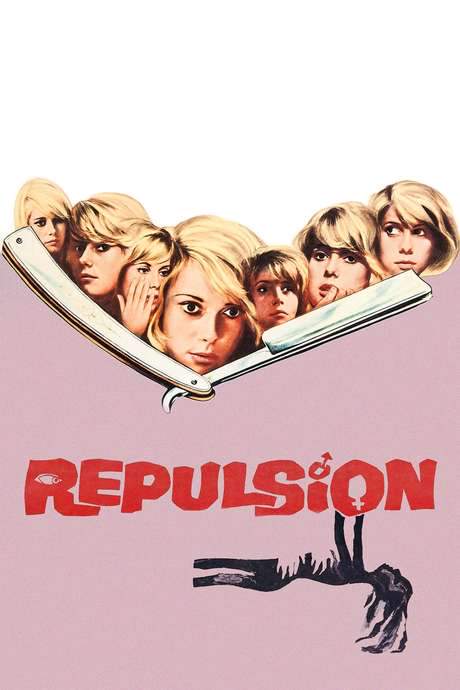
Repulsion (1965) movie poster

Characters & Themes

Repulsion (1965) Characters, Setting & Themes Explained

Release, runtime and language
1965 · 105 mins · English
JustWatch #15,373 14
Starring
Catherine Deneuve, Roman Polanski, Ian Hendry, John Fraser, James Villiers, Patrick Wymark

Carole, a young manicurist haunted by an intense fear of men, is left alone in her London flat when her sister and roommate Helen departs for an Italian vacation with her married boyfriend. Isolated, Carole’s anxiety spirals into terrifying hallucinations, blurring dream and reality, and driving her toward a shocking mental breakdown.

On this page (8)
  1. 1 Where to watch
  2. 2 Characters explained (6)
  3. 3 Where & when it takes place
  4. 4 Themes & meaning (3)
  5. 5 Character & meaning questions
  6. 6 Movie threads
  7. 7 Movies like Repulsion
  8. 8 Every angle

Where to watch

Where to Watch Repulsion (1965)

Where can you watch Repulsion? Stream, rent or buy it in the US, including on Brew, fuboTV and Midnight Pulp: current JustWatch availability with up-to-date prices.

Streaming availability powered by JustWatch

6 main characters · contains spoilers

Repulsion Characters Explained: Who Is Who

The main characters of Repulsion (1965), heroes and villains: what drives them, how they change over the course of the story and what each of them reveals about the film's bigger ideas.

  • Carole Ledoux (Catherine Deneuve)

    A shy Belgian manicurist living in London with her sister Helen, Carol is emotionally withdrawn and hypersensitive to odors, sounds, and social intrusion. Her polite, quiet exterior hides a volatile inner world that frays under pressure from male attention and domestic disruption. As events unfold, her perceptions fragment, and acts of violence erupt from a mind pushed to the edge.

    • 🪞 Introverted
    • 🧠 Psychological fragility
    • 🚪 Domestic confinement
  • Colin (John Fraser)

    A polite, persistent suitor who is enamoured of Carol and tries to win her over despite her indifference. He intrudes into her space and pushes for affection, revealing the friction between social expectations and Carol's resistance. His insistence accelerates Carol's sense of threat and paranoia.

    • 💌 Persistent
    • 🚶 Unwanted attention
    • 🧭 Miscommunication
  • Michael (Ian Hendry)

    A married man whose relationship with Helen provokes Carol's jealousy and distress. He leaves his belongings around and embodies the intrusion of another man into their home. His presence triggers Carol's spiraling paranoia and sense of violation.

    • 💘 Infidelity
    • 🧭 Jealousy
  • Hélène Ledoux (Yvonne Furneaux)

    Carol's older sister, who shares the apartment and acts as a foil to Carol's nerves. When she leaves for Italy, Carol is left alone, heightening her vulnerability and sense of abandonment.

    • 👭 Sisterly bond
    • ✈️ Travel
  • Le propriétaire (Patrick Wymark)

    The landlord who arrives to collect rent and becomes a threat when he attempts to assault Carol. His intrusion and predatory behavior escalate the sense that the home is no longer a safe space.

    • 🗝️ Intrusion
    • 🪤 Predation
  • Spoon Player (Roman Polanski)

    A mysterious, non-speaking figure credited as Spoon Player. He appears in scenes that contribute to the film's dreamlike and surreal atmosphere, reflecting Carol's unstable perception of reality.

    • 🎭 Enigmatic

Last updated: October 04, 2025 at 15:51

Was this helpful?

Setting

Where and When Does Repulsion Take Place?

The setting of Repulsion (1965): the year and time period, the places and locations, and how they shape the characters, the mood and the tension of the story.

Time period

1960s

Set in the 1960s London era. The time period provides a backdrop of changing social mores and rigid domestic expectations that heighten Carol's isolation. The film's style—clinical interiors, stark lighting, and contemporary wardrobe—emphasizes a mind under siege.

Location

London, United Kingdom

The action unfolds in a compact central-London apartment where Carol and her sister Helen live. The urban noise and crowded streets outside contrast with the claustrophobic interior that traps Carol's nerves. The setting, with its modern interiors and routine domestic spaces, intensifies the sense of confinement fueling her breakdown.

  • 🏙️ Urban
  • 🪟 Claustrophobic interiors
  • 🚪 Domestic confinement

Last updated: October 04, 2025 at 15:51

Was this helpful?

3 major themes

Repulsion Meaning: Themes & Message Explained

What is Repulsion (1965) really about? The emotional, social and philosophical themes the film keeps returning to, its symbolism and the message beneath the surface.

  • Isolation

    Carol's withdrawal from conversation and her growing disconnection from others are at the core of the film. Her sensory sensitivities—odors, sounds, and intrusive touches—compound her isolation. As details blur between dream and reality, solitude becomes a force that shapes her actions. The house and its surfaces—walls, mirrors, and everyday objects—reflect and magnify her inner emptiness.

  • Violence and Repression

    Violence in Repulsion appears as a manifestation of repressed sexuality and fear rather than straightforward aggression. Carol's imagined intrusions and real acts of killing puncture the boundary between reality and hallucination. The murders of Colin and the landlord are framed through clinical camera work that heightens unease rather than sensationalism. The violence serves as a purge of subconscious trauma, leaving her further entangled in delusion.

  • Domestic Space

    The apartment becomes a character in its own right—a cage of doors, walls, and barricades. Every domestic routine—brushing teeth, cleaning, cooking—acquires a menacing edge as Carol's psyche unravels. Cracked walls, overflowing baths, and a barricaded door symbolize the breach between inner and outer worlds. The claustrophobic setting maps the progression of Carol's mental breakdown.

Last updated: October 04, 2025 at 15:51

Was this helpful?

Character & theme questions

Repulsion Characters & Meaning: Your Questions Answered

The questions people ask about Repulsion (1965): who the characters really are, their relationships, what the symbols mean, where it takes place and what the movie is really about. Each answer contains spoilers.

Q1

Where does Repulsion take place?

The film unfolds entirely within a small central-London apartment shared by Carole and her sister Helen. The cramped interior, with its routine domestic spaces and thin walls, becomes a claustrophobic trap that mirrors Carole's deteriorating mental state, contrasting sharply with the noisy urban activity outside.

  • london apartment
  • setting
  • claustrophobic
  • central london
Q2

When is the movie set?

Repulsion is set in 1960s London, a period marked by shifting social norms and strict domestic expectations. The clinical interiors, stark lighting, and contemporary wardrobe emphasize the clinical nature of Carole's mind under siege, while the era's rigid gender roles heighten her sense of entrapment.

  • 1960s
  • london era
  • time period
  • 1960s london
Q3

What is the main theme of Repulsion?

Isolation is the central theme, with Carole's withdrawal from conversation and growing disconnection from others driving the narrative. Her hypersensitivity to odors, sounds, and touches intensifies her isolation, while the blurring of dream and reality transforms solitude into a destructive force that shapes her actions and perceptions.

  • isolation
  • theme
  • psychological
  • withdrawal
Q4

What does the apartment represent in the film?

The apartment functions as a character itself, a cage of doors, walls, and barricades that mirrors Carole's fractured mind. Everyday routines like brushing teeth and cleaning take on menacing dimensions as her psyche unravels. Cracked walls and barricaded doors symbolize the collapse between her inner and outer worlds.

  • apartment
  • domestic space
  • symbolism
  • setting
  • psychological
Q5

Who is Carole and what defines her character?

Carole Ledoux is a shy Belgian manicurist living in London who is emotionally withdrawn and hypersensitive to sensory intrusions like odors and sounds. Her polite, quiet exterior conceals a volatile inner world that unravels under pressure from male attention and domestic disruption, leading to fragmented perceptions and violent eruptions.

  • carole
  • character
  • manicurist
  • psychological breakdown
Q6

How does violence connect to the film's themes?

Violence in Repulsion emerges as a manifestation of repressed sexuality and deep-seated fear rather than straightforward aggression. The murders Carole commits are framed through clinical camera work that heightens unease, serving as a purge of subconscious trauma that leaves her further entangled in delusion.

  • violence
  • repression
  • sexuality
  • psychological
  • horror
Q7

What is the relationship between Carole and Helen?

Hélène Ledoux is Carole's older sister who shares the London apartment and acts as a fragile buffer against the outside world. When Helen leaves for Italy with her married boyfriend Michael, Carole is left completely alone, heightening her vulnerability and sense of abandonment to a breaking point.

  • helen
  • sisters
  • relationship
  • abandonment
  • isolation
Q8

Who is Colin and what role does he play?

Colin is a persistent suitor who attempts to win Carole's affection despite her indifference and discomfort. His polite but intrusive presence and push for affection represent the friction between social expectations and Carole's intense resistance, accelerating her paranoia and sense of threat.

  • colin
  • suitors
  • relationship
  • intrusion
  • pressure
Q9

What kind of film is Repulsion, horror or psychological drama?

Repulsion blends psychological horror with dramatic intensity, exploring severe mental illness through visual storytelling rather than supernatural elements. The film uses clinical cinematography, distorted sound design, and surreal imagery to portray Carole's subjective experience of terror and breakdown.

  • psychological horror
  • genre
  • drama
  • style
  • roman polanski
Q10

What does the landlord represent in the story?

The landlord arrives as a physical manifestation of the threat Carole perceives from the male world. His attempt to assault her escalates the film's exploration of intrusion and violation, confirming that the home, the one space that should feel safe, has become a site of danger.

  • landlord
  • intrusion
  • threat
  • safety
  • violation

Movie threads

More Movies Like Repulsion, by Mood & Story

Curated lists built around what makes Repulsion tick: the same mood, the same kind of story or the same emotional payoff. Each list explains why these movies belong together.

Movies with a fractured psyche like Repulsion

Movies that plunge you into a character's disintegrating perception of reality. Discover movies that, like Repulsion, place you inside a character's disintegrating mind. These films use subjective cinematography and narrative to blur reality and hallucination, perfect for viewers seeking similar psychological horror and intense character studies of mental collapse.

  • subjective
  • unreliable narrator
  • hallucinatory
  • paranoid
  • disorienting
  • fragmented
  • Tone: dark, unsettling
  • Pacing: slow, deliberate
Why these movies?

The story pattern: The narrative pattern follows a character's internal collapse, where external events are interpreted through their deepening psychosis. The story structure often becomes non-linear, incorporating flashbacks, dreams, and paranoid distortions that challenge the audience to piece together what is objectively real.

Why they belong together: These films are grouped by their commitment to a subjective, internal perspective. They share a common goal of making the audience experience mental illness, paranoia, or dissociation firsthand, prioritizing psychological authenticity over conventional plot.


Claustrophobic horror movies in confined spaces like Repulsion

Stories where a familiar safe space transforms into a source of primal fear. If you liked the oppressive atmosphere of Repulsion, explore these movies where a home becomes a prison of the mind. These stories feature intense isolation, psychological dread, and terror that grows within confined, familiar spaces, offering a similar vibe of domestic horror.

  • claustrophobic
  • isolating
  • oppressive
  • domestic terror
  • anxious
  • slow burn
  • Tone: oppressive, anxious
  • Pacing: slow burn
Why these movies?

The story pattern: The narrative is typically confined to a single primary location. The tension builds from isolation and the invasion of privacy, either by external forces or, more chillingly, by the protagonist's own deteriorating mental state. Everyday objects and sounds become charged with menace.

Why they belong together: These movies are united by the central theme of the home as a site of horror. They share a mood of extreme claustrophobia and anxiety, generated by the slow transformation of a safe space into a labyrinth of fear, often focusing on a single character's psychological battle.

If you liked this

Movies Like Repulsion

Similar movies to Repulsion: the same genre, themes or kind of story. Each one comes with its own plot summary, timeline and ending explained.

Browse all movie summaries

Every angle

Repulsion (1965) Explained: Plot, Timeline & Characters

Everything about Repulsion in one place: what happens in the plot summary, the timeline in chronological order, the characters and meaning and a spoiler-free summary. What's After the Movie adds the cast, box office and post-credit scenes.

Coming soon on iOS and Android

The Plot Explained Movie Summary App

Plot summaries, endings explained and timelines on your phone. Catch up on any movie in minutes, save your favorites and never miss a twist again.

Be the first to know when we launch. Your email stays private, always.

Learn more about the app