Plot Explained Spoilers guaranteed!
Plot Explained

Browse by genre

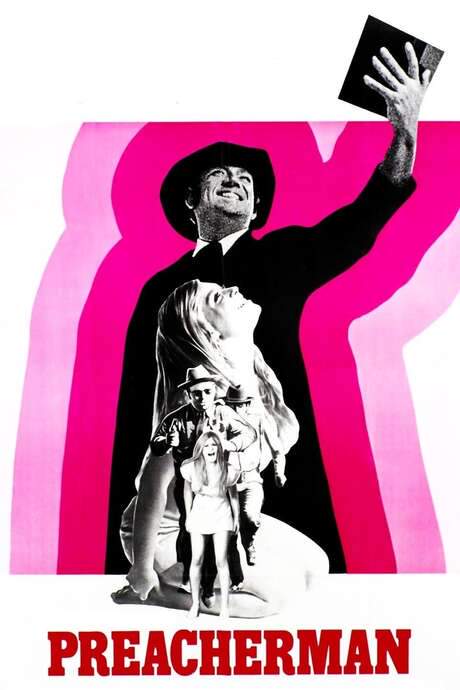
Preacherman (1971) movie poster

Plot Summary

Preacherman (1971) Plot Summary Explained

Release, runtime and language
1971 · 87 mins · English
Loading streaming availability…
Starring
Ilene Kristen, J.G. Patterson Jr., Bill Simpson, Albert T. Viola, Garland Atkins, Adam Hesse

In a sleepy North Carolina town, the slick but fraudulent preacher Amos T. Huxley arrives with grand promises, only to cheat his flock, siphon the earnings of a local moonshine operation, and pursue the naïve Mary Lou. When Mary Lou’s former boyfriend grows wary, he enlists the police to expose Huxley’s schemes.

On this page (6)
  1. 1 Where to watch
  2. 2 What happens: full plot
  3. 3 Plot questions answered
  4. 4 Movie threads
  5. 5 Movies like Preacherman
  6. 6 Every angle
Loading streaming availability…

Full plot summary · contains spoilers

What Happens in Preacherman: Full Plot Summary

The whole story of Preacherman (1971) explained, from the opening scene to the final frame: every key event, every twist and what it all adds up to. Read it as a quick recap before the sequel, to check a scene you missed, or to finally understand what really happened.

After a reckless liaison with a girl who turns out to be the daughter of White Oak County sheriff Zero Bull, the self-styled Preacherman Amos Huxley is beaten by the sheriff and his deputy and banished beyond the county line. He is found by local farmer Judd Crabtree, who brings the injured man to his home. There, Huxley crosses paths with Mary Lou, a young woman whose flirtations with several local boys have earned her a thorny reputation.

With a veneer of spiritual concern, Huxley pretends to want to baptize Mary Lou and steer her toward a more proper path. Yet his real aim is to manipulate her, pressing her into a string of sexual encounters while he keeps Judd distracted, sending him outside to “watch for the Angel Leroy.” This tangled web grows more complicated as Judd confesses to Huxley that his real money comes from an illegal moonshine operation, supported by [Zero Bull] and Bull’s brother-in-law. The revelation gives Huxley a dangerous idea: transform Judd’s bootlegging into a church-funded revenue stream, using Martha as the new supplier instead of the sheriff’s network.

The scheme heats up as Clyde Massingale, one of Mary Lou’s former lovers, reappears and resents Mary Lou’s newfound “salvation” and distance from him. Huxley tries to recruit Clyde into the enterprise, but Bull grows wary—aware that Clyde might know more about Huxley’s true past and the thinning bootlegging profits. The pressure mounts as the prisoner dragnet loosens its grip, and Huxley begins to believe he can slip out of the county with Mary Lou in tow.

Seeking one last burst of cash, Huxley convinces Judd and Martha to stage a large revival meeting, hoping the spectacle will pull in money and keep their operation alive. The plan seems to work at first, until Clyde betrays Huxley to Bull, who crashes the gathering. Judd creates a distraction long enough for Huxley and Mary Lou to flee, but a painful confession from Mary Lou—she loves Clyde—creates a crack in Huxley’s resolve. Undeterred, Huxley reminds Mary Lou that a substantial share of the profits awaits in her bedroom, a gesture meant to bind the pair to his scheme and to Judd.

As the escape unfolds, Clyde returns to Mary Lou and, with a mix of affection and cunning, misleads Bull and his deputy to protect the fleeing Huxley. With danger closing in, Huxley makes a break for the next county, leaving behind a tangle of loyalties, broken trusts, and fragile dreams of a new church-led community that may never come to be. The town’s fragile balance between faith, crime, and desire threads through every decision, shaping who gets hurt and who gets away.

In the end, the narrative pulls together the loyalties of those who dabble in sin and salvation, showing how greed, romance, and a longing for redemption collide under the pressures of small-town life. The characters—[Mary Lou], [Amos Huxley], [Zero Bull], [Judd Crabtree], [Martha], [Clyde Massingale], and [Deputy Leon]—each make choices that ripple through the community, leaving a lasting imprint on a county where the line between reverence and vice is often blurred.
Last updated: October 07, 2025 at 08:57

Was this helpful?

Plot questions answered

Preacherman Plot Explained: Your Questions Answered

The questions people ask most about Preacherman (1971): what happens in the confusing scenes, why the characters do what they do, the twists, hidden details and what the ending means. Each answer contains spoilers.

Q1

Why does Huxley decide to stay in the county after being banished?

Huxley decides to stay because a countywide roadblock is hunting escaped convicts, making it too dangerous to travel. With the sheriff actively looking for him and roadblocks blocking his exit, hiding with Judd Crabtree becomes his only viable option until the heat dies down.

  • huxley banishment
  • escape
  • roadblock
  • hiding
Q2

How does Huxley manipulate Mary Lou under the guise of baptism?

Huxley pretends to want to baptize Mary Lou and guide her toward a more proper path, using spiritual concern as a cover. Instead, he coerces her into sexual encounters while keeping Judd distracted by sending him outside to 'watch for the Angel Leroy.' The baptism becomes a tool for exploitation rather than genuine spiritual help.

Foreshadowing: Earlier, Mary Lou is described as having a thorny reputation for flirting with several local boys, which Huxley uses as justification for his 'spiritual intervention.'

  • huxley manipulation
  • baptism
  • mary lou
  • exploitation
Q3

Why does Huxley want to take over the moonshine operation?

After Judd confesses that his illegal moonshine still is run with Sheriff Bull and his brother-in-law, Huxley sees an opportunity. He proposes transforming the bootlegging into a church-funded revenue stream, replacing Bull's network with Martha as the new supplier. This allows Huxley to control the profits while using the church as a legitimate front.

  • moonshine operation
  • bootlegging
  • church scheme
  • revenue
Q4

Why does Clyde Massingale become jealous of Huxley?

Clyde was formerly in a relationship with Mary Lou and resents her newfound 'salvation' and distance from him. When Huxley arrives and Mary Lou becomes involved with the preacher's scheme, Clyde loses access to her both romantically and financially, making him bitter and willing to betray Huxley to the sheriff.

  • clyde jealousy
  • mary lou
  • ex-boyfriend
Q5

Why does Clyde betray Huxley to Sheriff Bull?

Clyde betrays Huxley because he resents losing Mary Lou to the preacher. When Sheriff Bull grows wary of Huxley and alerts Clyde to his criminal past, Clyde sees an opportunity for revenge. He tips off Bull about the revival meeting, hoping to bring Huxley down.

  • clyde betrayal
  • sheriff bull
  • revival meeting
Q6

Why does Huxley plan a large revival meeting?

With the prisoner dragnet loosening, Huxley sees a chance to escape the county. He persuades Judd and Martha to stage a large revival meeting, hoping the spectacle will pull in significant money and provide cover for his exit with Mary Lou and the profits.

  • revival meeting
  • escape plan
  • money scheme
Q7

What causes Bull to raid the revival meeting?

Clyde betrays the setup by tipping off Sheriff Bull about the revival meeting. Bull crashes the gathering because he knows about Huxley's criminal history and wants to shut down the moonshine operation that has been running outside his control. The raid is also motivated by personal vendetta since Huxley had sex with his daughter Mary Lou.

  • bull raid
  • revival
  • moonshine
  • betrayal
Q8

Why does Mary Lou tell Huxley she loves Clyde during the escape?

During the chaos of the escape, Mary Lou confesses to Huxley that she loves Clyde. This creates a crack in Huxley's resolve because he realizes his manipulation has not fully replaced her genuine feelings for her former lover, showing the emotional complexity of the relationships he has exploited.

  • mary lou confession
  • clyde love
  • emotional conflict
Q9

Why does Clyde help Huxley escape after betraying him?

After the betrayal, Clyde reconciles with Mary Lou and decides to help Huxley escape by misleading Bull and his deputy. This appears to be motivated by his lingering feelings for Mary Lou, he helps the man she wants to be with, possibly to earn her favor or to protect her from the consequences of the raid.

  • clyde help
  • misdirection
  • escape
Q10

Why does Huxley leave Mary Lou behind when he escapes?

Despite his initial plan to flee with Mary Lou, Huxley ultimately runs off alone. He tells her he has left a large share of profits in her bedroom for herself and Judd, but this is likely a way to tie up loose ends without actually staying. His character is fundamentally self-serving, he takes the opportunity to escape alone rather than risk being slowed down or caught with another person.

  • huxley escapes alone
  • leaves mary lou
  • self-preservation
Q11

Why does Sheriff Zero Bull beat and banish Huxley?

Huxley has a reckless sexual encounter with Mary Lou, who turns out to be the daughter of Sheriff Zero Bull. Enraged that the preacher seduced his daughter, the sheriff and his deputy beat Huxley severely and banish him beyond the county line, warning him never to return.

  • sheriff bull
  • violence
  • banishment
  • daughter
Q12

How does Martha become involved in the moonshine operation?

Huxley proposes replacing Sheriff Bull's existing supply network with Martha, a traveling saleswoman, as the new supplier for Judd's moonshine operation. This allows Huxley to take control of the profits away from Bull's network and redirect them through his own church-funded scheme.

  • martha supplier
  • moonshine distribution
  • church scheme

Movie threads

More Movies Like Preacherman, by Mood & Story

Curated lists built around what makes Preacherman tick: the same mood, the same kind of story or the same emotional payoff. Each list explains why these movies belong together.

Southern Gothic Con Games like in Preacherman

Stories of charismatic swindlers preying on the faith and naivety of small-town communities. If you liked the darkly comedic tale of a fraudulent preacher exploiting a small town in Preacherman, you'll find similar movies here. These stories feature charismatic grifters, religious hypocrisy, and a gritty southern atmosphere, focusing on the morally ambiguous chaos that unfolds when deception meets desperation.

  • southern gothic
  • deceptive
  • cynical
  • gritty
  • opportunistic
  • chaotic
  • Tone: dark, cynical
  • Pacing: steady, methodical
Why these movies?

The story pattern: These stories typically follow a charismatic outsider who arrives in an isolated community and systematically manipulates its inhabitants, often exploiting faith, greed, or lust. The plot revolves around the gradual build-up and eventual exposure of their elaborate schemes, creating a tense cat-and-mouse game with local authorities or suspicious residents, often leading to morally ambiguous resolutions.

Why they belong together: Movies in this thread are united by their specific Southern Gothic atmosphere, a darkly humorous tone, and a central plot involving a sophisticated con. They share a focus on the decay of traditional values, the ease of exploitation in closed communities, and characters who are often both villain and anti-hero.

Movies about Charismatic Villains like in Preacherman

A magnetic but morally bankrupt individual unravels the fragile order of a community. Fans of Preacherman's Amos T. Huxley will enjoy these movies featuring compelling yet destructive protagonists. These films explore how a single charismatic but corrupt individual can manipulate, betray, and reveal the dark underbelly of a seemingly ordinary community, often with a steady pace and mixed, ambiguous endings.

  • charismatic villain
  • corruption
  • betrayal
  • manipulative
  • psychological
  • chaotic
  • Tone: dark, tense
  • Pacing: steady, escalating
Why these movies?

The story pattern: The narrative pattern involves the introduction of a highly charismatic but ethically compromised character into a stable but fragile ecosystem (like a small town or isolated group). Their actions systematically test loyalties, exploit vulnerabilities, and drag other characters into their web of schemes, leading to a chain reaction of betrayal and moral compromise for everyone involved.

Why they belong together: These films are grouped together because of their shared focus on a mesmerizing central villain whose corruption is the engine of the plot. They create a specific vibe where the audience is simultaneously repulsed by and drawn to the antagonist, while observing the steady erosion of the surrounding world's moral compass.

If you liked this

Movies Like Preacherman

Similar movies to Preacherman: the same genre, themes or kind of story. Each one comes with its own plot summary, timeline and ending explained.

Browse all movie summaries

Every angle

Preacherman (1971) Explained: Plot, Timeline & Characters

Everything about Preacherman in one place: what happens in the plot summary, the timeline in chronological order, the characters and meaning and a spoiler-free summary. What's After the Movie adds the cast, box office and post-credit scenes.

Coming soon on iOS and Android

The Plot Explained Movie Summary App

Plot summaries, endings explained and timelines on your phone. Catch up on any movie in minutes, save your favorites and never miss a twist again.

Be the first to know when we launch. Your email stays private, always.

Learn more about the app