Plot Explained Spoilers guaranteed!
Plot Explained

Browse by genre

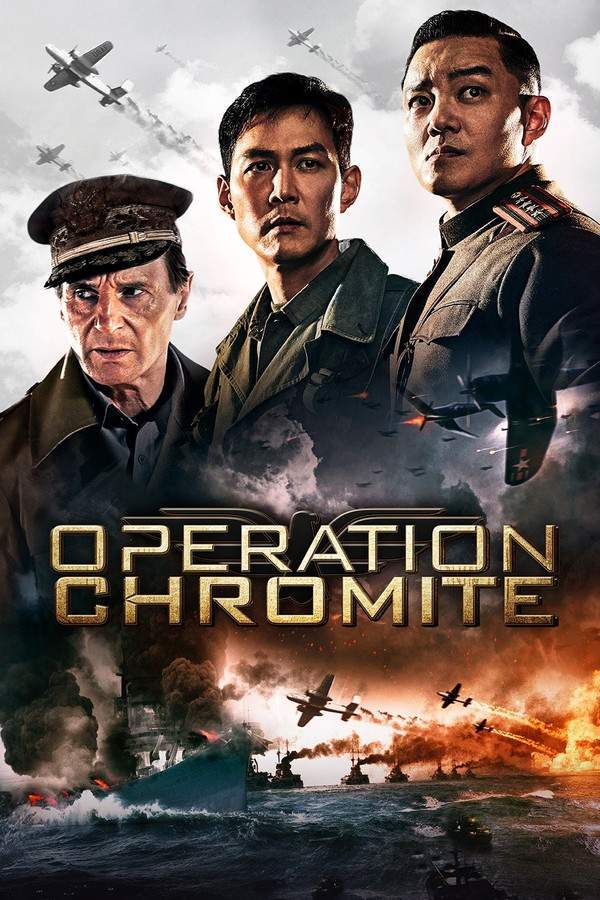
Operation Chromite (2016) movie poster

Timeline

Operation Chromite (2016) Timeline Explained – Every Event in Order

Release, runtime and language
2016 · 111 min · English
Loading streaming availability…
Directed by
John H. Lee
Starring
Liam Neeson

During the Korean War, Captain Jang and his specialized KLO team undertake a dangerous mission to infiltrate North Korea. Operating under the command of General MacArthur, they must gather crucial intelligence, capture key North Korean officials, and signal the UN forces’ impending attack by illuminating the Palmido lighthouse. The success of the mission hinges on their ability to navigate a hostile environment and execute a daring plan with precision.

On this page (6)
  1. 1 Where to watch
  2. 2 Events in order (15)
  3. 3 Timeline questions answered
  4. 4 Movie threads
  5. 5 Movies like Operation Chromite
  6. 6 Every angle
Loading streaming availability…

15 events in order · contains spoilers

Operation Chromite Timeline: Events in Chronological Order

Every key event of Operation Chromite (2016) in order, scene by scene, with when and where it takes place. Use it to untangle flashbacks, time jumps and parallel storylines, to refresh your memory before the sequel or to find the exact scene you are thinking of.

  1. Invasion of South Korea

    In 1950, North Korean forces, supported by the Soviet Union, successfully invaded South Korea, gaining control over most of the territory. This invasion marked the beginning of significant military conflict in the Korean Peninsula, leaving the South Koreans in a desperate situation.

    When
    1950
    Where
    South Korea
  2. Formation of UN Coalition

    In response to the invasion, an American-led coalition under the United Nations was formed to support South Korea. General Douglas MacArthur was appointed as the commander of these UN forces, highlighting the international effort to repel the invasion and restore peace.

    Where
    United Nations Headquarters
  3. MacArthur's Strategic Planning

    General MacArthur devised a bold and risky plan aimed at launching an attack behind enemy lines at the port city of Incheon. This plan was critical, as South Korea had lost significant territory and needed a decisive action to turn the tide of the war.

    Where
    Incheon
  4. Operation X-Ray Initiation

    To gather intelligence for the Incheon mission, MacArthur authorized Operation X-Ray, a covert operation spearheaded by Captain Jang Hak-Soo. This mission was essential for determining the locations of North Korean defenses and navigating the strategy for a successful assault.

    Where
    Incheon
  5. Captain Jang's Infiltration

    Captain Jang, along with seven members of the X-Ray unit, posed as a North Korean inspection team. Their infiltration into the heavily fortified Incheon command center was crucial for gathering intelligence about troop placements and mine locations.

    Where
    Incheon Command Center
  6. Lim Gye-Jin's Suspicion

    Within the command center, Lim Gye-Jin, a commander trained by the Soviets and loyal to Kim Il Sung, grew increasingly suspicious of Jang's true intentions. This tension added complexity to an already perilous mission, forcing the X-Ray team to act carefully.

    Where
    Incheon Command Center
  7. Jang's Emotional Struggles

    As the mission progressed, Captain Jang began to develop romantic feelings for Nurse Han Chae-Seon, complicating his focus. This emotional turmoil highlighted the personal sacrifices and risks involved in their dangerous undertaking for South Korea.

    Where
    Incheon
  8. Mobilization for Operation Chromite

    As the situation escalated, General MacArthur coordinated the massive mobilization of 75,000 troops and over 260 warships for Operation Chromite. The planning was fraught with challenges, including the looming threat of Hurricane Jean that could derail their efforts.

    Where
    Incheon
  9. Securing Navigation Charts

    During the mission, the X-Ray team needed to secure crucial navigation charts that detailed mine placements in Incheon's harbor. The success of the amphibious assault hinged on this vital information, as the harbor was fraught with underground dangers.

    Where
    Incheon Harbor
  10. The Night of September 14

    On the night of September 14, 1950, a critical moment arrived as General MacArthur ordered forces to capture the Incheon Lighthouse at midnight. This operation required bravery and strategy, marking a pivotal point in the campaign.

    When
    September 14, 1950
    Where
    Incheon Lighthouse
  11. Jang's Gallantry in Action

    During the climactic assault, Captain Jang showcased extraordinary gallantry by navigating a tank against fierce North Korean resistance. His bravery not only motivated his troops but also played a significant role in timing the UN forces' landing.

    Where
    Incheon
  12. Commencement of UN Forces Landing

    Despite the chaos and peril surrounding them, Jang signaled the UN forces to commence their landing operation. This act was crucial to ensure a coordinated assault against the tightly held North Korean positions in Incheon.

    Where
    Incheon
  13. Aftermath of the Assault

    The battle culminated in a significant UN victory, leading to the capture of Seoul. This success was a transformative moment in the Korean War, significantly impacting the course of military engagements on the peninsula.

    Where
    Seoul
  14. The Human Cost of War

    The Korean War, which was intensified by events like the attack on Incheon, claimed the lives of approximately 3 million people. This staggering figure serves as a stark reminder of the human cost associated with political and military conflicts.

    Where
    Korea
  15. Armistice Negotiations

    After years of brutal conflict, an armistice was finally brokered on July 27, 1953, ending hostilities. This agreement was pivotal in framing the geopolitical landscape of Korea, marking a tense ceasefire.

    When
    July 27, 1953
    Where
    Korea

Last updated: November 03, 2024 at 14:09

Was this helpful?

Timeline questions answered

Operation Chromite Timeline Explained: Your Questions Answered

When does it happen, and why in that order? The questions people ask about the chronology of Operation Chromite (2016): time jumps, flashbacks, cause and effect between scenes and the correct order of events, each answered with spoilers.

Q1

Why did Captain Jang Hak-Soo defect from the North Korean army?

Captain Jang defected to South Korea after witnessing the execution of his father by the North Korean regime. This personal tragedy, combined with his service as an officer in the Korean People's Army, gave him both the motivation to fight against his former side and the insider knowledge necessary for covert operations behind enemy lines.

  • captain jang
  • defection
  • military
  • personal motivation
Q2

Why was capturing Incheon so critical for the UN forces?

Incheon served as the gateway to Seoul, Korea's capital. North Korean forces had fortified the harbor with extensive mines and heavy artillery, making it seemingly impenetrable. If the UN forces could successfully land at Incheon, they could cut off North Korean supply lines and retake Seoul, completely shifting the momentum of the war.

  • incheon
  • strategy
  • amphibious assault
  • seoul
  • military
Q3

Why did Commander Lim Gye-Jin become suspicious of Jang?

Lim Gye-Jin, a Soviet-trained commander loyal to Kim Il Sung, noticed behavioral patterns and details that reminded him of a known South Korean operative. His training and loyalty made him particularly vigilant, and he refused to provide Jang with the crucial maps of mine locations, forcing the X-Ray team to obtain intelligence through other means.

  • lim gye-jin
  • suspicion
  • commander
  • north korean
Q4

What was the difference between Operation X-Ray and Operation Chromite?

Operation X-Ray was the covert intelligence mission led by Captain Jang to infiltrate Incheon and gather information about North Korean defenses, including mine placements and troop positions. Operation Chromite was the full-scale amphibious assault launched by 75,000 UN troops once that intelligence was secured. X-Ray preceded and enabled Chromite.

  • operation x-ray
  • operation chromite
  • mission distinction
Q5

Did Captain Jang die in the mission?

Yes, Captain Jang paid the ultimate price during the operation. While navigating a tank to counter North Korean resistance and signal the UN forces to begin their landing at the Incheon Lighthouse, Jang was killed in action. His sacrifice ensured the success of the amphibious assault that led to the capture of Seoul.

  • captain jang death
  • sacrifice
  • lighthouse
  • final mission
Q6

Why was capturing the Incheon Lighthouse the key to the operation?

The Incheon Lighthouse served as the visual signal point for the UN fleet. By capturing it and illuminating it, Jang could guide the incoming amphibious forces through the narrow, mine-laden channel safely. Without this signal, ships would risk destruction from artillery or running into mines.

  • lighthouse
  • signal
  • incheon
  • visual guide
  • naval operation
Q7

How did Jang's team obtain the mine location charts without help from Lim?

Since Lim refused to provide the navigation charts showing mine placements, Jang had to rely on the Korea Liaison Office (KLO) for communication and alternative intelligence sources. The team ultimately secured the critical charts through their covert efforts within the command center, enabling the safe passage of UN warships into Incheon harbor.

  • mines
  • navigation charts
  • klo
  • intelligence gathering
Q8

What threat did Hurricane Jean pose to Operation Chromite?

Hurricane Jean threatened to derail the entire operation by creating dangerous sea conditions for the massive amphibious assault. The timing of the attack had to account for the hurricane, adding another layer of complexity to MacArthur's already risky strategy. The weather window was narrow, making the success of Jang's intelligence mission even more critical.

  • hurricane jean
  • weather
  • operation timing
  • weather threat
Q9

What happened to Han Chae-Seon after the operation?

Han Chae-Seon was a nurse with whom Jang developed romantic feelings during the mission. While the summary doesn't detail her fate after Jang's death, the emotional subplot highlights the personal sacrifices made by those involved in the operation. Her presence represented the human element beyond the military strategy.

  • han chae-seon
  • nurse
  • romance
  • emotional subplot
Q10

Why did MacArthur choose Incheon for the amphibious landing despite the risks?

MacArthur chose Incheon because it was the most strategically valuable location despite its defenses. The narrow channel and heavily mined harbor made it seem impenetrable, which meant North Korean forces would least expect an attack there. A successful landing would completely surprise the enemy and cut off their supply lines to Seoul.

  • macarthur
  • incheon landing
  • surprise attack
  • strategic choice
Q11

Why did Jang infiltrate Incheon disguised as a North Korean inspection team?

Disguising Jang and his team as a North Korean inspection team led by Park Nam-Chul allowed them to access the heavily fortified command center without immediate suspicion. This cover enabled them to gather intelligence on troop placements, mine locations, and defensive structures that would be essential for the success of the amphibious assault.

  • disguise
  • infiltration
  • inspection team
  • cover mission
Q12

Why was the night of September 14, 1950 so critical for the operation?

The night of September 14, 1950 was when MacArthur ordered the capture of the Incheon Lighthouse at midnight. This timing was crucial because the tide, weather conditions, and darkness had to align perfectly for the landing to succeed. Jang's team had secured the intelligence needed, and delaying any longer risked the element of surprise or adverse weather conditions.

  • september 14 1950
  • timing
  • midnight
  • tide conditions

Movie threads

More Movies Like Operation Chromite, by Mood & Story

Curated lists built around what makes Operation Chromite tick: the same mood, the same kind of story or the same emotional payoff. Each list explains why these movies belong together.

Covert Military Mission Movies like Operation Chromite

Tense, undercover operations where success hinges on stealth and precision. If you liked the tense undercover operation in Operation Chromite, explore these movies about high-stakes covert missions. This selection features similar historical war thrillers and modern military dramas where small teams undertake dangerous intelligence-gathering or sabotage tasks against overwhelming odds.

  • tense
  • suspenseful
  • urgent
  • gripping
  • heroic
  • dramatic
  • Tone: tense, urgent, somber
  • Pacing: fast, relentless
Why these movies?

The story pattern: The narrative typically follows a specialized team or individual on a single, critical mission. The plot is driven by meticulous planning, unexpected complications, and the race against time. Character journeys often revolve around duty, sacrifice, and the psychological toll of operating in constant peril, with success often coming at a great personal price.

Why they belong together: Movies are grouped here by their shared focus on the mechanics and tension of clandestine military operations. They deliver a similar vibe of high-intensity suspense, strategic thinking, and a sobering look at the sacrifices made by operatives, creating a cohesive experience for fans of tactical warfare stories.

War Movies with Bittersweet Endings like Operation Chromite

Stories where strategic success is shadowed by profound personal loss. For viewers who appreciated the poignant ending of Operation Chromite, this list features similar war films where a military victory is achieved but tinged with sadness. These movies, like Operation Chromite, balance strategic success with the heavy cost of war, offering a more complex and emotionally resonant conclusion.

  • somber
  • bittersweet
  • dramatic
  • heroic
  • tragic
  • gripping
  • Tone: somber, bittersweet, dramatic
  • Pacing: steady, building to climax
Why these movies?

The story pattern: The narrative builds towards a crucial objective, such as winning a battle or completing a mission, which is ultimately successful from a tactical standpoint. However, this achievement is undercut by the loss of protagonists or comrades, creating an ending that is both triumphant and mournful. The journey emphasizes the theme that even necessary victories in war extract a terrible toll.

Why they belong together: These films are grouped by their shared emotional structure and thematic conclusion. They deliver a powerful, mixed feeling by juxtaposing collective achievement with individual tragedy, appealing to viewers who seek war stories that acknowledge the complexity and sorrow inherent in conflict, beyond simple glory.

If you liked this

Movies Like Operation Chromite

Similar movies to Operation Chromite: the same genre, themes or kind of story. Each one comes with its own plot summary, timeline and ending explained.

Browse all movie summaries

Every angle

Operation Chromite (2016) Explained: Plot, Timeline & Characters

Everything about Operation Chromite in one place: what happens in the plot summary, the timeline in chronological order, the characters and meaning and a spoiler-free summary. What's After the Movie adds the cast, box office and post-credit scenes.

Coming soon on iOS and Android

The Plot Explained Movie Summary App

Plot summaries, endings explained and timelines on your phone. Catch up on any movie in minutes, save your favorites and never miss a twist again.

Be the first to know when we launch. Your email stays private, always.

Learn more about the app