Plot Explained Spoilers guaranteed!
Plot Explained

Browse by genre

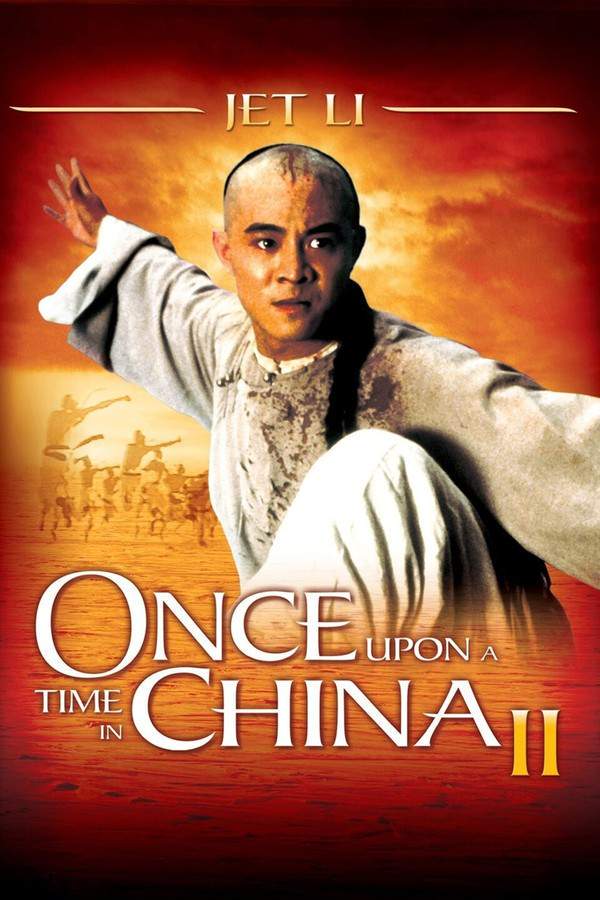
Once Upon a Time in China II (re-release) (2001) movie poster

Plot Summary

Once Upon a Time in China II (re-release) (2001) Plot Summary Explained

Release, runtime and language
2001 · 113 min · Chinese
JustWatch #9,038 22
Directed by
Hark Tsui
Starring
Jet Li

Set in ancient China, a renowned martial arts master and his students find themselves facing a formidable threat. A merciless mercenary emerges, jeopardizing the safety of their school and the reputation of the master's family. He must use his extraordinary skills to protect those he cares about and restore honor to his lineage in this action-packed adventure.

On this page (6)
  1. 1 Where to watch
  2. 2 What happens: full plot
  3. 3 Plot questions answered
  4. 4 Movie threads
  5. 5 Movies like Once Upon a Time in China II (re-release)
  6. 6 Every angle

Where to watch

Where to Watch Once Upon a Time in China II (re-release) (2001)

Where can you watch Once Upon a Time in China II (re-release)? Stream, rent or buy it in the US, including on HBO Max, Shout! Factory TV and Amazon Video: current JustWatch availability with up-to-date prices.

Streaming availability powered by JustWatch

Full plot summary · contains spoilers

What Happens in Once Upon a Time in China II (re-release): Full Plot Summary

The whole story of Once Upon a Time in China II (re-release) (2001) explained, from the opening scene to the final frame: every key event, every twist and what it all adds up to. Read it as a quick recap before the sequel, to check a scene you missed, or to finally understand what really happened.

The story unfolds in China during the tumultuous times of the Qing dynasty in 1895. Our hero, Wong Fei-hung, embarks on a train journey from Foshan to Canton to attend a seminar focused on medicine. He is joined by his romantic interest, 13th Aunt, and his devoted apprentice, Leung Foon. The atmosphere in Canton is anything but peaceful; the streets are filled with unrest as citizens protest the signing of the Treaty of Shimonoseki. Adding to the chaos, the White Lotus Sect, a xenophobic cult, terrorizes Westerners and seeks to obliterate anything perceived as foreign or alien to Chinese traditions.

In a gripping moment, 13th Aunt nearly falls victim to the cult while attempting to capture a photograph of them. Luckily, Wong swoops in just in time to engage in a fierce battle with the cult members, ultimately rescuing her. At the seminar, Wong delivers a lecture on acupuncture, aided by a Western-trained Chinese doctor named Sun Wen, who serves as a translator for a largely non-Chinese audience. However, the seminar is abruptly interrupted as the White Lotus Sect launches an attack, raining flaming arrows onto the building. Wong, along with Leung and Sun, manages a daring escape as they realize that Canton has become too perilous. He resolves to take Leung and 13th Aunt back to Foshan.

Just as they are about to depart, they receive alarming news regarding an assault on the Tongwen Guan, a school dedicated to teaching foreign languages to Chinese children. Without hesitation, they rush to save the kids from the clutches of the White Lotus Sect. Unfortunately, the innkeeper they approach is unwilling to shelter the children, fearing reprisal from the cult. Seeking refuge, Wong visits a local government office only to face off against a military officer, Nap-lan Yun-seut, who tests Wong’s staff skills in a sparring match. Although impressed, Nap-lan declines Wong's request for sheltering the children.

Meanwhile, 13th Aunt and Leung succeed in bringing the children to the British consulate, which is under siege. In this tense environment, Wong reunites with Sun Wen and learns about a revolutionary underground movement plotting to overthrow the Qing government and establish a republic. The situation escalates when Nap-lan arrives with his troops, attempting to infiltrate the consulate under false pretenses. The tension heightens when he secretly assassinates the British consul to further his own agenda.

In a daring twist, Lu Haodong disguises himself as Leung to follow Wong out of the consulate, while Leung takes on the role of Lu to divert Nap-lan's attention. A fateful showdown looms as Wong and Lu prepare to confront Priest Gao, the sect's formidable leader. After an intense battle, Wong emerges victorious, though tragically kills Gao in the process. The trio then sets out to recover a vital book containing the names of revolutionaries from a hidden location but are caught in a deadly ambush by Nap-lan's forces, resulting in Lu suffering a fatal injury.

As Wong grapples with Nap-lan in a desperate fight, Lu bravely urges Leung to burn the book to protect their cause from the grasp of the Qing government. In a poignant moment before succumbing to his wounds, Lu entrusts Leung with the task of delivering a cloth to Sun Wen at the pier. As dawn breaks, Wong and Leung battle against the relentless Nap-lan, ultimately leading to a climactic fight where Wong manages to free himself from Nap-lan's lethal grip and emerges victorious.

With a sense of urgency, Wong and Leung reach the pier, throwing the precious cloth to Sun Wen, who reveals Lu’s revolutionary design of the Blue Sky with a White Sun flag, symbolizing hope and a new beginning for the Republic of China.
Last updated: November 15, 2024 at 18:29

Was this helpful?

Plot questions answered

Once Upon a Time in China II (re-release) Plot Explained: Your Questions Answered

The questions people ask most about Once Upon a Time in China II (re-release) (2001): what happens in the confusing scenes, why the characters do what they do, the twists, hidden details and what the ending means. Each answer contains spoilers.

Q1

Why does Wong Fei-hung decide to return to Canton after initially planning to leave?

Wong decides to return to Canton because he receives news about an assault on the Tongwen Guan, a school teaching foreign languages to Chinese children. Although he had resolved to take Leung and 13th Aunt back to Foshan after the seminar attack, the threat to innocent children compels him to change course and rush to their rescue.

Foreshadowing: Earlier, the group discussed leaving Canton because it had become too dangerous after the White Lotus Sect attacked the seminar.

  • Wong Fei-hung
  • Tongwen Guan
  • children rescue
  • Canton
Q2

What is the Tongwen Guan and why is it important?

The Tongwen Guan is a school in Canton dedicated to teaching foreign languages to Chinese children. It represents the clash between traditional Chinese values and modernization during the Qing dynasty. The White Lotus Sect targets it because they view foreign influence as a threat to Chinese traditions, making the rescue of the children a critical mission for Wong.

Foreshadowing: The film's opening establishes the tension between those seeking modernization and those clinging to traditional Chinese identity.

  • Tongwen Guan
  • foreign language school
  • White Lotus Sect
  • children
Q3

Why does Nap-lan Yun-seut assassinate the British consul?

Nap-lan assassinates the British consul to further his own political agenda during the turmoil. By killing the consul and attempting to infiltrate the British consulate under false pretenses, he creates chaos that serves the Qing government's interests while eliminating a foreign representative who might interfere with their control.

Foreshadowing: Nap-lan's earlier refusal to help shelter the children and his testing of Wong's skills hint at his duplicitous nature.

  • Nap-lan Yun-seut
  • British consul
  • assassination
  • Qing government
Q4

Why does Lu Haodong disguise himself as Leung?

Lu Haodong disguises himself as Leung to follow Wong out of the consulate unnoticed, while Leung impersonates Lu to divert Nap-lan's attention. This risky swap allows Lu to accompany Wong for the confrontation with Priest Gao while creating a distraction that confuses their enemies.

Foreshadowing: The buildup to the showdown with Priest Gao creates tension about how Wong will reach the final confrontation.

  • Lu Haodong
  • Leung Foon
  • disguise
  • Priest Gao confrontation
Q5

Why does Wong Fei-hung kill Priest Gao?

Wong kills Priest Gao during their intense battle because he is forced to in self-defense and to protect others. Though he emerges victorious, killing the sect leader weighs heavily on him, as Gao was a formidable opponent and the victory comes at the cost of taking a life.

Foreshadowing: The earlier attacks by the White Lotus Sect on the seminar and the Tongwen Guan establish the deadly stakes of this confrontation.

  • Wong Fei-hung
  • Priest Gao
  • White Lotus Sect
  • battle
Q6

What is the book that Lu Haodong protects and why does it matter?

The book contains the names of revolutionaries who are plotting to overthrow the Qing government and establish a republic. It is crucial because if captured by the Qing authorities, it would expose and destroy the entire underground revolutionary movement. Lu sacrifices his life to protect this list from falling into Nap-lan's hands.

Foreshadowing: Sun Wen earlier reveals the revolutionary underground movement to Wong at the British consulate.

  • revolutionary book
  • names list
  • Qing government
  • Lu Haodong sacrifice
Q7

Why does Lu Haodong tell Leung to burn the book and deliver the cloth to Sun Wen?

Lu instructs Leung to burn the book to protect the revolutionary names from being seized by the Qing government. He entrusts Leung with a cloth to deliver to Sun Wen at the pier because it contains his revolutionary design for the Blue Sky with a White Sun flag, a symbol representing hope for a new Republic of China.

Foreshadowing: This moment connects to the earlier revelation about the revolutionary movement and Lu's dedication to the cause.

  • Lu Haodong
  • burn book
  • cloth
  • revolutionary flag
Q8

What is the significance of the Blue Sky with a White Sun flag at the end?

The Blue Sky with a White Sun flag represents Lu Haodong's revolutionary design for the future Republic of China. When Sun Wen reveals this flag at the pier, it symbolizes hope and a new beginning beyond the Qing dynasty's oppression. The successful delivery of the cloth bearing this design marks a hopeful conclusion despite the bloodshed and sacrifices made.
Foreshadowing: Sun Wen's earlier discussion about the revolutionary underground movement aiming to overthrow the Qing government sets up this symbolic ending.

  • Blue Sky White Sun flag
  • Republic of China
  • Sun Wen
  • revolutionary symbol
Q9

What does the White Lotus Sect want and why do they attack foreigners?

The White Lotus Sect is a xenophobic cult that seeks to obliterate anything perceived as foreign or alien to Chinese traditions. They terrorize Westerners and those with foreign influence because they view modernization and foreign presence as a threat to traditional Chinese values and identity during the unstable period following the Treaty of Shimonoseki.

Foreshadowing: The film's opening establishes the tense atmosphere with citizens protesting the Treaty of Shimonoseki, showing the widespread anti-foreign sentiment.

  • White Lotus Sect
  • xenophobia
  • foreigners
  • Chinese traditions
Q10

Why does 13th Aunt risk her life to photograph the White Lotus Sect?

13th Aunt attempts to photograph the cult members to capture evidence of their violent acts, likely to expose their crimes or warn others. Her willingness to risk danger for this documentation shows her courage and determination to help the cause, even though she nearly becomes a victim of the sect.

Foreshadowing: This act of bravery establishes 13th Aunt as a proactive character willing to put herself in danger.

  • 13th Aunt
  • photograph
  • White Lotus Sect
  • danger

Movie threads

More Movies Like Once Upon a Time in China II (re-release), by Mood & Story

Curated lists built around what makes Once Upon a Time in China II (re-release) tick: the same mood, the same kind of story or the same emotional payoff. Each list explains why these movies belong together.

Movies about heroic resistance like in Once Upon a Time in China II (re-release)

Stories of legendary heroes defending their people against oppressive forces. Discover movies like 'Once Upon a Time in China II (re-release)' where a legendary hero confronts a formidable threat during a period of intense political unrest. These films feature fast-paced action, a tense atmosphere, and a central conflict between tradition and progress, honoring the struggle for justice in volatile eras.

  • urgent
  • heroic
  • tense
  • action-packed
  • patriotic
  • anxious
  • Tone: tense, heroic, urgent
  • Pacing: fast, action-driven
Why these movies?

The story pattern: The narrative follows a highly skilled protagonist who is reluctantly or willingly drawn into a large-scale conflict that threatens their community or ideals. The journey involves key confrontations that test their abilities and resolve, culminating in a significant but often costly victory that symbolizes hope for the future.

Why they belong together: These movies are grouped by their shared focus on a heroic figure navigating a dangerous historical moment. They blend intense, fast-paced action with themes of honor, sacrifice, and resistance against corrupt systems or invading forces, creating a thrilling and urgent viewing experience.

Action movies with philosophical depth like in Once Upon a Time in China II (re-release)

Action films where the physical fights reflect a deeper ideological conflict. If you liked the clash of ideas in 'Once Upon a Time in China II (re-release)', explore these action-packed films where the fighting represents a deeper conflict. These movies combine thrilling martial arts or combat with thoughtful explorations of culture, progress, and identity, offering more than just physical showdowns.

  • tense
  • thought-provoking
  • ideological
  • action-packed
  • cultural conflict
  • urgent
  • Tone: tense, thought-provoking
  • Pacing: fast, but with thematic pauses
Why these movies?

The story pattern: The plot is structured around a central ideological rift, often personified by the hero and the antagonist. Key action sequences are dramatic culminations of these conflicting philosophies, forcing the protagonist to defend their beliefs physically. The resolution often involves a synthesis or a clear victory for one ideal over the other.

Why they belong together: They are united by their ability to weave substantial thematic questions about society and progress into the framework of a high-intensity action movie. The physical conflict is given greater meaning by its connection to a battle of ideas, appealing to viewers who enjoy action with intellectual substance.

If you liked this

Movies Like Once Upon a Time in China II (re-release)

Similar movies to Once Upon a Time in China II (re-release): the same genre, themes or kind of story. Each one comes with its own plot summary, timeline and ending explained.

Browse all movie summaries

Every angle

Once Upon a Time in China II (re-release) (2001) Explained: Plot, Timeline & Characters

Everything about Once Upon a Time in China II (re-release) in one place: what happens in the plot summary, the timeline in chronological order, the characters and meaning and a spoiler-free summary. What's After the Movie adds the cast, box office and post-credit scenes.

Coming soon on iOS and Android

The Plot Explained Movie Summary App

Plot summaries, endings explained and timelines on your phone. Catch up on any movie in minutes, save your favorites and never miss a twist again.

Be the first to know when we launch. Your email stays private, always.

Learn more about the app