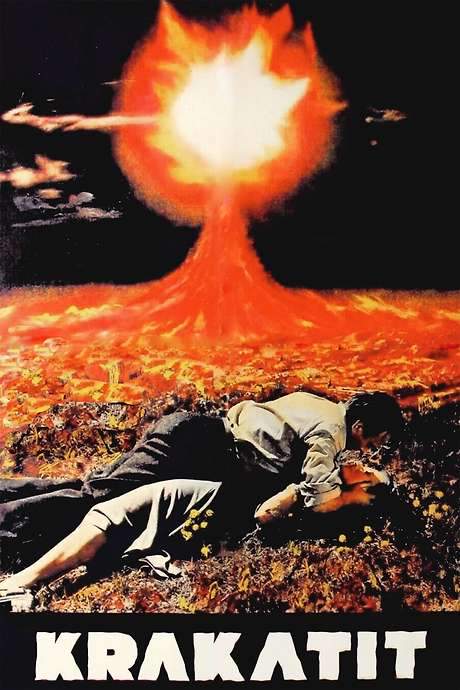
Captain Hector Servadac Jan Tříska works as a cartographer for the French army in a remote colonial outpost along the northern edge of Africa. During a mapping mission, he slips into the sea and is saved by a striking young woman named Angelika Jana Drbohlavová, who is fleeing Spanish captors. The Spaniards are backing the Arabian king in a rising rebellion, and the tension between the three powers hangs heavy over the outpost as they prepare for a looming confrontation. This fragile equilibrium is shattered when a comet nears Earth, touches the planet’s surface, and lifts the entire colony away from its home ground, beginning a surreal voyage through space.
On the moving mass of land assembled by the comet, the French, Spaniards, and Arabians are thrust together as they struggle to hold their ground and their grudges. Hector returns to his commander, who issues a drastic edict: all non-French people must be arrested. This sweeping order traps Spaniards and Angelika’s brothers—who have no inkling of Angelika’s escape—just as those brothers press on to rescue her. Angelika herself is hidden away by shopkeepers within a town that travels with the others, a precarious refuge amid a landscape that has become a roaming world.
As supplies dwindle and the balance of power shifts, the Arabians lose their conventional weapons during the comet’s upheaval. They wait for a new opportunity to arm themselves, while the Spaniards adapt to the new, weaponless reality. The French general, sensing the changing odds, orders Hector to lead a counterattack. The clash is brutal and chaotic, and the Germanic-level threat posed by roaming dinosaurs forces Hector to flee for his life. The encounter with these prehistoric beasts underscores the absurdity and danger of fighting on a comet made of drifting rock and sky.
In the midst of the chaos, Hector encounters Angelika again in the same town, where she has become a vital presence among the shopkeepers, helping them pack metal pots into a carriage for safekeeping. He pleads with her to run away with him, but the moment is thwarted by the din of falling pots startling the horses, which bolt in panic. The din of pots proves oddly effective against the dinosaurs, and the creatures retreat at the noise, a surreal reminder that improvisation can outwit primal threats. Observing this, the French general makes a bold move: he replaces his soldiers’ traditional weapons with pots. The Arabian forces seize on this ingenuity and begin arming themselves with the improvised cookware, turning a seemingly ridiculous tactic into a practical advantage.
As the comet’s voyage continues, a strange calm settles over the mixed force until Mars suddenly appears in the sky, casting a spell of fatalistic peace over both sides. Everyone agrees to halt the fighting, convinced that the looming impact of the comet will spell the end for all of them. Yet the forecast proves false—the comet and Mars miss each other, and the fragile attempt at a peaceful society on the comet falls under new strain. Hector must pivot from peacekeeper to diplomat once more, urging the warring factions to seize the chance for a new, cooperative existence aboard their shared ship of stars.
The dream-like lull is shattered when Angelika’s brothers abduct her again. The Spaniards extend a final gesture of aid by offering their ship to ferry the couple toward safety. A perilous sea voyage ensues, during which the travelers sight what seems to be a coastline only to discover it is a colossal serpent lurking near the vessel. They fend off the threat with the pots they’ve become accustomed to wielding. They also discover an island inhabited by prehistoric creatures, witnessing life’s early spark as it evolves from sea to land. The voyage strengthens their resolve to be together, and Hector and Angelika plan to marry.
But Earth itself reappears in the sky during the wedding ceremony, reigniting old hostilities among the warring factions. The clash between the French, Spaniards, and Arabs surges anew, and Angelika is kidnapped once more by her brothers. Hector gives chase, only to tumble into the sea himself. He awakens on a familiar shore, rescued by his adjutant, who delivers a final, startling revelation: the entire odyssey has been a dream. The closing moment leaves questions lingering about where reality ends and illusion begins, but it carries a clear note of reflection on love, loyalty, and the human impulse to find peace—even in improbable, cosmic circumstances.










-WnKdfG4vURdHlA.jpg)