Plot Explained Spoilers guaranteed!
Plot Explained

Browse by genre

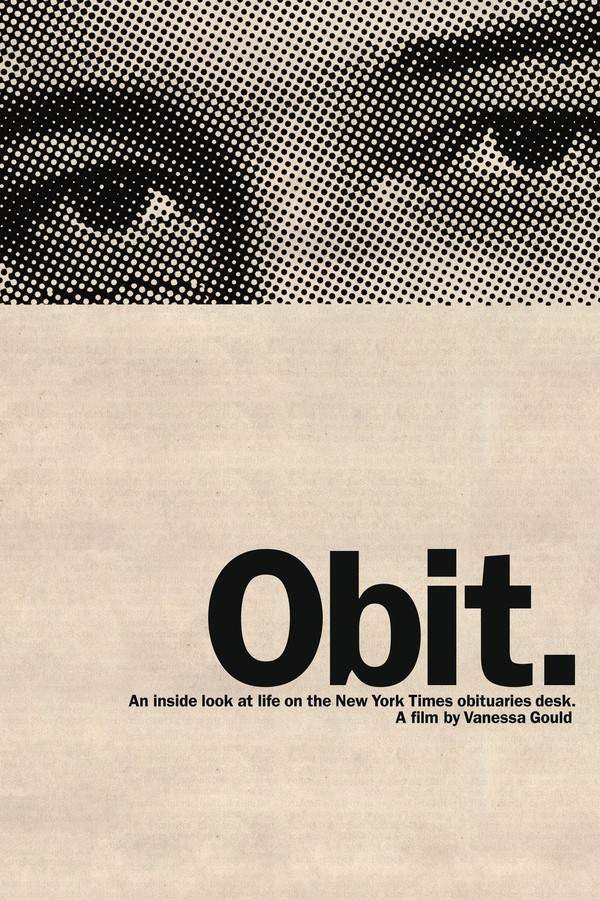
Obit (2017) movie poster

Timeline

Obit (2017) Timeline Explained – Every Event in Order

Release, runtime and language
2017 · 93 min · English
Echo score 78
Loading streaming availability…
Directed by
Vanessa Gould

Within the bustling newsroom of The New York Times, a dedicated team of obituary writers preserves the stories of those about to pass. They meticulously craft compelling narratives, transforming lives into lasting legacies. Each deadline represents a race against time, prompting reflection on memory, mortality, and the enduring power of storytelling. The writers balance journalistic rigor with a touch of artistry, immortalizing individuals and their impact on history.

On this page (6)
  1. 1 Where to watch
  2. 2 Events in order (14)
  3. 3 Timeline questions answered
  4. 4 Movie threads
  5. 5 Movies like Obit
  6. 6 Every angle
Loading streaming availability…

14 events in order · contains spoilers

Obit Timeline: Events in Chronological Order

Every key event of Obit (2017) in order, scene by scene, with when and where it takes place. Use it to untangle flashbacks, time jumps and parallel storylines, to refresh your memory before the sequel or to find the exact scene you are thinking of.

  1. Inside the Obituary Desk

    The documentary opens with an intimate, first-of-its-kind glimpse into the specialized world of newspaper obituaries at The New York Times. It reveals the meticulous process behind documenting a person's life after they have passed away.

    Where
    The New York Times
  2. Writers at Work

    The film follows various writers as they navigate the challenges of researching and composing obituaries. Viewers witness the intellectual struggle involved in condensing an entire lifetime into a fitting written tribute.

    Where
    The New York Times
  3. Editorial Meetings

    The writers attend editorial meetings to discuss and coordinate the obituaries in progress. These gatherings reveal the collaborative decision-making that shapes the newspaper's death notices.

    Where
    The New York Times
  4. Crafting the Perfect Lede

    The writers fight against the clock as they strive to perfect their 'lede,' the opening paragraph of each story. This crucial element must capture the essence of a person's entire life in just a few carefully chosen sentences.

  5. Racing the 6 PM Deadline

    The strict 6 pm print-edition deadline creates relentless daily pressure for the obituary desk. Every tribute must be polished and finalized in time to make it into the next morning's newspaper.

    When
    6 pm
    Where
    The New York Times
  6. Obituary for William P. Wilson

    The process is illustrated through the creation of an obituary for William P. Wilson. Wilson was the man responsible for coaching John F. Kennedy during his legendary and historic televised debate against Richard Nixon.

  7. Remembering Dick Rich

    The documentary also profiles Dick Rich, a visionary who revolutionized the advertising world. His groundbreaking work for Alka-Seltzer transformed the way products were marketed to American audiences.

  8. Archival Clips Bring Lives to Screen

    As the narrative unfolds, the film incorporates numerous other individuals to enrich the experience. Archival film clips are woven in throughout, bringing the subjects' lives vividly to the screen.

  9. The Keeper of the Morgue Files

    An intriguing segment features the lone keeper of the Times' morgue files. The curator shares the unique functions of this vast repository and showcases its most hidden treasures.

    Where
    The New York Times
  10. An Archive Too Massive to Move

    The morgue archive proves far too massive to be relocated to the newspaper's new building. Its sheer scale means decades of stored newspaper history must remain exactly where it is.

    Where
    The New York Times
  11. The 'Advances' in Locked Cabinets

    Among the archive's hidden treasures are the 'advances' — obituaries written for famous figures long before they actually pass away. These pre-written notices are kept securely under lock and key in filing cabinets.

    Where
    The New York Times
  12. Elinor Smith's 1931 Advance

    The Times prepared an advance obituary for pioneer aviator Elinor Smith as early as 1931. The newspaper anticipated that her dangerous career in the air might end in a fatal crash.

    When
    1931
  13. A Stunning Twist of Longevity

    In a stunning twist, Elinor Smith survived for decades after her advance obituary was written. She eventually passed away in 2010 at the remarkable age of 98.

    When
    2010
  14. An Eighty-Year-Old Resource

    When Smith's death finally occurred, the original advance written nearly eighty years prior proved to be a vital resource. The obituary desk relied on this aged document to craft her long-delayed final tribute.

    Where
    The New York Times

Last updated: October 18, 2026 at 16:59

Was this helpful?

Timeline questions answered

Obit Timeline Explained: Your Questions Answered

When does it happen, and why in that order? The questions people ask about the chronology of Obit (2017): time jumps, flashbacks, cause and effect between scenes and the correct order of events, each answered with spoilers.

Q1

Why does The New York Times write obituaries for people who are still alive?

The newspaper keeps pre-written obituaries, known as "advances," for famous figures long before they pass away. This preparation ensures that when a major death occurs, the obituary desk can publish a detailed, thoroughly researched tribute almost immediately rather than scrambling to write one from scratch. These advance obituaries are stored securely in locked filing cabinets within the Times' archive.

  • advance obituaries
  • pre-written obituaries
  • new york times obits
  • obituary desk
Q2

How did the advance obituary written for Elinor Smith in 1931 end up being useful?

Elinor Smith was a pioneering aviator, and the Times prepared an advance obituary for her in 1931 because her dangerous flying career made an early death seem likely. In a remarkable twist of longevity, she survived for nearly eighty more years and died in 2010 at the age of 98. When her death finally came, the obituary desk relied on that decades-old advance as a foundational resource to craft her actual tribute.

  • elinor smith
  • advance obituary
  • pioneer aviator
  • new york times morgue
Q3

Who was William P. Wilson and why was his obituary featured in the documentary?

William P. Wilson was the man who coached John F. Kennedy for his televised debate against Richard Nixon. His obituary was used in Obit as an illustrative example of the meticulous process the obituary desk follows, showing how writers research a subject's defining achievements and craft a compelling lede. The segment highlights how an obituary must distill a person's entire legacy into a tight, memorable narrative.

  • william p wilson
  • jfk debate coach
  • kennedy nixon debate
  • obituary examples
Q4

Who was Dick Rich and why did the obituary desk profile him?

Dick Rich was a visionary in the advertising world whose groundbreaking work for Alka-Seltzer transformed the way products were marketed to American audiences. The documentary includes his obituary as another example of how the obituary desk profiles subjects whose influence shaped everyday American culture, not just political or military figures.

  • dick rich
  • alka-seltzer
  • advertising obituary
  • obituary subjects
Q5

What is a lede and why is it so important in obituary writing?

A lede is the opening paragraph of a news story, and in obituary writing it carries particular weight because it must capture the essence of an entire life in just a few sentences. The documentary shows writers laboring over this opening hook because it determines whether readers will be drawn into the rest of the tribute. A strong lede distills who the person was and why they mattered, setting the tone for the entire obituary.

  • lede
  • obituary writing
  • opening paragraph
  • news writing craft
Q6

Why is the 6 PM deadline so important for the obituary desk?

The 6 PM deadline is the print-edition cutoff at The New York Times, meaning every obituary must be finalized by that time to appear in the next morning's newspaper. Because obituaries are time-sensitive and often need to be published the same day a death is announced, the deadline creates relentless daily pressure on writers to complete their research and polish their prose before the window closes.

  • 6pm deadline
  • print edition
  • new york times deadline
  • obituary pressure
Q7

What are the morgue files at The New York Times?

The morgue files are the newspaper's vast physical archive of clippings, notes, and research material, accumulated over decades of reporting. In the documentary, the lone keeper of this archive explains how it functions as a research repository that writers can draw on when assembling obituaries, especially for figures whose lives span many decades and require historical context.

  • morgue files
  • new york times archive
  • newspaper clippings
  • obituary research
Q8

Why couldn't The New York Times move its obituary archive to the new building?

The morgue archive is far too massive to be physically relocated, holding decades of accumulated newspaper history in the form of clippings and files. Rather than attempting a costly and impractical move, the newspaper left the archive where it was, and the curator continues to maintain and draw from it as a research resource for the obituary desk.

  • morgue archive
  • newspaper archive relocation
  • times archive size
Q9

Why are advance obituaries kept in locked filing cabinets?

Advance obituaries are kept under lock and key because they reveal which living figures the newspaper has deemed significant enough to prepare for in advance, and also because they contain sensitive biographical information that has not been published. Locking them away prevents premature leaks that could upset the subjects, their families, or readers who would otherwise learn about the newspaper's private preparations.

  • advance obituary security
  • locked filing cabinets
  • obituary secrecy
Q10

How do obituary writers research and write a life story so quickly?

Obituary writers combine their own reporting with extensive use of the morgue files, where decades of prior Times coverage on a subject is already organized and indexed. For famous figures who may have lived for a century, the archive contains historical clippings that serve as ready-made research, allowing writers to condense a lifetime into a coherent tribute under tight deadline pressure.

  • obituary research
  • how obituaries are written
  • morgue research
  • deadline reporting
Q11

How old was Elinor Smith when she finally died?

Elinor Smith died in 2010 at the age of 98, nearly eighty years after the Times first prepared an advance obituary in 1931. Her remarkable longevity turned what had been a precaution into a historical curiosity, since the document outlived the era of aviation it was originally written about and remained useful to a completely different generation of obituary writers.

  • elinor smith age
  • elinor smith death
  • pioneer aviator longevity
Q12

What makes Obit different from other documentaries about journalism?

Obit is described as a first-of-its-kind documentary because it focuses exclusively on the obituary desk at The New York Times, a corner of journalism that is rarely shown on screen. Rather than chasing breaking news, the film follows writers engaged in a slower, reflective craft of memorializing lives, weaving in archival footage and historical examples to show how death notices double as works of historical preservation.

  • obit documentary
  • journalism documentary
  • obituary film
  • new york times film

Movie threads

More Movies Like Obit, by Mood & Story

Curated lists built around what makes Obit tick: the same mood, the same kind of story or the same emotional payoff. Each list explains why these movies belong together.

Movies about mortality and memory like Obit

Reflective stories that honor lives, memory, and the quiet weight of saying goodbye. Discover contemplative documentaries and dramas like Obit that explore death, obituary writing, memory, and lasting legacy. These gentle films treat mortality with quiet reverence, weaving archival storytelling with reflective pacing for viewers seeking meditative stories about life, loss, and the craft of remembrance.

  • reflective
  • melancholic
  • meditative
  • memento mori
  • reverent
  • nostalgic
  • Tone: melancholic, reflective
  • Pacing: steady, meditative
Why these movies?

The story pattern: Stories in this thread tend to unfold through observation rather than confrontation, often following someone whose job or calling places them in regular contact with the dying or the dead. Narratives drift between present-day process and recovered history, using photographs, files, and recollections to resurrect the recently departed. Conflicts are internal, often philosophical, centered on how to honor a life with words. Endings lean bittersweet, affirming that well-lived lives echo forward even as the final page turns.

Why they belong together: These films share a melancholic but dignified tone, a low-key intensity, and a pacing that respects the gravity of its subject without sensationalizing grief. They tend to use archival material, oral history, and quiet professional rituals as their emotional engine, and they privilege craft and contemplation over plot twists or trauma. The result is a viewing experience that feels reverent, reflective, and ultimately consoling.
Process-driven documentary portraits like Obit

Intimate documentaries that follow passionate professionals perfecting their meticulous craft. Find observational documentaries similar to Obit that follow dedicated professionals at work, from journalism and obituary writing to other meticulous crafts. If you liked Obit's steady look at The New York Times newsroom, you'll enjoy these intimate, workplace-driven documentaries about passionate makers, deadline pressure, and the artistry behind everyday professions.

  • behind-the-scenes
  • craft
  • process
  • observational
  • intimate
  • methodical
  • Tone: reverent, contemplative
  • Pacing: steady, process-driven
Why these movies?

The story pattern: Stories in this thread are typically structured around the rhythms of a job rather than a three-act arc. Viewers are invited into editorial meetings, workrooms, or studio spaces, where the central tension is often a deadline, a difficult client, or the challenge of finishing a piece to standard. Characters are defined less by personal drama than by their relationship to their work, and the narrative arc is really a craft arc: incomplete project, refinement, finished piece. Revelations come through small professional triumphs, not personal epiphanies.

Why they belong together: These documentaries share a steady pace, a straightforward structure, and an almost fly-on-the-wall intimacy that lets the work speak for itself. They trade melodrama for mastery, building emotional weight through repetition, precision, and the quiet humanity of people who care deeply about what they make. The cumulative effect is calming, absorbing, and oddly inspiring.

If you liked this

Movies Like Obit

Similar movies to Obit: the same genre, themes or kind of story. Each one comes with its own plot summary, timeline and ending explained.

Browse all movie summaries

Every angle

Obit (2017) Explained: Plot, Timeline & Characters

Everything about Obit in one place: what happens in the plot summary, the timeline in chronological order, the characters and meaning and a spoiler-free summary. What's After the Movie adds the cast, box office and post-credit scenes.

Coming soon on iOS and Android

The Plot Explained Movie Summary App

Plot summaries, endings explained and timelines on your phone. Catch up on any movie in minutes, save your favorites and never miss a twist again.

Be the first to know when we launch. Your email stays private, always.

Learn more about the app