Plot Explained Spoilers guaranteed!
Plot Explained

Browse by genre

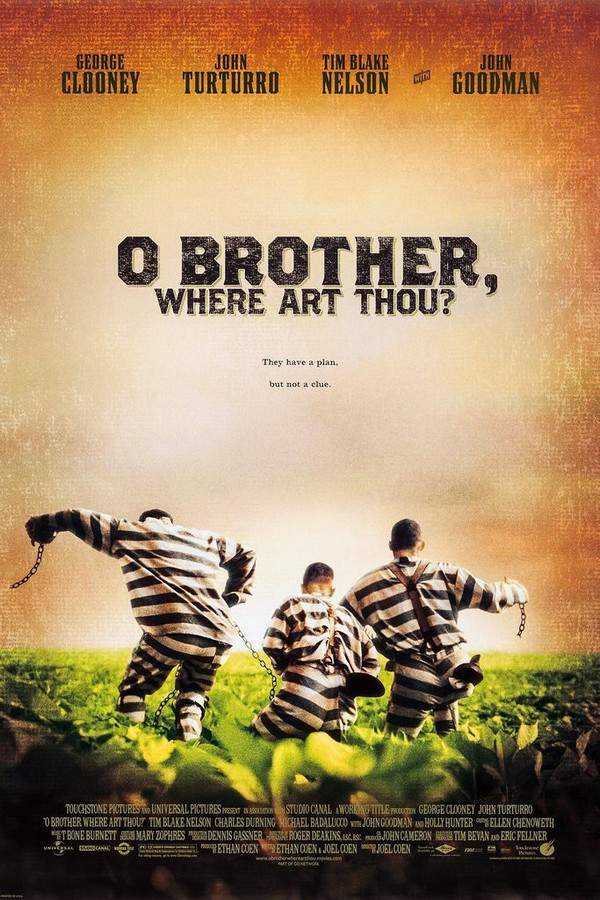
O Brother, Where Art Thou? (2000) movie poster

Plot Summary

O Brother, Where Art Thou? (2000) Plot Summary Explained

Release, runtime and language
2000 · 106 min · English
JustWatch #213 17
Directed by
Ethan Coen, Joel Coen
Starring
John Turturro, George Clooney, Tim Blake Nelson

During the Depression, three escaped convicts, Ulysses, Delmar, and Pete, find themselves on a chaotic journey through Mississippi. Driven by the hope of finding a hidden treasure, the unlikely trio faces numerous obstacles and encounters a cast of eccentric locals. Their pursuit of freedom and fortune leads to a series of misadventures and humorous situations as they navigate the challenges of the era.

On this page (7)
  1. 1 Where to watch
  2. 2 What happens: full plot
  3. 3 Plot questions answered
  4. 4 The book behind the movie
  5. 5 Movie threads
  6. 6 Movies like O Brother, Where Art Thou?
  7. 7 Every angle

Where to watch

Where to Watch O Brother, Where Art Thou? (2000)

Where can you watch O Brother, Where Art Thou?? Stream, rent or buy it in the US, including on Amazon Prime Video, Amazon Video and Apple TV Store: current JustWatch availability with up-to-date prices.

Streaming availability powered by JustWatch

Full plot summary · contains spoilers

What Happens in O Brother, Where Art Thou?: Full Plot Summary

The whole story of O Brother, Where Art Thou? (2000) explained, from the opening scene to the final frame: every key event, every twist and what it all adds up to. Read it as a quick recap before the sequel, to check a scene you missed, or to finally understand what really happened.

Ulysses Everett McGill, portrayed by George Clooney, is a charming and quick-talking convict who manages to escape from a chain gang in rural Mississippi during the tumultuous times of the Great Depression in 1937. He is shackled to two fellow prisoners: the dim-witted Delmar, played by Tim Blake Nelson, and the fiery Pete, depicted by John Turturro. Together, they embark on a quest driven by Everett's claim that he has hidden away a staggering $1.2 million after a botched armored car heist, and he promises to share the riches with his companions.

Their journey begins unexpectedly when they hitch a ride from a venerable blind man on a railway handcar, who cryptically predicts that they will find treasure, although "it may not be the one they seek." Stopping by Pete's cousin’s home, Washington Hogwallop, they receive a warm welcome until the authorities, led by the part-blind Sheriff Cooley (Daniel Von Bargen), arrive following a tip-off. The trio narrowly escapes as their temporary refuge goes up in flames, thanks to the courageous intervention of Hogwallop’s spirited young son, who drives them to safety in a car.

As they continue their adventurous trek, they stumble upon a religious baptism taking place in a river, with Pete and Delmar eagerly joining in the ceremony, much to the reluctance of Everett. Adding to their eclectic journey is a young black musician named Tommy Johnson, played by Chris Thomas King, who intriguingly mentions selling his soul to the devil for his unmatched musical abilities. This twist leads the group to a local radio station, where they perform "Man of Constant Sorrow" as the 'Soggy Bottom Boys,' earning them an unexpected sum of $40 while remaining anonymous.

But their newfound success comes with unforeseen consequences. Sheriff Cooley's relentless pursuit brings trouble to their camp, forcing them to split from Tommy. When they encounter notorious robber George 'Babyface' Nelson (Michael Badalucco), their trajectory shifts as they find themselves partaking in another heist. Following an enchanting, yet risky, encounter with three mesmerizing sirens by the river, Pete mysteriously disappears, leading Delmar to believe that the bewitching women have transformed him into a toad, discovered in Pete's discarded clothing.

Amidst further frivolity, they meet Big Dan Teague (John Goodman), a one-eyed Bible salesman who violently exploits their naivety, stealing their meager possessions. Down but not out, Everett and Delmar make their way to Everett's hometown to reconnect with his estranged wife, Penny (Holly Hunter), only to discover that she is engaged to another man, leaving him heartbroken.

Their efforts lead to an unexpected reunion with Pete, who admits he was forced to betray them after suffering under the relentless Sheriff Cooley's threats. Tensions rise when their path crosses with a hate-filled Ku Klux Klan rally, where they yet again disguise themselves to help their friend Tommy, ultimately leading to a chaotic confrontation that leaves Big Dan in peril.

In a surprising twist of fate during a political fundraiser, they perform once more, drawing cheers from the audience who recognizes the elusive Soggy Bottom Boys. However, their raucous celebration is interrupted by Homer Stokes, who tries to unveil their identities, but is swiftly 'ridden out on a rail' by the outraged townsfolk. This moment marks a significant turnaround for the group, as they receive an official pardon from the incumbent governor, Pappy O'Daniel.

As their journey nears its end, Penny's longing for the original wedding ring, which now rests at the bottom of a flooded valley, sets up a poignant reunion between her and Everett. Their adventure culminates dramatically as they barely escape an ambush by Sheriff Cooley’s men when the valley floods, allowing them to resurface and reclaim what they thought lost—both the ring and their sense of camaraderie.

With the compelling hymn "Angel Band" resonating in the air, Everett is left reflecting on the unpredictability and the twists of fate, standing by the side of his beloved Penny and their daughters as they cross paths again with the wise handcar operator who once predicted their journey.
Last updated: November 08, 2024 at 00:59

Was this helpful?

Plot questions answered

O Brother, Where Art Thou? Plot Explained: Your Questions Answered

The questions people ask most about O Brother, Where Art Thou? (2000): what happens in the confusing scenes, why the characters do what they do, the twists, hidden details and what the ending means. Each answer contains spoilers.

Q1

Why does Everett claim to have hidden $1.2 million when he really doesn't?

Everett uses the lie about hidden treasure to motivate Delmar and Pete to help him escape and stay together. He knows they're unlikely to follow him on a simple quest for freedom, but the promise of riches keeps them committed to the journey. The lie also reflects Everett's character as a charming manipulator who uses storytelling to get what he wants.

Foreshadowing: Early in the film, the blind man predicts they'll find treasure 'but it may not be the one they seek,' hinting that Everett's fabricated fortune isn't the real prize.

  • everett
  • treasure
  • money
  • motivation
  • escape
Q2

What really happened to Pete after the sirens?

Pete doesn't actually transform into a toad, he abandons the group. After the encounter with the three seductive women by the river, Pete chooses to leave voluntarily, taking nothing but his clothes. Delmar invents the toad story to cope with the confusing situation and Pete's sudden disappearance.

Foreshadowing: The sirens scene follows the pattern of mythological temptresses, fitting the film's Odyssey-inspired structure where such encounters lead to crew members abandoning the journey.
  • pete
  • sirens
  • disappearance
  • toad
  • river
Q3

Why does Pete betray Everett and Delmar to Sheriff Cooley?

Pete betrays his friends not out of malice but out of fear. After being separated from the group, Sheriff Cooley captures and tortures Pete, threatening to kill him unless he reveals the others' whereabouts. Pete's confession under duress reflects the extreme pressure and violence Cooley uses to maintain control over the region.

Foreshadowing: Earlier, Cooley's relentless pursuit and burning of Hogwallop's house establish him as a ruthless, unstoppable antagonist who uses fear to get what he wants.

  • pete
  • betrayal
  • sheriff cooley
  • torture
  • threats
Q4

How do the Soggy Bottom Boys get pardoned by the governor?

They earn their pardon by accident. During a political fundraiser, they perform as the Soggy Bottom Boys again and become instant celebrities when the crowd recognizes them from the radio. The incensed Homer Stokes tries to expose them as criminals, but the angry townspeople 'ride him out on a rail' for ruining the celebration. Impressed by their popularity, Governor Pappy O'Daniel pardons them on the spot to score political points.

Foreshadowing: Their earlier radio performance 'Man of Constant Sorrow' planted the seeds for this unexpected redemption.

  • pardon
  • governor
  • soggy bottom boys
  • performance
  • politics
Q5

Why is Penny engaged to another man when Everett returns?

Penny moved on because Everett abandoned her years ago to serve time, and she believed he'd been killed in a chain gang accident. During his absence, she met and fell in love with Vernon, a well-meaning man who provides stability for her and Everett's daughters. Her engagement represents the consequences of Everett's criminal lifestyle and prolonged absence.

Foreshadowing: Everett's obsession with his own schemes over his family responsibilities hints at why Penny would seek a more reliable partner.

  • penny
  • everett
  • marriage
  • engagement
  • abandonment
Q6

What happens to the hidden treasure at the end?

The treasure is lost forever when the valley floods. After recovering the treasure from where Everett buried it, Everett and his companions barely escape Sheriff Cooley's ambush as the waters rise rapidly. The flood sweeps away the fortune, leaving them with nothing but the wedding ring Penny wanted. This aligns with the blind man's earlier prophecy that they'd find treasure 'but it may not be the one they seek.'

Foreshadowing: The blind man's prediction about the treasure not being the one they seek foreshadows this loss, suggesting the real reward was their journey and friendship.

  • treasure
  • flood
  • valley
  • lost
  • ring
Q7

Why do they infiltrate the KKK rally to help Tommy?

They risk their lives at the KKK rally to save Tommy, who they fear will be harmed or killed. Disguising themselves in robes, they infiltrate the rally and cause a chaotic distraction that allows Tommy to escape. Despite their own troubles, they risk everything for their friend, showing loyalty that defines their unlikely friendship.

Foreshadowing: Earlier, Tommy explained he sold his soul to the devil for his musical talent, creating an emotional connection that motivates the group to help him.

  • kkk
  • tommy
  • rescue
  • rally
  • loyalty
Q8

Why does Delmar think Pete turned into a toad?

Delmar genuinely believes the sirens transformed Pete into a toad because he lacks the intellectual capacity to understand what actually happened. When Pete's clothes are found empty, Delmar fills the void with magical thinking, the same whimsical, superstitious logic that drives much of the film's Southern Gothic atmosphere.

Foreshadowing: The film's loose adaptation of The Odyssey includes various mythological encounters, making Delmar's interpretation oddly fitting within the story's fantasy-like tone.

  • delmar
  • pete
  • toad
  • sirens
  • superstition
Q9

Why does Everett refuse to get baptized like Pete and Delmar?

Everett sees himself as intellectually superior and too pragmatic to embrace religious conversion. He's a con man who relies on his wits rather than faith, so participating in what he views as a naive religious ritual doesn't align with his self-image. His refusal also highlights his isolation from the simpler, more superstitious outlooks of his companions.

Foreshadowing: Throughout the journey, Everett consistently separates himself from the folk beliefs and superstitions that influence Pete and Delmar's decisions.

  • everett
  • baptism
  • religion
  • character
  • motivation
Q10

What does the blind man's prophecy about treasure mean?

The blind man's cryptic prediction that they'll find treasure 'but it may not be the one they seek' proves accurate, they discover Everett's buried cash, but lose it all to the flood. The true treasure they find is their freedom, friendship, and Everett's reconciliation with Penny. The prophecy adds a mythological layer, reinforcing the film's Odyssey-inspired structure.

Foreshadowing: This prophecy appears early and sets up the film's central theme about the difference between what we seek and what we actually need.

  • blind man
  • prophecy
  • treasure
  • fate
  • odyssey
Q11

Why does Big Dan Teague rob and beat Everett and Delmar?

Big Dan Teague exploits the travelers' trust and naivety as a predatory con artist. Posing as a friendly Bible salesman, he lures them in, then reveals his violent side by beating them and taking their possessions. His character represents the dangers of trusting strangers on the road during the Depression, when desperation led many to prey on others.

Foreshadowing: Earlier encounters with helpful and harmful strangers establish the lawless atmosphere of the era.

  • big dan teague
  • robbery
  • con artist
  • bible salesman
  • violence
Q12

Why does Sheriff Cooley never catch the trio despite his pursuit?

Sheriff Cooley's failure to catch them stems from a combination of bad luck, their constant movement, and the absurd nature of the story. He's outwitted at every turn, sometimes by coincidence, sometimes by the trio's cunning. His pursuit represents the relentless but ultimately futile force of authority chasing the film's free-spirited characters.

Foreshadowing: Cooley's initial scene establishes him as terrifyingly competent, making his repeated failures more surprising.

  • sheriff cooley
  • pursuit
  • law
  • escape
  • humor

Movie threads

More Movies Like O Brother, Where Art Thou?, by Mood & Story

Curated lists built around what makes O Brother, Where Art Thou? tick: the same mood, the same kind of story or the same emotional payoff. Each list explains why these movies belong together.

Folksy road trip movies like O Brother, Where Art Thou?

Quirky characters and misadventures on a journey through a distinct cultural landscape. If you enjoyed the quirky journey through the American South in O Brother, Where Art Thou?, you'll find similar charm in these movies. This list features road trip comedies and adventures filled with witty dialogue, eccentric characters, and a strong sense of regional folk culture, perfect for viewers seeking movies like this one.

  • quirky
  • folksy
  • witty
  • hopeful
  • chaotic
  • atmospheric
  • Tone: whimsical, humorous, folksy
  • Pacing: variable, episodic
Why these movies?

The story pattern: Stories in this thread follow an episodic quest structure, often with a nominal goal like finding treasure or reaching a destination. The narrative is driven by the characters' interactions with the strange and wonderful world they traverse, rather than a tightly-woven plot, leading to a series of self-contained, humorous vignettes.

Why they belong together: These movies are grouped by their shared whimsical tone, focus on regional Americana, and a narrative built around a humorous, character-driven journey. They balance lighthearted chaos with a folksy, almost mythical atmosphere, creating a distinct and charming viewing experience.

Bittersweet redemption stories like O Brother, Where Art Thou?

Characters seeking a second chance find that the journey itself is the real reward. Fans of the trio's quest for freedom and treasure in O Brother, Where Art Thou? will appreciate these movies about redemption. This list features character-driven stories where the journey leads to a bittersweet but ultimately meaningful conclusion, highlighting themes of friendship and personal growth for viewers looking for similar films.

  • hopeful
  • reflective
  • bittersweet
  • redemptive
  • character-driven
  • comedic-drama
  • Tone: bittersweet, hopeful, reflective
  • Pacing: steady, character-driven
Why these movies?

The story pattern: The narrative pattern involves characters escaping a troubled past and embarking on a physical and metaphorical journey. They face challenges that test their bonds and morals. The climax often involves a pyrrhic victory or a shift in priorities, where the original goal is lost but a more valuable, intangible reward—like friendship or self-respect—is gained.

Why they belong together: This thread connects films that blend comedy and drama to explore themes of redemption. They share a medium emotional weight, a mix of peril and humor, and a conclusive yet bittersweet ending feel, creating a satisfying emotional arc that is hopeful but grounded in reality.

If you liked this

Movies Like O Brother, Where Art Thou?

Similar movies to O Brother, Where Art Thou?: the same genre, themes or kind of story. Each one comes with its own plot summary, timeline and ending explained.

Browse all movie summaries

Every angle

O Brother, Where Art Thou? (2000) Explained: Plot, Timeline & Characters

Everything about O Brother, Where Art Thou? in one place: what happens in the plot summary, the timeline in chronological order, the characters and meaning and a spoiler-free summary. What's After the Movie adds the cast, box office and post-credit scenes.

Coming soon on iOS and Android

The Plot Explained Movie Summary App

Plot summaries, endings explained and timelines on your phone. Catch up on any movie in minutes, save your favorites and never miss a twist again.

Be the first to know when we launch. Your email stays private, always.

Learn more about the app