








Plot Explained Spoilers guaranteed!
Plot Explained

Browse by genre

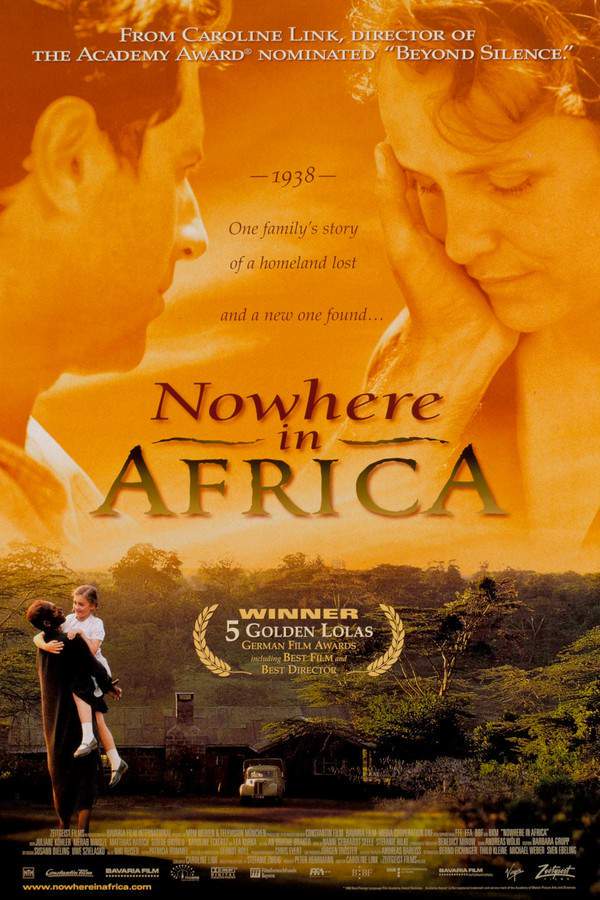
Nowhere in Africa (2003) movie poster

Timeline

Nowhere in Africa (2003) Timeline Explained – Every Event in Order

Release, runtime and language
2003 · 141 min · German
JustWatch #33,816 4
Directed by
Caroline Link
Starring
Merab Ninidze, Juliane Köhler, Matthias Habich

As war threatens Europe, Jewish lawyer Walter Redlich moves his family from Germany to a farm in Kenya, hoping for safety and a fresh start. While his young daughter Regina embraces the freedom and beauty of their new surroundings, his wife Jettel struggles to adapt to the challenges of rural life. Forced to confront difficult circumstances and relocate again, the family grapples with their shifting identities and the emotional toll of displacement against a backdrop of global conflict.

On this page (6)
  1. 1 Where to watch
  2. 2 Events in order (15)
  3. 3 Timeline questions answered
  4. 4 Movie threads
  5. 5 Movies like Nowhere in Africa
  6. 6 Every angle

Where to watch

Where to Watch Nowhere in Africa (2003)

Where can you watch Nowhere in Africa? Stream, rent or buy it in the US, including on Chai Flicks, Kino Film Collection and Hoopla: current JustWatch availability with up-to-date prices.

Streaming availability powered by JustWatch

15 events in order · contains spoilers

Nowhere in Africa Timeline: Events in Chronological Order

Every key event of Nowhere in Africa (2003) in order, scene by scene, with when and where it takes place. Use it to untangle flashbacks, time jumps and parallel storylines, to refresh your memory before the sequel or to find the exact scene you are thinking of.

  1. A Boy in Africa

    The film opens in Africa with a young boy navigating the vast plains, carrying a note of immense significance. This moment sets the stage for the intertwined fates of the characters as the story unfolds.

    Where
    Africa
  2. Threat of War in Germany

    As World War II looms closer, a once-esteemed Jewish family begins to crumble under the pressure of the Nazi regime in Germany. The imminent threat forces them to reconsider their safety and future.

    Where
    Germany
  3. Regina and Jettel's Life

    In a frosty glade in Germany, we meet Regina and her mother Jettel, who live a life of comfort despite the looming dangers. Their world is defined by fear and denial as they await communication from Jettel's husband.

    Where
    Germany
  4. Walter's Letter from Kenya

    Walter, now in Kenya, sends an urgent letter urging Regina and Jettel to join him. He highlights the dangers they face in Germany and provides practical advice for their relocation, emphasizing the need for essential supplies.

    Where
    Kenya
  5. Walter's Malaria and Recovery

    In Kenya, Walter suffers from malaria, but thanks to the herbal remedies suggested by their cook, Ouwour, he miraculously recovers. This moment marks a significant turning point for Walter's outlook on life in Africa.

    Where
    Kenya
  6. Arrival in Rongai

    Half a year later, Regina and Jettel arrive in Rongai, Kenya, to reunite with Walter. Regina quickly adapts to her new environment and begins forging friendships, while Jettel struggles to accept this new reality.

    Where
    Rongai, Kenya
  7. Jettel's Conflict with Walter

    Tensions escalate between Walter and Jettel as they argue over essential supplies and the challenges they face in adjusting to life in Africa. Jettel's reluctance to embrace their new home creates rifts between them.

    Where
    Kenya
  8. Historical Distress on November 10, 1938

    On November 10, 1938, Walter writes a desperate letter to his father, emphasizing the critical need for relocation to Kenya amid the rising danger from the Nazi regime in Germany. His words reflect a profound sense of urgency.

    When
    November 10, 1938
  9. Internment Camps During War

    As war breaks out between British and Nazi Germany, Walter and his family face internment in separate camps. Each grapples with their new circumstances—Walter's loneliness and Jettel's adaptation to camp life.

    Where
    British territories
  10. Jettel's Proposal and Struggles

    During their internment, Jettel receives a troubling proposal from a British soldier that challenges her loyalty. This dilemma reflects the hardships and desperation faced by Jewish families during the war.

    Where
    Internment Camp
  11. Life After Release

    Following their release, the family relocates to a new farm where Regina flourishes. However, the tension between Walter and Jettel continues to complicate their relationships as they adjust to their newfound freedom.

    Where
    New Farm
  12. Devastating News from Germany

    On October 2, 1940, Walter receives news that emigration is no longer possible. The weight of this information amplifies his disillusionment, forcing him to confront the harsh realities of their situation.

    When
    October 2, 1940
  13. Community Support and Locust Invasion

    As a sudden locust invasion threatens their crops, the family unites with their community to fight back. This collective effort signifies a turning point in Walter's commitment to his family and their future.

    Where
    Kenya
  14. Birth of a New Life

    As the family prepares for their return to Germany, the prospect of a new child brings complexities to their relationships. Regina stands as a mediator, symbolizing the blending of their cultures amid conflict.

  15. Reflecting on Their Journey

    The film culminates in reflections on the family's struggles and transformations through war. It highlights the profound impact of their experiences on their identities and relationships as they navigate a new life.

Last updated: November 04, 2024 at 01:00

Was this helpful?

Timeline questions answered

Nowhere in Africa Timeline Explained: Your Questions Answered

When does it happen, and why in that order? The questions people ask about the chronology of Nowhere in Africa (2003): time jumps, flashbacks, cause and effect between scenes and the correct order of events, each answered with spoilers.

Q1

Why did Walter give his judicial robes to Ouwour after recovering from malaria?

Walter gave his judicial robes to Ouwour as a gesture of gratitude for saving his life with herbal remedies after conventional Quinine treatment had failed. He symbolically declared that he no longer needed the robe because he was a lawyer in his first life and must now 'think with his brawn, not with his brain' in their new life in Kenya. This moment represents Walter's psychological shift from his former identity as a German lawyer to accepting his new reality as a farmer in Africa.

Foreshadowing: Earlier, Walter's profession as a lawyer was established, making this departure from that identity more poignant.

  • walter
  • ouwwour
  • judicial robes
  • malaria
  • kenya
Q2

Why was the family separated into different internment camps during the war?

When war erupted between Britain and Nazi Germany, all Germans in British territories, including Jewish refugees, were interned as enemy aliens. Walter was sent to one camp, while Jettel and Regina were sent to another. This separation was standard British wartime policy, splitting families regardless of their refugee status or fleeing from Nazi persecution. The family was only reunited after the Jewish women in the camps advocated for their husbands' release.

  • internment camps
  • british
  • world war 2
  • separation
  • walter
  • jettel
Q3

What was the proposal Jettel received from the British soldier during internment?

During their internment, a British soldier proposed to Jettel that she engage in a relationship with him in exchange for better living conditions and stability for her family. Jettel reluctantly accepted this proposal, highlighting the desperate circumstances and moral compromises faced by Jewish refugees during the war. This decision created tension in her marriage and contributed to the strain between her and Walter after their release.

  • british soldier
  • jettel
  • proposal
  • internment camp
  • desperation
Q4

Why couldn't Walter's father Max join the family in Kenya?

Walter's father Max chose not to accompany the family to Kenya because he believed the situation in Germany would improve within a year or two. On October 2, 1940, Walter received devastating news that emigration was no longer possible, likely due to the tightening of Nazi restrictions and the outbreak of full-scale war. Tragically, Max and other relatives were later sent to concentration camps in Poland, where they perished.

Foreshadowing: Earlier in the film, Max expresses his reluctance to leave, believing the situation would be temporary.

  • max
  • father
  • emigration
  • kenya
  • concentration camp
  • poland
Q5

Why did Regina adapt to Africa so quickly while Jettel struggled?

Regina adapted quickly because she was young and more open to new experiences, allowing her to form friendships with local children and embrace the freedom of her surroundings. In contrast, Jettel clung to her privileged German socialite identity and viewed Kenya as temporary, making it harder for her to accept the realities of rural life. Regina's youth allowed her to shed her fears and discover an adventurous spirit, while Jett's fixed identity created resistance to change.

  • regina
  • jettel
  • adaptation
  • independence
  • growth
  • kenya
Q6

What changed in Jettel's perception of Ouwour over time?

Jettel initially viewed Ouwour as merely a servant and looked down on him, maintaining her condescending attitude from her former privileged life. Over time, through observing his intelligence, kindness, and the critical role he played in Walter's recovery, Jettel came to see Ouwour as a man of depth and worth. This change reflected her broader transformation from a prejudiced, privileged socialite to someone who could recognize humanity beyond social hierarchies.

  • jettel
  • ouwwour
  • prejudice
  • respect
  • cook
  • transformation
Q7

What was the significance of the locust invasion in the story?

The locust invasion threatened the family's crops and livelihood, forcing them to unite with their local community to protect their harvest. This collective effort became a turning point for Walter, who had been planning to return to Germany. The shared struggle and success against the crisis renewed his commitment to his family and to staying in Africa, reaffirming his decision to remain with Jettel and Regina rather than leaving.

  • locust invasion
  • crops
  • community
  • walter
  • turning point
Q8

Why did the family decide to return to Germany after the war?

Despite building a life in Kenya and finding community, the family felt a pull toward returning to Germany after World War II ended. Walter had always maintained hope of returning home, and the birth of a new child symbolized new beginnings. However, the decision was complex, Regina had become a bridge between both cultures, and the family grappled with the blurred lines between love for their homeland and their new life. Their African home had become integral to their identity, making the departure emotionally fraught.

  • return to germany
  • war end
  • family
  • regina
  • kenya
Q9

How did the war and displacement affect Walter and Jettel's marriage?

Walter and Jettel's marriage was severely strained by the hardships of displacement, separation in internment camps, Jett's proposal to the British soldier, and Walter's growing bitterness toward the Nazi regime. Trust issues emerged between them as they struggled with the emotional toll of their circumstances. However, they ultimately reconciled, with Walter affirming his commitment to Jettel during the locust invasion, and Jettel conceiving a new child, symbolizing their renewed bond despite everything they endured.

  • marriage
  • walter
  • jettel
  • tension
  • reconciliation
  • internment

Movie threads

More Movies Like Nowhere in Africa, by Mood & Story

Curated lists built around what makes Nowhere in Africa tick: the same mood, the same kind of story or the same emotional payoff. Each list explains why these movies belong together.

Bittersweet family sagas of wartime displacement like in Nowhere in Africa

Stories of families rebuilding their lives in foreign lands, scarred by loss but resilient. If you were moved by the story of the Redlich family in Nowhere in Africa, this list features similar movies about families uprooted by war. These dramas share a focus on cultural adaptation, marital strife, and the bittersweet nature of finding a new home while carrying the emotional weight of the old one.

  • displaced
  • resilient
  • melancholic
  • strained
  • transformative
  • reflective
  • Tone: bittersweet, melancholic
  • Pacing: steady, character-driven
Why these movies?

The story pattern: These narratives typically follow a family unit through a chronological, steady-paced journey forced upon them by external conflict. The central tension arises from the clash between their old identities and the harsh realities of a new environment, charting individual transformations and the evolution of family bonds under extreme pressure.

Why they belong together: Movies in this thread are grouped by their shared focus on the family as a microcosm of wartime trauma. They possess a bittersweet tone, heavy emotional weight, and a steady pacing that allows for deep character exploration of displacement, resilience, and the complex mix of loss and acceptance.

Slow-burn personal transformations in exile like in Nowhere in Africa

Character-driven journeys where a foreign land slowly reshapes identity and purpose. For viewers who appreciated Jettel's arduous adaptation in Nowhere in Africa, this collection highlights movies about characters undergoing transformative journeys in exile. These films share a steady pace, reflective mood, and explore themes of cultural shock, resilience, and the bittersweet forging of a new identity.

  • transformative
  • reflective
  • resilient
  • melancholic
  • displaced
  • introspective
  • Tone: reflective, bittersweet
  • Pacing: steady, slow-burn
Why these movies?

The story pattern: The narrative pattern is one of gradual, internal change. A character is thrust into an unfamiliar world, initially resisting it, but over time, the challenges and beauty of the new environment force a reckoning with their past self. The plot is less about major events and more about the cumulative impact of daily life on identity.

Why they belong together: These films are united by a specific character arc: the transformative exile. They share a steady, reflective pacing that allows the transformation to feel earned, a melancholic yet resilient mood, and a focus on the psychological nuances of adapting to a completely different way of life.

If you liked this

Movies Like Nowhere in Africa

Similar movies to Nowhere in Africa: the same genre, themes or kind of story. Each one comes with its own plot summary, timeline and ending explained.

Browse all movie summaries

Every angle

Nowhere in Africa (2003) Explained: Plot, Timeline & Characters

Everything about Nowhere in Africa in one place: what happens in the plot summary, the timeline in chronological order, the characters and meaning and a spoiler-free summary. What's After the Movie adds the cast, box office and post-credit scenes.

Coming soon on iOS and Android

The Plot Explained Movie Summary App

Plot summaries, endings explained and timelines on your phone. Catch up on any movie in minutes, save your favorites and never miss a twist again.

Be the first to know when we launch. Your email stays private, always.

Learn more about the app