Plot Explained Spoilers guaranteed!
Plot Explained

Browse by genre

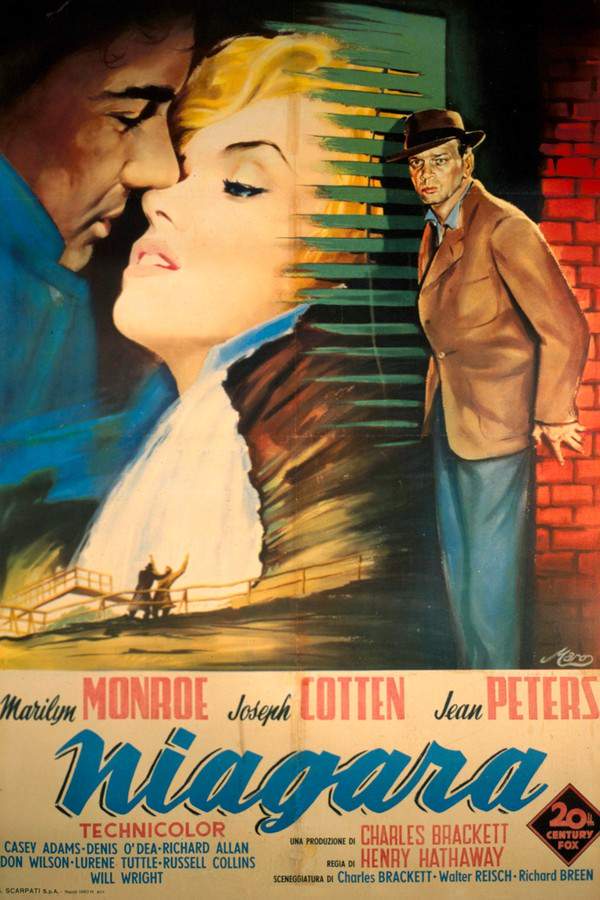
Niagara (1953) movie poster

Plot Summary

Niagara (1953) Plot Summary Explained

Release, runtime and language
1953 · 92 min · English
JustWatch #11,653 6
Directed by
Henry Hathaway
Starring
Joseph Cotten, Denis O'Dea, Marilyn Monroe, Will Wright, Lurene Tuttle, Max Showalter

A young couple, George and Rose Loomis, are on a trip to Niagara Falls, seemingly enjoying a romantic getaway in a secluded cabin. However, their idyllic existence is disrupted by the arrival of Polly Dawson, who suspects that Rose is involved in a dangerous affair with her husband’s friend. As Polly investigates, she uncovers a complex web of lies, deception, and potentially deadly intentions that threaten to shatter the couple’s marriage and expose a shocking truth.

On this page (6)
  1. 1 Where to watch
  2. 2 What happens: full plot
  3. 3 Plot questions answered
  4. 4 Movie threads
  5. 5 Movies like Niagara
  6. 6 Every angle

Where to watch

Where to Watch Niagara (1953)

Where can you watch Niagara? Stream, rent or buy it in the US, including on FlixFling, Hoopla and Mometu: current JustWatch availability with up-to-date prices.

Streaming availability powered by JustWatch

Full plot summary · contains spoilers

What Happens in Niagara: Full Plot Summary

The whole story of Niagara (1953) explained, from the opening scene to the final frame: every key event, every twist and what it all adds up to. Read it as a quick recap before the sequel, to check a scene you missed, or to finally understand what really happened.

Ray, portrayed by Casey Adams, and his wife Polly Cutler, played by Jean Peters, are attempting to enjoy a delayed honeymoon at the breathtaking Niagara Falls. Upon arrival at their reserved cabin at the Rainbow Cabins on the Canadian side, they discover it is occupied by George, depicted by Joseph Cotten, and his wife Rose, portrayed by Marilyn Monroe. Rose argues that George has been unwell and persuades Polly and the cabin manager, Mr. Qua, to allow them to stay, prompting the Cutlers to accept a less desirable cabin.

Ray is on a business trip after winning a prize for his creative sales campaign at his company, which specializes in shredded wheat crisps. Meanwhile, George works at the Toledo plant and wants to meet with the head of the Niagara factory, Mr. Kettering, although he learns that Kettering is out of town.

As they get to know each other, it becomes evident that George and Rose's marriage is strained. Rose's youth and beauty contrast sharply with George's jealousy and irritability; it’s suggested that he may have recently left an Army mental hospital. The couple generally keeps to themselves, and Rose often appears indifferent to George.

On a tour of the falls the next day, Polly witnesses Rose engaging in a passionate kiss with a man named Patrick, played by Richard Allan. In an unusual stipulation, visitors are required to wear galoshes, leading to an amusing encounter. Back at their cabins, George discovers a Niagara tourist tunnels ticket in Rose's coat, indicating her escapades without him.

That night, the Cutlers bear witness to George's angry outburst when he suspects Rose's disinterest in their marriage. After a brief gathering, George's turmoil manifests as he storms out, shattering a record in a fit of rage related to a song he believes contains hidden meaning for Rose. Concerned about George's state, Polly visits him to provide first aid for his hand, and he opens up about his troubled past as a sheep rancher whose fortunes dwindled after marrying Rose, who he had met while she was still a barmaid.

Unbeknownst to George, Rose is plotting his murder, instructing Patrick to prepare for the following day. She manipulates George into following her to a dark tourist tunnel, where Patrick awaits, intending to kill him. As part of her scheme, she tells George she is going to buy bus tickets for Chicago, knowing he would follow.

However, in a twist of fate, George ends up killing Patrick in self-defense and cleverly disguises his actions by taking Patrick's shoes. When Rose alerts the police to George's strange disappearance, Inspector Starkey arrives to investigate.

Despite Rose's assumptions about George's fate, George emerges as the character who has triumphed over Patrick, allowing the police to mistakenly believe he is the victim. When they retrieve a body and bring Rose to identify it, she is devastated to find that it’s Patrick instead of her husband, ultimately leading to her hospitalization.

As events unfold, Mr. Kettering pays the cabins a visit to meet Ray, prompting the motel manager to relocate the Cutlers to the Loomises' cabin. George is now on a vengeful path, seeking retribution against Rose but stumbles upon Polly instead. Their encounter leads to a complicated emotional exchange, and Polly soon relays her suspicions about George's survival to the police.

Later, as chaos ensues, George confronts Rose, leading to a dramatic confrontation within the Carillon bell tower, where he tragically strangles her amidst a silent backdrop. Meanwhile, the Cutlers find themselves fishing with friends on a section of the River Niagara, where George seizes the opportunity to kidnap Polly, leading to a terrorist chase that ends with George sacrificing himself as he plunges over the Falls. The story leaves a haunting image of Rose’s lifeless body in a striking red dress at the base of the cascading waters, while Polly is ultimately rescued, highlighting the tangled web of love, betrayal, and tragedy at Niagara Falls.
Last updated: October 25, 2024 at 09:59

Was this helpful?

Plot questions answered

Niagara Plot Explained: Your Questions Answered

The questions people ask most about Niagara (1953): what happens in the confusing scenes, why the characters do what they do, the twists, hidden details and what the ending means. Each answer contains spoilers.

Q1

Why does Rose want to murder George?

Rose wants to kill George because she is having an affair with Patrick and wants to be free to live her own life. She views George as an obstacle to her happiness, especially since his jealousy and mental instability have made their marriage intolerable. The affair gave her both motive and the means to orchestrate his death.

Foreshadowing: Early scenes establish Rose's cold indifference toward George and her frequent absences, hinting at her deeper intentions.

  • rose loomis
  • murder plot
  • affair
  • patrick
  • jealous husband
Q2

How does George end up killing Patrick instead of being killed?

When Rose lures George into the dark tourist tunnel intending for Patrick to kill him, George discovers Patrick lurking in the darkness. Rather than becoming a victim, George fights back and kills Patrick in self-defense. He then switches shoes with Patrick's body to create confusion about who actually died, allowing him to disappear and plot his revenge against Rose.

Foreshadowing: Rose's suspicious behavior with the bus tickets to Chicago and her insistence that George follow her alone foreshadow the ambush.

  • self-defense
  • patrick death
  • tourist tunnel
  • shoe switch
  • deception
Q3

Why does George switch shoes with Patrick's body?

George switches shoes with Patrick's corpse to make the police believe the victim is George rather than Patrick. By taking Patrick's shoes, he ensures the body will be identified as the taller man (George), allowing him to move freely while Rose believes he is dead. This clever ruse throws off the investigation and gives George time to carry out his own revenge.

Foreshadowing: George's knowledge of the tourist tunnels and his observation of details suggest his capacity for calculated deception.

  • shoe switch
  • body identification
  • police investigation
  • disguise
Q4

Why does George strangle Rose at the bell tower?

George kills Rose after discovering her betrayal and learning she orchestrated his murder. Consumed by rage and a desire for revenge, he confronts her at the Carillon bell tower and strangles her. His action represents the tragic culmination of his psychological instability and the final manifestation of his shattered trust, as he cannot forgive Rose's attempted betrayal.

Foreshadowing: George's violent outburst when he smashed the record earlier in the film foreshadows his capacity for lethal rage.

  • bell tower confrontation
  • strangulation
  • revenge
  • betrayal
  • rose death
Q5

Why does George kidnap Polly at the end?

George kidnaps Polly during the chaos following Rose's death because he is consumed by grief and desperation after killing his wife. Rather than escaping alone, he takes Polly with him in his boat, using her as a hostage or emotional anchor. His ultimate sacrifice, plunging over the Falls, suggests he sought a dramatic end rather than capture, using Polly as his final companion in death.

Foreshadowing: George's earlier conversation with Polly, where he revealed his emotional vulnerability, hints at the complex connection that develops between them.

  • polly kidnapping
  • falls
  • suicide
  • hostage
  • desperation
Q6

Why do the police initially believe George is the victim?

The police believe George is the victim because George switched shoes with Patrick's body, making the corpse appear taller (matching George's height). Combined with Rose's frantic report of George's strange disappearance, the physical evidence points to George being dead. The police have no reason to suspect the victim is actually Patrick until Rose identifies the body and realizes her plan has catastrophically backfired.

Foreshadowing: The shoe switch is the crucial detail that enables George's deception to work on the authorities.

  • police investigation
  • mistaken identity
  • shoe evidence
  • inspector starkey
Q7

What is George's backstory and why is he unstable?

George was a sheep rancher whose fortunes declined after he married Rose, who was once a barmaid. The story suggests he recently left an Army mental hospital, indicating psychological trauma. His jealousy and volatility stem from his knowledge of Rose's infidelity and his deteriorating circumstances, making him increasingly unstable throughout the film.

Foreshadowing: Rose's argument that George is unwell when requesting the cabin exchange hints at his fragile mental state.

  • sheep rancher
  • army mental hospital
  • jealousy
  • instability
  • rose barmaid
Q8

Why is Rose devastated when identifying the body?

Rose is devastated when identifying the body because she expected to see George's corpse, confirming her successful murder plot. Instead, she discovers it is Patrick, her lover and co-conspirator. This means George survived and killed Patrick, turning her perfect murder scheme into a nightmare. The shock of this reversal, combined with the collapse of her plans, leads to her emotional breakdown and hospitalization.

Foreshadowing: Rose's confidence in Patrick's ability to carry out the killing sets her up for devastating disappointment.

  • body identification
  • patrick death
  • shock
  • hospitalization
  • failed murder plot
Q9

Why does George commit suicide by going over the Falls?

George ultimately sacrifices himself by going over Niagara Falls because he has lost everything, his wife betrayed him, he killed both her lover and then Rose herself, and he has no reason to live. Rather than face arrest or live with his crimes, he chooses a dramatic, fatalistic end. His kidnapping of Polly suggests he may have wanted companionship in death, though he ultimately releases her before the final plunge.

Foreshadowing: George's earlier statement about his ruined life and broken fortunes foreshadows his willingness to embrace death.

  • suicide
  • falls
  • death scene
  • sacrifice
  • final act
Q10

How does Polly suspect George is still alive?

Polly becomes suspicious that George survived when she encounters him at the cabins after his supposed disappearance. His presence confuses her because the police believe he is the victim. During their charged encounter, George inadvertently reveals enough information for Polly to deduce that he is alive and that something sinister has occurred. She then communicates her suspicions to Inspector Starkey.

Foreshadowing: Polly's earlier observation of Rose's affair gave her insight into the complex dynamics at play.

  • polly cutler
  • survival suspicion
  • police
  • encounter
  • george alive
Q11

How does the couples' romantic trip become a murder investigation?

The trip transforms into a murder investigation when Rose's plot to kill George unfolds. After George kills Patrick in self-defense and switches the shoes, the police are called. Rose's report of George's strange disappearance, followed by the discovery of a body, kicks off the investigation. The mistaken identity and subsequent revelations turn what should have been a joyful honeymoon into a full-blown criminal case.

Foreshadowing: The initial cabin conflict and George's volatile behavior plant seeds for the deadly events that follow.

  • honeymoon
  • cabin
  • niagara falls
  • murder investigation
  • couple
Q12

What is the significance of Rose's red dress at the end?

Rose's striking red dress at the end serves as a haunting visual contrast to her death. The red symbolizes passion, danger, and the deadly affair that drove the plot. Positioned at the base of the cascading Falls, the image combines natural beauty with tragic consequences, embodying the film noir aesthetic of allure leading to destruction.

Foreshadowing: Rose's beauty and allure are established from her first appearance, making her red dress a final, tragic statement.

  • red dress
  • rose death
  • visual imagery
  • film noir
  • falls

Movie threads

More Movies Like Niagara, by Mood & Story

Curated lists built around what makes Niagara tick: the same mood, the same kind of story or the same emotional payoff. Each list explains why these movies belong together.

Noir Thrillers of Marital Betrayal like Niagara

Stories where adultery and betrayal spiral into inescapable, violent consequences. Explore movies like Niagara, where the façade of a perfect marriage crumbles under the weight of adultery and murderous intent. These tense, psychologically-driven stories focus on the fatalistic spiral of crime of passion, perfect for fans of classic film-noir mood and bleak endings.

  • tense
  • suspenseful
  • jealous
  • fatalistic
  • deceptive
  • claustrophobic
  • Tone: tense, dark, bleak
  • Pacing: steady, methodical
Why these movies?

The story pattern: The narrative typically centers on a dysfunctional marriage, where infidelity ignites a volatile mix of jealousy and premeditated violence. The plot unfolds with a steady, deliberate pace, building suspense as a murder scheme is planned and then unravels, often leading to mistaken identities and a double-cross that ensures no one escapes unscathed.

Why they belong together: These films are grouped by their shared dark tone, high psychological intensity, and focus on the destructive power of betrayal within an intimate relationship. They deliver a heavy emotional weight through a claustrophobic atmosphere and a foreboding sense of doom, making the viewing experience consistently tense and unforgiving.

Claustrophobic Suspense Thrillers like Niagara

Thrillers where a confined setting amplifies psychological dread and imminent danger. If you liked the tense, confined atmosphere of Niagara, you'll enjoy these movies that trap their characters in isolated settings. From remote cabins to secluded motels, these thrillers use their environment to build unbearable suspense and a feeling of inescapable doom, similar to the mood around Niagara Falls.

  • claustrophobic
  • suspenseful
  • anxious
  • tense
  • isolated
  • paranoid
  • Tone: tense, anxious, claustrophobic
  • Pacing: steady, slow burn
Why these movies?

The story pattern: The plot often involves characters brought together in a remote or confined space where a secret—like an affair or a crime—is threatened with exposure. The narrative uses the isolation to methodically increase paranoia and distrust, leading to a confrontation that erupts into violence. The pacing is steady, focusing on the slow burn of psychological unease rather than action.

Why they belong together: These films are united by their masterful use of setting to create mood. The feeling of being trapped, both physically and by circumstance, generates a specific kind of anxious, high-intensity suspense. The shared vibe is one of impending disaster, where the environment itself feels like an antagonist.

If you liked this

Movies Like Niagara

Similar movies to Niagara: the same genre, themes or kind of story. Each one comes with its own plot summary, timeline and ending explained.

Browse all movie summaries

Every angle

Niagara (1953) Explained: Plot, Timeline & Characters

Everything about Niagara in one place: what happens in the plot summary, the timeline in chronological order, the characters and meaning and a spoiler-free summary. What's After the Movie adds the cast, box office and post-credit scenes.

Coming soon on iOS and Android

The Plot Explained Movie Summary App

Plot summaries, endings explained and timelines on your phone. Catch up on any movie in minutes, save your favorites and never miss a twist again.

Be the first to know when we launch. Your email stays private, always.

Learn more about the app