







Plot Explained Spoilers guaranteed!
Plot Explained

Browse by genre

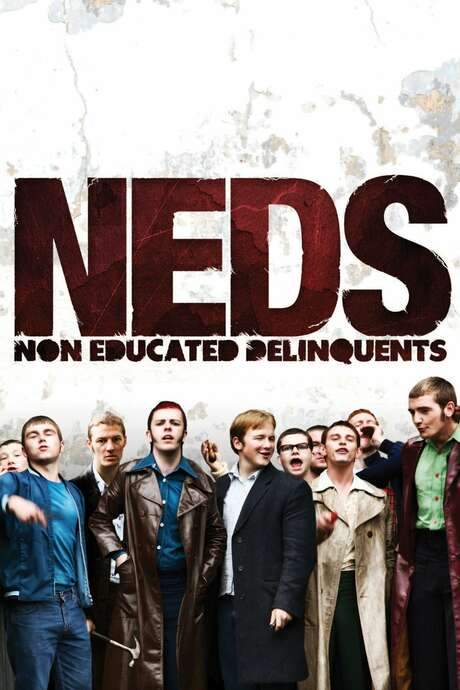
Neds (2010) movie poster

Timeline

Neds (2010) Timeline Explained – Every Event in Order

Release, runtime and language
2010 · 124 mins · English
Starring
Peter Mullan, Douglas Russell, Stephen McCole, Joe Cassidy, Marianna Palka, Steven Robertson

John McGill, a former prize‑winning schoolboy, spirals into violent teenage delinquency. Facing low expectations, he shifts from victim to avenger, scholar to thug, altar‑boy to glue‑sniffer. When he tries to reclaim his old self, the harsh reality of his new world makes conformity impossible, pushing him toward inevitable, self‑determined violence.

On this page (5)
  1. 1 Where to watch
  2. 2 Events in order (12)
  3. 3 Timeline questions answered
  4. 4 Movie threads
  5. 5 Every angle

Where to watch

Where to Watch Neds (2010)

Where can you watch Neds? Stream, rent or buy it in the US, including on Fawesome, Hoopla and Plex: current JustWatch availability with up-to-date prices.

Streaming availability powered by JustWatch

12 events in order · contains spoilers

Neds Timeline: Events in Chronological Order

Every key event of Neds (2010) in order, scene by scene, with when and where it takes place. Use it to untangle flashbacks, time jumps and parallel storylines, to refresh your memory before the sequel or to find the exact scene you are thinking of.

  1. Beginning of School Transition

    The film opens with a leaving ceremony marking John's transition from primary to secondary school. On his final day, he is approached by Canta, a local bully, who threatens him and warns about his new school. John's brother helps him deal with the bullying threat by enlisting gang members to confront Canta.

  2. Starting Secondary School

    John begins his new secondary school and initially adjusts well, though he is not in the top class. The headmaster promises a promotion by Christmas once he proves himself, and John successfully advances. However, he quickly becomes socially isolated and feels out of place among his peers.

  3. Summer Camp Incident

    John attends a summer camp for children with disabilities after his teacher recommends it. During the camp, he befriends Julian, a middle-class boy. However, he is forbidden from seeing Julian again after accidentally breaking a record of Julian’s father, which causes a rift with Julian's family.

  4. Gang Recruitment

    While walking home, John is threatened by members of the Car-D gang, who initially want to mug him. Recognizing his brother's association with the gang, they stop threatening him and invite him to join. John accepts, marking the beginning of his involvement in gang activities.

  5. Decline into Gang Behavior

    John's behavior worsens; he starts drawing graffiti, being rude to teachers, and smoking cigarettes. He gets involved in gang fights and obtains a knife during an altercation, indicating his descent into delinquency and violent conflicts with rival gangs.

  6. Vandalism and Gang Feuds

    In response to rejection from Julian's family, John vandalizes their home by throwing fireworks-filled football boots through the window. He later joins gang fights, including a bicycle attack, and runs into a rival gang where he fights and is ambushed, escalating gang conflicts.

  7. Violent Incident with Canta

    John encounters his former bully Canta, now appearing pitiful and isolated. After a brief confrontation where Canta makes a snide remark, John attacks him, knocking him down and dropping a stone slab on his head, resulting in lasting brain damage, signifying John's increasing violence.

  8. Family Violence and Isolation

    John's father becomes abusively drunk towards his mother. In response, John beats his father with a frying pan, leading his mother to order him out of the house. John then takes refuge in a high-rise flats' machine room, living on stolen supplies while experiencing growing turmoil.

    Where
    High-rise flats, Glasgow
  9. Contemplation and Gluedown

    Stripped and disoriented, John sniffs glue and has a hallucination involving Jesus, where he is challenged about his poor life choices. The next morning, his sober father finds him and urges him to return home, requesting him to end his suffering, hinting at John's suicidal thoughts.

  10. Attempted Suicide and Street Violence

    John straps two knives to his hands and considers ending his life, but ultimately he leaves his home. He attacks a rival gang member, injuring him, and is chased and beaten by gang members. Eventually, members of his own gang rescue him, but his violence persists.

  11. Returning to Normalcy

    Faced with ongoing violence and inner turmoil, John decides to leave gang life and return to school, attending a remedial class. He seeks to distance himself from gang conflicts and violence, signaling his desire for change amid his troubled past.

  12. Field Trip Escapade

    During a school trip to a safari park, the bus breaks down. Believing he has been abandoned with Canta and feeling trapped, John decides to leave the vehicle. The film concludes with John and Canta walking into the distance through a pride of lions, both seemingly finding a space of peace.

    Where
    Safari park

Last updated: August 05, 2025 at 06:58

Was this helpful?

Timeline questions answered

Neds Timeline Explained: Your Questions Answered

When does it happen, and why in that order? The questions people ask about the chronology of Neds (2010): time jumps, flashbacks, cause and effect between scenes and the correct order of events, each answered with spoilers.

Q1

Why does John McGill join the gang?

John joins the Young Car-D gang after being cornered by members who recognize his brother Benny's association with the group. Initially threatened with being mugged, he is invited to join once they realize his connection. He accepts vodka and cigarettes from the gang members, which marks his entry into their world and begins his descent into delinquency.

Foreshadowing: John's brother Benny already leads a gang, establishing that gang culture is normalized in John's environment.

  • john mcgill
  • gang recruitment
  • young car-d
  • benny mcgill
  • glasgow gangs
Q2

What triggers John's violent breakdown?

John's violence escalates through multiple factors: rejection from Julian's family after breaking their record, his growing isolation at school, exposure to gang culture through his brother, and the overall poverty and brutality of his environment. The cumulative effect of these rejections and pressures leads him to channel his anger into violent actions.

Foreshadowing: The summer camp incident with Julian shows John forming a connection only to have it severed, establishing a pattern of rejection that fuels his rage.

  • john mcgill violence
  • john breakdown
  • rejection
  • gang violence
  • glasgow poverty
Q3

Why does John attack Canta?

John attacks Canta after encountering his former bully, who now appears pitiful and isolated. When Canta makes a snide remark during their confrontation, John's accumulated anger and past trauma from bullying erupt. He knocks Canta down and drops a stone slab on his head, causing permanent brain damage. This attack represents John's transformation into the very kind of violent thug he once feared.

Foreshadowing: The film opens with Canta threatening John on his last day of primary school, establishing Canta as the source of John's early trauma.

  • john attacks cantacanta
  • bullying
  • violence
  • brain damage
  • revenge
Q4

What does John's father ask him to do?

After finding John in the machine room hallucinating from glue, John's sober father pleads with him to end his suffering. The father, overwhelmed by his own pain and alcoholism, asks John to kill him - revealing the depth of the family's dysfunction and despair. This moment exposes the cyclical abuse and hopelessness that pervades John's home life.

Foreshadowing: Earlier scenes show the father becoming abusively drunk and violent toward John's mother, establishing the toxic environment that leads to this request.

  • john father
  • suicide request
  • domestic abuse
  • alcoholism
  • family violence
Q5

What does the glue hallucination scene mean?

After being thrown out of his home and taking refuge in a high-rise machine room, John sniffs glue and experiences a hallucination involving Jesus, who challenges him about his poor life choices. This surreal moment represents John's lowest psychological point and serves as a symbolic reckoning with his decisions, though he ultimately chooses not to act on the despair.

Foreshadowing: The scene follows John's assault on his abusive father and his subsequent exile from home, representing his complete rock bottom.

  • glue sniffing
  • jesus hallucination
  • john breakdown
  • substance abuse
  • mental health
Q6

Why does John decide to return to school?

After surviving the street violence, being beaten by rival gang members, and experiencing his psychological breakdown, John chooses to leave gang life and return to school. He attends remedial classes and seeks to distance himself from the violence that has consumed his life. This decision represents his attempt to reclaim the promising future he had as a student before his descent into delinquency.

Foreshadowing: Early in the film, the headmaster promises John a promotion if he proves himself, and he initially succeeds academically, showing his potential for a different path.

  • john returns to school
  • redemption
  • gang exit
  • education
  • change
Q7

Why does John attack his father with a frying pan?

John attacks his father after witnessing him become abusively drunk and violent toward his mother. Protective of his mother and overwhelmed by the family's dysfunction, John strikes his father with a frying pan. His mother then orders John out of the house, forcing him to seek refuge in the high-rise flats' machine room.

Foreshadowing: The film establishes early that John's father is an alcoholic whose behavior becomes increasingly abusive, building toward this violent confrontation.

  • john attacks father
  • frying pan
  • domestic violence
  • protection mother
  • family abuse
Q8

Why does Julian's family cut ties with John?

During summer camp, John befriends Julian, a middle-class boy. However, when John accidentally breaks a record belonging to Julian's father, Julian's family decides to sever their connection with John. This rejection fuels John's feelings of being unacceptable to mainstream society and deepens his anger toward the world that has rejected him.

Foreshadowing: John is sent to a disability summer camp, indicating the school system already views him as different or troubled.

  • julian
  • rejection
  • summer camp
  • class divide
  • record breaking
Q9

Why does John rob the bus driver?

After his brother Benny is arrested following a stabbing during a gang fight, John desperately needs money to help raise bail. He robs a bus driver with a knife to get the money, but the robbery fails to generate enough funds, escalating his legal troubles and further trapping him in his criminal trajectory.

Foreshadowing: Benny's arrest creates a power vacuum and financial pressure on John, who feels responsible for helping his brother.

  • bus robbery
  • bail money
  • benny arrested
  • crime escalation
  • financial desperation
Q10

What does the ending with lions mean?

During a school field trip to a safari park, the bus breaks down. John walks hand-in-hand with Canta into the distance, past a pride of lions that ignore them. The lions, despite being predators, do not attack - symbolizing a possible peaceful coexistence between former enemies. The ending suggests John has found a path toward reconciliation and a new beginning, though it remains ambiguous whether this represents genuine redemption or wishful thinking.

Foreshadowing: John's earlier violence against Canta was the pinnacle of his rage; this ending inverts that violence into reconciliation.

  • ending explained
  • lions
  • cantacanta reconciliation
  • safari park
  • symbolic ending
  • redemption

Movie threads

More Movies Like Neds, by Mood & Story

Curated lists built around what makes Neds tick: the same mood, the same kind of story or the same emotional payoff. Each list explains why these movies belong together.

Gritty Social Realism Movies like Neds

Unflinching stories of young lives shattered by poverty and gang culture. If the raw and unflinching portrayal of youth violence and social struggle in Neds resonated with you, explore these movies. This list features similar emotionally heavy dramas set against a backdrop of poverty and delinquency, offering a stark look at challenging coming-of-age stories.

  • gritty
  • raw
  • oppressive
  • brutal
  • angry
  • despairing
  • Tone: dark, brutal, despairing
  • Pacing: steady, consequential
Why these movies?

The story pattern: These narratives typically follow a young protagonist from a disadvantaged background as they are pulled into a world of gangs and crime. The story is a linear, steady descent, often showing a bright start corrupted by environmental pressures, leading to violence, despair, and an ambiguous potential for change.

Why they belong together: Movies in this thread are grouped by their shared commitment to social realism, a dark tone, high emotional intensity, and a focus on the brutal cause-and-effect relationship between a harsh environment and a young person's tragic downfall.

Painful Coming-of-Age Stories like Neds

Stories of teenage turmoil where redemption is a fragile, uncertain possibility. For viewers who appreciated the heavy emotional weight and challenging themes of Neds, this collection features similar films about difficult adolescences. These movies explore teenage characters navigating trauma, violence, and family dysfunction, often ending on a note of ambiguous hope.

  • despairing
  • hopeful
  • raw
  • emotional
  • traumatic
  • redemptive
  • Tone: dark, heavy, ambiguous
  • Pacing: steady, character-driven
Why these movies?

The story pattern: The narrative pattern involves a young person grappling with external trauma (family dysfunction, abuse) and internal conflict. The protagonist spirals, often becoming a version of what they fear, before a pivotal moment forces a confrontation with their identity. The ending is typically ambiguous, suggesting a possible but difficult path forward rather than a clean resolution.

Why they belong together: These films share a heavy emotional weight, a dark but not entirely hopeless tone, and a central focus on a young character's painful psychological and moral development through extreme hardship.

Every angle

Neds (2010) Explained: Plot, Timeline & Characters

Everything about Neds in one place: what happens in the plot summary, the timeline in chronological order, the characters and meaning and a spoiler-free summary. What's After the Movie adds the cast, box office and post-credit scenes.

Coming soon on iOS and Android

The Plot Explained Movie Summary App

Plot summaries, endings explained and timelines on your phone. Catch up on any movie in minutes, save your favorites and never miss a twist again.

Be the first to know when we launch. Your email stays private, always.

Learn more about the app