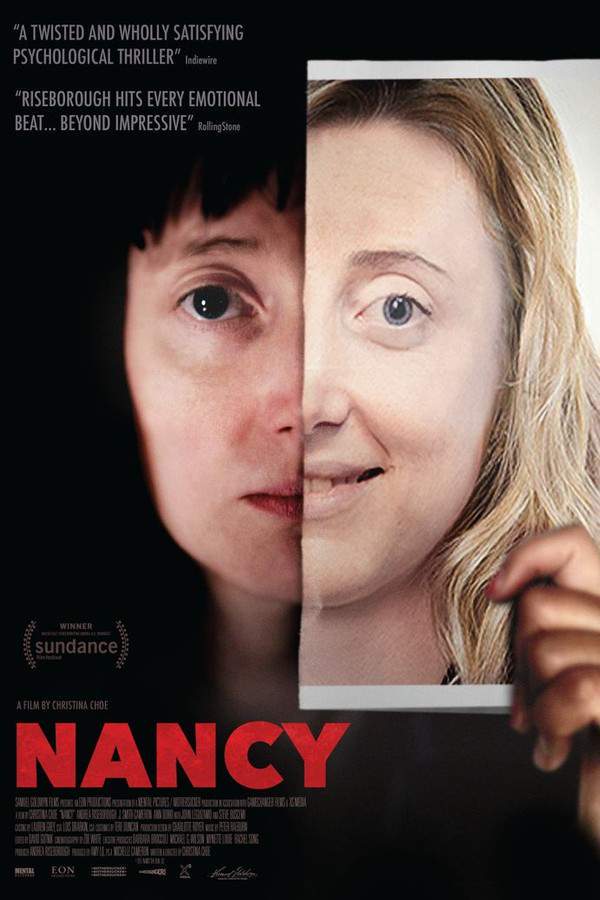
Nancy Freeman, [Andrea Riseborough], is a lonely woman who lives with her ailing mother, Betty [Ann Dowd]. An aspiring short story writer whose submissions are routinely rejected, Nancy seeks validation and companionship through a blog where she claims to be the grieving mother of a dead child. Off the blog, she meets Jeb, [John Leguizamo], a divorced father grieving the loss of his daughter. Posing as pregnant—having purchased a prosthetic belly—they share a coffee and form a tentative connection, drawn together by shared pain and a longing for closeness.
However, a chance encounter at a grocery store reveals to Jeb that Nancy isn’t actually pregnant, and his disappointment drives a wedge between them, causing him to pull away and never see her again. The emotional ripple from that moment underscores Nancy’s pattern of seeking attention through fabrication, even as she briefly finds someone who genuinely grieves.
Soon afterward, Betty dies from a stroke, leaving Nancy with an even more fragile sense of loss. She then sees a news report about a couple, Leo [Steve Buscemi] and Ellen [J. Smith-Cameron], who have never given up hope of finding their daughter, kidnapped years ago. Noting a vague resemblance between herself and an age-progressed image of the couple’s daughter, Nancy reaches out, claiming she may have been kidnapped and that she could be their child. This bold move pulls Nancy into a new, unsettling possibility: a chance to belong to a family she herself could pretend to be.
Ellen, a professor of comparative literature, is quick to believe that Nancy could be their daughter after seeing a photo, while Leo, a psychologist, remains more skeptical. When Nancy visits, Leo swiftly arranges a DNA test for the next day. Nancy’s cat sits in the sun room, a small detail that underscores Leo’s allergies and the domestic, everyday life of the people she’s trying to join. The tension between belief and doubt begins to build as the three interact more closely.
The trio then spends time together—an art gallery visit, shared meals, and longer conversations that help them get to know each other. Nancy confides in Ellen about her dream of becoming a writer and shares some of her work with the couple. Ellen is eager and offers to send Nancy’s writing to an editor she knows, a gesture that fills Nancy with hope and validation, making the prospect of a real future feel closer than ever.
When the DNA results arrive, they confirm what no one wants to hear: Nancy is not their daughter. On a walk, Ellen opens up about her own guilt, blaming herself for her daughter Brooke’s disappearance after Brooke ran off to see a kitten in a pet shop. Nancy offers comfort and understanding, even as the revelation shifts the emotional ground beneath them. A sudden gunshot shatters the moment, and a young man bursts out desperate for a phone. Nancy rushes to help, applying compression to the injured boy as they wait for an ambulance, signaling a return to the harsh realities outside their hopeful fantasies.
That night, Ellen wraps Nancy in a quiet, intimate moment, whispering “I love you,” a line that suggests she’s grateful for Nancy’s presence in their lives despite the failed lie about maternity. The mood is intimate and charged, but Nancy is pulled back to reality by a mounting sense of improvised belonging that could crumble at any moment. The following dawn finds Nancy shaken by the weight of the night’s disclosures, and she quietly slips away, leaving the couple to sleep, leaving readers with a lingering, unsettled sense of what family can mean when truth and longing collide.