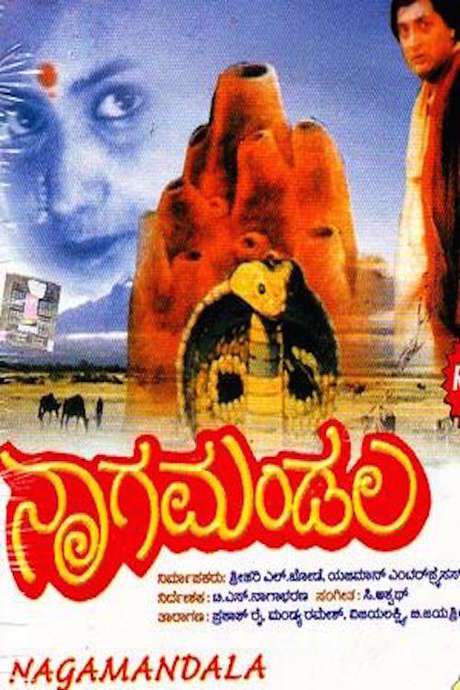
Year: 1997
Runtime: More mins
Language: Kannada
Director: T. S. Nagabharana
Adapted from Girish Karnad’s play, the film is directed by T.S. Nagabharana, scored by C. Aswath and produced by Srihari L. Khoday. It asks whether a husband is the one who marries an innocent girl for selfish pleasure or the one who offers life. G.S. Bhaskar’s contrast lighting in night and interior scenes creates a folk atmosphere.
Warning: spoilers below!
Haven’t seen Nagamandala yet? This summary contains major spoilers. Bookmark the page, watch the movie, and come back for the full breakdown. If you're ready, scroll on and relive the story!
Explore the full timeline and setting of Nagamandala (1997). Follow every major event in chronological order and see how the environment shapes the story, characters, and dramatic tension.
Last updated: October 04, 2025 at 16:51
Meet the key characters of Nagamandala (1997), with detailed profiles, motivations, and roles in the plot. Understand their emotional journeys and what they reveal about the film’s deeper themes.
Last updated: October 04, 2025 at 16:51
Explore the central themes of Nagamandala (1997), from psychological, social, and emotional dimensions to philosophical messages. Understand what the film is really saying beneath the surface.
Last updated: October 04, 2025 at 16:51
Browse frequently asked questions about Nagamandala (1997) focused on characters, relationships, themes, symbols, setting, and story context. This movie info FAQ gives spoiler-aware explanations for character arcs, world details, and thematic interpretation so readers can better understand what the film is really about.
The film takes place in a rural Kannada village, centered around Kurudamma's home and Rani's maternal house. Key locations include Appanna's village and a local gym. The Devi festival and daily village life establish the setting as a traditional community governed by customs and family reputations.
The film centers on a naga (serpent) that shapeshifts into Appanna's form to win Rani's affection, blurring the line between husband and supernatural being. This deception creates doubt and danger as nights become contested and truth wavers until the Naga divya ritual exposes the truth.
Rani's initial fear of consummation gradually gives way to trust as understanding grows between her and Appanna. The relationship moves from suspicion to closeness, with care and patience healing fractures. A magical deception tests their loyalty, but genuine affection ultimately redefines their marriage.
The village enforces reputation through a panchayat and tests that threaten Rani's legitimacy. Her pregnancy becomes a catalyst that shifts perception and validates her in the community's eyes. Across suspicion and scandal, truth and acceptance gradually replace judgment.
Rani is a timid, compassionate wife whose initial fear of her overbearing husband drives the early conflict. She grows resilient as the couple navigates a dangerous blend of love, fear, and supernatural interference. Her pregnancy becomes a turning point that tests and ultimately redefines her bond with Appanna.
Appanna is Rani's husband, whose impatience and jealousy propel the drama yet who is capable of change. He suspects infidelity and seeks solace away from home, until truth and trust begin to heal the relationship. The climactic confrontation with the naga culminates in a renewed, caring partnership.
Kurudamma is a blind elder who orchestrates the match between Rani and Appanna, guiding the plot through schemes and warnings. Her actions drive the marriage arrangement, but they also reveal her pragmatic, protective motives for Rani and the family.
Despite a dark and tense tone driven by domestic fear and deception, the story carries a hopeful undercurrent through the supernatural bond. The climax features a physical confrontation between Appanna and the naga, ultimately facilitating a genuine emotional transformation in Appanna and resulting in a clear happy ending.
The film features a folk atmosphere created through contrast lighting in night and interior scenes. The Devi festival, village panchayat gatherings, and community tests establish the cultural context. Traditional spaces like the courtyard and a tree with an anthill become stages for key emotional moments.
The film incorporates the naga (serpent) as a supernatural shapeshifter, a concept rooted in Indian mythology. The Naga divya ritual serves as the mechanism to expose the truth about the serpent's deception, leading to the dramatic confrontation between the human husband and the supernatural being.
Discover curated groups of movies connected by mood, themes, and story style. Browse collections built around emotion, atmosphere, and narrative focus to easily find films that match what you feel like watching right now.
Stories where supernatural intervention shatters injustice, leading to transformative healing.If you were captivated by how Nagamandala uses a folk tale to resolve marital terror, you'll enjoy these movies. This list features similar stories where magic realist elements or mythological justice intervene in harsh realities, leading to emotional transformation and hopeful, if unconventional, happy endings.
The narrative pattern begins with a character trapped in an unbearable, realistic injustice. A supernatural element is introduced, often with ambiguous morality, which creates a double life or a profound test. This leads to a climactic confrontation where the 'magic' is exposed, forcing a societal or personal reckoning. The resolution sees the real-world problem solved through the fantastical ordeal, resulting in a genuine, hard-won transformation.
These films are grouped together because they share a unique blend of heavy, tense realism with the uncanny logic of folklore. They are not pure fantasies but grounded dramas where the supernatural serves a specific moral and emotional purpose, leading to cathartic, hopeful conclusions that feel both magical and earned.

Tense stories of identity deception within a claustrophobic home, testing truth and love.Fans of the anxious suspense in Nagamandala, generated by the snake's assumption of Appanna's identity, will find similar tension here. These movies explore the terrifying premise of a deceptive double within a marriage or family, building claustrophobic dread around questions of identity and truth.
The journey typically revolves around a protagonist who feels unsafe in their own home due to a manipulative or abusive figure. The introduction of a deceptive double—whether supernatural, psychological, or human—creates a complex web of fear and confused desire. The plot builds steadily towards a moment of public or private revelation where the deception is violently or dramatically unmasked, resolving the central conflict.
These films share a very specific mood: a high-tension, anxious atmosphere generated by the theme of domestic fear compounded by identity deception. The pacing is often steady and methodical, focusing on the psychological unraveling of the protagonist and the uncanny suspense of the double's presence.
Don't stop at just watching - explore Nagamandala in full detail. From the complete plot summary and scene-by-scene timeline to character breakdowns, thematic analysis, and a deep dive into the ending - every page helps you truly understand what Nagamandala is all about. Plus, discover what's next after the movie.
Read a complete plot summary of Nagamandala, including all key story points, character arcs, and turning points. This in-depth recap is ideal for understanding the narrative structure or reviewing what happened in the movie.
Track the full timeline of Nagamandala with every major event arranged chronologically. Perfect for decoding non-linear storytelling, flashbacks, or parallel narratives with a clear scene-by-scene breakdown.