Plot Explained Spoilers guaranteed!
Plot Explained

Browse by genre

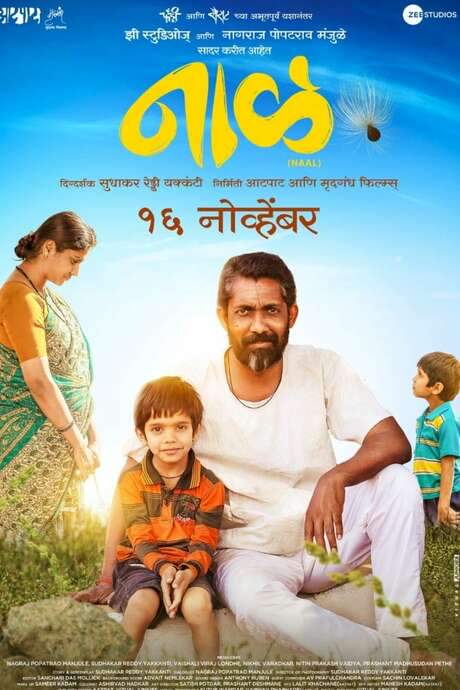
Naal (2018) movie poster

Plot Summary

Naal (2018) Plot Summary Explained

Release, runtime and language
2018 · 117 mins · Marathi
Echo score 85
Directed by
Sudhakar Reddy Yakkanti
Starring
Nagraj Popatrao Manjule, Om Bhutkar, Devika Daftardar, Seva Chouhan, Deepti Devi, Shrinivas Pokale

An eight-year-old boy accustomed to a loving and comfortable life is shaken when he discovers a surprising secret about his identity. This revelation leads him to emotionally withdraw from his mother and question everything he thought he knew. He struggles to reconcile his previous understanding of his family with this new reality, leading to a period of significant change and emotional distance.

On this page (4)
  1. 1 What happens: full plot
  2. 2 Plot questions answered
  3. 3 Movie threads
  4. 4 Every angle

Full plot summary · contains spoilers

What Happens in Naal: Full Plot Summary

The whole story of Naal (2018) explained, from the opening scene to the final frame: every key event, every twist and what it all adds up to. Read it as a quick recap before the sequel, to check a scene you missed, or to finally understand what really happened.

Chaitanya Nagraj Popatrao Manjule is an eight-year-old boy whose days unfold in a quiet, remote village in Maharashtra. He lives with his father, a small-time landlord, his loving mother, and his elderly grandmother, in a household that also includes a chicken farm and a cow with her calf. The atmosphere is intimate and rooted in routine, with the family sharing chores, meals, and small moments of affection that anchor Chaitanya’s world.

Their peaceful dynamic is shaken when an visiting uncle gently seeds a troubling thought: that Chaitanya’s real mother might be Parvati Deepti Devi, a revelation that unsettles the boy and starts to fracture the trust he feels for the people who raised him. The seed of doubt grows as Chaitanya stores the idea away, testing his own ideas about what makes a mother a parent. He turns to his oldest friend, Bachchan Sanket Itankar, who offers a simple, almost mythic piece of wisdom: real mothers cry often. This line, spoken in a casual moment, becomes a compass for Chaitanya as he begins to measure his mother’s actions against the possibility of a different, unknown mother.

From then on, Chaitanya’s questions multiply and his behavior grows distant. He probes his mother, seeking signs of love and vulnerability, and when she scolds him for pushing too hard, he interprets her warmth as a sign of absence or lack of genuine love. He withdraws from her, and the affectionate term he once used, Aai (Mom), begins to fall away as a protective shield slips into place around his heart. His adopted mother’s care feels less certain to him, and the emotional distance widens.

To reclaim a sense of stability, his family plans a crucial trip to the city for medical advice and to see his grandmother’s siblings. The plan is delicate: a chance for the mother-son bond to re-knit against the backdrop of adults’ concerns and a looming test—his exams that must not be derailed. Chaitanya longs to go, yet the journey would complicate the boy’s current commitments, and he looks for cunning ways to delay the trip. Bachchan offers a grimmer suggestion to test his grandmother’s wellbeing, a plan that is quickly abandoned when the grandmother discards the tampered food. In a later, darker moment, Chaitanya tries to orchestrate an accident, hoping to spark a change in his grandmother’s mood and the family’s future. He uses his calf as a tool to provoke a fall, but the plan backfires, and the grandmother fractures her hip, forcing a domestic relocation to recover indoors.

The camel of misfortune continues its uneasy march as the calf escapes and later dies after colliding with electrified wires. In the aftermath, Chaitanya’s father arranges to preserve the calf’s memory by stuffing it to encourage the cow to continue giving milk. The loss weighs heavily on everyone, and the family ultimately heads toward the city for medical attention and to visit relatives. Chaitanya’s longing to join them remains strong, but his mother insists he stay behind for his own protection and because he might stand in the way of the aging grandmother’s needs.

When the trio reaches the city, the trip brakes, the grandmother’s health becomes the central concern, and a sorrowful realization settles in—death has touched their lives in a way that reshapes trust and ritual. The grandmother dies in the process of their journey, a turn of fate that casts a long shadow over the family’s future. The bus departs without them, leaving Chaitanya in a state of confusion and heartbreak, unsure of how to interpret the loss and the silence that follows. The funeral ritual begins, and Parvati [Deepti Devi] appears in the midst of relatives; her presence brings a quiet ache, a reminder of the child’s uncertain connection to the woman who might be his mother. Parvati remains reserved, not fully engaging with him, perhaps out of respect or distance, and Chaitanya’s search for connection with her feels almost like a plea.

Back home, a poignant turning point arrives with the arrival of the stuffed calf at the family’s house. The cow, having learned to trust again, allows others to approach and be milked. A beaker of milk is offered to Chaitanya, who gazes at the lifelike calf and comes to a simple, profound realization: the mother who raised him—whether biologically related or not—has always been the one who provides care, warmth, and safety. In that moment, he returns to his mother, softly calling her Aai (Mom) for the first time in months, and her face lights up with relief and happiness. They share a quiet, intimate smile, the kind of smile that signals healing, forgiveness, and a renewed bond that neither time nor doubt can erase.

The film’s quiet resonance lies in its patient depiction of a family learning to navigate doubt, memory, and the meaning of true motherhood. It leans into the emotional texture of rural life, the fragility of human connections, and the enduring power of love to redefine what family means. Through Chaitanya’s journey—from curiosity and fear to reconciliation and trust—the story invites viewers to reflect on the tenderness that underpins everyday life and the way a child’s questions can lead a family back to one another.
Last updated: February 25, 2026 at 08:11

Was this helpful?

Plot questions answered

Naal Plot Explained: Your Questions Answered

The questions people ask most about Naal (2018): what happens in the confusing scenes, why the characters do what they do, the twists, hidden details and what the ending means. Each answer contains spoilers.

Q1

Why does Chaitanya stop calling his mother 'Aai'?

After learning that his biological mother might be Parvati, Chaitanya begins questioning whether his adoptive mother truly loves him. When she scolds him for running away, he interprets this as proof that she does not love him unconditionally. He withdraws emotionally and stops using the affectionate term 'Aai' (Mom) as a protective mechanism against what he perceives as rejection.

Foreshadowing: The seed of doubt is planted early when the uncle suggests his real mother might be someone else, and Chaitanya's friend tells him that real mothers cry often.

  • chaitanya
  • aai
  • mother
  • emotional distance
  • adoptive mother
Q2

Why does Chaitanya cause his grandmother to fall and break her hip?

Chaitanya desperately wants to join the family trip to the city, where he believes Parvati lives. When his mother insists he stay behind for his exams and to care for her, Chaitanya sees this as another rejection. Desperate to change the situation, he engineers the calf to charge at his grandmother, hoping to create chaos that might alter the family's plans. The plan succeeds in canceling the trip but results in his grandmother breaking her hip.

Foreshadowing: Earlier, Chaitanya尝试s other schemes to change his circumstances, tampering with food and spilling marbles, showing his escalating desperation.

  • chaitanya
  • grandmother
  • fall
  • hip
  • trip
  • manipulation
Q3

Why does Parvati not talk to Chaitanya at the funeral?

Parvati remains silent and distant at the grandmother's funeral out of respect for Chaitanya's adoptive mother. Even though she may be his biological mother, she chooses not to intrude on the family dynamic or create confusion during a time of grief. Her reserved behavior reflects her understanding that claiming him publicly could further destabilize the boy's relationship with the woman who raised him.

Foreshadowing: Parvati's presence is felt earlier when the uncle first mentions her to Chaitanya, establishing her as a figure of uncertain claim.

  • parvati
  • funeral
  • silence
  • biological mother
  • respect
Q4

Why does the stuffed calf help Chaitanya reconcile with his mother?

After the calf dies from electrocution, Chaitanya's father has it stuffed to help the cow continue producing milk. When Chaitanya sees the lifelike calf by the cow, he realizes that the mother who raised him, whether biologically related or not, has always provided care, warmth, and nourishment, just as the cow provides milk for her calf. This moment of seeing the 'mother' cow care for the stuffed calf triggers his realization that motherhood is defined by love and nurture, not biology.

Foreshadowing: The calf's death earlier creates the opportunity for this symbolic resolution, and Chaitanya's earlier tests of his mother's love now come full circle.

  • stuffed calf
  • reconciliation
  • cow
  • milk
  • realization
  • motherhood
Q5

What causes Chaitanya to become emotionally distant from his mother?

When Chaitanya's uncle tells him that Parvati might be his biological mother, the eight-year-old becomes consumed with doubt about whether the woman who raised him truly loves him. His friend Bachchan tells him that 'real mothers cry often,' and Chaitanya begins testing his mother's reactions to see if she cries for him. Each test, whether running away, causing trouble, or pushing for affection, feels like a failure to him, widening the emotional gap between them.

Foreshadowing: The uncle's revelation is the inciting incident that sets all of Chaitanya's subsequent behavior in motion.

  • chaitanya
  • distance
  • mother
  • trust
  • doubt
  • biological mother
Q6

Why does the calf die in Naal?

After Chaitanya uses the calf to cause his grandmother's fall, the calf escapes in the chaos and later dies after colliding with electrified wires in the field. The death adds to the chain of consequences from Chaitanya's schemes and deepens the family's grief during an already difficult period. It also sets up the later reconciliation moment when the calf is stuffed.

Foreshadowing: Chaitanya's manipulation of the calf for his own purposes directly leads to its death, showing the unintended consequences of his actions.

  • calf
  • death
  • electrocution
  • farm
  • consequences
Q7

What makes Chaitanya call his mother 'Aai' again?

Chaitanya returns to calling his mother 'Aai' after seeing the stuffed calf placed beside the cow. Looking at the cow accepting the stuffed calf and then receiving milk from his own mother, he understands that a mother's love is shown through care and nourishment, not blood ties. This symbolic moment helps him realize his adoptive mother has always been his true mother because she raised him with love.

Foreshadowing: Earlier, Chaitanya's friend told him that real mothers cry often, but the stuffed calf scene teaches him that real mothers feed and care for their children, something his adoptive mother has always done.

  • aai
  • reconciliation
  • mother
  • calling
  • return
  • love
Q8

Why does the family trip get cancelled in Naal?

The trip to the city is cancelled because Chaitanya engineers his grandmother to be attacked by the calf, causing her to break her hip. With his grandmother injured and needing care, the family must stay home rather than travel for medical help and to visit relatives. This event marks a turning point where Chaitanya's schemes backfire seriously.

Foreshadowing: Chaitanya had been trying various methods to delay or change the trip, from tampering with food to spilling marbles, before resorting to the calf.

  • trip
  • cancelled
  • grandmother
  • hip
  • injury
Q9

Why does Chaitanya test his mother's love?

After learning that his biological mother might be Parvati, Chaitanya becomes obsessed with determining whether his adoptive mother truly loves him. His friend Bachchan suggests that real mothers cry often when their children are in danger. Chaitanya then tests his mother by pretending to run away, hoping to see if she will cry for him. When she scolds him instead of crying, he interprets this as evidence she does not love him, fueling his emotional withdrawal.

Foreshadowing: Bachchan's simple wisdom becomes the lens through which Chaitanya judges his mother's actions throughout the film.

  • test
  • mother
  • love
  • bachchan
  • crying
  • trust
Q10

What happens to Chaitanya's grandmother in the city?

After the initial trip is cancelled due to her broken hip, Chaitanya's grandmother later travels to the city with his parents for medical treatment. During the journey, she passes away at a bus stop. Her death occurs after the family has already experienced significant hardship, and it forces Chaitanya to confront loss firsthand. The funeral becomes the setting where Parvati briefly appears.

Foreshadowing: The grandmother's death was foreshadowed by her declining health after the hip injury and the family's urgent need for medical care.

  • grandmother
  • death
  • journey
  • bus
  • funeral
Q11

Why does Chaitanya's uncle tell him about Parvati?

Chaitanya's uncle visits the family home and casually drops the revelation that Parvati might be Chaitanya's biological mother. The uncle's motivation is not fully explained in the film, he may not have understood the impact of his words on a young child. This single remark sets the entire emotional conflict of the film in motion, as Chaitanya cannot stop thinking about whether his mother is his 'real' mother.

Foreshadowing: The uncle's casual comment becomes the catalyst for all of Chaitanya's subsequent actions and emotional struggles throughout the film.

  • uncle
  • parvati
  • revelation
  • biological mother
  • secret
Q12

What does Chaitanya realize at the end of Naal?

At the end of Naal, Chaitanya realizes that his adoptive mother is his true mother because she has always cared for him, fed him, and loved him. Watching the cow accept the stuffed calf and then receiving milk from his mother, he understands that motherhood is defined by nurturing and love, not by biology. This understanding heals the emotional wound caused by learning about Parvati and allows him to call his mother 'Aai' again.

Foreshadowing: The journey from testing his mother's love to finally understanding its depth mirrors the cow's acceptance of the stuffed calf, both are about learning that care defines motherhood.

  • realization
  • end
  • mother
  • love
  • biology
  • family

Movie threads

More Movies Like Naal, by Mood & Story

Curated lists built around what makes Naal tick: the same mood, the same kind of story or the same emotional payoff. Each list explains why these movies belong together.

Movies about childhood truths and family secrets like Naal

Stories where a child's discovery of a secret reshapes their world. Looking for movies similar to Naal? This thread gathers films where a child's discovery of a family secret leads to an emotional journey. If you liked watching the young protagonist grapple with identity and belonging, you'll find similar tender, coming-of-age stories here.

  • childhood
  • emotional distance
  • coming-of-age
  • family secrets
  • introspective
  • tender
  • Tone: bittersweet, melancholic
  • Pacing: steady, deliberate
Why these movies?

The story pattern: The narrative follows a linear, character-driven path, centering on the child's internal conflict. After a pivotal revelation, the protagonist withdraws emotionally, creating distance from loved ones. The plot unfolds steadily as they grapple with this new truth, eventually moving toward a resolution that affirms love and connection.

Why they belong together: These films are grouped by their shared focus on a child's perspective during a family crisis. They balance the melancholy of a fractured reality with the tenderness of healing, featuring steady pacing and a medium emotional intensity that avoids melodrama.

Quiet rural dramas with emotional depth like Naal

Slow-burning stories where rural settings amplify personal grief and healing. Discover movies like Naal that use a rural setting to tell intimate, emotionally resonant stories. If you appreciated the quiet, steady pace and the blend of heartache and hope against a rustic backdrop, this collection of tender dramas is for you.

  • rural life
  • quiet
  • introspective
  • bittersweet
  • tender
  • melancholic
  • Tone: bittersweet, tender
  • Pacing: steady, contemplative
Why these movies?

The story pattern: The narrative is straightforward and deeply atmospheric, unfolding at a steady pace. The rural environment provides a constant, grounding presence against which a character's internal turmoil—often related to family, identity, or loss—is amplified. The focus is on emotional realism and subtle character transformation rather than complex plotting.

Why they belong together: These movies share a specific vibe: a bittersweet tone, a steady, contemplative pace, and a medium intensity that stems from internal, psychological stakes. The rural setting is integral, creating a sense of isolation and authenticity that deepens the emotional impact.

Every angle

Naal (2018) Explained: Plot, Timeline & Characters

Everything about Naal in one place: what happens in the plot summary, the timeline in chronological order, the characters and meaning and a spoiler-free summary. What's After the Movie adds the cast, box office and post-credit scenes.

Coming soon on iOS and Android

The Plot Explained Movie Summary App

Plot summaries, endings explained and timelines on your phone. Catch up on any movie in minutes, save your favorites and never miss a twist again.

Be the first to know when we launch. Your email stays private, always.

Learn more about the app