Plot Explained Spoilers guaranteed!
Plot Explained

Browse by genre

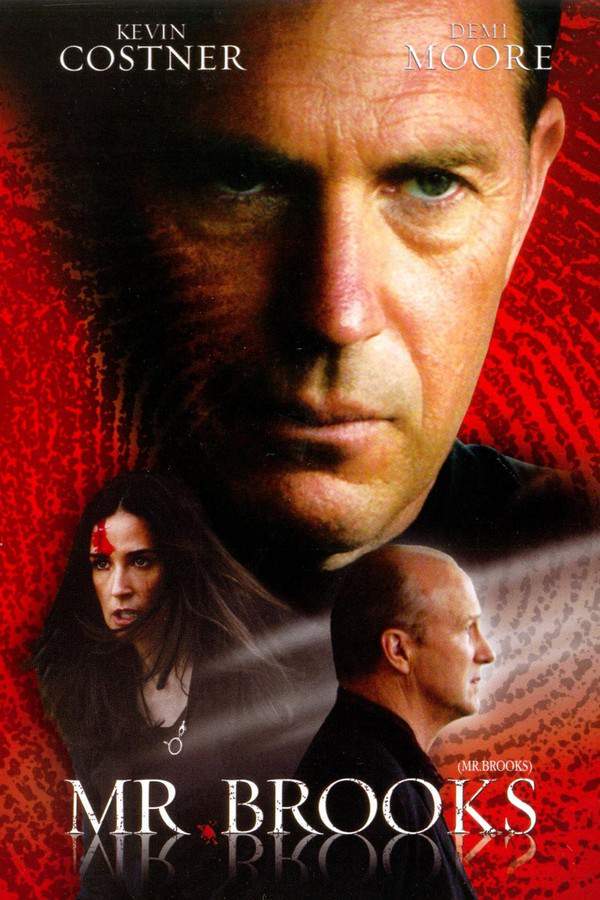
Mr. Brooks (2007) movie poster

Timeline

Mr. Brooks (2007) Timeline Explained – Every Event in Order

Release, runtime and language
2007 · 120 min · English
Directed by
Bruce A. Evans
Starring
William Hurt, Kevin Costner, Demi Moore
Budget
$20M

Respected businessman Earl Brooks leads a seemingly normal life, but he struggles with a dangerous secret—he is also Marshall, a brutal killer. Driven by a dark fascination, Marshall's violent urges threaten to consume Brooks. When a witness discovers his double life, they blackmail him into committing more crimes. A determined detective investigates the escalating series of murders, unknowingly closing in on Brooks/Marshall and forcing them to maintain a precarious balance between their two identities.

On this page (5)
  1. 1 Events in order (14)
  2. 2 Timeline questions answered
  3. 3 Movie threads
  4. 4 Movies like Mr. Brooks
  5. 5 Every angle

14 events in order · contains spoilers

Mr. Brooks Timeline: Events in Chronological Order

Every key event of Mr. Brooks (2007) in order, scene by scene, with when and where it takes place. Use it to untangle flashbacks, time jumps and parallel storylines, to refresh your memory before the sequel or to find the exact scene you are thinking of.

  1. Earl Brooks recognized as 'Man of the Year'

    Earl Brooks, a successful businessman in Portland, Oregon, is celebrated by the Chamber of Commerce for his achievements, earning the title of 'Man of the Year.' This public honor masks his darker side, as he is secretly known as the infamous 'Thumbprint Killer,' a serial murderer who struggles with a hidden addiction to killing.

    Where
    Portland, Oregon
  2. Struggle to resist violent impulses

    For two years, Brooks has been battling his violent urges by attending 12-step meetings. However, the pressure to kill intensifies as his alter ego, Marshall, becomes more insistent on carrying out their dark desires.

  3. First brutal murder after two years

    In a moment of desperation, Brooks succumbs to his violent tendencies and brutally murders a couple in their apartment. He meticulously leaves their bloodied thumbprints on a lampshade to further establish his signature style.

    Where
    Couple's Apartment
  4. Brooks' daughter returns home

    In a surprising twist, Brooks' daughter, Jane, returns home after dropping out of college. Her intention to join her father's company adds complexity to Brooks' already tangled life and raises new concerns about her future.

  5. Mr. Smith finds incriminating evidence

    While at work, Brooks is confronted by Mr. Smith, who blackmails him with incriminating photographic evidence from Brooks' recent murder. Despite his initial hesitation, Brooks becomes entangled in a deadly pact with Smith, leading them down a dangerous path.

    Where
    Brooks' Workplace
  6. Mrs. Brooks reveals Jane's pregnancy

    As tensions rise, Mrs. Brooks divulges shocking news to Earl: Jane is pregnant. This revelation complicates both their lives, as Brooks becomes even more determined to protect his daughter from the dark fate he fears for her.

  7. Detectives investigate potential links to Jane

    Detectives from Palo Alto arrive to investigate a hatchet murder case linked to Jane's past at college. Brooks begins to worry about Jane's potential involvement in the crime, leading him to consider sacrificing her freedom to shield her from their shared legacy of violence.

    Where
    Palo Alto
  8. Brooks plans to create a distraction

    To protect Jane, Brooks devises a plan to commit another murder in Palo Alto, intending to create a separate serial killer myth. This strategy would shift investigators' attention away from Jane and provide her some respite from their dark world.

    Where
    Palo Alto
  9. Brooks pretends to be terminally ill

    As the weight of his crimes grows heavier, Brooks concocts a plan to fake a terminal illness. This ruse is designed to allow him to vanish completely, creating space between himself and law enforcement while ensuring his family's safety.

  10. Brooks targets Detective Atwood's ex-husband

    Researching Detective Tracy Atwood, who is undergoing a difficult divorce, Brooks sets his sights on her ex-husband and his attorney as potential victims. This move is both strategic and desperate, driven by a need to keep his own identity concealed.

  11. Smith's mistake at the murder scene

    In a twist of fate, Smith panics during a murder and accidentally leaves behind crucial DNA evidence. This blunder threatens to unravel their operations and lead the authorities closer to Brooks, placing them both in jeopardy.

    Where
    Murder Scene
  12. Confrontation between Brooks and Smith

    As tensions boil over, Brooks confronts Smith about his reckless actions. Utilizing his cunning, Brooks outmaneuvers Smith, saving his own life while ensuring that he keeps both his identity and dark secrets safe from the law.

  13. Authorities misidentify the killer

    In a tragic mix-up, law enforcement mistakenly celebrates Smith as the true Thumbprint Killer. This unfortunate turn allows Brooks to continue his life of deception, masking his criminal past behind a facade of normalcy.

  14. Brooks' haunting nightmare

    Brooks experiences a chilling nightmare reflecting his deep fears about Jane following in his footsteps. This haunting vision reveals the inescapable nature of his dark legacy and the lengths he will go to protect her from his fate.

Last updated: November 02, 2024 at 11:57

Was this helpful?

Timeline questions answered

Mr. Brooks Timeline Explained: Your Questions Answered

When does it happen, and why in that order? The questions people ask about the chronology of Mr. Brooks (2007): time jumps, flashbacks, cause and effect between scenes and the correct order of events, each answered with spoilers.

Q1

Why does Earl Brooks agree to take Mr. Smith along on his murders?

Brooks agrees because Smith blackmails him with photographic evidence from the couple's murder. The images show Brooks at the crime scene, and Smith uses this leverage to force Brooks into a deadly pact. Despite his initial reluctance, Brooks has no choice but to comply if he wants to keep his identity hidden.

Foreshadowing: Earlier, Brooks struggles with his addiction to killing while Marshall becomes more insistent, suggesting he was already vulnerable to coercion.

  • mr smith
  • blackmail
  • thumbprint killer
  • coercion
Q2

What is Marshall in Mr. Brooks?

Marshall is Brooks' sinister alter ego, manifested as a separate personality that represents his violent urges. Played by William Hurt, Marshall is the embodiment of Brooks' compulsion to kill, the dark side that demands satisfaction. He appears as a physical presence that Brooks converses with, representing the internal battle between his desire to live normally and his addiction to murder.

Foreshadowing: The film establishes early on that Brooks attends 12-step meetings for his addiction to killing, indicating his struggle is ongoing and internal.

  • marshall
  • alter ego
  • split personality
  • thumbprint killer
Q3

Why does Brooks plan to kill Detective Atwood's ex-husband?

Brooks researches Atwood thoroughly and learns she is going through a difficult divorce. He plans to kill her ex-husband and his attorney to eliminate potential witnesses who could help identify him. The murders would also frame Atwood herself, making her seem like a suspect in her ex-husband's death while Brooks maintains his distance from the investigation.

Foreshadowing: Brooks' earlier research into Atwood's divorce shows his strategic approach to selecting victims who would draw less scrutiny.

  • detective atwood
  • ex-husband
  • murder plot
  • jesse vialo
Q4

How does Mr. Smith get caught by police?

Smith panics during a murder and accidentally leaves behind crucial DNA evidence at the crime scene. This mistake proves fatal, he is mistakenly identified as the Thumbprint Killer by authorities. Brooks cleverly outmaneuvers Smith during their confrontation, turning the tables and ensuring his own identity remains concealed while Smith takes the blame.

Foreshadowing: Smith's reckless behavior and lack of experience compared to Brooks' meticulous methods sets up his eventual downfall.

  • dna evidence
  • thumbprint killer
  • mistake
  • arrest
Q5

Why does Brooks fake being terminally ill?

Brooks fakes a terminal illness as part of his plan to disappear completely and escape from law enforcement. By pretending to be dying, he creates an opportunity to vanish without suspicion while also attempting to protect his family from the scandal of his true identity being revealed.

Foreshadowing: The mounting pressure from the police investigation and his daughter's pregnancy drive Brooks to desperate measures.

  • terminal illness
  • escape plan
  • disappearance
  • deception
Q6

What crime might Jane be involved in from college?

Detectives from Palo Alto investigate a hatchet murder connected to Jane's past at college. Brooks and Marshall suspect Jane may have been involved in this violent crime. Fearing his daughter is following his own dark path, Brooks considers sacrificing her freedom to protect her from descending into a life of crime, eventually devising a plan to create a separate serial killer myth to distract police from Jane.

Foreshadowing: Jane's sudden return home after dropping out of college, combined with her pregnancy, raises concerns about what drove her away.

  • jane
  • college
  • hatchet murder
  • palo alto
  • daughter
Q7

Why does Brooks commit a murder in Palo Alto?

Brooks commits another murder in Palo Alto specifically to create a separate serial killer myth. His goal is to shift law enforcement's attention away from Jane and her potential involvement in the college hatchet murder. By establishing a different killer's pattern in a different location, Brooks hopes to clear his daughter's name while maintaining his own elaborate deception.

Foreshadowing: The arrival of Palo Alto detectives investigating a crime linked to Jane creates the immediate motivation for this strategic distraction.

  • palo alto
  • distraction
  • serial killer myth
  • frame
  • jane
Q8

Why does Brooks kill the couple in their apartment?

After two years of resisting his urges through 12-step meetings, Brooks succumbs to his violent addiction. Despite his efforts to live normally as a respected businessman, Marshall, the embodiment of his killing compulsion, becomes increasingly assertive. In a moment of desperation, Brooks gives in to the overwhelming pressure and brutally murders the couple in their apartment, leaving his signature bloodied thumbprints on a lampshade.

Foreshadowing: The film opens with Brooks being celebrated as 'Man of the Year' while secretly battling his dark impulses, establishing the central conflict.

  • couple murder
  • thumbprints
  • addiction
  • two years
  • relapse
Q9

Why do the open curtains matter after the first murder?

When Brooks completes the murder, Marshall notices the couple's curtains were left open, a significant oversight that could potentially expose them to witnesses. This detail highlights Marshall's attention to detail and his role as the more ruthless part of Brooks' personality, critical of any mistake that might lead to their capture.

Foreshadowing: This moment demonstrates Marshall's constant vigilance and criticism, illustrating the dynamic between Brooks and his alter ego.

  • curtains
  • mistake
  • observation
  • detail
Q10

Why does Detective Atwood's divorce matter to Brooks?

Brooks specifically researches Atwood's personal life and discovers she is going through a difficult divorce. This information becomes crucial to his plan because an ex-husband and his attorney represent potential targets Brooks can manipulate. By targeting people connected to Atwood's messy personal life, Brooks calculates he can create more chaos while staying one step ahead of the investigation.

Foreshadowing: Brooks' methodical research into his pursuer shows his strategic intelligence in anticipating police movements.

  • atwood divorce
  • personal life
  • investigation
  • strategy

Movie threads

More Movies Like Mr. Brooks, by Mood & Story

Curated lists built around what makes Mr. Brooks tick: the same mood, the same kind of story or the same emotional payoff. Each list explains why these movies belong together.

Claustrophobic double life thrillers like Mr. Brooks

When a secret identity starts to suffocate the person living it. If the intense psychological pressure of Mr. Brooks captivated you, explore more movies about characters living dangerous double lives. This list features similar tense thrillers where secret identities create a constant, suffocating fear of exposure and lead to gripping moral decay.

  • claustrophobic
  • anxious
  • paranoid
  • suspenseful
  • oppressive
  • psychological
  • Tone: dark, tense, oppressive
  • Pacing: steady, building tension
Why these movies?

The story pattern: The narrative follows a protagonist, often outwardly successful or normal, who harbors a dark and compulsive secret. The plot is driven by the escalating complications of maintaining this duality, typically involving a persistent investigator, a blackmailer, or an unexpected witness. The structure creates a tightening noose around the protagonist, leading to a climax where their two worlds violently collide.

Why they belong together: These films are grouped by their shared focus on duality and the psychological toll of secrecy. They create a distinct, anxious atmosphere through a steady pacing that builds claustrophobia, a dark tone exploring addiction or compulsion, and a heavy emotional weight centered on the inescapability of one's true nature.
Bleak crime stories about moral decay like Mr. Brooks

Stories where the pursuit of vice leads to an inescapable abyss. For viewers who appreciated the heavy themes of addiction and moral collapse in Mr. Brooks, this list features similar dark crime dramas. Discover movies that explore the grim spiral of compulsion, where characters are haunted by their actions and face bleak, unforgiving endings.

  • dark
  • bleak
  • oppressive
  • suspenseful
  • haunted
  • grim
  • Tone: dark, bleak, morally complex
  • Pacing: steady, methodical spiral
Why these movies?

The story pattern: The narrative pattern follows a character grappling with an intrinsic, destructive compulsion. The plot is a downward spiral, where each attempt to control or hide their addiction only deepens their entanglement and moral corruption. External pressures from law enforcement or personal relationships accelerate the decay, culminating in an ending that offers no redemption, only the grim consequences of their actions.

Why they belong together: Movies in this thread share a consistently dark and bleak tone, a high-intensity viewing experience, and a heavy emotional weight. They are united by their exploration of addiction and the irreversible nature of moral decay, often featuring a steady, methodical pacing that makes the protagonist's downfall feel inevitable.

If you liked this

Movies Like Mr. Brooks

Similar movies to Mr. Brooks: the same genre, themes or kind of story. Each one comes with its own plot summary, timeline and ending explained.

Browse all movie summaries

Every angle

Mr. Brooks (2007) Explained: Plot, Timeline & Characters

Everything about Mr. Brooks in one place: what happens in the plot summary, the timeline in chronological order, the characters and meaning and a spoiler-free summary. What's After the Movie adds the cast, box office and post-credit scenes.

Coming soon on iOS and Android

The Plot Explained Movie Summary App

Plot summaries, endings explained and timelines on your phone. Catch up on any movie in minutes, save your favorites and never miss a twist again.

Be the first to know when we launch. Your email stays private, always.

Learn more about the app