Year: 1945
Runtime: 113 min
Language: English
Director: Vincente Minnelli
Budget: $1.7M
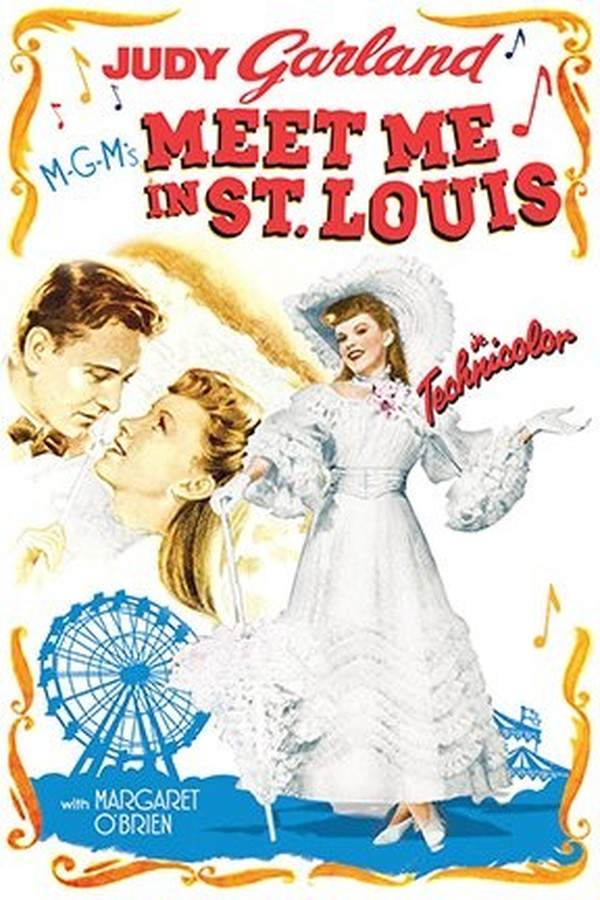
Set in 1904, this beloved musical follows the Smith family as they prepare for the World's Fair in St. Louis. The film centers on Esther Smith and her three sisters, each navigating the challenges and excitement of adolescence. Through song and dance, they experience first loves, family bonds, and the anticipation of a bright future. Featuring a memorable performance by Judy Garland, this classic captures the charm and optimism of a bygone era in vibrant Technicolor.
Find where to stream, rent, or buy Meet Me in St. Louis (1945) in the US with current JustWatch availability, up-to-date pricing, and platform listings for subscription, rental, and digital purchase options.
Warning: spoilers below!
Haven’t seen Meet Me in St. Louis yet? This summary contains major spoilers. Bookmark the page, watch the movie, and come back for the full breakdown. If you're ready, scroll on and relive the story!
Trace every key event in Meet Me in St. Louis (1945) with our detailed, chronological timeline. Perfect for unpacking nonlinear stories, spotting hidden connections, and understanding how each scene builds toward the film’s climax. Whether you're revisiting or decoding for the first time, this timeline gives you the full picture.
Last updated: November 21, 2024 at 10:47
Find frequently asked questions about the Meet Me in St. Louis (1945) timeline, including chronological order, nonlinear jumps, cause-and-effect links, and scene sequence clarifications. This timeline FAQ helps explain when key events happen, how moments connect, and why the story unfolds in that specific order.
Mr. Smith decides to keep the family in St. Louis after seeing how heartbroken Tootie is about the move. When Tootie cries about missing Santa Claus's visit, her genuine distress prompts Mr. Smith to cancel the relocation plans entirely. The family then spends their final night in St. Louis at the fairgrounds, celebrating their decision to stay.
Earlier scenes establish Tootie's deep attachment to her home and traditions, making her Christmas Eve meltdown the emotional breaking point that changes everything.
Esther orchestrates an early dinner to ensure her family is occupied and away from the telephone when Warren Sheffield calls Rose at 6:30 PM. She wants Rose to be able to take the long-distance call privately without Mr. Smith or other family members overhearing, as the call represents a significant romantic development.
The dinner schedule change creates tension throughout the evening, with the family scrambling to finish eating before the phone rings.
Esther physically confronts John after Tootie comes home with a bloody lip on Halloween night, claiming John attacked her. Furious about her younger sister being hurt, Esther lashes out and injures John in her revenge. However, the circumstances of Tootie's injury are later revealed to be exaggerated or misunderstood.
Earlier scenes establish Esther's protective nature toward her younger sisters, making her explosive reaction believable despite its intensity.
Rose firmly rejects Warren Sheffield despite his wealth and status as a Yale heir. She declares him a "Raving Beauty" as she turns him down, choosing to focus on her own path rather than pursuing a romantic relationship with him at that time. The rejection happens during Lon's farewell party.
Rose's independence and firm stance on her own decisions are established early in the film, setting up her rejection of Warren's advances.
John proposes to Esther at the Christmas ball, but she feels conflicted because accepting would mean him sacrificing his education and future career. Esther realizes the weight of this sacrifice and struggles with whether to accept. The film doesn't explicitly show whether John follows through with his education, but the proposal creates a significant emotional dilemma for Esther.
Esther's earlier conversation with her mother about whether she's too young for love hints at her hesitation to commit.
During a candid mother-daughter conversation on stage, Mrs. Smith shares the story of her own first love with Mr. Smith. She tells Esther that when she knew she was falling in love, "You'll hear a bell", a metaphor for recognizing true love. This heartwarming revelation surprises Esther and helps her understand her mother's perspective on romance.
This intimate conversation occurs right before the phone call chaos, establishing the family's emotional undercurrents.
Tootie believes that if the family moves to New York before Christmas, Santa Claus won't be able to find them and won't deliver her presents. This childlike fear represents her deepest anxiety about leaving St. Louis, and her tearful plea about Santa becomes the pivotal moment that moves Mr. Smith to keep the family in St. Louis.
Tootie's vivid imagination and strong attachments to her home and traditions are established in early scenes.
Mr. Smith announces the family will relocate to New York for a career opportunity, presenting it as a positive change for the family. He tries to reassure everyone that the move won't be drastic, but his optimism doesn't ease his family's concerns about leaving their beloved St. Louis home.
The announcement comes after Halloween, creating tension that builds through the Christmas portion of the film.
The 1904 World's Fair serves as the backdrop and catalyst for much of the film's action. Set in St. Louis, the fair represents hope, excitement, and the future. The family's decision to stay in St. Louis allows them to experience the fair together, and the final scene takes place at the fairgrounds as they celebrate their decision to remain in the city.
The film's title song "Meet Me in St. Louis" references the fair, and the family initially prepares to leave just as the fair approaches.
Esther and John are formally introduced at Lon's farewell party. Esther pretends not to recognize him, leading to a playful misunderstanding when she accidentally mixes up his hat with someone else's. Later at the party, she invites John to join her and Agnes at the fairgrounds the following Friday, setting up their first official outing.
Earlier tension between them (Esther trying to catch his eye at dinner) establishes mutual interest before their formal introduction.
Warren Sheffield, a wealthy Yale scholar and heir to a fortune, calls to speak with Rose romantically. The entire family knows about the call except Mr. Smith, creating household tension. Esther's scheme to change dinner time stems from wanting Rose to take the call privately, highlighting the significance of this potential romance for the family.
The phone call's importance is established early, driving much of the pre-dinner chaos in the first act.
Lon Smith is heading off to Princeton University for his education. The family holds a farewell party for him before his departure. His absence represents one of the first major transitions the family faces, and his excitement about his Princeton catalog is shown early in the film.
Lon's departure is mentioned alongside other family members' summer activities, establishing his upcoming change of status.
Discover curated groups of movies connected by mood, themes, and story style. Browse collections built around emotion, atmosphere, and narrative focus to easily find films that match what you feel like watching right now.
Gentle stories of family life, told through charming, seasonal snapshots.If you liked the gentle, episodic storytelling of Meet Me in St. Louis, explore more movies with a similar feel. These films offer comforting stories centered on family bonds, often structured around seasonal events or small-town life, with a light emotional weight and a steady, charming pace.
Narratives in this thread often unfold in a series of vignettes or episodes, much like chapters in a family album. Conflicts are mundane and relatable—sibling rivalry, a potential move, first loves—and are typically resolved in a way that reaffirms family unity. The journey is more about savoring moments than reaching a dramatic climax.
Movies are grouped here for their shared focus on comforting nostalgia, low-stakes family dynamics, and a storytelling rhythm that feels more like a gentle meander than a sprint. They prioritize mood and sentiment over complex plotting, resulting in a consistently light, optimistic viewing experience.
Musicals and dramas radiating hope and wonder from a bygone era.Fans of the hopeful, musical spirit of Meet Me in St. Louis will enjoy these similar movies. Discover stories set at the turn of the century that capture a sense of optimism, technological progress, and family-centered joy, often featuring musical numbers and a brightly nostalgic aesthetic.
The narrative pattern often involves characters embracing or anticipating a bright future, symbolized by events like world's fairs or new inventions. Personal journeys of romance or ambition are set against this backdrop of progress, with conflicts serving to highlight the enduring values of community and family rather than creating lasting despair.
These movies are united by their specific historical setting and the uplifting mood it inspires. They share a visual and musical vibrancy that celebrates the past with affection, coupled with straightforward stories that assure viewers of a happy conclusion, making them feel-good experiences.
Don't stop at just watching - explore Meet Me in St. Louis in full detail. From the complete plot summary and scene-by-scene timeline to character breakdowns, thematic analysis, and a deep dive into the ending - every page helps you truly understand what Meet Me in St. Louis is all about. Plus, discover what's next after the movie.
Read a complete plot summary of Meet Me in St. Louis, including all key story points, character arcs, and turning points. This in-depth recap is ideal for understanding the narrative structure or reviewing what happened in the movie.
Discover the characters, locations, and core themes that shape Meet Me in St. Louis. Get insights into symbolic elements, setting significance, and deeper narrative meaning - ideal for thematic analysis and movie breakdowns.
Discover movies like Meet Me in St. Louis that share similar genres, themes, and storytelling elements. Whether you’re drawn to the atmosphere, character arcs, or plot structure, these curated recommendations will help you explore more films you’ll love.
Meet Me in St. Louis (1945) Plot Summary & Movie Recap
Meet Me in St. Louis (1945) Scene-by-Scene Movie Timeline
Meet Me in St. Louis (1945) Spoiler-Free Summary & Key Flow
Movies Like Meet Me in St. Louis – Similar Titles You’ll Enjoy
Judy (2019) Complete Plot Breakdown
Hello, Dolly! (1969) Story Summary & Characters
The Music Man (1962) Movie Recap & Themes
On Moonlight Bay (1951) Full Summary & Key Details
Meet Me Next Christmas (2024) Full Summary & Key Details
Meet Me at the Fair (1953) Film Overview & Timeline
Love Me or Leave Me (1955) Movie Recap & Themes
Meet Me in Las Vegas (1956) Full Movie Breakdown
Meet Me Tonight (1952) Complete Plot Breakdown
The Dolly Sisters (1945) Plot Summary & Ending Explained
Lovely to Look At (1952) Spoiler-Packed Plot Recap
Love Me Tonight (1932) Film Overview & Timeline
Meet Me in St. Louis (1959) Film Overview & Timeline
St. Louis Blues (1929) Movie Recap & Themes
St. Louis Blues (1939) Story Summary & Characters