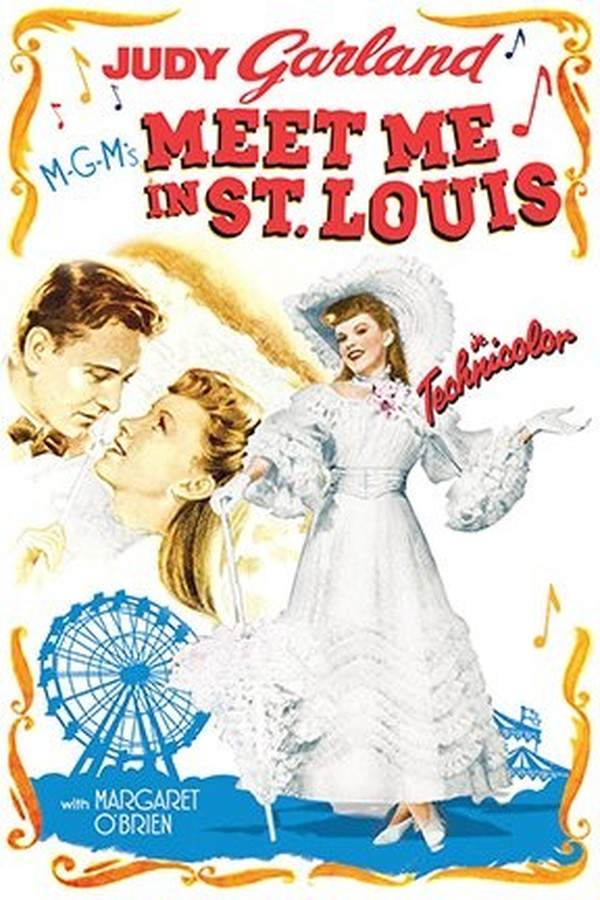
As the scorching summer of 1903 descends upon the Smith household, the family's everyday lives come to life. Young Tootie, full of imagination, spends her time playing with her dolls, while Agnes gracefully takes to her stilts. Esther excels on the tennis court, Rose enjoys a quiet afternoon, and Lon eagerly flips through his Princeton catalog. Meanwhile, Mrs. Smith and Katie, their devoted maid, embark on a shopping trip, as Grandpa cherishes moments with Agnes, and Mr. Smith heads to the office. Everything appears to unfold in a comforting routine until Esther whispers a request to Katie that sparks a change in their dinner schedule—dinner will be served an hour early.
The reason for this alteration becomes evident when Rose enters, excitement sparkling in her eyes. She reveals that Warren Sheffield, a prominent Yale scholar and heir to a considerable fortune, has scheduled a long-distance call for 6:30 PM, coinciding with their usual dinner time. Esther's clever plan aims to keep her family out of earshot for this call, but fate has its own intentions.
As the clock nears the appointed time, Esther makes vain attempts to catch the eye of John Truitt with the help of Agnes, all while Mr. Smith wrestles with his frustrations over a lost case at work, seeking solace in the bath. Amid the familial chaos, Tootie and Agnes engage in a fierce rivalry over a beloved doll, echoing the sentiment of unity that should exist amongst them. Following the upheaval, Esther and Mrs. Smith find themselves alone on stage, where they share a meaningful discussion about love's complexities and whether Esther is too young to indulge in such emotions. Mrs. Smith surprises Esther with a heartfelt story of her own first love for Mr. Smith: > "You'll Hear a Bell."
As dinner approaches, tension mounts in the household. Everyone is acutely aware of Warren's phone call's significance, except for Mr. Smith, who remains blissfully ignorant of the ticking clock. His arrival at the dinner table triggers a frenzied rush as the family scrambles to finish their meals to avoid the inevitable. However, just as they prepare to escape, the phone's shrill ring pierces the air. Mr. Smith, baffled by the operator's news of a call from New York, is met with chaos as Esther, overwhelmed with frustration, reveals the entire situation. The realization strikes Mr. Smith that everyone has been in the know except him. As the phone rings again, Rose answers but is left dissatisfied by John Truitt’s nervous inquiry about her well-being.
As months pass, the family gathers for Lon’s farewell party ahead of his Princeton journey. Warren attempts to reconcile with Rose, but she remains firm in her decision to reject him with a resolute > "Raving Beauty." Amidst the festivities, Esther is introduced to John Truitt, pretending not to recognize him, and misplacing his hat amongst the piano. The party takes a lively turn as Lon and Warren lead a joyous dance to "Skip to My Lou." Meanwhile, Tootie and Agnes sneak upstairs, only to be discovered, leading to an entertaining performance of "Under the Bamboo Tree." As the night comes to a close, Esther invites John to join them at the Fairgrounds the following Friday, which he readily accepts but leaves her feeling slightly disappointed.
When Friday arrives, the trio hops onto a trolley bound for the fairgrounds, where John Truitt almost misses his ride, setting the stage for the adventures that lie ahead through the enchanting melody of "The Trolley Song."
Act II unfolds on a thrilling Halloween night, filled with supernatural spirit as Tootie and Agnes prepare for a trick-or-treating adventure. Back home, Katie questions the girls about their refusal to attend the Halloween Social, met with a firm "no" from both due to their distaste for men. Katie offers sage advice with "Touch of the Irish," but just then, a spine-chilling scream pierces the air. Tootie returns nursing a bloody lip, claiming that John Truitt caused her injury. Yet, little does she know, Esther is set on exacting revenge when John arrives to apologize. Esther's fury boils over as she confronts John, leaving him bruised in both body and spirit.
As the evening unfolds, the family is hit with startling news: they're moving to New York. The announcement sends tremors through the household, with each member grappling with this unexpected upheaval. Mr. Smith tries to reassure them that the change won't be drastic, but his optimism fails when met with skepticism, particularly from Mrs. Smith.
Fast forward to winter, Christmas in St. Louis is upon them, and the characters grapple with romantic possibilities beneath the mistletoe as Rose and Warren find themselves dateless. Esther, along with Katie, devises a plan to fill Lucille's dance card with uninterested suitors. But fate plays a hand when John Truitt appears, confessing he cannot attend the dance due to a delay with his tuxedo. Grandpa comes to the rescue, extending his support to Esther, providing her with a ticket to the dance and promising memorable moments ahead.
On the night of the grand ball, Lucille seizes the moment, proposing a partnership with Warren, Rose, herself, and Lon for the evening's festivities. Oblivious to their arrangement, Esther inadvertently commandeers Lucille’s dance card, leaving her friend feeling neglected. Just then, John arrives in a perfectly fitted tuxedo, having been relentless in tracking down the tailor. As the ball draws to a close, John surprises Esther with a romantic proposal, yet she grapples with guilt, realizing that accepting would entail him sacrificing his education for a shared future in New York.
The weight of this decision sinks in as Esther seeks sanctuary back home, only to find Tootie distraught over the prospect of missing Santa's visit if they leave St. Louis. Esther tries to lift her spirits with painted dreams of New York's joys > "Have Yourself a Merry Little Christmas." Mr. Smith, however, perceives Tootie's sorrow and revisits their plans, leading to the abrupt halt of their move.
As the family reconciles with this sudden turn of fate, they decide to cherish their time in St. Louis, heading out for an exhilarating night at the fair—a fitting conclusion for all their adventures, as they embrace the music of "Trolley Song" and "Meet Me in St. Louis" cascading into the night.