Plot Explained Spoilers guaranteed!
Plot Explained

Browse by genre

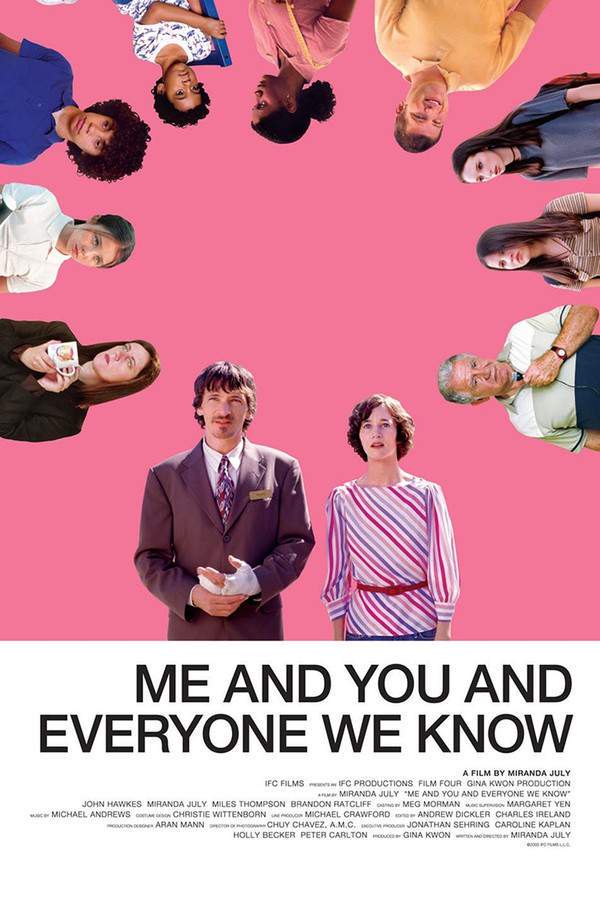
Me and You and Everyone We Know (2005) movie poster

Plot Summary

Me and You and Everyone We Know (2005) Plot Summary Explained

Release, runtime and language
2005 · 91 min · English
Loading streaming availability…

A recently divorced father attempts to move on and find love again, cautiously beginning a relationship with an eccentric artist. Simultaneously, his two sons explore the challenges and joys of navigating romantic relationships, leading to both comedic and touching moments. The film explores the various forms of connection and the difficulties of opening oneself up to new relationships after loss.

On this page (6)
  1. 1 Where to watch
  2. 2 What happens: full plot
  3. 3 Plot questions answered
  4. 4 Movie threads
  5. 5 Movies like Me and You and Everyone We Know
  6. 6 Every angle
Loading streaming availability…

Full plot summary · contains spoilers

What Happens in Me and You and Everyone We Know: Full Plot Summary

The whole story of Me and You and Everyone We Know (2005) explained, from the opening scene to the final frame: every key event, every twist and what it all adds up to. Read it as a quick recap before the sequel, to check a scene you missed, or to finally understand what really happened.

Richard, portrayed by John Hawkes, is a shoe salesman grappling with the aftermath of his recent separation from his wife, Pam (JoNell Kennedy). Ejected from their shared life, he now strives to create a new world for himself and his two children, Peter (Miles Thompson) and Robby (Brandon Ratcliff). The separation has been particularly harsh, with Pam retaining everything from her family's side, leaving Richard in a state of confusion and despair. This emotional struggle leads Richard to take drastic measures, even injuring himself in an act of frustration.

Amidst this turmoil, Richard crosses paths with Christine (Miranda July), a unique senior cab driver and aspiring video artist. Their interaction begins when Christine transports a client, Michael (Hector Elias), to shop for shoes, sparking a budding romance. Noticing Christine's scraped ankles, Richard assists her by selling a new pair of shoes, deepening their connection.

Christine is dedicated to her art, working tirelessly on a video project she wishes to submit to a contemporary art museum. However, she faces dismissal from the pretentious Nancy Harrington (Tracy Wright), who embodies the snobby critique of the art world, confusing genuine creativity with commonplace trash. After a comical incident where an artist treats a burger wrapper as art, Nancy insists that Christine mail her project instead of accepting it on the spot.

As their relationship develops, Richard and Christine enjoy a casual walk following Richard's work day. They begin to dream about a shared future, yet this moment of intimacy quickly turns precarious when Richard feels overwhelmed and asks Christine to exit his car before driving away in confusion.

Meanwhile, the two brothers, Robby and Peter, experiment with an online chat that stirs controversy and curiosity, leading to Robby meeting a woman in the park who, realizing he’s just a child, walks away after an unexpected kiss. Robby also finds a close companion in Silvie, a neighborhood girl raised by her parents, Colette Kilroy and James Kayten.

The story further unfolds with teenagers Heather (Natasha Slayton) and Rebecca (Najarra Townsend), who explore their budding friendship with their older neighbor Andrew (Brad William Henke). Their playful yet complicated dynamic involves flirty exchanges and misinterpreted signals, which culminates in shocking encounters that blur the lines of innocence.

Despite Christine's initial failures at the museum, her persistence pays off as her work gains unexpected acceptance from the curator—a woman connected to the boys. As the characters' lives intertwine, Peter strikes a friendship with Silvie that reveals deeper themes of hope and aspiration, epitomized by the hope chest she dreams of filling for her future marriage.

In a poignant finale, the narrative threads converge as Richard and Christine acknowledge their feelings for each other, and Robby discovers the sounds that awaken him at dawn are simply a businessman passing time—an encounter that symbolizes the mundane beauty of life. When Robby is gifted a quarter by this stranger, it serves as a metaphor for time and its ever-passing nature, inviting reflection on the mosaic of relationships that color their lives.

Last updated: November 03, 2024 at 14:39

Was this helpful?

Plot questions answered

Me and You and Everyone We Know Plot Explained: Your Questions Answered

The questions people ask most about Me and You and Everyone We Know (2005): what happens in the confusing scenes, why the characters do what they do, the twists, hidden details and what the ending means. Each answer contains spoilers.

Q1

Why does Richard injure himself after his separation?

Richard injures himself as a desperate cry for help after being ejected from his home and losing everything in the separation. The emotional turmoil of losing his wife, Pam, and being left with nothing from her family's side leaves him feeling lost, confused, and overwhelmed. This act of self-injury is meant to signal his deep desperation and need for change in his life, showing the severity of his emotional state.

  • richard
  • self-injury
  • separation
  • emotional breakdown
  • cry for help
Q2

Why does Richard ask Christine to leave his car?

Richard asks Christine to exit the car because he becomes overwhelmed by the intimacy of the moment. After enjoying a casual walk and beginning to dream about a shared future with Christine, Richard experiences panic and confusion about moving forward with a new relationship. His emotional instability from the recent separation causes him to retreat suddenly, leaving both of them uncertain about where they stand.

  • richard
  • christine
  • car
  • relationship
  • emotional overwhelm
  • retreat
Q3

What happens to Christine's video art project at the museum?

Christine's video project initially gets dismissed by snobby art critic Nancy Harrington, who treats it as unworthy. However, Christine persists and eventually her work gains unexpected acceptance from the museum curator, who turns out to have a connection to the boys. This acceptance represents a transformative moment for Christine, validating her artistic ambitions despite the initial rejection.

  • christine
  • video art
  • museum
  • nancy harrington
  • acceptance
  • curator
Q4

What is the significance of the businessman and quarter at the end?

Robby discovers the sounds that wake him at dawn are simply a businessman passing time nearby, not something mysterious. This encounter symbolizes finding beauty in everyday, mundane moments of life. When the stranger gifts Robby a quarter, it represents the fleeting nature of time and serves as a metaphor for the passage of time and the small connections that shape our lives.

  • robby
  • businessman
  • quarter
  • ending
  • symbolism
  • time
  • dawn
Q5

What happens when Robby meets a woman from the online chat in the park?

Robby and his brother Peter experiment with an online chat, which leads Robby to arrange a meeting with a woman in the park. The encounter becomes awkward and humorous when the woman realizes Robby is just a child after he kisses her. Disappointed and uncomfortable, she walks away, leaving Robby to confront the reality of his online interactions.

  • robby
  • online chat
  • park
  • woman
  • encounter
  • awkward
Q6

What is the hope chest Silvie talks about?

Silvie, a neighborhood girl befriended by Robby and Peter, shares her dreams of filling a hope chest for her future marriage. This hope chest represents her aspirations for adulthood and her hopeful outlook on life. The friendship between Peter and Silvie reveals deeper themes of hope and aspiration, showing how young people dream about their futures.

  • silvie
  • hope chest
  • marriage
  • future
  • dreams
  • aspirations
Q7

What is the nature of the teenagers' relationship with Andrew?

Teenagers Heather and Rebecca explore a complicated dynamic with their older neighbor Andrew. Their relationship involves flirty exchanges and misinterpreted signals, which lead to shocking encounters that blur the lines of innocence. The story portrays the awkward and sometimes dangerous exploration of adolescent curiosity when interacting with adults.

  • heather
  • rebecca
  • andrew
  • teenagers
  • neighbor
  • flirty
  • relationship
Q8

Why does Pam keep everything after the separation?

Pam retains everything from her family's side of the marriage, leaving Richard in a state of confusion and despair. The summary indicates the separation was particularly harsh, with Pam keeping all the family assets while Richard is left to rebuild his life with nothing. This one-sided outcome contributes significantly to Richard's emotional breakdown and feeling of loss.

  • pam
  • richard
  • separation
  • divorce
  • assets
  • custody
Q9

How does the shoe shopping lead to Richard and Christine's relationship?

Richard and Christine's connection begins when Christine transports a client, Michael, to shop for shoes. Noticing Christine's scraped ankles, Richard assists her by selling her a new pair of shoes. This simple act of kindness creates a bond between them, sparkin their budding romance and establishing trust early in their relationship.

  • shoes
  • richard
  • christine
  • shopping
  • connection
  • romance
Q10

Why does Nancy Harrington dismiss Christine's art?

Nancy Harrington, a snobby art critic, dismisses Christine's video project as unworthy, confusing genuine creativity with commonplace trash. After a comical incident where an artist treats a burger wrapper as art, Nancy insists Christine mail her project instead of accepting it on the spot. This represents the pretentious and exclusionary nature of the contemporary art world that Christine must navigate.

  • nancy harrington
  • art criticism
  • video project
  • museum
  • pretentious

Movie threads

More Movies Like Me and You and Everyone We Know, by Mood & Story

Curated lists built around what makes Me and You and Everyone We Know tick: the same mood, the same kind of story or the same emotional payoff. Each list explains why these movies belong together.

Movies like Me and You and Everyone We Know: Quirky Bittersweet Character Studies

Offbeat stories finding humor and heart in lonely characters seeking connection. If you liked the charmingly odd and emotionally resonant vibe of Me and You and Everyone We Know, explore these movies that similarly mix gentle humor with poignant observations on loneliness and connection. These films are for viewers who enjoy character-driven stories about misfits finding their way.

  • quirky
  • bittersweet
  • lonely
  • hopeful
  • awkward
  • poignant
  • Tone: bittersweet, quirky, reflective
  • Pacing: steady, observational
Why these movies?

The story pattern: Stories in this thread typically unfold through the parallel, often intersecting journeys of multiple characters. The narrative structure is episodic, building a mosaic of small, meaningful moments rather than a single driving plot. The central conflict is often internal—the struggle against loneliness and the awkward, brave steps taken toward human connection.

Why they belong together: Movies are grouped here for their distinctive blend of whimsical, eccentric characters with a grounding sense of melancholy and hope. They share a tone that is neither purely comedic nor purely dramatic, but a very specific, authentic-feeling mix of the two. The pacing is deliberate, allowing time to soak in the characters' unique worlds.

Interwoven Life Stories like in Me and You and Everyone We Know

Stories weaving together multiple characters exploring love and loneliness. Fans of the multi-character narrative in Me and You and Everyone We Know will appreciate these other films that weave together separate but connected stories. Discover similar movies that explore the theme of human connection through the parallel lives of an ensemble cast.

  • interwoven
  • ensemble
  • contemplative
  • realistic
  • poignant
  • lonely
  • Tone: poignant, realistic, contemplative
  • Pacing: steady, methodical
Why these movies?

The story pattern: The narrative pattern involves introducing a group of characters, often in the same community or city, whose individual storylines run parallel. The plot progresses not through a single climax, but through the cumulative emotional weight of these interconnected journeys. The structure emphasizes how we are all simultaneously isolated and linked, creating a complex, realistic portrait of a community or social group.

Why they belong together: These films are grouped by their shared narrative structure and thematic focus. They use the ensemble/mosaic format to explore the nuances of a central idea from multiple angles, creating a richer, more complex understanding than a single protagonist's story could provide. The pacing is often steady, allowing each thread room to breathe.

If you liked this

Movies Like Me and You and Everyone We Know

Similar movies to Me and You and Everyone We Know: the same genre, themes or kind of story. Each one comes with its own plot summary, timeline and ending explained.

Browse all movie summaries

Every angle

Me and You and Everyone We Know (2005) Explained: Plot, Timeline & Characters

Everything about Me and You and Everyone We Know in one place: what happens in the plot summary, the timeline in chronological order, the characters and meaning and a spoiler-free summary. What's After the Movie adds the cast, box office and post-credit scenes.

Coming soon on iOS and Android

The Plot Explained Movie Summary App

Plot summaries, endings explained and timelines on your phone. Catch up on any movie in minutes, save your favorites and never miss a twist again.

Be the first to know when we launch. Your email stays private, always.

Learn more about the app