Plot Explained Spoilers guaranteed!
Plot Explained

Browse by genre

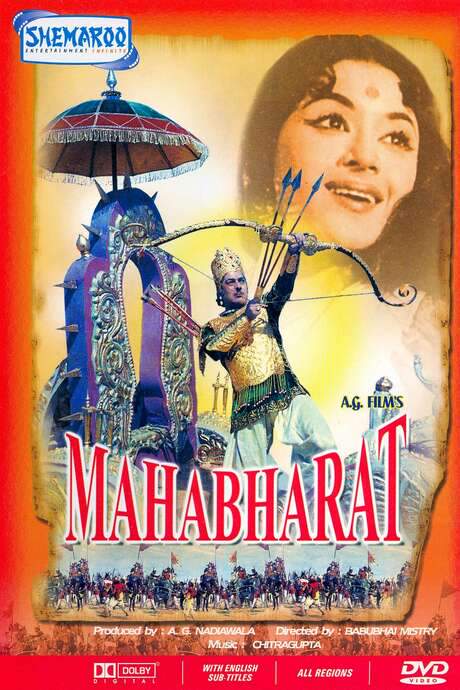
Mahabharat (1965) movie poster

Characters & Themes

Mahabharat (1965) Characters, Setting & Themes Explained

Release, runtime and language
1965 · 163 mins · Hindi
Directed by
Babubhai Mistri
Starring
Anoop Kumar, Pradeep Kumar, Dara Singh, Joginder Singh, Padmini, Abhi Bhattacharya

An adaptation of the ancient Indian epic The Mahabharata, it dramatizes the monumental conflict between the cousins Pandavas and Kauravas—descendants of the same ancestor—whose rivalry culminates in a massive war that explores duty, honor, and destiny.

On this page (7)
  1. 1 Characters explained (7)
  2. 2 Where & when it takes place
  3. 3 Themes & meaning (3)
  4. 4 Character & meaning questions
  5. 5 Movie threads
  6. 6 Movies like Mahabharat
  7. 7 Every angle

7 main characters · contains spoilers

Mahabharat Characters Explained: Who Is Who

The main characters of Mahabharat (1965), heroes and villains: what drives them, how they change over the course of the story and what each of them reveals about the film's bigger ideas.

  • Arjun - Pradeep Kumar

    A master archer and pivotal Pandava, Arjun wrestles with the moral weight of killing his kin and gurus. Guided by Krishna, he faces existential doubts but ultimately channels his skill and duty to uphold his brothers and Draupadi. His arc blends battlefield prowess with inner conscience during the epic journey.

    • 🏹 Hero
    • 🧭 Strategist
  • Draupadi - Padmini

    The Pandavas' wife whose dignity becomes a focal point of the conflict. She endures humiliation and injustice, and her rise as a symbol of resilience catalyzes the resolve of her husbands. Her presence intertwines division and unity among the brothers.

    • 👑 Queen
    • 💖 Loved & Respected
  • Krishna - Abhi Bhattacharya

    A divine guide and charioteer to Arjun, Krishna reveals his true nature and counsel at crucial moments. He mediates the dice crisis and Arjun's moral struggle, shaping choices that influence the war's outcome. His wisdom frames a timeless dialogue on duty and grace.

    • 🕊️ Divine
    • 🧭 Charioteer
  • Karna - Sivaji Ganesan

    Born of Kunti but raised away from his birth family, Karna embodies unwavering generosity and tragic honor. Rejected by mentors, he becomes a formidable rival to Arjun, driven by loyalty and a complex sense of injustice. His fate binds him to the conflict despite his noble codes.

    • 🗡️ Warrior
    • ⚔️ Rival
  • Duryodhan - Bhushan Tiwari

    The eldest Kaurava, defined by pride and a relentless quest for supremacy. He humiliates Draupadi and orchestrates schemes that plunge the kingdom into war. His stubborn pursuit of power underscores the epic's central conflict between pride and righteousness.

    • ⚔️ Antagonist
    • 👑 Pride
  • Shakuni - Jeevan Dhar

    A cunning advisor whose machinations fuel the dice game and the feud between the cousins. His plots exploit weakness and sow distrust, turning initial disagreements into a full-blown war. He embodies strategic deceit behind the throne.

    • 🧠 Mastermind
    • 🗡️ Schemer
  • Bhim - Dara Singh

    The mighty Pandava with immense strength and a gentle heart. He defeats demons, protects his brothers, and embodies a blend of raw power and protective loyalty. His actions catalyze major turning points, including his bond with Hidimba and the birth of Ghatotkach.

    • 💪 Strength
    • 🛡️ Protector

Last updated: October 04, 2025 at 18:37

Was this helpful?

Setting

Where and When Does Mahabharat Take Place?

The setting of Mahabharat (1965): the year and time period, the places and locations, and how they shape the characters, the mood and the tension of the story.

Time period

Location

Hastinapur, Ganga river, Khandavprasth, Indraprasth, Panchal, Kurukshetra

The story unfolds across ancient Indian realms, starting in Hastinapur and moving through forests and embattled cities. Indraprasth, transformed from Khandavprasth, becomes the Pandavas' capital before the great war. The epic culminates on the battlefield of Kurukshetra, a stage for tests of dharma, loyalty, and fate.

  • 🗺️ Kingdoms
  • 🏛️ Mythology
  • ⚔️ War

Last updated: October 04, 2025 at 18:37

Was this helpful?

3 major themes

Mahabharat Meaning: Themes & Message Explained

What is Mahabharat (1965) really about? The emotional, social and philosophical themes the film keeps returning to, its symbolism and the message beneath the surface.

  • Dharma

    Duty and morality drive the actions of both Pandavas and Kauravas. The narrative tests what is right versus what is easy, from the dice game to the decision to wage war. Krishna's guidance and Draupadi's dignity frame how characters interpret their obligations. The clashes reveal how personal choices shape the fate of nations.

  • Fate vs Free Will

    Prophecies, identity, and social constraints push characters toward destined paths, even as they exercise agency. The exile, the disguise of identities, and the war arena illuminate how much of life is preordained versus chosen. The epic pivots on pivotal choices that redefine who they are.

  • Loyalties & Alliance

    Bonds within the Pandava brothers, Draupadi's support network, and Krishna's mentorship illustrate loyalty under strain. Betrayals and strategic alliances test trust and unity. The struggle also shows how alliances with divine or mortal allies alter outcomes in this war between good and evil.

Last updated: October 04, 2025 at 18:37

Was this helpful?

Character & theme questions

Mahabharat Characters & Meaning: Your Questions Answered

The questions people ask about Mahabharat (1965): who the characters really are, their relationships, what the symbols mean, where it takes place and what the movie is really about. Each answer contains spoilers.

Q1

Where is the story of the Pandavas and Kauravas set?

The epic unfolds across ancient Indian kingdoms, primarily in Hastinapur, the capital of the Kuru dynasty. The Pandavas later establish their capital at Indraprasth after transforming the wilderness of Khandavprasth. The final confrontation takes place at Kurukshetra, a sacred battlefield that becomes the stage for the great war between cousins.

  • hastinapur
  • indraprasth
  • kurukshetra
  • ancient india
  • kingdoms
Q2

What is the significance of Kurukshetra in the story?

Kurukshetra is the sacred war ground where the decisive battle between the Pandavas and Kauravas unfolds. Known as the 'Field of Dharma,' it represents more than a physical location, it is a spiritual arena where questions of duty, righteousness, and cosmic order are tested through warfare. The setting gives its name to the Bhagavad Gita discourse between Krishna and Arjun.

  • kurukshetra
  • battlefield
  • dharma
  • war
  • field of righteousness
Q3

What does the Mahabharat say about dharma and moral duty?

The epic centers on the tension between dharma (righteous duty) and personal desire. Both Pandavas and Kauravas justify their actions through competing interpretations of duty, from the fateful dice game to the decision to wage war. Krishna's counsel to Arjun frames dharma as accepting one's role regardless of consequences, while Draupadi's dignity becomes a test case for what honor truly demands.

  • dharma
  • moral duty
  • righteousness
  • krishna guidance
  • ethics
Q4

How does the Mahabharat explore fate versus free will?

The narrative presents destiny as predetermined, prophecies shape characters' paths from birth, yet characters repeatedly face choices that redefine their identities. The exile period and disguised identities test agency within constraints. Even the great war unfolds according to divine plan, but characters must still choose how to act within that framework, blending preordained fate with human decision-making.

  • fate
  • free will
  • destiny
  • prophecy
  • choice
Q5

What role do loyalties and alliances play in the Mahabharat?

Loyalty drives the story's fractures and resolutions. The Pandava brothers' bond remains steadfast through exile, while strategic alliances, with divine allies like Krishna and mortal kings, determine war outcomes. Betrayals, particularly Shakuni's manipulations and Duryodhan's dishonorable acts, test trust and expose how alliances forged in greed ultimately collapse under moral weight.

  • loyalty
  • alliances
  • pandavas
  • kauravas
  • brotherhood
  • shakuni
Q6

Who is Krishna and what is his role in the story?

Krishna serves as the divine charioteer and philosophical guide to Arjun, revealing his cosmic nature when needed. He mediates the dice game crisis, counsels Arjun through moral paralysis on the battlefield, and shapes strategic decisions that influence the war's outcome. His wisdom provides the spiritual anchor to the narrative, framing duty and grace through the Bhagavad Gita.

  • krishna
  • charioteer
  • divine guide
  • bhagavad gita
  • mentor
Q7

Who is Arjun and what defines his character?

Arjun is the master archer and most skilled warrior among the Pandavas, whose journey blends unparalleled battlefield prowess with profound inner conscience. He wrestles with the moral weight of killing his kin and teachers, experiencing existential doubt before receiving Krishna's counsel. His arc represents the struggle between attachment and duty, ultimately channeling his abilities to uphold righteousness.

  • arjun
  • archer
  • pandava
  • warrior
  • conscience
Q8

Who is Draupadi and why is she important?

Draupadi is the shared wife of the five Pandavas, whose dignity becomes a focal point of the epic's moral conflict. Her humiliation at the dice game catalyzes the Pandavas' resolve for war, transforming her into a symbol of resilience and righteous anger. She represents both the vulnerability of women in that era and the unifying force that binds the Pandava brothers.

  • draupadi
  • wife of pandavas
  • honor
  • resilience
  • symbol
Q9

Who is Karna and what makes him a tragic figure?

Karna is the legendary warrior born to Kunti but raised away from his royal heritage, embodying unwavering generosity and strict honor codes. Rejected by Drona and denied his rightful status, he becomes Duryodhan's ally despite his nobility. His tragic fate, fighting against his own brothers while bound by loyalty to his friend, makes him one of the most emotionally resonant characters in the epic.

  • karna
  • tragic hero
  • warrior
  • honor
  • born of Kunti
Q10

Who is Duryodhan and what drives his antagonism?

Duryodhan is the eldest Kaurava prince whose pride and relentless pursuit of power define him as the story's primary antagonist. He orchestrates the humiliating dice game against Draupadi and schemes continuously to destroy the Pandavas. His stubborn pursuit of supremacy, even when advised toward peace, drives the kingdom into devastating war and represents the destructive nature of unchecked ambition.

  • duryodhan
  • kaurava
  • pride
  • antagonist
  • ambition
Q11

What is Indraprasth and why does it matter?

Indraprasth was the capital city established by the Pandavas after transforming the jungle of Khandavprasth into a magnificent kingdom. It represents the Pandavas' rise to power and becomes the site of the failed dice game that leads to their exile. The city's prosperity and subsequent humiliation contrast the heights of achievement with the depths of fall.

  • indraprasth
  • capital
  • pandavas
  • kingdom
  • khandavprasth
Q12

What time period does the Mahabharat depict?

The Mahabharat is set in ancient India during a mythological era preceding recorded history, placing it in a timeless past where divine beings interact freely with mortals. While not anchored to a specific calendar year, the narrative establishes a world of warrior kingdoms, sacred rivers like the Ganga, and Vedic cultural practices that reflect an early period of Indian civilization.

  • ancient india
  • time period
  • mythology
  • veda
  • historical era

Movie threads

More Movies Like Mahabharat, by Mood & Story

Curated lists built around what makes Mahabharat tick: the same mood, the same kind of story or the same emotional payoff. Each list explains why these movies belong together.

Epic Myths of Fate and Divine Conflict like in Mahabharat

Grand, mythic stories where gods and destiny guide the fate of mortals. If you enjoyed the mythic grandeur and spiritual depth of Mahabharat, explore more movies like it. These epic stories draw from ancient legends and feature larger-than-life conflicts guided by fate and divine will, perfect for fans of complex, heavy, and spiritually resonant cinema.

  • epic
  • mythic
  • spiritual
  • grand
  • fateful
  • tragic
  • Tone: dark, mythic, spiritual
  • Pacing: variable, building slowly to epic climaxes
Why these movies?

The story pattern: Narratives in this thread typically follow a vast, complex arc, often involving a foundational conflict between cosmic forces of good and evil, or order and chaos, played out through mortal characters. The journey is dictated by prophecy, divine plans, and the heavy burden of fulfilling a cosmic role, leading to climactic, world-altering battles.

Why they belong together: Movies are grouped here for their shared focus on mythic scale, spiritual themes, and the interplay between human agency and divine fate. They create a heavy, intense viewing experience defined by grand stakes and a dark, serious tone that explores foundational moral questions.

Tragic Wars and Heavy Moral Choices like in Mahabharat

Intense stories of conflict where victory carries a devastating personal cost. Seeking more movies like Mahabharat that explore the brutal realities of war? This collection features intense war epics and dramas where the fight for righteousness leads to profound loss and moral questioning, matching the dark tone and bittersweet conclusion of the original film.

  • tragic
  • tense
  • moral conflict
  • war
  • heavy
  • bittersweet
  • Tone: dark, tragic, morally complex
  • Pacing: variable, with tense build-up and explosive conflict
Why these movies?

The story pattern: These stories follow characters forced into conflict, often against their own kin or former allies, where the concepts of honor and duty are tested to their breaking point. The narrative arc builds towards a climactic confrontation whose aftermath is not triumphant, but somber, exploring the bitter cost of the struggle and the scars it leaves behind.

Why they belong together: These films are united by their exploration of war's tragic necessity and the heavy moral dilemmas faced by their characters. They share a dark tone, high intensity, and a bittersweet or sorrowful ending feel, creating a coherent experience of profound dramatic weight.

If you liked this

Movies Like Mahabharat

Similar movies to Mahabharat: the same genre, themes or kind of story. Each one comes with its own plot summary, timeline and ending explained.

Browse all movie summaries

Every angle

Mahabharat (1965) Explained: Plot, Timeline & Characters

Everything about Mahabharat in one place: what happens in the plot summary, the timeline in chronological order, the characters and meaning. What's After the Movie adds the cast, box office and post-credit scenes.

Coming soon on iOS and Android

The Plot Explained Movie Summary App

Plot summaries, endings explained and timelines on your phone. Catch up on any movie in minutes, save your favorites and never miss a twist again.

Be the first to know when we launch. Your email stays private, always.

Learn more about the app