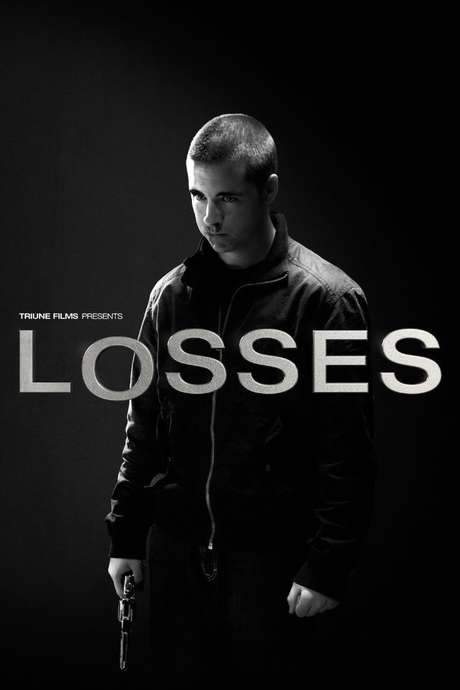
Year: 2011
Runtime: 10 mins
Language: English
Director: Ryan Connolly
A man that has been trained to kill, betrayed the financier of that training and has only five minutes to prove his worth before the financier cuts his losses.
Warning: spoilers below!
Haven’t seen Losses yet? This summary contains major spoilers. Bookmark the page, watch the movie, and come back for the full breakdown. If you're ready, scroll on and relive the story!
Trace every key event in Losses (2011) with our detailed, chronological timeline. Perfect for unpacking nonlinear stories, spotting hidden connections, and understanding how each scene builds toward the film’s climax. Whether you're revisiting or decoding for the first time, this timeline gives you the full picture.
Last updated: January 08, 2026 at 08:31
Find frequently asked questions about the Losses (2011) timeline, including chronological order, nonlinear jumps, cause-and-effect links, and scene sequence clarifications. This timeline FAQ helps explain when key events happen, how moments connect, and why the story unfolds in that specific order.
The Boss handed the man a paper clip as part of the test itself. It was a deliberate challenge to see if the man could use any available object as a weapon or tool. The paper clip served as both a test of resourcefulness and the means for the man to escape his handcuffs, demonstrating that even a small, innocent-looking item could be turned lethal.
The paper clip was placed on the table alongside the test conditions, hinting that The Boss expected the man to use it creatively.
The guard was overconfident in his hand-to-hand combat skills and underestimated the man. By choosing a bare-knuckle fight instead of continuing the shootout, he believed he could prove superiority. This arrogance proved fatal when the man easily overpowered him using a broken pool cue as a weapon.
Earlier combat showed the man was skilled at close-quarters fighting, which set up this guard's fatal decision.
The five-minute test was designed to evaluate whether the man had the skills, speed, and determination to complete a high-stakes mission. By successfully fighting through every guard and reaching the office alive, he proved himself capable. The Boss revealed the test was real, and the job was his to accept, but only because the man demonstrated he could handle it.
The Boss hinted at the investment he made in the man, suggesting this was always the intended outcome of the test.
The man explicitly stated he never asked for the job. Despite being a trained hitman, he had already left that life and taken the money to escape it. Going through the building wasn't about wanting the position, it was about survival. His refusal showed he wanted out, not a promotion.
The Boss mentioned the man quit being a hitman and took the money, establishing his desire to leave that world.
The Boss was making clear that rejecting the job would not result in freedom. His organization would consider the man a liability, someone who knew about the operation but refused to join. Therefore, they would eliminate him to prevent any risk of exposure or retaliation.
The phrase "cut his losses" earlier established that The Boss does not tolerate failures or loose ends.
When The Boss noticed the gun in the man's hand, he immediately dove for his own weapon on the table. The man was faced with a choice: let The Boss fire first or act preemptively. In that split second, he chose to shoot, not out of desire for the job, but because The Boss became an active threat that needed neutralization.
The tension in the office scene showed both men were armed and aware of each other's reach.
The five-minute constraint served as a practical test of the man's speed and efficiency in a real combat scenario. It forced him to move quickly through the building and eliminate guards swiftly, demonstrating whether he could complete a time-sensitive mission. The Boss wanted someone who could act fast under pressure, not hesitate or take unnecessary time.
The timeline shows the entire sequence from abduction to office confrontation, fitting within this compressed timeframe.
The man collected guns from fallen guards throughout the building, but ammunition ran dry during the hallway sequence when three more guards advanced with an assault rifle. He was forced to improvise: he punched one guard to seize his gun, then used that weapon as a human shield while the others fired, conserving his remaining bullets until he could reload from the guard's rifle.
The earlier hallway fights showed the man systematically collecting weapons, foreshadowing his resourcefulness when those weapons eventually failed him.
The ending leaves the man's future uncertain. He survived the test, refused the job, and killed The Boss, but now walks alone down a roadside path. His next move is unclear: he could disappear, find new work, or face retaliation from The Boss's organization. The open road symbolizes both freedom and danger, with no clear direction promised.
The final quote "Screw it" suggests a decisive break from his past, though what comes next remains unknown.
The Boss revealed he had been watching the man for some time and saw qualities that made him valuable: exceptional combat skills, resourcefulness, and a cold, calculated resolve. By mentioning the money invested and the admiration he felt, The Boss indicated he had been grooming the man for this role, believing his unique abilities justified the investment.
The Boss's mention of "cut his losses" suggested he only keeps assets that prove their worth, the man proved himself by surviving.
Discover curated groups of movies connected by mood, themes, and story style. Browse collections built around emotion, atmosphere, and narrative focus to easily find films that match what you feel like watching right now.
Characters fighting for survival with a literal or figurative deadline looming.Movies like Losses that generate intense suspense from a strict time limit. If you enjoyed the high-stakes urgency of a protagonist racing against the clock under life-or-death pressure, you'll find similar pulse-pounding experiences here.
The narrative is a linear, propulsive journey towards a single, time-sensitive goal. The central conflict escalates as the deadline approaches, stripping away subplots and focusing entirely on the immediate and escalating obstacles the protagonist must overcome.
These movies are grouped by their shared core mechanic: a relentless countdown. This creates a unique and intense viewing experience defined by urgency, minimal downtime, and a constant, palpable sense of impending consequence.
A lone warrior pushed to their absolute limit in a relentless gauntlet of violence.If you liked the relentless, brutal action and lone-wolf survival feel of Losses, this thread gathers movies featuring a skilled fighter enduring an overwhelming physical trial. Expect similar high-octane, graphically violent set pieces.
The plot is often straightforward: a character with exceptional combat skills is trapped or tasked with surviving an onslaught of enemies. The journey is a linear progression through escalating physical challenges, testing the protagonist's skill, will, and stamina to the breaking point.
These films are united by their core premise of a single character weathering a storm of violence. They prioritize intense, practical action sequences and a feeling of desperate, solo endurance over complex plot twists or large casts.
Don't stop at just watching - explore Losses in full detail. From the complete plot summary and scene-by-scene timeline to character breakdowns, thematic analysis, and a deep dive into the ending - every page helps you truly understand what Losses is all about. Plus, discover what's next after the movie.
Read a complete plot summary of Losses, including all key story points, character arcs, and turning points. This in-depth recap is ideal for understanding the narrative structure or reviewing what happened in the movie.
Discover the characters, locations, and core themes that shape Losses. Get insights into symbolic elements, setting significance, and deeper narrative meaning - ideal for thematic analysis and movie breakdowns.