Plot Explained Spoilers guaranteed!
Plot Explained

Browse by genre

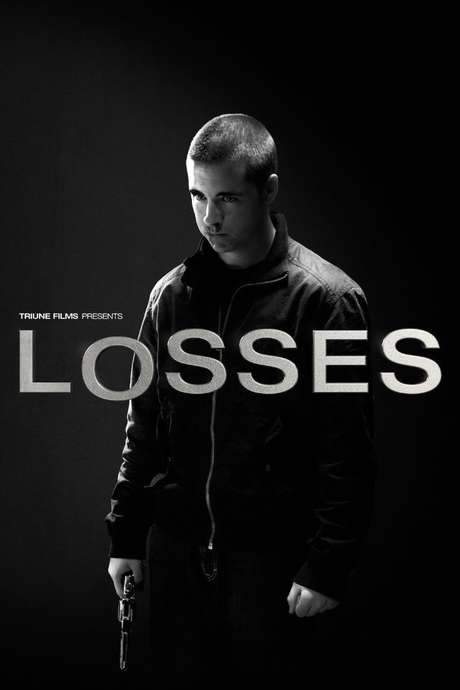
Losses (2011) movie poster

Characters & Themes

Losses (2011) Characters, Setting & Themes Explained

Release, runtime and language
2011 · 10 mins · English
Loading streaming availability…
Directed by
Ryan Connolly
Starring
Tim Allen, Tim Connolly, Todd Bruno, Andres Zamorano, Nic Daire, Josh Connolly

A man that has been trained to kill, betrayed the financier of that training and has only five minutes to prove his worth before the financier cuts his losses.

On this page (7)
  1. 1 Where to watch
  2. 2 Characters explained (2)
  3. 3 Where & when it takes place
  4. 4 Themes & meaning (3)
  5. 5 Character & meaning questions
  6. 6 Movie threads
  7. 7 Every angle
Loading streaming availability…

2 main characters · contains spoilers

Losses Characters Explained: Who Is Who

The main characters of Losses (2011), heroes and villains: what drives them, how they change over the course of the story and what each of them reveals about the film's bigger ideas.

  • The Boss (Todd Bruno)

    A calculating crime lord who uses fear and manipulation to maintain control. He orchestrates a staged ‘five-minute test’ to recruit the protagonist and deliberately blurs the line between employment and death. He treats loyalty as a commodity and rewards obedience with power, while principled resistance is punished swiftly.

    • 🗝️ Power
    • 🧠 Manipulation
    • 🔪 Violence
  • Hero (Josh Connolly)

    A skilled, reluctant former hitman who becomes the Boss’s target and then the only viable path to survival. He moves through the building with lethal efficiency, using whatever is at hand to survive and outsmart his opponents. His restraint in accepting the job contrasts with his capacity for decisive, brutal action when cornered.

    • ⚔️ Protagonist
    • 🧠 Resourceful
    • 🗡️ Deadly

Last updated: January 08, 2026 at 08:29

Was this helpful?

Setting

Where and When Does Losses Take Place?

The setting of Losses (2011): the year and time period, the places and locations, and how they shape the characters, the mood and the tension of the story.

Time period

Location

The Boss's Office, Dark Interrogation Room, City Building Hallways

The action unfolds inside an urban crime compound, with a dim interrogation room, a shadowy hallway, and the Boss’s private office. A van pulls up to a city building, kicking off a brutal sequence through tight, controlled spaces. The setting emphasizes power and danger, with guards, metal fixtures, and a cold, high-stakes atmosphere. The claustrophobic layout heightens tension as the protagonist fights his way toward the Boss.

  • 🏙️ Urban
  • 🗝️ Interior
  • 🔒 Security

Last updated: January 08, 2026 at 08:29

Was this helpful?

3 major themes

Losses Meaning: Themes & Message Explained

What is Losses (2011) really about? The emotional, social and philosophical themes the film keeps returning to, its symbolism and the message beneath the surface.

  • Violence

    Violence is the central mechanism by which power is exercised and fear is maintained. The protagonist’s extraordinary lethality turns the environment into a killing field, collapsing guards and obstacles with brutal efficiency. The film uses close-quarters combat and graphic precision to remind viewers that violence here is both tool and consequence. The ongoing bloodshed reveals how quickly moral boundaries vanish in a world ruled by intimidation.

  • Power

    Power operates as a currency that the Boss wields to shape outcomes and demand loyalty. The test of five minutes is a calculated display designed to measure compliance and usefulness. The protagonist’s reluctance contrasts with the Boss’s hunger for control, revealing a dynamic built on fear, wealth, and coercion. Ultimately, the confrontation exposes who truly commands the environment.

  • Choice

    The Boss offers a life-changing job at the edge of death, forcing the protagonist to choose between survival and autonomy. The hero’s insistence that he never wanted the job highlights his internal conflict and moral boundaries. The climactic decision—shooting the Boss—tests whether personal agency survives in a world that manufactures obedience. The ending implies that choice, even when limited, is a form of resistance.

Last updated: January 08, 2026 at 08:29

Was this helpful?

Character & theme questions

Losses Characters & Meaning: Your Questions Answered

The questions people ask about Losses (2011): who the characters really are, their relationships, what the symbols mean, where it takes place and what the movie is really about. Each answer contains spoilers.

Q1

Where does the movie take place?

The movie takes place inside an urban crime compound, primarily in a Boss's private office, a dim interrogation room, and shadowy city building hallways. The setting consists of tight, controlled interior spaces with guards, metal fixtures, and a cold, high-stakes atmosphere that emphasizes power and danger.

  • setting
  • location
  • boss office
  • interrogation room
  • urban compound
Q2

Who is The Boss in the movie?

The Boss (Todd Bruno) is a calculating crime lord who uses fear and manipulation to maintain control. He orchestrates the five-minute test to recruit the protagonist, deliberately blurring the line between employment and death. He treats loyalty as a commodity, rewards obedience with power, and punishes principled resistance swiftly.

  • boss
  • todd bruno
  • crime lord
  • villain
  • antagonist
Q3

Who is the protagonist in Losses?

The protagonist is Josh Connolly, a skilled but reluctant former hitman who becomes the Boss's target and then the only viable path to survival. He moves through the building with lethal efficiency, using whatever is at hand to survive and outsmart opponents. His restraint in accepting the job contrasts with his capacity for decisive, brutal action when cornered.

  • hero
  • josh connolly
  • protagonist
  • hitman
  • assassin
Q4

What role does violence play in the movie?

Violence is the central mechanism by which power is exercised and fear is maintained. The protagonist's extraordinary lethality turns the environment into a killing field, collapsing guards and obstacles with brutal efficiency. The film uses close-quarters combat and graphic precision to show that violence is both tool and consequence in this world.

  • violence
  • combat
  • action
  • killing
  • brutality
Q5

How is power portrayed in the film?

Power operates as a currency that the Boss wields to shape outcomes and demand loyalty. The five-minute test is a calculated display designed to measure compliance and usefulness. The protagonist's reluctance contrasts with the Boss's hunger for control, revealing a dynamic built on fear, wealth, and coercion.

  • power
  • control
  • boss
  • loyalty
  • coercion
  • fear
Q6

What does the choice theme represent in Losses?

The Boss offers a life-changing job at the edge of death, forcing the protagonist to choose between survival and autonomy. The hero's insistence that he never wanted the job highlights his internal conflict and moral boundaries. The climactic decision tests whether personal agency survives in a world that manufactures obedience.

  • choice
  • autonomy
  • survival
  • moral conflict
  • decision
Q7

What is the five-minute test in the movie?

The five-minute test is a calculated display by the Boss designed to measure the protagonist's compliance and usefulness. It serves as both a recruitment tool and a threat, proving the protagonist's lethal worth before the Boss decides whether to hire him or cut his losses. The time limit creates immediate tension and forces rapid decision-making.

  • five minute test
  • recruitment
  • boss
  • time limit
  • trial
Q8

What kind of world does the movie portray?

The movie portrays a cold, high-stakes criminal underworld where violence is the primary language of negotiation. The claustrophobic layout of the urban compound, with its interrogation rooms, shadowy hallways, and guarded passages, heightens the sense of danger and control. The atmosphere is devoid of humor or warmth, focusing entirely on survival and power dynamics.

  • world
  • atmosphere
  • setting
  • criminal underworld
  • danger
  • tension
Q9

What happens to the protagonist at the end?

The protagonist survives the ordeal and rejects the Boss's job offer, choosing personal autonomy over survival through obedience. However, his future remains uncertain, he has escaped immediate death but faces an ambiguous path forward outside the Boss's control. This ending emphasizes that choice, even when limited, is a form of resistance.

  • ending
  • conclusion
  • protagonist future
  • autonomy
  • rejection
Q10

What motivates the protagonist to survive?

The protagonist is motivated by a desire for autonomy rather than by loyalty to the Boss or enthusiasm for the job. He never wanted the position being offered, but with only five minutes to prove his worth, survival becomes his primary drive. His actions throughout the movie reflect both his lethal capability and his reluctance to be controlled.

  • motivation
  • survival
  • autonomy
  • protagonist goal
  • reluctance

Movie threads

More Movies Like Losses, by Mood & Story

Curated lists built around what makes Losses tick: the same mood, the same kind of story or the same emotional payoff. Each list explains why these movies belong together.

Ticking Clock Thrillers like Losses

Characters fighting for survival with a literal or figurative deadline looming. Movies like Losses that generate intense suspense from a strict time limit. If you enjoyed the high-stakes urgency of a protagonist racing against the clock under life-or-death pressure, you'll find similar pulse-pounding experiences here.

  • urgent
  • suspenseful
  • high-stakes
  • tense
  • race against time
  • pressure-cooker
  • Tone: tense, urgent
  • Pacing: fast, relentless
Why these movies?

The story pattern: The narrative is a linear, propulsive journey towards a single, time-sensitive goal. The central conflict escalates as the deadline approaches, stripping away subplots and focusing entirely on the immediate and escalating obstacles the protagonist must overcome.

Why they belong together: These movies are grouped by their shared core mechanic: a relentless countdown. This creates a unique and intense viewing experience defined by urgency, minimal downtime, and a constant, palpable sense of impending consequence.

Brutal Solo Survival Action Movies like Losses

A lone warrior pushed to their absolute limit in a relentless gauntlet of violence. If you liked the relentless, brutal action and lone-wolf survival feel of Losses, this thread gathers movies featuring a skilled fighter enduring an overwhelming physical trial. Expect similar high-octane, graphically violent set pieces.

  • action-packed
  • brutal
  • ruthless
  • suspenseful
  • one-against-many
  • physical endurance
  • Tone: brutal, relentless, gritty
  • Pacing: fast, action-packed
Why these movies?

The story pattern: The plot is often straightforward: a character with exceptional combat skills is trapped or tasked with surviving an onslaught of enemies. The journey is a linear progression through escalating physical challenges, testing the protagonist's skill, will, and stamina to the breaking point.

Why they belong together: These films are united by their core premise of a single character weathering a storm of violence. They prioritize intense, practical action sequences and a feeling of desperate, solo endurance over complex plot twists or large casts.

Every angle

Losses (2011) Explained: Plot, Timeline & Characters

Everything about Losses in one place: what happens in the plot summary, the timeline in chronological order, the characters and meaning and a spoiler-free summary. What's After the Movie adds the cast, box office and post-credit scenes.

Coming soon on iOS and Android

The Plot Explained Movie Summary App

Plot summaries, endings explained and timelines on your phone. Catch up on any movie in minutes, save your favorites and never miss a twist again.

Be the first to know when we launch. Your email stays private, always.

Learn more about the app