Plot Explained Spoilers guaranteed!
Plot Explained

Browse by genre

Lisbon Story (1994) movie poster

Timeline

Lisbon Story (1994) Timeline Explained – Every Event in Order

Release, runtime and language
1994 · 100 mins · English
Directed by
Wim Wenders
Starring
Manoel de Oliveira, Rüdiger Vogler, Patrick Bauchau, João Canijo, Sofia Bénard da Costa, Teresa Salgueiro

The film serves as Wim Wenders’ love letter to Lisbon and to cinema itself. When a sound engineer receives a cryptic postcard from a friend currently shooting on location in Lisbon, he embarks on a cross‑European quest to track him down and lend his technical aid, intertwining personal pilgrimage with reflections on filmmaking.

On this page (5)
  1. 1 Events in order (12)
  2. 2 Timeline questions answered
  3. 3 Movie threads
  4. 4 Movies like Lisbon Story
  5. 5 Every angle

12 events in order · contains spoilers

Lisbon Story Timeline: Events in Chronological Order

Every key event of Lisbon Story (1994) in order, scene by scene, with when and where it takes place. Use it to untangle flashbacks, time jumps and parallel storylines, to refresh your memory before the sequel or to find the exact scene you are thinking of.

  1. Invitation to Lisbon

    Philip Winter, a sound engineer, receives a postcard from Friedrich Munro inviting him to Lisbon to record sounds for his forthcoming film. The invitation frames the city’s noises as the core of the project. Winter contemplates how sound might shape cinema as much as images.

    Where
    Lisbon
  2. Arrival and discovery of Friedrich's house

    Winter arrives in Lisbon and goes to Friedrich's house, only to find it filled with editing equipment and reels, while the director is absent. The scene suggests a project in limbo and a director who has vanished. Local children who have worked with Friedrich hint that he will return, but cannot say when.

    Where
    Lisbon
  3. Winter's search through Lisbon

    With Friedrich missing, Winter launches a street-by-street search through the city to locate the director. He follows clues he finds in houses, studios, and conversations, tracking the arc of Friedrich's recent work. The quest reveals Winter's quiet determination to complete the film on his own terms.

    Where
    Lisbon
  4. Early hand-cranked shoot

    Winter experiments with an early hand-cranked motion picture camera, attempting to document Lisbon in a raw, unmediated way. He speaks of 'pretending that the whole history of cinema had never happened' as he runs film through the device. The effort highlights the tension between old techniques and the new urges for unseen imagery.

    Where
    Lisbon
  5. Unseen image concept emerges

    Friedrich's motive becomes clear: he wants to capture the 'unseen image' of the city, one that is not shaped by a filmmaker's point of view. He aims to present something that can be shown to no one, so the source of the photo does not 'die' with the viewer. Winter listens, torn between documentary ambition and this radical notion.

    Where
    Lisbon
  6. Back-camera or bag-lens concept

    To realize the unseen image, Friedrich imagines strapped-on or concealed cameras—rolling on his back or placed in holes-cut bags—that would film without a conventional, aimed gaze. The idea embodies a radical rejection of typical spectatorship. The setting centers on Lisbon as his obsession with the city drives the experiment.

    Where
    Lisbon
  7. Winter embraces sound as primary medium

    While Friedrich pursues the unseen image, Winter leans into sound as his principal medium, recording the city’s ambience and voices. His focus on auditory texture contrasts with Friedrich’s visual experiment. The divergent approaches set the stage for a future collaboration rather than separation.

    Where
    Lisbon
  8. Cameos by Madredeus and Oliveira

    The film features appearances by the Portuguese folk group Madredeus and by filmmaker Manoel de Oliveira, anchoring the story in its Portuguese cultural context. Their cameos underscore the fusion of cinema, music, and reality. These elements blur the line between documentary-like observation and fiction.

    Where
    Lisbon
  9. Winter sends a sound message

    As the pursuit progresses, Winter records a sound message for Friedrich, hoping to reconnect and coax him back to the project. The message serves as a bridge between their separate visions and hints at a shared path forward. The moment concentrates the emotional core of their collaboration.

    Where
    Lisbon
  10. Final meeting and shift toward collaboration

    Winter and Friedrich finally meet and acknowledge the value of combining the old camera with sound to realize the unseen image together. They decide to pursue the original project afresh, but now with a hybrid approach. The reunion signals a hopeful turn for their film within a film.

    Where
    Lisbon
  11. Friedrich's critique of image commercialization

    Friedrich explains his discomfort with the commercialization of images, which motivates his pursuit of an unseen image beyond market-driven viewing. He questions what cinema means when images are commodified for mass audiences. The exchange clarifies his artistic stance and the film’s critique of media culture.

    Where
    Lisbon
  12. Lisbon Story's blend of fiction and reality

    Lisbon Story blends fiction with semi-non-fictional elements, including real-life figures and cultural cameos that ground the story in Lisbon. The meta-cinematic approach mirrors its themes about seeing, listening, and the circulation of images. The film’s structure mirrors Friedrich’s pursuit of an image that cannot be simply watched.

    Where
    Lisbon

Last updated: October 09, 2025 at 09:19

Was this helpful?

Timeline questions answered

Lisbon Story Timeline Explained: Your Questions Answered

When does it happen, and why in that order? The questions people ask about the chronology of Lisbon Story (1994): time jumps, flashbacks, cause and effect between scenes and the correct order of events, each answered with spoilers.

Q1

Why does Friedrich Monroe disappear when Winter arrives in Lisbon?

Friedrich has become obsessed with capturing the city's "unseen image" and has isolated himself to pursue this radical concept. Rather than abandoning the project entirely, he retreats into a kind of artistic hermitage, working with local children who help him experiment with unconventional filming methods. His disappearance is not a rejection of Winter but rather an intensification of his creative pursuit, Friedrich is so consumed by his philosophical experiment that he loses track of conventional commitments.

Foreshadowing: The children at Friedrich's house hint early on that he will return, suggesting his absence is temporary and purposeful.

  • friedrich monroe
  • missing director
  • lisbon
  • artistic pursuit
Q2

What is the "unseen image" that Friedrich wants to capture?

The unseen image is Friedrich's concept of capturing Lisbon in a way that is not shaped by a filmmaker's subjective point of view. He wants to film the city without directing the viewer's gaze, essentially creating footage that could be shown to no one, preventing what he sees as the inevitable 'death' of an image when a viewer watches it. This represents a philosophical rejection of traditional spectatorship and commercial cinema's reliance on audience consumption of images.

  • unseen image
  • filmmaking philosophy
  • capture without viewing
  • lisbon
Q3

Why does Friedrich want to strap a camera to his back or hide it in bags?

Friedrich believes that conventional filmmaking imposes the director's point of view onto the audience, corrupting the purity of what the camera can capture. By strapping a camera to his back or concealing it in bags with holes cut for the lens, he attempts to record Lisbon without aiming or framing, creating what he calls the "unseen image." This method embodies his radical rejection of traditional cinematography and his belief that images should not be commodified for viewer consumption.

  • back-camera
  • bag-lens
  • camera experiment
  • unconventional filming
Q4

Why does Friedrich reject the hand-cranked camera approach?

Friedrich sees the early hand-cranked camera as simply another historical technique, not radical enough to escape the fundamental problem of cinema. He describes using it as "pretending that the whole history of cinema had never happened," which he recognizes as an illusion. The hand-cranked method still produces images meant to be viewed, consumed, and commercialized. His pursuit of the unseen image represents a deeper break with cinematic tradition than any retro technique could achieve.

  • hand-cranked camera
  • cinema history
  • rejection of tradition
  • filmmaking technique
Q5

What role does Winter's sound engineering play in the story?

Winter serves as the counterpoint to Friedrich's visual obsession. While Friedrich pursues the unseen image, Winter embraces sound as his primary creative medium, recording the city's ambient noises, voices, and musicality. His sound recordings represent an alternative path to capturing Lisbon's essence. The film positions sound as a complementary perspective to vision, and ultimately, Winter's audio work becomes the bridge that connects his and Friedrich's separate artistic visions.

  • sound engineer
  • sound recording
  • lisbon sounds
  • audio medium
Q6

Why does Winter send a sound message to Friedrich?

Winter records a sound message as a creative and emotional bridge to reconnect with the missing director. Rather than simply searching physically, he uses his own medium, sound, to reach Friedrich, demonstrating his belief that audio can communicate what visual searching cannot. The message represents Winter's commitment to the collaborative project and serves as an invitation for Friedrich to reengage with their shared artistic endeavor.

  • sound message
  • communication
  • reconnecting with friedrich
Q7

What is the significance of the Madredeus and Manoel de Oliveira cameos?

The appearance of the Portuguese folk group Madredeus and filmmaker Manoel de Oliveira anchors the film in Portuguese cultural reality, blurring the line between fiction and documentary. Madredeus's music contributes to the film's auditory landscape while reinforcing Lisbon's identity. Oliveira's cameo adds a meta-layer, as he is a legendary Portuguese filmmaker, making the film's meditation on cinema self-referential. These cameos underscore the film's theme of art, memory, and the evolving language of creative expression.

  • madredeus
  • manoel de oliveira
  • cameo
  • portuguese culture
Q8

How does the ending resolve the conflict between sound and image?

When Winter and Friedrich finally meet, they reconcile their divergent approaches. Rather than choosing between Friedrich's unseen image concept and Winter's sound work, they decide to combine them. The collaboration represents a synthesis: Friedrich's visual experiment paired with Winter's audio perspective creates a hybrid approach that honors both their original visions. This resolves the film's central creative tension by suggesting that the unseen image and recorded sound can coexist and complement each other.

  • collaboration
  • sound and image synthesis
  • ending resolution
  • creative partnership
Q9

What does Friedrich mean when he says images "die" with the viewer?

Friedrich's statement reflects his belief that when an image is watched, it loses its original meaning and becomes what the viewer projects onto it. He sees traditional cinema as a transaction where the filmmaker's意图 is consumed and transformed by each viewer's interpretation. By creating an "unseen image", footage never meant to be displayed, Friedrich attempts to preserve the image's integrity, free from theViewer interpretation that he equates with death or corruption.

  • image death
  • viewer interpretation
  • meaning of images
  • cinema philosophy
Q10

What is the connection between Lisbon Story and The State of Things?

Lisbon Story is a partial sequel to Wim Wenders' 1982 film The State of Things, both featuring director Friedrich Monroe (played by Patrick Bauchau). In The State of Things, Friedrich is a filmmaker struggling with the fate of images and his creative identity. Lisbon Story continues this thread, now placing Friedrich in Portugal, the same country that framed The State of Things, and exploring his evolution from a filmmaker wrestling with artistic uncertainty to one pursuing a radical philosophical experiment with the very nature of visual representation.

  • the state of things
  • sequel
  • friedrich monroe
  • wim wenders
Q11

Why does Winter continue searching for Friedrich even after realizing the project is abandoned?

Winter's persistence stems from both professional commitment and personal artistic investment. As a sound engineer, he sees value in documenting Lisbon's acoustic identity and believes the project has merit beyond Friedrich's philosophical detour. His search also becomes a personal journey of discovery, exploring the city while defining his own creative identity. Winter's determination reflects the film's theme of artistic perseverance and the belief that creative collaboration can emerge from individual pursuit.

  • winter search
  • persistence
  • artistic commitment
  • personal journey

Movie threads

More Movies Like Lisbon Story, by Mood & Story

Curated lists built around what makes Lisbon Story tick: the same mood, the same kind of story or the same emotional payoff. Each list explains why these movies belong together.

Movies where the city is a character like Lisbon Story

Films where a city's soul is revealed through an artist's journey. For viewers who loved the atmospheric portrayal of Lisbon. These movies, like Lisbon Story, use their settings as central characters, exploring cities through an artistic lens. If you enjoy thoughtful journeys where location and mood are paramount, you'll find similar films here.

  • atmospheric
  • contemplative
  • nostalgic
  • dreamlike
  • wistful
  • artistic
  • Tone: melancholic, contemplative
  • Pacing: slow, meditative
Why these movies?

The story pattern: Stories in this thread often follow a character—a filmmaker, musician, or wanderer—whose journey through a specific locale is the primary narrative driver. The conflict is frequently internal or creative, centering on rediscovery, observation, and the search for inspiration within the urban or natural environment.

Why they belong together: These films are grouped by their shared emphasis on atmosphere and setting. They offer a similar viewing experience defined by a contemplative pace, a strong visual and auditory sense of place, and a narrative that is more about immersion and feeling than high-stakes action.
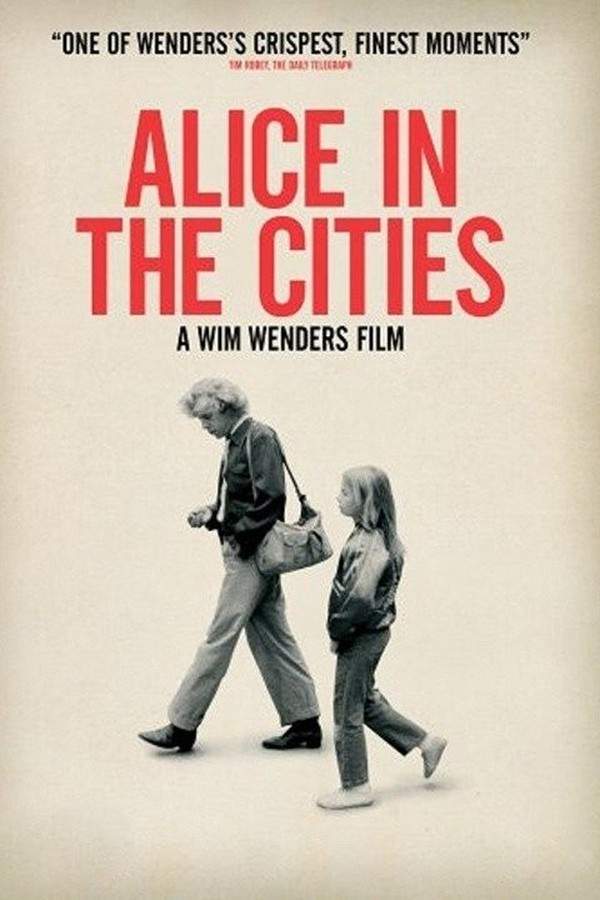
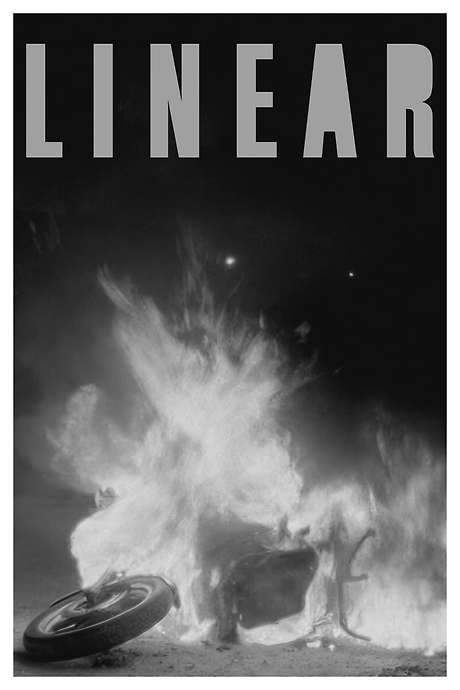
Movies about artistic soul-searching like Lisbon Story

Gentle stories about artists reconnecting with their purpose and craft. If you liked the themes of filmmaking and creative rediscovery in Lisbon Story, this collection is for you. Discover movies about artists, musicians, and writers on quiet quests for meaning. These similar stories explore creative block and the joy of rekindling one's artistic passion.

  • contemplative
  • artistic
  • wistful
  • hopeful
  • introspective
  • philosophical
  • Tone: melancholic, wistful, hopeful
  • Pacing: slow, thoughtful
Why these movies?

The story pattern: The narrative pattern involves a creator, often experiencing disillusionment or block, who embarks on a low-stakes journey—physical or metaphorical—that leads to a renewed understanding of their art. Resolution comes through collaboration, introspection, or a synthesis of different perspectives, resulting in a hopeful, rather than triumphant, ending.

Why they belong together: These movies share a specific mood and thematic core: a light emotional weight, a melancholic yet hopeful tone, and a focus on intellectual and artistic concerns over dramatic conflict. They appeal to viewers seeking thoughtful, character-driven stories about the nature of art and creativity.

If you liked this

Movies Like Lisbon Story

Similar movies to Lisbon Story: the same genre, themes or kind of story. Each one comes with its own plot summary, timeline and ending explained.

Browse all movie summaries

Every angle

Lisbon Story (1994) Explained: Plot, Timeline & Characters

Everything about Lisbon Story in one place: what happens in the plot summary, the timeline in chronological order, the characters and meaning and a spoiler-free summary. What's After the Movie adds the cast, box office and post-credit scenes.

Coming soon on iOS and Android

The Plot Explained Movie Summary App

Plot summaries, endings explained and timelines on your phone. Catch up on any movie in minutes, save your favorites and never miss a twist again.

Be the first to know when we launch. Your email stays private, always.

Learn more about the app