Year: 2002
Runtime: 116 mins
Language: English
Director: Bob Gale
Starting as a simple wish, his journey transforms into a sprawling adventure that becomes the quintessential road trip. An aspiring painter sets out across America, encountering a parade of eccentric characters who each impart meaningful lessons, guiding him toward self‑discovery and artistic growth.
Warning: spoilers below!
Haven’t seen Interstate 60 yet? This summary contains major spoilers. Bookmark the page, watch the movie, and come back for the full breakdown. If you're ready, scroll on and relive the story!
Read the complete plot breakdown of Interstate 60 (2002), including all key story events, major twists, and the ending explained in detail. Discover what really happened—and what it all means.
Neal Oliver, James Marsden a yearn-filled grocery warehouse worker from St. Louis, dreams of becoming an artist while feeling adrift under the shadow of a father who wants him to follow a conventional path and a girlfriend who isn’t surprised by the status quo. On the eve of his 22nd birthday, during a party where O.W. Grant, the enigmatic wish-granter with a pipe shaped like a monkey’s head, acts as the waiter, Neal wishes for a clear answer to what his life should be. The moment is charged with possibility and pressure: his father hands him a law-school admission letter he never wanted, and a gleaming red BMW convertible—meant for his dad, not him—sits on display as a reminder that others may control his direction. A sudden accident—Neal is struck by a falling bucket—sends him into a stark, waking fog.
In the hospital, a doctor named Ray, Christopher Lloyd, administers a peculiar test: Neal must identify the suit on a set of playing cards, only to discover that appearances deceive him—red spades and black hearts contradict the rules of the deck, a sign that the world isn’t always as it seems. When Neal returns to life outside, he glimpses a woman he has been dreaming about on a billboard. The billboard company insists the image is blank, but Neal discovers a new portrait, this time accompanied by an inscription that reads “Call 555-1300.” A call leads him to an appointment at 555 Olive Street, Suite 1300, and there Ray entrusts him with a package to deliver to a Robin Fields in Danver, Colorado (not “Denver”). The roadmap claims Interstate 60 will take him there, but the road map itself reveals a puzzle: there is no Interstate 60 to be found.
Undeterred, Neal heads west and encounters O.W. Grant along the highway, who reappears with a sly, guiding hand, steering Neal toward the elusive Interstate 60. Along the journey, Neal meets a gallery of strange, almost fable-like figures: a man who can gorge himself on unimaginable quantities of food, a woman chasing an unattainable perfect sex, a mother desperate to locate her son in a city where a government-controlled drug has chained the population, a dying ex-advertiser crusading against deceit, and Mrs. James, who runs a Museum of Art Fraud that houses real masterpieces masquerading as fakes.
In Morlaw, a strange town where every resident is a lawyer who spends their days suing one another, Neal finally encounters Lynn Linden, the imprisoned dream-woman from the billboard. Their encounter becomes intensely intimate in a motel, and Neal sketches the motel in paint. Although he continues toward Danver to deliver the package, Lynn remains behind, drawn into a different life with the aid of Danver Publishing.
Meanwhile, news of a murderer on the loose travels through the airwaves and seems to describe Neal’s own car, pushing him to abandon his vehicle and hitchhike. When he reaches Danver, the person who presents herself as “Robin Fields” is revealed to be O.W. Grant in disguise. Neal opens the package, which contains a replacement monkey-head pipe for Grant’s broken one, and Grant uses his supernatural abilities to bend time itself, waking Neal up back in the hospital before the moment of his initial encounter with Ray.
Back in the world of the hospital, Neal finds the courage to confront his father and claim his own life path, free from parental control. His sister leads him to an art gallery where Neal discovers that his painting of the motel—the image Grant had “left” there on his behalf—now hangs in the flesh of the real world. Lynn appears again, not as a passive dream, but as a woman who works with Danver Publishing and has become genuinely interested in Neal’s art. She speaks of commissioning more roadside motel and diner paintings, suggesting that Neal’s future lies in a blend of his creative vision and the new life he’s chosen to chart.
Together, the threads of reality and illusion tighten into a vision of agency and artistry. Neal’s encounters—both the fantastical and the grounded—culminate in a choice: to live beyond others’ expectations, to embrace his art, and to see Lynn as a partner in shaping his own story rather than a mere dream. The tale lingers on the edge of wonder and consequence, inviting the audience to wonder what is real, what is wish-made, and what it means to finally decide who you are.
Note: Key characters appear with linked actors for cross-reference: Neal Oliver James Marsden, O.W. Grant Gary Oldman, Ray Christopher Lloyd, Lynn Linden Amy Smart, Dad John Bourgeois, and Mrs. James Ann-Margret. The narrative circles back to Grant’s influence and Neal’s awakening, emphasizing personal choice, artistic pursuit, and the blurred boundaries between dreams and the waking world.
Last Updated: October 09, 2025 at 16:54
Discover curated groups of movies connected by mood, themes, and story style. Browse collections built around emotion, atmosphere, and narrative focus to easily find films that match what you feel like watching right now.
Dreamlike adventures where the road itself becomes a teacher.If you enjoyed the magical road trip and quirky life lessons of Interstate 60, you'll love these movies. Discover similar stories where characters embark on surreal, dreamlike adventures filled with eccentric characters, leading to meaningful self-discovery and personal growth.
These stories typically feature a protagonist at a crossroads, embarking on a physical journey that quickly takes on a fable-like quality. The narrative is episodic, structured around a series of encounters with memorable characters who challenge the protagonist's worldview, culminating in a clearer sense of self and purpose.
Movies are grouped here for their shared whimsical tone, fable-like structure, and focus on a transformative, often surreal, journey. They blend light comedy with thoughtful, philosophical themes, creating a hopeful and introspective viewing experience that feels like a modern fairy tale.
Stories that playfully critique society while offering warm, human insights.Explore movies similar to Interstate 60 that blend gentle satire with heartfelt storytelling. These films use quirky, episodic narratives and absurd situations to comment on society, but always maintain a core of optimism and belief in humanity, much like Neal's journey on Interstate 60.
The narrative often presents an ordinary character thrust into an absurd or allegorical version of our world. Through a series of encounters that exaggerate real-world issues, the protagonist learns to see through societal illusions, leading to a happy ending where authentic living and human connection triumph over conformity.
These films are united by their unique blend of gentle satire and heartfelt storytelling. They share a specific tone: using whimsy and surrealism not just for fantasy, but as a tool for social commentary, all while maintaining a light emotional weight and a fundamentally optimistic outlook.
Don't stop at just watching — explore Interstate 60 in full detail. From the complete plot summary and scene-by-scene timeline to character breakdowns, thematic analysis, and a deep dive into the ending — every page helps you truly understand what Interstate 60 is all about. Plus, discover what's next after the movie.
Track the full timeline of Interstate 60 with every major event arranged chronologically. Perfect for decoding non-linear storytelling, flashbacks, or parallel narratives with a clear scene-by-scene breakdown.
Discover the characters, locations, and core themes that shape Interstate 60. Get insights into symbolic elements, setting significance, and deeper narrative meaning — ideal for thematic analysis and movie breakdowns.
Get a quick, spoiler-free overview of Interstate 60 that covers the main plot points and key details without revealing any major twists or spoilers. Perfect for those who want to know what to expect before diving in.
Visit What's After the Movie to explore more about Interstate 60: box office results, cast and crew info, production details, post-credit scenes, and external links — all in one place for movie fans and researchers.
Discover movies like Interstate 60 that share similar genres, themes, and storytelling elements. Whether you’re drawn to the atmosphere, character arcs, or plot structure, these curated recommendations will help you explore more films you’ll love.
Interstate 60 (2002) Scene-by-Scene Movie Timeline
Interstate 60 (2002) Movie Characters, Themes & Settings
Interstate 60 (2002) Spoiler-Free Summary & Key Flow
Movies Like Interstate 60 – Similar Titles You’ll Enjoy
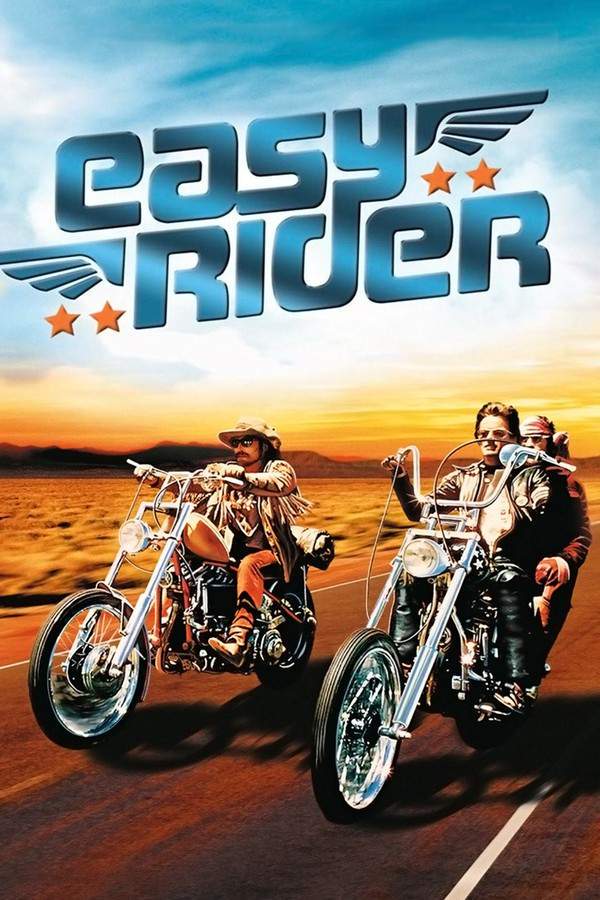
Easy Rider (1969) Spoiler-Packed Plot Recap
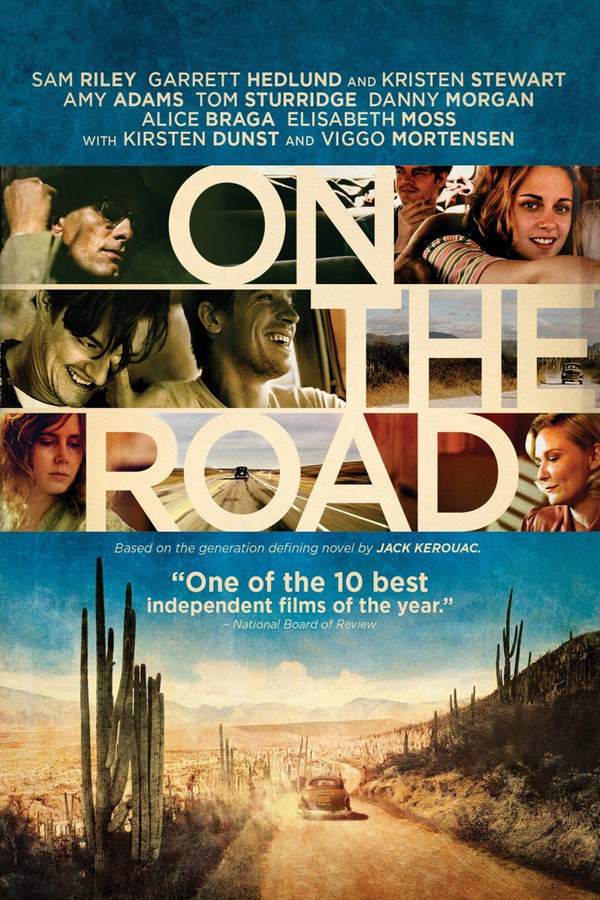
On the Road (2012) Full Summary & Key Details
The Long Dumb Road (2018) Plot Summary & Ending Explained
Crossroads (2002) Plot Summary & Ending Explained
World Traveler (2002) Spoiler-Packed Plot Recap
Road, Movie (2010) Plot Summary & Ending Explained
Hit the Road (2022) Full Summary & Key Details
Interstate 8 (2019) Film Overview & Timeline
Highway 61 (1991) Spoiler-Packed Plot Recap
Human Highway (1982) Plot Summary & Ending Explained
Wanderlust (2006) Full Summary & Key Details
The Trip (1967) Full Summary & Key Details
HWY: An American Pastoral (1970) Ending Explained & Film Insights
Roadside Prophets (1992) Complete Plot Breakdown
The Missouri Traveler (1958) Full Movie Breakdown