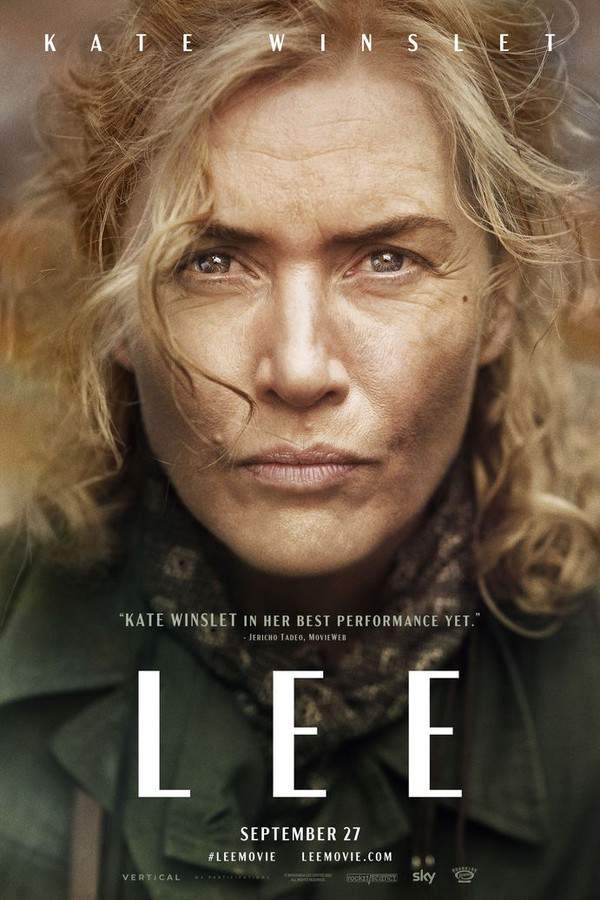
Lee Miller, a former fashion model turned photographer, shares her life story during an interview in 1977, using vivid flashbacks that draw the audience into her past. Her journey begins in 1937, when she meets and falls in love with Roland Penrose while indulging in a bohemian lifestyle across Europe. The couple eventually moves to London, where Lee takes on a role at Vogue magazine during the tumult of World War II. She captures the resilience of Britons living through the Blitz, yet her ability to document the war is stifled due to the restrictions placed on women in combat zones.
As the United States joins the war in late 1941, Lee finds herself alongside photojournalist David Scherman as a war correspondent. During her harrowing experiences in June 1944, at the Battle of Saint-Malo, she inadvertently photographs the harrowing effects of napalm for the first time. Her lens captures visceral moments from the Liberation of Paris, including the intense public shaming of French women accused of collaborating with Germans. Lee’s hearts ache as she reconnects with her friend, Solange D'Ayen, whose husband remains unaccounted for after recent imprisonment.
Traveling deeper into Nazi Germany, Lee and Scherman document horrific war crimes at places like Dachau and Buchenwald. Among their most shocking discoveries is the reality behind the atrocities that occurred within these camps. A surreal moment captured in their travels occurs when David Scherman takes a photograph of Lee bathing in Adolf Hitler's former Munich residence in April 1945, not long before Germany's surrender.
Following the war, Lee returns to Britain, where she faces frustration upon learning that her powerful wartime photographs remain unpublished, as Audrey Withers reveals that the British censor deemed them too traumatic for the already suffering public. In the aftermath, Lee marries Roland in 1947, and soon after, their son Antony is born.
Years later, it is revealed that Antony, who recently unearthed knowledge about his mother's challenging past, is the one conducting the interview. As they converse, they delve into the complexities of his upbringing—how Lee’s struggles with alcoholism and PTSD shaped his childhood. Upon Lee’s passing, a trove of photographs and documents is discovered in her attic, leading Antony and his wife Suzanna to establish the Lee Miller Archives, preserving the remarkable yet tumultuous legacy of Lee’s life and work.