

Plot Explained Spoilers guaranteed!
Plot Explained

Browse by genre

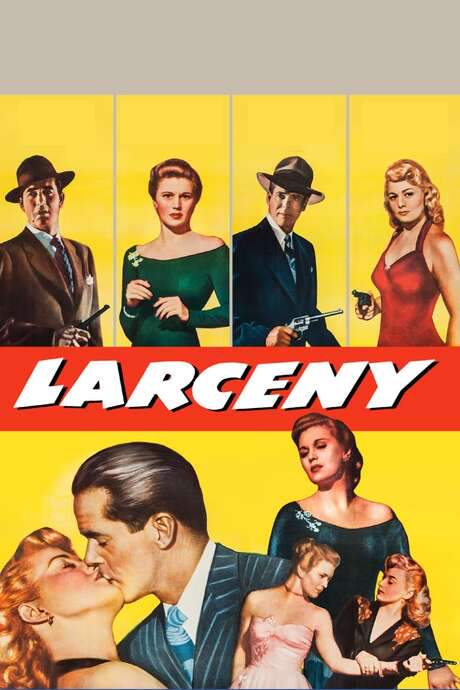
Larceny, Inc. (1942) movie poster

Timeline

Larceny, Inc. (1942) Timeline Explained – Every Event in Order

Release, runtime and language
1942 · 96 mins · English
Directed by
Lloyd Bacon
Starring
Edward Brophy, Jackie Gleason, Jack Carson, Anthony Quinn, Broderick Crawford, Joseph Crehan

Three former convicts purchase a luggage shop located next to a bank, intending to dig a tunnel into the vault and execute a daring robbery. Their elaborate scheme triggers a chaotic series of setbacks, yet the shop surprisingly thrives, flourishing even as they juggle their illicit plans.

On this page (7)
  1. 1 Where to watch
  2. 2 Events in order (11)
  3. 3 Timeline questions answered
  4. 4 Movie threads
  5. 5 Movies like Larceny, Inc.
  6. 6 Categories
  7. 7 Every angle

Where to watch

Where to Watch Larceny, Inc. (1942)

Where can you watch Larceny, Inc.? Stream, rent or buy it in the US, including on HBO Max and YouTube TV: current JustWatch availability with up-to-date prices.

Streaming availability powered by JustWatch

11 events in order · contains spoilers

Larceny, Inc. Timeline: Events in Chronological Order

Every key event of Larceny, Inc. (1942) in order, scene by scene, with when and where it takes place. Use it to untangle flashbacks, time jumps and parallel storylines, to refresh your memory before the sequel or to find the exact scene you are thinking of.

  1. Pressure decides to go straight as release looms

    Just before his release from Sing Sing, Maxwell and his dim-witted accomplice Jug Martin reject a bank robbery proposal offered by fellow inmate Leo Dexter. The moment shows Maxwell choosing a straight path over crime, setting the tone for his attempted reinvention. The rejection also sows the seeds for Leo's later vendetta.

    When
    Just before release
    Where
    Sing Sing prison
  2. Bank loan denial triggers robbery plan

    Maxwell hopes to buy a Florida dog racing track and become a legitimate businessman with Denny Costello, his adopted daughter. When the bank loan is denied, he makes a fateful decision to rob the bank next door to the luggage shop. The plan marks a sharp turn from reform to crime.

    When
    After loan denial
    Where
    Bank next to the luggage shop
  3. Buys luggage shop and starts tunnel

    To finance his new life, Pressure buys the luggage shop from Homer Bigelow and moves his operation into the storefront. He enlists Jug and their friend Weepy Davis to start digging a tunnel in the basement as a secret back entrance. The store's new venture becomes the cover for a possible heist.

    When
    After purchase
    Where
    Luggage shop
  4. Jeff Randolph arrives; Denny's romance begins; advertising

    Slick salesman Jeff Randolph arrives and convinces Weepy to place an order for dozens of luggage pieces to stock the shop. Jeff quickly wins Denny's interest, hinting at a budding romance that complicates the crooks' plans. He also helps devise advertising gimmicks to bring in a flood of customers.

    When
    Shortly after Jeff's arrival
    Where
    Luggage shop
  5. Advertising boosts business; legit sales prove profitable

    The high volume of sales draws crowds and makes the storefront busier than ever, blurring the line between crime and commerce. The store's success even attracts the bank next door, which offers to purchase the business to expand its own space. Pressure begins to entertain the possibility of a legitimate future.

    When
    During early growth
    Where
    Luggage shop
  6. Leo Dexter escapes and seeks control

    Leo Dexter learns that Pressure has effectively stolen his original idea and breaks out of prison to seize control of the operation. He becomes a disruptive force, pressuring Pressure to return to the planned robbery. The tension between old instinct and new legitimacy reaches a boiling point.

    When
    After discovery of theft
    Where
    Sing Sing prison
  7. Pressure forced back into the robbery

    Reluctantly, Pressure resists at first, but Leo's menace and proximity to the bank push him back into the heist. The crew prepares for the break-in with dynamite and a vault plan, despite the store's flourishing legitimate trade. The looming robbery redefines the group's relationships and stakes.

    When
    Post-escape
    Where
    Luggage shop / bank vicinity
  8. Christmas Eve vault plan; Homer returns

    On Christmas Eve, Leo outlines the vault-dynamite scheme, raising the danger level for everyone involved. Homer Bigelow reappears, nostalgic for his store and determined to reclaim his space, only to be knocked out early and trigger the burglar alarm. The tension escalates as the plan moves toward disaster.

    When
    Christmas Eve
    Where
    Bank vault area
  9. Climax: the burglary goes awry; Leo captured

    Pressure intervenes when Leo panics and reaches for his gun; Pressure knocks Leo unconscious and tries to calm the situation. Leo attempts to flee but is captured by the pursuing police while the store erupts in flames. Pressure regains consciousness, drags Homer Bigelow outside, and earns heroic recognition.

    When
    During the heist
    Where
    Bank/store
  10. Denny accepts Jeff's marriage proposal

    Denny Costello accepts Jeff Randolph's marriage proposal, cementing personal happiness amid the criminal chaos. The couple's engagement marks a turning point for Pressure as he reassesses his future with the store and his family.

    When
    After the heist
    Where
    Luggage shop
  11. Pressure plans expansion; first store in chain

    Pressure resolves to build a new store and launch a chain, signaling his transition from convict-turned-businessman to entrepreneur. The dream of a growing business overrides past crimes and points to a hopeful, long-term enterprise.

    When
    After engagement
    Where
    Company planning location

Last updated: October 09, 2025 at 10:51

Was this helpful?

Timeline questions answered

Larceny, Inc. Timeline Explained: Your Questions Answered

When does it happen, and why in that order? The questions people ask about the chronology of Larceny, Inc. (1942): time jumps, flashbacks, cause and effect between scenes and the correct order of events, each answered with spoilers.

Q1

Why does Pressure Maxwell decide to go straight after leaving prison?

Pressure Maxwell decides to go straight because he wants to buy a Florida dog racing track and run a legitimate business with his adopted daughter Denny Costello. After serving time in Sing Sing, he's genuinely tired of crime and wants to start fresh with a legal venture.

Foreshadowing: Earlier in prison, Pressure rejects a bank robbery proposal from fellow inmate Leo Dexter, showing his commitment to changing his ways.

  • pressure maxwell
  • go straight
  • legitimate business
  • denny costello
  • florida dog track
Q2

Why does Pressure Maxwell go back to planning a robbery after trying to go straight?

Pressure is forced back toward crime when the bank denies his loan application, which would have funded his dream of buying the Florida dog racing track. With no legitimate way to raise the money, he buys the luggage shop next to the bank as a cover to dig a tunnel into the vault.

Foreshadowing: The bank's loan denial directly follows his rejection of Leo's criminal proposal, creating the ironic situation that drives him back to crime.

  • bank loan
  • robbery plan
  • tunnel
  • bank vault
  • luggage shop
Q3

How does the luggage shop become successful despite the criminal plan?

Salesman Jeff Randolph arrives and convinces Weepy Davis to place a large order of suitcases. He then helps devise clever advertising gimmicks that draw huge crowds, making the store so profitable that the bank next door offers to buy the shop to expand its own space.

Foreshadowing: Jeff's sales pitch and advertising ideas begin almost immediately after he enters the shop, setting up the store's rapid success.

  • jeff randolph
  • advertising
  • suitcases
  • store success
  • bank offer
Q4

Why does Leo Dexter break out of jail and target Pressure's shop?

Leo Dexter learns that Pressure has effectively stolen his original bank robbery idea, using the luggage shop next to the bank to dig a tunnel. Feeling betrayed that Pressure used his plan for a legitimate business while Leo remained in prison, Leo breaks out to seize control of the operation and force the robbery forward.

Foreshadowing: Leo first proposed the bank robbery scheme to Pressure in prison, and Pressure rejected it, establishing Leo's ownership claim in his mind.

  • leo dexter
  • break out
  • jail
  • prison
  • revenge
  • take over
Q5

What triggers the chaotic climax on Christmas Eve?

On Christmas Eve, Leo and his cohorts attempt to blow open the bank vault using dynamite. Homer Bigelow, the original shop owner who returned wanting his store back, is knocked out during the struggle and accidentally triggers the burglar alarm. Leo panics, reaches for his gun, and Pressure intervenes, leading to a confrontation that ends with Leo unconscious and the store set on fire.

Foreshadowing: Leo had been pressuring Pressure throughout the film to proceed with the robbery, building to this explosive finale.

  • christmas eve
  • dynamite
  • homer bigelow
  • burglar alarm
  • fire
  • chaos
Q6

Why does Denny Costello accept Jeff Randolph's marriage proposal?

Denny accepts Jeff's proposal because he represents a legitimate, stable future compared to the criminal chaos surrounding her adopted father. Jeff helped transform the shop into a thriving business through honest means, and she recognizes him as someone who can provide a brighter, steadier life.

Foreshadowing: Jeff and Denny's romance begins quickly after Jeff arrives, with her interest growing alongside the store's success.

  • denny costello
  • jeff randolph
  • marriage proposal
  • engagement
  • legitimate future
Q7

What happens to Leo Dexter at the end of the movie?

Leo Dexter is captured by authorities after the Christmas Eve robbery attempt goes wrong. When he panics and tries to reach for his gun during the chaos, Pressure Maxwell knocks him unconscious. Leo then attempts to flee but is caught by pursuing police, ending his criminal career.

Foreshadowing: Leo was established as a dangerous criminal from his prison introduction, and his escape created the film's main conflict.

  • leo dexter
  • captured
  • arrested
  • police
  • jail
Q8

Why does the bank offer to buy the luggage shop?

The bank offers to purchase the luggage shop because Jeff Randolph's advertising has made it so successful and popular that it draws massive crowds. The bank wants to expand its own space and sees acquiring the shop as a valuable opportunity.

Foreshadowing: The store's transformation from a criminal front to a thriving business happens gradually through Jeff's marketing efforts.

  • bank
  • buy shop
  • expansion
  • business offer
  • luggage shop
Q9

How does Jeff Randolph's advertising save the business from the criminal plot?

Jeff Randolph convinces Weepy to place a large order of suitcases and then creates advertising gimmicks that flood the store with customers. The noise and activity from the legitimate sales actually mask the sound of the tunnel digging below, while the profits make the robbery unnecessary in Pressure's eyes.

Foreshadowing: Jeff's arrival coincides with the tunnel construction beginning, allowing the dual operations to coexist.

  • advertising
  • marketing
  • customers
  • noise cover
  • tunnel dig
Q10

Why does Weepy Davis agree to order so many suitcases from Jeff?

Weepy Davis is persuaded by Jeff Randolph's slick sales pitch to place a large order of dozens of suitcases to stock the new shop. Weepy, not being very bright, is easily convinced by Jeff's charm and ends up committing to an order that helps launch the store's success.

Foreshadowing: Weepy's tendency to be easily swayed is established early when he joins Pressure and Jug in their criminal schemes.

  • weepy davis
  • suitcases
  • order
  • jeff randolph
  • salesman
Q11

Why does Homer Bigelow return to the luggage shop?

Homer Bigelow returns to the shop out of nostalgia for his former business and a desire to reclaim his space. He becomes caught up in the Christmas Eve chaos when he tries to assert ownership, gets knocked out accidentally, and triggers the burglar alarm that sets off the final confrontation.

Foreshadowing: Homer sold the shop to Pressure at the beginning, but his sentimental attachment resurfaces as the business thrives.

  • homer bigelow
  • return
  • store
  • nostalgia
  • christmas eve
Q12

How does Pressure Maxwell become a hero at the end?

During the chaotic climax, when Leo panics and reaches for his gun, Pressure intervenes and knocks Leo unconscious. After the store catches fire, Pressure regains consciousness, drags the unconscious Homer Bigelow to safety, and emerges as the heroic figure who saved someone from the flames while the criminals are captured.

Foreshadowing: Pressure's internal struggle between crime and legitimacy has been building throughout the film, and his choice to stop Leo represents his ultimate rejection of crime.

  • pressure maxwell
  • hero
  • fire rescue
  • homer bigelow
  • leo unconscious
Q13

What motivates Pressure Maxwell to start a chain of stores?

After seeing the luggage shop thrive through legitimate sales and winning the affection of his family, Pressure decides to build a small chain of stores. This represents his full transformation from convict to entrepreneur, turning his delayed dream of a legitimate business empire into reality.

Foreshadowing: The store's success and the bank's offer to buy it demonstrate that honest business can be more profitable than crime.

  • expansion
  • chain stores
  • business empire
  • entrepreneur
  • legitimate

Movie threads

More Movies Like Larceny, Inc., by Mood & Story

Curated lists built around what makes Larceny, Inc. tick: the same mood, the same kind of story or the same emotional payoff. Each list explains why these movies belong together.

Farce-Driven Crime Comedies like Larceny, Inc.

Where elaborate criminal schemes hilariously backfire amidst escalating chaos. If you liked the chaotic, screwball humor of Larceny, Inc., you'll enjoy these movies where elaborate criminal plans lead to hilarious complications. Find similar titles featuring comedic capers, escalating confusion, and a lighthearted tone that keeps the stakes entertaining rather than truly dangerous.

  • farcical
  • chaotic
  • mischievous
  • lighthearted
  • comedic
  • upbeat
  • Tone: light, mischievous, comedic
  • Pacing: steady, fast-paced chaos
Why these movies?

The story pattern: Stories in this thread typically follow characters who devise a clever, often illicit, plan. However, the narrative quickly pivots to focus on the farcical series of errors and coincidences that undermine the scheme. The central conflict is less about the success of the plan and more about surviving the comedic pandemonium it triggers.

Why they belong together: These films are grouped by their shared commitment to farce as the primary engine of comedy. They feature clever but flawed characters, a steady stream of escalating mishaps, and a tone that treats even criminal activity as a source of lighthearted fun rather than genuine menace.


Movies about Redemptive Ventures like Larceny, Inc.

Characters find unexpected success and personal reform through a new, legitimate enterprise. Discover films similar to Larceny, Inc. where characters find an unexpected path to redemption through a legitimate business. If you enjoyed the theme of criminals finding greater success on the right side of the law, you'll find more hopeful stories of second chances and comedic turnarounds here.

  • hopeful
  • redemptive
  • ironic
  • upbeat
  • comedic
  • second chances
  • Tone: hopeful, upbeat, ironic
  • Pacing: steady, character-driven
Why these movies?

The story pattern: The narrative pattern involves characters starting a venture with dubious or selfish intentions. Through a series of events, the venture becomes genuinely successful, often in spite of the characters' original plans. This success forces a moral reevaluation, leading to a happy ending where the characters choose reformation over regression.

Why they belong together: These movies share a core optimistic theme: that anyone can find redemption through legitimate effort. They blend comedic elements with a hopeful message, focusing on the irony and joy of finding success where it was least expected, ultimately celebrating personal growth and positive change.

If you liked this

Movies Like Larceny, Inc.

Similar movies to Larceny, Inc.: the same genre, themes or kind of story. Each one comes with its own plot summary, timeline and ending explained.

Browse all movie summaries

Categories

Movie Lists Featuring Larceny, Inc.

Larceny, Inc. appears in these hand-built movie categories. Each one groups movies by a specific mood, theme or story type, with their plot summaries and endings explained.

View all movie categories

Every angle

Larceny, Inc. (1942) Explained: Plot, Timeline & Characters

Everything about Larceny, Inc. in one place: what happens in the plot summary, the timeline in chronological order, the characters and meaning and a spoiler-free summary. What's After the Movie adds the cast, box office and post-credit scenes.

Coming soon on iOS and Android

The Plot Explained Movie Summary App

Plot summaries, endings explained and timelines on your phone. Catch up on any movie in minutes, save your favorites and never miss a twist again.

Be the first to know when we launch. Your email stays private, always.

Learn more about the app