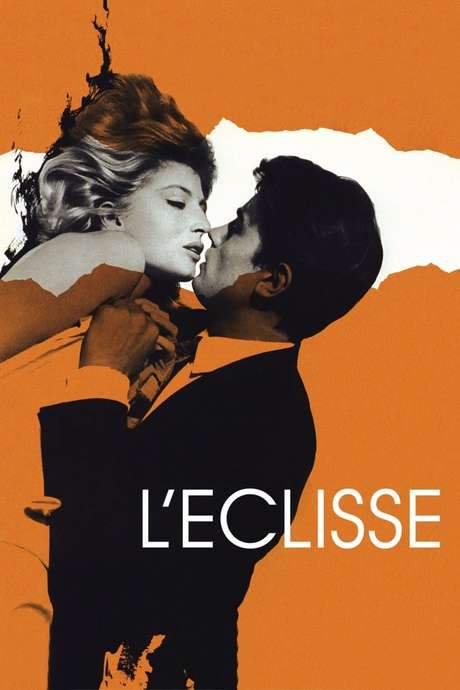
Lidia and Giovanni Pontano are a married couple who travel to a Milan hospital to visit their seriously ill friend, Tommaso Garani, a sharp-witted left-wing cultural critic. Tommaso exudes warmth for Giovanni’s newly published book, praising the work in a way that makes the visit feel almost ceremonial. But the moment Gonzales of life and mortality collide; the sight of Tommaso in pain unsettles Lidia, and she quietly withdraws from the room. As Giovanni pauses to say goodbye, a sick and uninhibited young woman slides into the moment, pulling him into a kiss that is as unsettling as it is brief. Nurses intervene, and the scene ends with a jolt of reality: the bedrock of their relationship is already shifting. Outside the hospital, Giovanni spots his wife in tears and, in a move that will haunt their conversation later, offers no comfort. The car ride home becomes a stark confession: he describes the encounter as if it meant little, while Lidia absorbs it with a calm indifference that unsettles him and foreshadows a widening distance between them.
At Giovanni’s book launch, the couple seems to inhabit two separate spaces. Giovanni signs copies and basks in a moment of public success, while Lidia watches from the sidelines, her distance widening. She leaves the crowd and wanders through Milan, retracing the streets of the life they built together when they were newlyweds. Her wandering leads her to a neighborhood that feels charged with memory, where a street fight erupts and rockets are set off in a distant field. The upheaval mirrors her inner state, and she feels the pull of a truth she cannot yet name. A phone call to Giovanni brings him to pick her up, and that night they drift toward a nightclub, where a sultry dancer performs and conversation verges on brittle small talk. She hints that she has something to tell him, then suggests they accept an invitation to a party by Mr. Gherardini, a wealthy industrialist, at his villa.
The party scene unfurls with a formal ease that masks the unease simmering below the surface. Valentina Gherardini, the host’s young daughter, becomes the focal point of Giovanni’s attentions as he moves through the guests. Their flirtation includes a playful moment—Valentina slides her compact across the floor, and others gather to watch a lighthearted little contest before Giovanni steps away. Amid the social energy, Lidia receives news from the hospital: Tommaso has died, a blow that shatters the fragile equilibrium she carried with her. The moment Giovanni returns to the party, he sees Valentina and is drawn irresistibly toward her; the kiss of death for the night’s pretenses seems imminent.
A private moment with Mr. Gherardini occurs when Giovanni is offered an executive position within the company, an offer he neither fully rejects nor embraces. He delays his decision, leaving the door open while he stares down the mounting questions about loyalty, art, and ambition. A brief, fragile reconnection with Lidia is followed by a chance encounter with Valentina, who urges him to spend the remainder of the evening with his wife. That suggestion is interrupted by a rain shower that sends guests scrambling. As a bold, impulsive moment unfolds, Lidia finds herself standing on a diving board, about to leap into the pool, when a lingering, persistent pull from another man—Roberto—pulls her away. They drive off, and she engages him in conversation, enjoying the dialogue but still turning away when he tries to kiss her.
Back inside, Giovanni searches the crowd for Valentina and finally finds her alone. She invites him to spend the remainder of the night with his wife, and she shares a creative work-in-progress on a tape. Giovanni praises the writing, but Valentina discards the tape as merely a childish experiment. Giovanni tries to frame his own crisis—the creative struggle that threatens to spill into every facet of his existence—yet the moment still feels evasive. They return to the party as dawn approaches, and Lidia and Roberto rejoin the room. Valentina offers Lidia a place to dry off in her room, and the two women speak frankly, with Lidia admitting that she no longer feels jealousy toward Valentina as Giovanni looks on.
The dawn leaves them physically exhausted and spiritually unsettled, and the couple leaves the party together along the early course of a private golf course. On the walk, Lidia opens up about Tommaso’s death and recalls how he had once offered her affection and support, a contrast to the love she felt for Giovanni in their youth. She explains that she once chose him, but now she feels she might die because she no longer loves him. Giovanni accepts the failure of their marriage but reaffirms his love, even as the unspoken truth between them grows louder. He reads back to her a love letter he had written before they married, and the moment is intimate and painful in equal measure. Lidia embraces him but then resists, insisting that they no longer love each other. Yet, as they stand together on the green, Giovanni continues to pursue, pulling her into a final kiss and tenderly fondling her in a bunker as the world around them continues to wake up to a new, uncertain dawn.
In this drama of desire, memory, and disillusion, the characters navigate a landscape where love can be both a sustaining force and a destabilizing shadow. The film’s quiet, observant gaze captures the weariness and longing that arise when a partnership reaches a threshold—when past affections endure only in memory, and the future remains stubbornly unresolved. The tale insists on a patient, almost clinical examination of emotional fracture, presenting a world where truth surfaces not in grand declarations but in the slow, complicated dance of two people who once believed in a shared future.