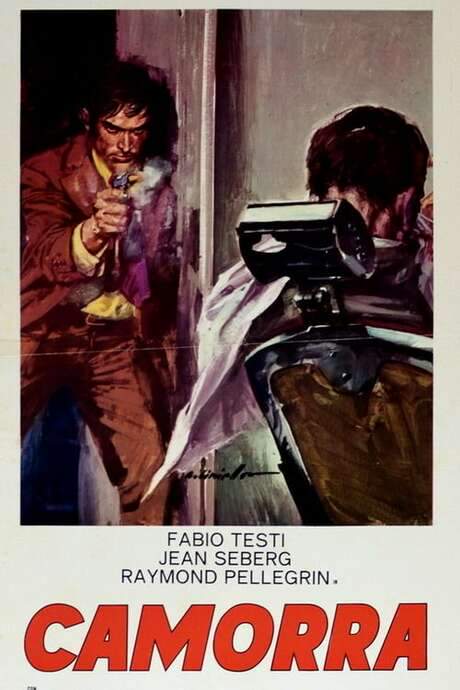
Gabriele Ingenis, a young man in a fog-draped Bologna square, roams among the crowd under the arcades, visibly dazed after a bloody shootout. An Istrian refugee, he had crossed paths months earlier with his old friend Corrado Minguzzi and Paolo Casaroli at a Bologna Luna Park, and that encounter seeds a dangerous partnership. The trio’s bond deepens into a shared, reckless fate as they acquire weapons and recruit a few occasional accomplices, dreaming of bigger grabs even as their first robbery—against a small bank in a Lombardy agricultural center—happens almost on impulse and with imperfect planning.
As their confidence grows, the gang stages a more ambitious strike in Genoa, targeting a bank crowded with employees and customers and pulling off a clean emptying of the safe. Flush with cash, they abandon Bologna for Venice, chasing a hedonistic stretch of life: they move through the city with a casual ease, enjoying the company of easy-going women and testing their luck at the casino. The thrill and the money feed their bravado, but the roving fortune soon strains under the weight of risk and suspicion, and the plan to pull off a final, audacious score in Rome takes shape.
In the Italian capital, tension rises as a cashier tries to disarm Casaroli in the midst of the heist. Ingenis steps forward to shield his partner, firing at the cashier, while Minguzzi returns fire at a pursuer, and an alarm finally blares into the night. The escape through Rome spirals into violence, leaving more casualties in their wake and turning the city into a pressure chamber of fear and desperation. Believing his friends have fallen, Ingenis, who did not escape intact, takes his own life in a cinema, a stark end to his participation in the escalating spree.
Casaroli survives the brutal episode, severely injured but alive, and finds himself in hospital as a journalist manages to secure a conversation and record a brief, haunting exchange. When the interview ends, the journalist leaves with the image of a man who, in his own fragmented way, sings the chorus of “Paquito lindo,” a song borrowed from the film Fear and Sand, echoing the precarious mix of defiance and despair that has come to define his world.
The narrative traces how a chance meeting in a Bologna square spirals into a sequence of calculated crimes, shifting loyalties, and irrevocable choices. It examines the allure of quick money, the camaraderie and fragility of a trio bonded by desperation, and the crushing weight of consequences that follow when violence becomes the measure of choice. Through stark settings—from a dim Lombardy outpost to bustling Genoa, glittering Venice, and finally Rome—the story remains focused on the men who choose to walk that line, and on the human costs that accumulate as the dream of a big score unravels into tragedy.