Plot Explained Spoilers guaranteed!
Plot Explained

Browse by genre

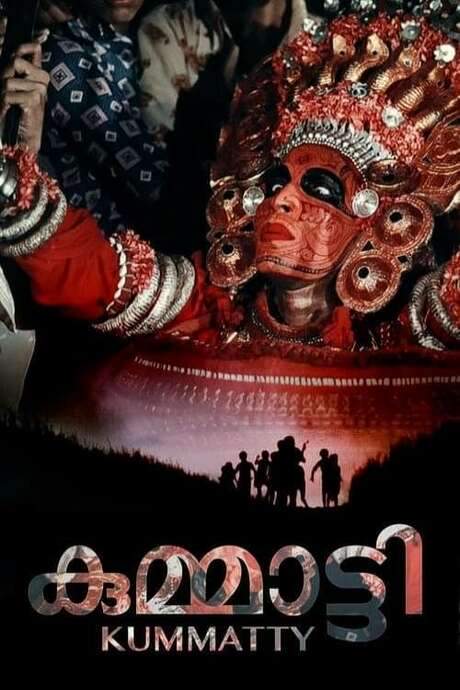
Kummatty (1979) movie poster

Plot Summary

Kummatty (1979) Plot Summary Explained

Release, runtime and language
1979 · 90 mins · Malayalam
Loading streaming availability…
Directed by
Govindan Aravindan
Starring
Kuttyedathi Vilasini, Shanker, Master Ashokan, Vakkil, Sivasankaran Divakaran, Ramunni

Kummatty will get you. A stranger who may be the trickster magician Kummatty comes to a village in Malabar, India.

On this page (5)
  1. 1 Where to watch
  2. 2 What happens: full plot
  3. 3 Plot questions answered
  4. 4 Movie threads
  5. 5 Every angle
Loading streaming availability…

Full plot summary · contains spoilers

What Happens in Kummatty: Full Plot Summary

The whole story of Kummatty (1979) explained, from the opening scene to the final frame: every key event, every twist and what it all adds up to. Read it as a quick recap before the sequel, to check a scene you missed, or to finally understand what really happened.

The film opens with the sun rising over the mountains, unveiling a quiet hamlet set against a brownish-green landscape and expansive blue skies, while a man’s song threads through the morning air. Here, a young boy named Chindan begins his day, brushing his teeth, helping his mother with the vegetables, and setting off for school. As he and his friend walk toward the temple, they share a simple moment of curiosity, listening to the temple priest’s offering and watching an old woman sweep the floors. In a playful impulse, Chindan whispers a tease to the old woman, then darts away to join his friend.

Throughout the village, fields glow with pale whiteness as children carry their books and walk toward school. A lesson about elections and voting unfolds, grounding the world of these youngsters in everyday democracy. Back at home, Chindan tugs at a caged parrot, enjoying a few carefree moments before the day’s adventures pull him toward the river with his schoolmates. A tense moment arises when he spots a black dog and considers throwing a stone, but he stops himself, letting the animal slip away.

That afternoon, curiosity leads Chindan and friends to a woman who lies in a sweaty, unconscious state in her home, while a doctor hovers nearby and works with anxious hands. The scene stirs something in Chindan, a sense of wonder at the unknown powers at work in the world around him. The following morning, the old temple woman visits with a pot of water; the children seize the pot and vanish, and she curses them with a warning voice that lingers in their minds.

> Just see, I'm going to send you to Kummatty.

As Chindan and his friends sing a playful tune about Kummatty’s descent, they wander through grass, across fields, and beneath towering trees, the landscape becoming a liminal space between childhood innocence and myth. By dawn, a wandering man arrives in the village, carrying a cloth sack and a rack of bohemian animal masks. Chindan and two girls notice him, tracing his songs as he rests under a tree near the temple. The man’s eerie melodies ripple through the night, drawing every child’s attention as they study by the glow of oil lamps and candles.

The next morning, the group watches as the man bathes in an ancient pool, while the old woman watches from behind a wall. He then goes to the school, where his tambourine and lively song lure the children into a moment of shared joy. When Chindan returns from the market, he finds the masks left behind under the tree and studies them with a mix of fear and fascination before the man is encountered again and simply asks him to move on. From that day, the children begin to refer to the mysterious figure as Kummatty, the Bogeyman, a title that blends fear with a hint of friendly wonder.

Chindan’s insistence on Kummatty’s magical powers grows, though some friends doubt him and even watch as Kummatty shaves his beard in the underbrush. On another occasion, Kummatty invites Chindan to approach and introduces himself, conjuring a fruit from nowhere. The old woman witnesses the moment and, soon after, Chindan’s friends join in the belief that Kummatty holds real magic. A festival scene arrives as one friend dresses as a deity, walking through the village to the cheers of the crowd.

When Kummatty’s health falters, Chindan runs for help, bringing a doctor to the old woman’s aid. Then, during a moment of farewell, Kummatty gathers his masks and prepares to move on, but Chindan and the other children beg him to stay. As a parting gift, Kummatty performs a final trick for his beloved pupils, guiding them to wear the masks and lie on all fours in a playful tableau. He closes his eyes, chants a mystic mantra, and one by one the children transform into animals—a monkey, a donkey, a goat, a cow, an orangutan, an elephant, a peacock, a horse—and even Chindan becomes a dog.

The joyful moment collapses into confusion as the dog-changed Chindan is pursued by the very black dog he once spared. Kummatty returns the children to human form, but Chindan remains trapped as a dog, while the others resume their lives. The village wakes to search for the missing boy, tears and fear mixing with the flame-lit torches that illuminate the night. The boy-turned-dog is found at a grand mansion where a girl keeps many dogs as pets, and he is claimed as her new pet. He is chained to a tree, and the other dogs bark at him from their kennel.

Days stretch into a lengthy illness for Chindan the dog. A veterinarian tries to diagnose him, but the doctor’s verdict is clear: only open nature can restore him. The girl’s father negotiates with his daughter, trading a Pomeranian for the chance to free Chindan, but the dog’s fate remains uncertain. Back home, Chindan’s mother and father pray to multiple deities in a desperate bid to reverse the transformation, but their hopes wane as the old temple woman passes away.

A year passes. Then a faint, familiar melody returns to Chindan’s ears, guiding him to the village’s edges where he discovers that Kummatty has returned. The two share a heartfelt reunion, and Kummatty recognizes that the dog is Chindan. With a joyous embrace, Chindan becomes human once more, and the village gathers for a moment of communal marvel. The film closes with a quiet, symbolic gesture: Chindan frees the family’s caged parrot, tossing it into the Malabar sky, as a montage follows—birds of every kind wheeling through an open, limitless expanse, embodying freedom and the unbounded reach of imagination.
Last updated: October 09, 2025 at 10:49

Was this helpful?

Plot questions answered

Kummatty Plot Explained: Your Questions Answered

The questions people ask most about Kummatty (1979): what happens in the confusing scenes, why the characters do what they do, the twists, hidden details and what the ending means. Each answer contains spoilers.

Q1

Why does Chindan stay trapped as a dog while the other children transform back?

When Kummatty performs the transformation spell, Chindan becomes a dog. Unlike the others who return to human form immediately, Chindan remains a dog because he was the one who initially spared a black dog earlier in the film. The magic mirrors his own choice, showing that mercy and consequence are intertwined. The other children transform back because they had not shown that same act of compassion.

Foreshadowing: Earlier, Chindan chooses not to throw a stone at a black dog, sparing its life.

  • chindan
  • dog transformation
  • magic
  • kummatty
  • mercy
  • consequence
Q2

What is Kummatty - a magician or bogeyman?

Kummatty is a wandering magician who carries animal masks and performs tricks for the village children. However, the children and villagers refer to him as the Bogeyman, blending folk legend with his mysterious powers. He can perform real magic, conjuring fruit and transforming children into animals, but his nature remains ambiguous, he is neither purely malevolent nor entirely benevolent.

Foreshadowing: The old woman threatens to send the children to Kummatty, establishing him as a figure of folk fear.

  • kummatty
  • magician
  • bogeyman
  • magic
  • mysterious stranger
Q3

Why does the old temple woman curse the children with Kummatty?

The old woman brings a pot of water to the temple, and Chindan and his friends snatch it away in playful mischief. Angered by their disrespect, she curses them, declaring she will send them to Kummatty. This curse sets the magical events in motion, as if her words have summoned or awakened the mysterious stranger who soon arrives in the village.

Foreshadowing: The children had earlier teased the old woman at the temple, whispering 'Kummatty' and running away.

  • old woman
  • curse
  • temple
  • kummatty
  • children
Q4

How does Kummatty transform the children into animals?

As a farewell gift, Kummatty asks the children to wear his animal masks and sit on all fours. He closes his eyes, chants a mystic mantra, and one by one they transform, into a monkey, donkey, goat, cow, orangutan, elephant, peacock, horse, and Chindan becomes a dog. The transformation is immediate and magical, blurring the line between performance and reality.

Foreshadowing: Throughout the film, Kummatty performs smaller magic tricks like conjuring fruit and bird-shaped biscuits.

  • transformation
  • magic
  • masks
  • kummatty
  • animals
  • spell
Q5

Why does Chindan spare the black dog in the beginning?

Chindan sees a black dog and considers throwing a stone at it, but he stops himself and lets the animal walk away. This act of mercy seems simple but becomes crucial, it sets up the moral logic of the later transformation. When Kummatty's magic transforms the children, Chindan becomes the same creature he chose not to harm, suggesting that kindness and cruelty both carry consequences.

Foreshadowing: This moment directly foreshadows Chindan becoming a dog.

  • black dog
  • mercy
  • chindan
  • compassion
  • foreshadowing
Q6

What happens to the old temple woman after the transformation?

The old temple woman passes away during the year that Chindan remains trapped as a dog. She had been a believer in traditional powers and curses, and her death marks the end of that older generation's connection to the mystical. Her passing also symbolizes how the village moves forward, though her warnings about Kummatty proved ultimately true.

Foreshadowing: She cursed the children and warned them about Kummatty.

  • old woman
  • death
  • temple
  • passing
  • village
Q7

How does Chindan become human again?

One year later, Chindan hears faint familiar melodies and discovers Kummatty has returned to the village. Kummatty recognizes the dog as Chindan, embraces him lovingly, and Chindan instantly transforms back into a human boy. The reunion is joyful and miraculous, reversing the year-long separation.

Foreshadowing: Kummatty's songs and music are established as magical throughout the film.

  • chindan
  • transformation
  • human again
  • kummatty
  • return
  • reunion
Q8

Why does Kummatty leave the village?

Kummatty gathers his masks and prepares to move on to another place, as he is a wandering traveler. The children beg him to stay, but he decides to leave. His departure triggers the final transformation trick as a parting gift, a farewell performance that goes tragically wrong for Chindan.

Foreshadowing: Kummatty is introduced as a wandering man who arrives with his masks and will eventually move on.

  • kummatty
  • departure
  • leaving
  • village
  • masks
  • wandering
Q9

What does the ending signify - Chindan freeing the parrot?

In the final scene, Chindan frees the family's caged parrot, tossing it into the open Malabar sky. A montage follows showing birds of every kind wheeling freely through expansive skies. This symbolizes freedom, imagination, and childhood's unbounded reach, the parrot's release mirrors Chindan's own return to human form and the restoration of his freedom after being trapped.

Foreshadowing: The film opens with Chindan playing with the caged parrot, establishing his relationship with the bird.

  • parrot
  • freedom
  • ending
  • birds
  • sky
  • imagination
Q10

What happens to Chindan after he is transformed into a dog at the mansion?

Chindan ends up at a grand mansion where a girl keeps many dogs as pets. He is chained to a tree while the other dogs bark at him from their kennel. He falls ill and a veterinarian diagnoses him, declaring that only open nature can restore him. The girl's father tries to trade a Pomeranian for his release, but the dog remains trapped in his canine form until Kummatty returns.

Foreshadowing: The transformation causes chaos and confusion among the village.

  • mansion
  • dog
  • chindan
  • chained
  • illness
  • veterinarian

Movie threads

More Movies Like Kummatty, by Mood & Story

Curated lists built around what makes Kummatty tick: the same mood, the same kind of story or the same emotional payoff. Each list explains why these movies belong together.

Stories of magical childhood like Kummatty

Stories where the wonder of childhood is touched by the magical and mythical. If you enjoyed the blend of childhood wonder and myth in Kummatty, you'll find similar enchantments here. This thread gathers movies about magical encounters and transformations through a child's eyes, perfect for fans of gentle, wondrous stories grounded in folklore and innocence.

  • wondrous
  • magical
  • nostalgic
  • playful
  • melancholic
  • dreamlike
  • Tone: whimsical, melancholic
  • Pacing: slow, contemplative
Why these movies?

The story pattern: These narratives often follow a child protagonist whose ordinary world is interrupted by a magical event or character. The journey typically involves a temporary transformation or challenge that serves as a metaphor for growing up, ultimately leading to a return home with a new understanding, though sometimes with a touch of melancholy for what is lost.

Why they belong together: Movies are grouped here because they share a core focus on the intersection of childhood innocence and magical realism. They possess a whimsical yet reflective tone, a slow, contemplative pacing that allows for wonder, and a medium emotional weight derived from the genuine stakes of a child's journey.

Atmospheric rural stories like Kummatty

Contemplative stories where setting and atmosphere become a central character. For viewers who loved the dreamy, nostalgic feel of village life in Kummatty, this collection highlights movies where the rural setting is key. Discover similar films with a slow pace, strong sense of place, and a blend of the mundane with the magical, perfect for quiet, contemplative viewing.

  • dreamlike
  • nostalgic
  • quiet
  • atmospheric
  • contemplative
  • rural
  • Tone: nostalgic, quiet, mysterious
  • Pacing: slow, atmospheric
Why these movies?

The story pattern: The plot in these films is often straightforward, serving as a vessel to carry the audience through the environment. Conflict arises from the interaction between characters and their surroundings—be it nature, community, or local legends—rather than complex plot twists. The emotional journey is one of connection, observation, and subtle transformation tied to the land and its stories.

Why they belong together: These films are connected by their priority of atmosphere over intricate plotting. They share a slow, deliberate pacing that lets the setting breathe, a tone that balances the whimsical or magical with the melancholic or nostalgic, and a focus on the quiet drama of everyday life in a specific cultural and geographical context.

Every angle

Kummatty (1979) Explained: Plot, Timeline & Characters

Everything about Kummatty in one place: what happens in the plot summary, the timeline in chronological order, the characters and meaning and a spoiler-free summary. What's After the Movie adds the cast, box office and post-credit scenes.

Coming soon on iOS and Android

The Plot Explained Movie Summary App

Plot summaries, endings explained and timelines on your phone. Catch up on any movie in minutes, save your favorites and never miss a twist again.

Be the first to know when we launch. Your email stays private, always.

Learn more about the app