Plot Explained Spoilers guaranteed!
Plot Explained

Browse by genre

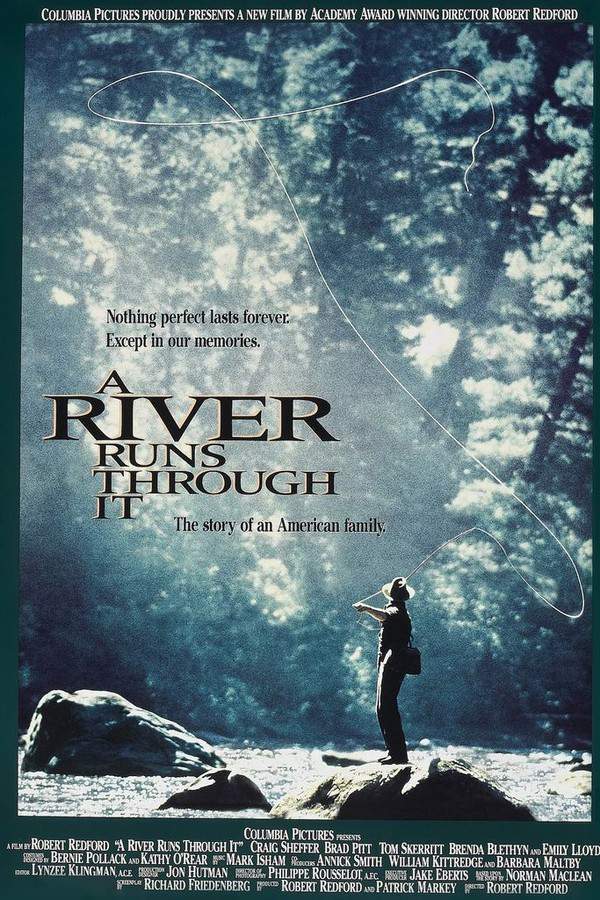
A River Runs Through It (1992) movie poster

Plot Summary

A River Runs Through It (1992) Plot Summary Explained

Release, runtime and language
1992 · 123 min · English
Loading streaming availability…
Starring
Brad Pitt, Craig Sheffer

Growing up in rural Montana, brothers Paul and Norman Maclean find solace and connection through fly fishing. As they mature, their differing paths and personal struggles challenge their close relationship. Their bond is tested by the complexities of adulthood and the uncertainties of the future, ultimately leading to a poignant reunion that explores themes of family, faith, and enduring brotherhood.

On this page (5)
  1. 1 Where to watch
  2. 2 What happens: full plot
  3. 3 Plot questions answered
  4. 4 Movie threads
  5. 5 Every angle
Loading streaming availability…

Full plot summary · contains spoilers

What Happens in A River Runs Through It: Full Plot Summary

The whole story of A River Runs Through It (1992) explained, from the opening scene to the final frame: every key event, every twist and what it all adds up to. Read it as a quick recap before the sequel, to check a scene you missed, or to finally understand what really happened.

In the picturesque town of Missoula, Montana, the Maclean brothers, Norman Maclean and Paul, are raised under the nurturing care of their mother, Clara, and their father, Rev. John Maclean, a devoted Presbyterian minister. His teachings instill in them a profound reverence for the art of fly fishing on the majestic Blackfoot River. Guided by their father's unwavering moral compass and academic rigor, the brothers embark on different paths; Norman heads to Dartmouth College, leaving Paul to refine his skills as an adept fisherman and an investigative journalist in Helena.

Fast forward six years to the vibrant and chaotic Jazz Age, Norman returns home to discover a remarkably transformed Paul, now a bold journalist with a taste for hard drink. Their lives intertwine again at a Fourth of July dance, where Norman crosses paths with Jessie Burns (character), a mesmerizing flapper whose father runs the local general store in Wolf Creek. Norman is instantly taken with Jessie and organizes a double date, inviting Paul and his spirited companion, Mabel, a Cheyenne woman who has faced scorn from the town's white population.

However, underlying tensions threaten to escalate as Norman is forced to bail Paul out after he finds himself in trouble defending Mabel against a local bully. The desk sergeant reveals Paul's mounting debts from a high-stakes poker game at the infamous Lolo speakeasy, drawing unwanted attention from the town's criminal element. Though Norman is ready to assist Paul financially, his brother refuses the help.

As Norman and Jessie's relationship flourishes, she seeks his support to help her brother, Neal (character), who battles severe alcoholism. Both Norman and Paul initially shy away from Neal but, on Jessie's insistence, they invite him for a fishing trip. However, their plans take a chaotic turn when Neal arrives intoxicated, accompanied by Rawhide, a prostitute he met the previous night. The brothers soon find themselves separated from Neal during the fishing trip but return to their car later to discover the consequences of the wild night that Neal and Rawhide have experienced.

Norman is burdened by the growing anger of Jessie over their perceived neglect, prompting him to contemplate a confession of his burgeoning feelings for her. A week later, as they farewell Neal at the station, Jessie’s frustrations erupt again as she expresses her despair in attempting to save those unwilling to accept help, her voice laced with urgency.

Meanwhile, Norman harbors a life-altering secret: a letter from the University of Chicago offering Neal a prestigious English Literature position. Faced with the reality of leaving Montana, Norman grapples with the weight of his love for Jessie, whose understanding embrace offers him solace.

That evening, Norman, drawn to the allure of liquor, confides in Paul about his feelings for Jessie. Rather than celebrating, Paul urges Norman into the smoky backrooms of the Lolo speakeasy, where high-stakes poker can seal their fates. As Norman watches the events unfold, he becomes increasingly aware of the delicate balance between his brother's fortunes and his own aspirations.

The subsequent morning brings both relief and anxiety for Norman as he finds Paul alive but nursing a hangover. The decision to accept the Chicago offer seems inevitable, yet Norman must summon the courage to communicate this to his loved ones. A final fishing trip with his family reminds them all of their roots and the diverging paths that await.

As they cast their lines into the wilderness, Norman’s plea for Paul to join him in Chicago goes unheard. Paul remains steadfast, captivated by the land and the thrill of the catch. The brothers share a brief moment of triumph with a magnificent rainbow trout, symbolizing both Paul's fervor and Norman's bittersweet farewell.

As Norman prepares to leave for Chicago, he is blindsided by the tragic news of Paul’s untimely death. Heartbroken, he must relay this devastating truth to their parents, forever altering the family's story. Years later, the echoes of that tragedy persist as Mrs. Maclean, Norman, Jessie, and their children come together for a poignant sermon delivered by Rev. Maclean, just moments before his own demise. In the face of mortality, he imparts a crucial lesson: when a loved one spirals into self-destruction, all one can offer is steadfast love amidst uncertainty.

As the narrative concludes, the camera captures an elderly Norman Maclean staring contemplatively at the same river that bore witness to his youthful tribulations. The soothing sound of the water glimmering under the sun serves as a healing balm for his soul, while the comforting voice of director Robert Redford articulates the closing lines of Norman's original novella, enveloping the story in a poignant epilogue.

Last updated: November 22, 2024 at 15:47

Was this helpful?

Plot questions answered

A River Runs Through It Plot Explained: Your Questions Answered

The questions people ask most about A River Runs Through It (1992): what happens in the confusing scenes, why the characters do what they do, the twists, hidden details and what the ending means. Each answer contains spoilers.

Q1

Why does Paul refuse to go to Chicago with Norman?

Paul chooses to stay in Montana because he is deeply connected to the land and the river. He tells Norman that the river is all he needs, and he cannot imagine leaving the Blackfoot River and the freedom it represents. His identity is rooted in Montana, and despite his self-destructive behavior, he finds solace in the landscape that shaped him.

Foreshadowing: Earlier, Paul is shown perfecting his fishing skills while Norman studies, establishing that fishing is Paul's true passion and purpose.

  • paul maclean
  • chicago
  • montana
  • fly fishing
  • blackfoot river
  • brothers
Q2

How does Paul die in A River Runs Through It?

Paul's death is left ambiguous and mysterious. Norman receives a telegram saying Paul is dead, and it's implied he died in a bar fight or from his self-destructive lifestyle in Seattle. The exact circumstances are never shown or fully explained, which is consistent with the film's theme of accepting uncertainty about those we love.

Foreshadowing: Throughout the film, Paul engages in dangerous behaviors, heavy drinking, poker debts, and confrontations with dangerous people at the Lolo speakeasy, setting up his tragic end.

  • paul death
  • tragedy
  • maclean family
  • mysterious death
Q3

What does Reverend Maclean mean by 'we can only love' those who are self-destructive?

In his final sermon, Rev. Maclean teaches that when a family member spirals into self-destruction, you cannot save them or change them, you can only offer steadfast love. This reflects his own experience with Paul, acknowledging that some people cannot be helped despite everyone's efforts. The lesson is about acceptance and unconditional love in the face of helplessness.

Foreshadowing: The brothers' failed attempt to help Neal, Jessie's alcoholic brother, demonstrates this theme earlier in the film.

  • reverend maclean
  • sermon
  • love
  • self-destruction
  • family
  • acceptance
Q4

Why does Norman wait so long to tell his family about the Chicago job offer?

Norman hesitates to share the news because he knows accepting the position means leaving Montana and his family behind, especially his troubled brother Paul. He struggles with guilt about pursuing his own future while Paul remains self-destructive in Montana. His secret letter symbolizes his internal conflict between personal ambition and familial loyalty.

Foreshadowing: Norman already left once for Dartmouth, and the film explores whether he will leave again, deepening the tension between his ambitions and his bond with Paul.

  • university of chicago
  • job offer
  • norman maclean
  • montana
  • guilt
Q5

What is the significance of the rainbow trout in the final fishing scene?

The rainbow trout they catch together represents the brothers' last moment of perfect harmony. It's a magnificent fish that requires both men working in sync to land, symbolizing their shared history and skill. For Norman, catching it with Paul becomes a bittersweet memory, a final perfect moment before Paul's death and Norman's departure.

Foreshadowing: The entire film builds fishing as the brothers' primary bonding activity, with their father teaching them on the Blackfoot River from childhood.

  • rainbow trout
  • blackfoot river
  • fishing scene
  • brothers
  • final trip
Q6

Why does Paul take Norman to the Lolo speakeasy after Norman confesses his feelings for Jessie?

Paul responds to Norman's emotional confession by pulling him into the dangerous world Paul inhabits, literally leading him into the smoky backrooms of the Lolo speakeasy. This act represents Paul's inability to process vulnerability or joy without seeking risk. It also foreshadows the chaotic lifestyle that will ultimately consume Paul.

Foreshadowing: Earlier, Paul is established as someone who deals with problems through escape, drinking, gambling, and reckless behavior.

  • lolo speakeasy
  • poker
  • norman
  • jessie
  • confession
  • paul
Q7

Why couldn't Norman and Paul help Neal with his alcoholism?

Neal's alcoholism represents the film's central theme that some people cannot be helped unless they choose to help themselves. Despite Jessie's desperate pleas and the brothers' fishing trip attempt, Neal arrives drunk and brings Rawhide, showing he has no intention of changing. Jessie later expresses her frustration at the train station, crying that she cannot save those who refuse to be saved.

Foreshadowing: This failure directly leads to Rev. Maclean's later sermon about loving those who self-destruct.

  • neal burns
  • alcoholism
  • jessie burns
  • failed intervention
  • blackfoot river
Q8

What happens to Norman and Jessie's relationship?

Norman and Jessie marry before he leaves for Chicago. When Norman receives the devastating news of Paul's death, Jessie is by his side, and they later raise their family together. The film shows them years later attending Rev. Maclean's final sermon, indicating their relationship endured despite the tragedy and distance from Montana.

Foreshadowing: Their relationship develops throughout the film, with Norman organizing the double date and later confessing his feelings to Paul before proposing to Jessie.

  • norman maclean
  • jessie burns
  • marriage
  • chicago
  • love story
Q9

What does the river represent in A River Runs Through It?

The Blackfoot River serves as both a literal setting and a symbolic constant throughout the film, it represents home, childhood, family bonds, and healing. In the final scene, elderly Norman returns to the river, finding solace in its sounds and beauty. The river witnessed the brothers' happiest moments and remains as a timeless source of reflection and peace.

Foreshadowing: The film opens with the brothers fishing as children and repeatedly returns to river scenes as the primary space for family connection and personal reflection.

  • blackfoot river
  • symbolism
  • healing
  • nature
  • montana
  • reflection
Q10

Why does Paul defend Mabel against the local bully?

Paul defends Mabel, his Cheyenne companion, because he loves her despite the town's prejudice against her. This act of defending her leads to Paul getting arrested, which forces Norman to bail him out. The incident reveals Paul's principled side and his willingness to stand against racism, even though it puts him in dangerous situations with people connected to the Lolo speakeasy.

Foreshadowing: Mabel's presence highlights the town's racial tensions and Paul's rebellious, nonconformist nature.

  • mabel
  • cheyenne
  • paul
  • defend
  • racism
  • montana

Movie threads

More Movies Like A River Runs Through It, by Mood & Story

Curated lists built around what makes A River Runs Through It tick: the same mood, the same kind of story or the same emotional payoff. Each list explains why these movies belong together.

Meditative dramas about family and nature like A River Runs Through It

Slow-paced stories where family bonds are tested against a backdrop of natural beauty. Find movies like A River Runs Through It that explore family dynamics and personal growth against serene natural landscapes. These similar dramas share a slow, thoughtful pace and a bittersweet tone, focusing on emotional bonds and the healing, yet challenging, power of the natural world.

  • tranquil
  • reflective
  • poignant
  • melancholic
  • nostalgic
  • lyrical
  • Tone: bittersweet, poignant, melancholic
  • Pacing: slow, meditative, deliberate
Why these movies?

The story pattern: Stories in this thread typically follow a linear, character-driven path, centering on familial relationships—often between siblings or parents and children—as they navigate life's challenges. The narrative is less about plot twists and more about emotional evolution, with the natural world serving as a constant, symbolic presence that reflects the characters' inner states.

Why they belong together: Movies are grouped here for their shared focus on the intersection of family and nature, a deliberate and reflective pacing, and a tone that balances melancholy with beauty. They offer a specific, tranquil yet emotionally resonant viewing experience.

Movies about brothers with tragic fates like A River Runs Through It

Stories of close brothers whose divergent paths lead to poignant and tragic outcomes. If you liked the story of Paul and Norman in A River Runs Through It, explore these similar dramas about brotherhood. These films focus on the intense bond between brothers, often featuring a charismatic but self-destructive sibling and a poignant, bittersweet ending that reflects on family and fate.

  • somber
  • poignant
  • tragic
  • nostalgic
  • heartbreaking
  • reflective
  • Tone: bittersweet, tragic, reflective
  • Pacing: steady, character-driven
Why these movies?

The story pattern: The narrative pattern follows two brothers from youth into adulthood, highlighting their contrasting personalities and life choices. The central conflict arises from the stable brother's inability to save the wilder, more charismatic sibling from their own demons. The story builds towards a tragic event that forces a reckoning with grief, memory, and the enduring nature of familial love.

Why they belong together: These films are united by a specific character archetype—the fraught but loving relationship between brothers—and a narrative arc that culminates in a bittersweet loss. They share a medium emotional weight, dealing seriously with themes like addiction and grief while maintaining a core of deep affection.

Every angle

A River Runs Through It (1992) Explained: Plot, Timeline & Characters

Everything about A River Runs Through It in one place: what happens in the plot summary, the timeline in chronological order, the characters and meaning and a spoiler-free summary. What's After the Movie adds the cast, box office and post-credit scenes.

Coming soon on iOS and Android

The Plot Explained Movie Summary App

Plot summaries, endings explained and timelines on your phone. Catch up on any movie in minutes, save your favorites and never miss a twist again.

Be the first to know when we launch. Your email stays private, always.

Learn more about the app