Plot Explained Spoilers guaranteed!
Plot Explained

Browse by genre

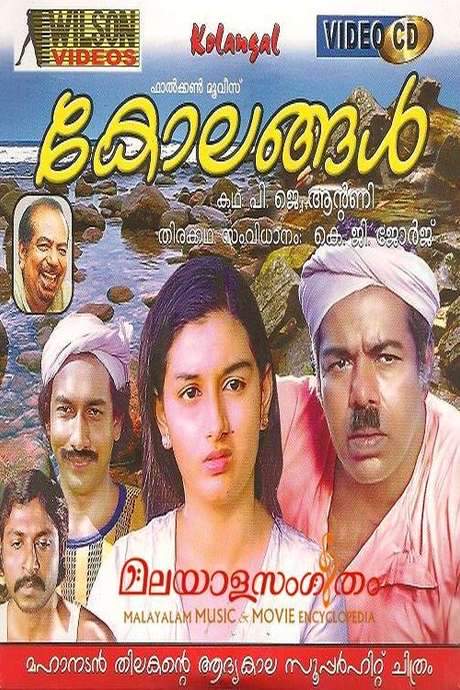
Kolangal (1981) movie poster

Plot Summary

Kolangal (1981) Plot Summary Explained

Release, runtime and language
1981 · 117 mins · Malayalam
Loading streaming availability…
Directed by
K. G. George
Starring
Thilakan, Nedumudi Venu, Sreenivasan, Menaka Suresh, Venu Nagavalli, Gladis

A 1981 Indian Malayalam film directed by K.G. George and produced by D. Philip and K.T. Varghese, it features Thilakan, Nedumudi Venu, Venu Nagavally and Sreenivasan in the principal roles. Adapted from P.J. Antony’s story “Oru Gramathinte Athmavu,” the narrative offers a vivid portrait of everyday life in a central‑Travancore village.

On this page (6)
  1. 1 Where to watch
  2. 2 What happens: full plot
  3. 3 Plot questions answered
  4. 4 Movie threads
  5. 5 Movies like Kolangal
  6. 6 Every angle
Loading streaming availability…

Full plot summary · contains spoilers

What Happens in Kolangal: Full Plot Summary

The whole story of Kolangal (1981) explained, from the opening scene to the final frame: every key event, every twist and what it all adds up to. Read it as a quick recap before the sequel, to check a scene you missed, or to finally understand what really happened.

Last updated: February 18, 2026 at 23:45

Was this helpful?

Plot questions answered

Kolangal Plot Explained: Your Questions Answered

The questions people ask most about Kolangal (1981): what happens in the confusing scenes, why the characters do what they do, the twists, hidden details and what the ending means. Each answer contains spoilers.

Q1

Why does Mariamma oppose Kunjamma's relationship with Cheriyan?

Mariamma opposes the relationship primarily due to social expectations and concerns about her daughter's reputation. As a widow facing economic vulnerability after her husband's death, Mariamma is pressured to secure her daughter's future through an acceptable marriage. Chacko's rumors about Kunjamma losing her chastity make Mariamma more susceptible to accepting a marriage proposal from Kallu Varky, whom she sees as a stable option despite knowing little about him.

Foreshadowing: Earlier in the story, the scandal of Aliamma's daughter returning pregnant from Madras shows how quickly a woman's reputation can be destroyed in the village.

  • Mariamma
  • Kunjamma
  • Cheriyan
  • opposition
  • marriage
  • social expectations
Q2

How do Chacko's rumors affect Kunjamma's life?

Chacko deliberately spreads rumors that Kunjamma has lost her chastity, making her undesirable to potential suitors and undermining her relationship with Cheriyan. This malicious gossip destroys Kunjamma's marriage prospects and forces her family into a desperate situation. The rumors work in tandem with Paramu's own predatory tactics of stalking and intimidating women, creating an atmosphere where women's reputations can be easily destroyed.

Foreshadowing: Chacko is established early as a parasitic villager who benefits from others' misfortune.

  • Chacko
  • rumors
  • Kunjamma
  • reputation
  • social ruin
Q3

Why does Mariamma agree to marry Kunjamma to Kallu Varky?

Mariamma agrees to the marriage after her husband dies, leaving her economically and socially vulnerable. Chacko presents the proposal as a solution to her precarious situation, framing himself as a savior. Desperate to secure her daughter's future and restore family honor after the rumors, Mariamma sees this marriage as the only viable option, not realizing she is trading one form of vulnerability for another.

Foreshadowing: The earlier incident of Aliamma's daughter being forced into marriage after her pregnancy scandal directly parallels this situation.

  • Mariamma
  • Kallu Varky
  • marriage
  • vulnerability
  • desperation
Q4

What does Cheriyan burning his hut represent?

Cheriyan's act of burning his hut and leaving the village symbolizes the destruction of hope and the final collapse of his dreams with Kunjamma. Unable to overcome the social barriers, rumors, and opposition, he chooses to sever all ties with the village entirely. This dramatic exit marks the tragic end of the romance subplot and represents how the village's toxic social dynamics drive out those who cannot conform to its oppressive expectations.

Foreshadowing: Cheriyan had remained in the village despite mounting pressure, but the marriage of Kunjamma to Kallu Varky makes his continued presence unbearable.

  • Cheriyan
  • hut
  • burning
  • departure
  • village
Q5

Why is Paramu considered predatory in the village?

Paramu treats women as personal property and systematically harasses them through voyeurism and intimidation. When women reject his advances, he retaliates by spreading rumors to ruin their reputations and lives. His behavior creates an environment of fear and control, where women cannot safely refuse male attention without facing social destruction. This predatory system works alongside Chacko's gossip to create a village where women's autonomy is constantly under attack.

Foreshadowing: Paramu's pattern of behavior is established early, showing he operates with impunity in the village.

  • Paramu
  • predatory
  • harassment
  • rumors
  • intimidation
Q6

What role does Raman Nair play in the village conflicts?

Raman Nair acts as a mediator, helping villagers with money, land, and disputes. He supports the idea of Cheriyan and Kunjamma's marriage and attempts to bring the families together. However, his interventions fail to unite the couple, highlighting the limits of mediation in a community dominated by deep-seated rivalries and malicious gossip. His failed attempts underscore how the village's social structures resist peaceful solutions.

Foreshadowing: Raman Nair's earlier assistance to various villagers establishes him as someone with influence, making his failure here more significant.

  • Raman Nair
  • mediation
  • marriage
  • conflict
  • village
Q7

What leads to the scandal involving Aliamma's daughter?

Aliamma's daughter is lured to Madras by a relative who promises a better job, but this is a deceptive trap. She returns home pregnant, creating a scandal that worsens the already tense relationship between Aliamma and Mariamma's families. This incident demonstrates how deception and broken trust devastate family reputations and serves as a warning of what happens to women who leave the village's protective (and controlling) environment.

Foreshadowing: This earlier scandal directly influences how the village treats Kunjamma's relationship and reputation.

  • Aliamma
  • daughter
  • Madras
  • pregnant
  • scandal
Q8

Why does the village remain tense at the end despite the marriages?

The village remains tense because the marriages and departures have not resolved the underlying social problems. The rivalry between Mariamma and Aliamma continues, predatory men like Paramu still operate unchecked, and Chacko's gossip networks remain active. Kunjamma's forced marriage and Cheriyan's departure have restored a表面的 calm, but the power dynamics, rumors, and past grievances that fuel conflict persist unchanged. The ending suggests the cycle of social oppression will continue.

Foreshadowing: Throughout the film, multiple conflicts remain unresolved, with new arrangements merely masking deeper problems.

  • village
  • tension
  • ending
  • unresolved
  • social control
Q9

How do rumors and gossip shape the village's social dynamics?

Rumor-mongering drives the village's social hierarchy and controls individual fates. Characters like Chacko and Paramu weaponize gossip to destroy reputations and manipulate outcomes. These rumors flow from the deep-seated rivalry between families and influence every decision, from marriage prospects to social acceptance. The community's willingness to believe and spread gossip without verification creates an environment where innocent people can be destroyed simply by being targeted.

Foreshadowing: The bitter rivalry between Mariamma and Aliamma establishes gossip as a primary weapon from the film's beginning.

  • rumors
  • gossip
  • village
  • social dynamics
  • reputation
Q10

What happens to Kunjamma by the end of the film?

Kunjamma is forced into marriage with Kallu Varky after her mother Mariamma accepts Chacko's proposal. This marriage represents the triumph of social pressure over personal choice, as Kunjamma's hopes of being with Cheriyan are destroyed by the combined forces of rumor, opposition, and economic desperation. Her fate exemplifies the tragic reality of women in this village who have no control over their own destinies.

Foreshadowing: Kunjamma's earlier rebellion in falling for Cheriyan makes her forced marriage even more tragic.

  • Kunjamma
  • marriage
  • Kallu Varky
  • forced
  • tragic

Movie threads

More Movies Like Kolangal, by Mood & Story

Curated lists built around what makes Kolangal tick: the same mood, the same kind of story or the same emotional payoff. Each list explains why these movies belong together.

Oppressive Village Dramas like Kolangal

Movies where the closed nature of a small community becomes a trap. Explore movies like Kolangal that delve into the tense and oppressive atmosphere of rural communities. If you were captivated by how a village's social fabric can destroy lives, these similar stories of false rumors, betrayal, and moral decay are your next watch.

  • oppressive
  • gritty
  • claustrophobic
  • tragic
  • somber
  • social drama
  • Tone: bleak, tense, oppressive
  • Pacing: steady, deliberate
Why these movies?

The story pattern: Stories typically follow characters trapped by the social structures of their small community. A moral transgression, real or perceived, sparks a chain reaction of judgment and ostracism. The narrative focuses on the psychological toll as protagonists are systematically broken down by the collective weight of their neighbors' opinions.

Why they belong together: These films are grouped together because they share a core focus on setting-as-antagonist, creating a palpable sense of claustrophobia and social dread. They feature a steady pacing that allows tension to simmer and a bleak tone reflecting the often-tragic consequences of societal pressure.

Slow Burn Bleak Tragedies like Kolangal

Character-driven stories where sadness accumulates steadily toward a tragic end. For viewers seeking movies like Kolangal with a heavy emotional weight and a tragic, inevitable conclusion. These films share a steady, deliberate pace and a bleak tone, building a profound sense of despair through the relentless unfolding of a character's downfall.

  • tragic
  • melancholic
  • bleak
  • slow burn
  • somber
  • despairing
  • Tone: bleak, tragic, melancholic
  • Pacing: steady, slow burn
Why these movies?

The story pattern: The narrative pattern involves following a protagonist or a group of characters facing a series of interconnected hardships. The story avoids melodrama, instead opting for a realistic, steady progression where hope is extinguished piece by piece. The ending is typically sad or bleak, emphasizing the lasting impact of the preceding events.

Why they belong together: This thread connects films based on a specific emotional journey: a steady build of tension and sadness, a consistently bleak worldview, and a heavy emotional payoff. They prioritize a melancholic, immersive mood over plot twists, creating a deeply affecting viewing experience centered on tragedy and resignation.

If you liked this

Movies Like Kolangal

Similar movies to Kolangal: the same genre, themes or kind of story. Each one comes with its own plot summary, timeline and ending explained.

Browse all movie summaries

Every angle

Kolangal (1981) Explained: Plot, Timeline & Characters

Everything about Kolangal in one place: what happens in the plot summary, the timeline in chronological order, the characters and meaning. What's After the Movie adds the cast, box office and post-credit scenes.

Coming soon on iOS and Android

The Plot Explained Movie Summary App

Plot summaries, endings explained and timelines on your phone. Catch up on any movie in minutes, save your favorites and never miss a twist again.

Be the first to know when we launch. Your email stays private, always.

Learn more about the app