






Plot Explained Spoilers guaranteed!
Plot Explained

Browse by genre

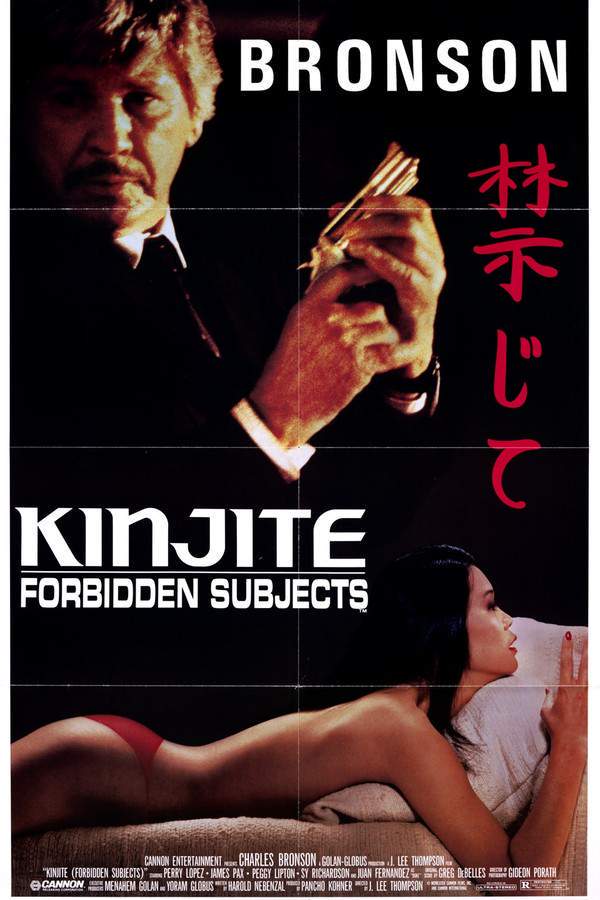
Kinjite: Forbidden Subjects (1989) movie poster

Characters & Themes

Kinjite: Forbidden Subjects (1989) Characters, Setting & Themes Explained

Release, runtime and language
1989 · 97 min · English
JustWatch #25,015 7
Directed by
J. Lee Thompson
Starring
Bill McKinney, Charles Bronson, Peggy Lipton, Perry Lopez, Sy Richardson, Juan Fernández

A veteran detective and his partner navigate the dangerous underbelly of Los Angeles, relentlessly tracking a ruthless pimp who preys on vulnerable teenagers. The investigation leads them deep into a world of exploitation and violence as they work to bring him to justice.

On this page (8)
  1. 1 Where to watch
  2. 2 Characters explained (5)
  3. 3 Where & when it takes place
  4. 4 Themes & meaning (3)
  5. 5 Character & meaning questions
  6. 6 Movie threads
  7. 7 Movies like Kinjite: Forbidden Subjects
  8. 8 Every angle

Where to watch

Where to Watch Kinjite: Forbidden Subjects (1989)

Where can you watch Kinjite: Forbidden Subjects? Stream, rent or buy it in the US, including on fuboTV, MGM Plus and Philo: current JustWatch availability with up-to-date prices.

Streaming availability powered by JustWatch

5 main characters · contains spoilers

Kinjite: Forbidden Subjects Characters Explained: Who Is Who

The main characters of Kinjite: Forbidden Subjects (1989), heroes and villains: what drives them, how they change over the course of the story and what each of them reveals about the film's bigger ideas.

  • Hiroshi Hada

    Hiroshi is a conflicted Japanese entrepreneur caught in a tumultuous marriage. His curiosity and reckless actions set off a chain of tragic events, driving him to a desperate quest to protect his daughter from the ugliest corners of society.

    • 🚶‍♂️ Businessman
    • 🏠 Family Man
  • Fumiko Hada

    Fumiko, the daughter of Hiroshi, finds herself ensnared in a harrowing child prostitution ring. Her trauma and struggle for survival depict the darker realities of exploitation faced by vulnerable young individuals in society.

    • 👧 Victim
    • 🎭 Innocence Lost
  • Lt. Crowe

    Lt. Crowe begins with a strong bias against Japanese people but evolves through his experiences while searching for Fumiko. His character reflects the complexities of racism, love, and duty as a father, leading to a nuanced understanding of human connection.

    • 👮‍♂️ Law Enforcement
    • 👨‍👧 Protective
  • Duke

    Duke, known as the 'Pimp King,' is a sinister figure who perpetuates the exploitation of young girls. His violent and ruthless behavior ultimately leads to his downfall, illustrating the consequences of a life defined by cruelty.

    • 👿 Antagonist
    • 🚨 Criminal
  • Eddie Rios

    Eddie Rios serves as Lt. Crowe's partner, supporting his quest for justice. His dedication and bravery in confronting danger shine throughout their intense pursuit of the nefarious Duke.

    • 🤝 Partner
    • 💪 Brave

Last updated: October 23, 2024 at 08:47

Was this helpful?

Setting

Where and When Does Kinjite: Forbidden Subjects Take Place?

The setting of Kinjite: Forbidden Subjects (1989): the year and time period, the places and locations, and how they shape the characters, the mood and the tension of the story.

Time period

The movie's events unfold in a contemporary setting, reflecting modern societal issues such as crime and the struggle against child exploitation. This time period showcases the complexities of urban life and the darker facets of human behavior in a bustling metropolis.

Location

Tokyo, Marina

Tokyo serves as a vibrant yet chaotic backdrop, known for its bustling subway system where much of the story unfolds. The marina later becomes a key setting for the dramatic confrontation, highlighting the stark contrast between serene waters and the violence that lurks beneath.

  • 🏙️ City
  • ⛵ Harbor

Last updated: October 23, 2024 at 08:47

Was this helpful?

3 major themes

Kinjite: Forbidden Subjects Meaning: Themes & Message Explained

What is Kinjite: Forbidden Subjects (1989) really about? The emotional, social and philosophical themes the film keeps returning to, its symbolism and the message beneath the surface.

  • Justice

    The theme of justice is intricately woven throughout the narrative, highlighting the moral dilemmas faced by the characters. Lt. Crowe’s journey reflects the quest for retribution, while the harsh consequences faced by Duke serve to illustrate the suspenseful pursuit of accountability.

  • Trauma

    Trauma serves as a persistent theme, deeply affecting the characters and their relationships. Fumiko's experiences with violence and exploitation reveal the lasting effects of trauma, not only on her but also on her family, creating enduring scars that haunt them.

  • Parental Love

    The bond between parents and their children highlights the theme of unconditional love. Lt. Crowe’s dedication to his daughter and Hiroshi Hada's desperate attempts to protect Fumiko showcase the lengths to which parents will go to save their children.

Last updated: October 23, 2024 at 08:47

Was this helpful?

Character & theme questions

Kinjite: Forbidden Subjects Characters & Meaning: Your Questions Answered

The questions people ask about Kinjite: Forbidden Subjects (1989): who the characters really are, their relationships, what the symbols mean, where it takes place and what the movie is really about. Each answer contains spoilers.

Q1

Where is Kinjite set?

Kinjite is set primarily in Tokyo, a vibrant and chaotic metropolis that serves as the backdrop for the story. The bustling Tokyo subway system plays a significant role in the narrative, representing the urban environment where exploitation occurs. A marina also becomes a key location for the film's dramatic confrontation, contrasting serene waters with the violence lurking beneath the surface.

  • tokyo setting
  • tokyo subway
  • marina
  • movie location
Q2

What time period does Kinjite take place in?

Kinjite takes place in a contemporary, modern setting reflecting the late 1980s. The movie addresses current societal issues like crime and child exploitation, showcasing the complexities of urban life in a bustling metropolis and the darker facets of human behavior.

  • contemporary
  • modern
  • 1980s
  • time period
  • era
Q3

What is the theme of justice in Kinjite?

Justice is a central theme in Kinjite, exploring the moral dilemmas faced by characters throughout the story. Lt. Crowe's journey reflects a quest for retribution, while Duke's harsh consequences illustrate the suspenseful pursuit of accountability. The theme examines whether true justice can be achieved in a world filled with exploitation and violence.

  • justice
  • retribution
  • accountability
  • moral dilemma
  • theme
Q4

How does Kinjite handle the theme of trauma?

Trauma serves as a persistent and devastating theme in Kinjite, deeply affecting characters and their relationships. Fumiko's experiences with violence and exploitation reveal the lasting psychological effects not only on her but also on her family, creating enduring scars that haunt them throughout the film.

  • trauma
  • psychological effects
  • exploitation
  • emotional damage
Q5

What role does parental love play in Kinjite?

Parental love is a powerful theme in Kinjite, demonstrating the unconditional bond between parents and their children. Lt. Crowe's dedication to his daughter and Hiroshi Hada's desperate attempts to protect Fumiko showcase the extreme lengths parents will go to save their children from harm, even facing danger and corruption.

  • parental love
  • family
  • sacrifice
  • protection
  • father-daughter
Q6

Who is Duke in Kinjite?

Duke is the main antagonist known as the 'Pimp King,' a sinister figure who perpetuates the exploitation of young girls in the film. His violent and ruthless behavior drives much of the conflict, and his ultimate downfall illustrates the consequences of a life defined by cruelty and exploitation.

  • duke
  • pimp king
  • villain
  • antagonist
  • exploitation
Q7

What is Lt. Crowe's role in Kinjite?

Lt. Crowe is a veteran detective who begins with a strong bias against Japanese people but evolves through his experiences while searching for Fumiko. His character arc reflects the complexities of racism, love, and duty as a father, leading to a more nuanced understanding of human connection across cultural lines.

  • lt crowe
  • detective
  • police
  • character role
  • evolution
Q8

Who is Hiroshi Hada in Kinjite?

Hiroshi Hada is a conflicted Japanese entrepreneur caught in a tumultuous marriage. His curiosity and reckless actions set off a chain of tragic events, driving him to a desperate quest to protect his daughter Fumiko from the darkest corners of society.

  • hiroshi hada
  • father
  • japanese
  • entrepreneur
  • protective
Q9

What happens to Fumiko in Kinjite?

Fumiko Hada is the daughter of Hiroshi who finds herself ensnared in a harrowing child prostitution ring. Her trauma and struggle for survival depict the darker realities of exploitation faced by vulnerable young individuals, with her tragic overdose serving as a devastating emotional anchor in the film.

  • fumiko hada
  • daughter
  • exploitation
  • prostitution ring
  • victim
Q10

Who is Eddie Rios in Kinjite?

Eddie Rios serves as Lt. Crowe's partner and supporting character in the investigation. His dedication and bravery shine throughout their intense pursuit of the villainous Duke, providing support in the quest for justice.

  • eddie rios
  • partner
  • detective
  • police partner
  • support
Q11

What is the emotional tone of Kinjite?

Kinjite has a predominantly dark and heavy emotional tone due to its unflinching portrayal of sexual violence, child exploitation, and brutal violence. While there is a sense of 'poetic justice' in the ending, the overall feel is bittersweet, as the rescue is overshadowed by lasting psychological scars and a violent, morally ambiguous conclusion.

  • dark tone
  • emotional weight
  • bittersweet
  • serious
  • gritty

Movie threads

More Movies Like Kinjite: Forbidden Subjects, by Mood & Story

Curated lists built around what makes Kinjite: Forbidden Subjects tick: the same mood, the same kind of story or the same emotional payoff. Each list explains why these movies belong together.

Grim Urban Crime Thrillers like Kinjite: Forbidden Subjects

Sleuths descend into the city's sordid underworld to confront human depravity. If you liked the relentless, grim investigation in Kinjite: Forbidden Subjects, this thread features similar movies. These are fast-paced, high-intensity crime stories set in oppressive urban environments, focusing on detectives tackling disturbing cases of exploitation and violence.

  • gritty
  • tense
  • disturbing
  • oppressive
  • desperate
  • vengeful
  • Tone: dark, tense, grim
  • Pacing: fast, relentless
Why these movies?

The story pattern: The narrative typically centers on a dogged investigation into a brutal crime, often involving vulnerable victims. The protagonist, usually a jaded or driven detective, follows a trail of clues through a city's underbelly, leading to violent confrontations and a resolution that offers justice but little solace.

Why they belong together: These films are grouped by their shared commitment to a dark, procedural tone, high-stakes pacing, and a setting that feels like a character itself—a corrupt and dangerous city. They deliver a stressful, emotionally heavy experience focused on the grim reality of crime fighting.


Movies with Bittersweet Justice like Kinjite: Forbidden Subjects

Stories where hard-won justice is overshadowed by lasting psychological scars. For viewers who appreciated the complex, bittersweet ending of Kinjite: Forbidden Subjects, this thread collects movies where justice is served, but the cost is immense. These films feature heavy emotional weight, dark themes, and conclusions where trauma overshadows any sense of victory.

  • vengeful
  • disturbing
  • grim
  • heavy
  • traumatic
  • bittersweet
  • Tone: dark, bittersweet, grim
  • Pacing: variable, often fast-paced with a heavy conclusion
Why these movies?

The story pattern: The narrative pattern involves a grievous wrong that demands a response, often vengeance or violent justice. While the perpetrator meets a fitting end, the journey inflicts severe damage on the protagonists or victims. The resolution acknowledges the price paid, leaving characters and audience with a heavy sense of loss amid the justice.

Why they belong together: This thread unites films through their shared emotional trajectory: a descent into darkness in pursuit of justice, culminating in an ending that is morally ambiguous and emotionally draining. The key similarity is the focus on the lasting impact of trauma, making the 'win' feel hollow and complex.

If you liked this

Movies Like Kinjite: Forbidden Subjects

Similar movies to Kinjite: Forbidden Subjects: the same genre, themes or kind of story. Each one comes with its own plot summary, timeline and ending explained.

Browse all movie summaries

Every angle

Kinjite: Forbidden Subjects (1989) Explained: Plot, Timeline & Characters

Everything about Kinjite: Forbidden Subjects in one place: what happens in the plot summary, the timeline in chronological order, the characters and meaning and a spoiler-free summary. What's After the Movie adds the cast, box office and post-credit scenes.

Coming soon on iOS and Android

The Plot Explained Movie Summary App

Plot summaries, endings explained and timelines on your phone. Catch up on any movie in minutes, save your favorites and never miss a twist again.

Be the first to know when we launch. Your email stays private, always.

Learn more about the app