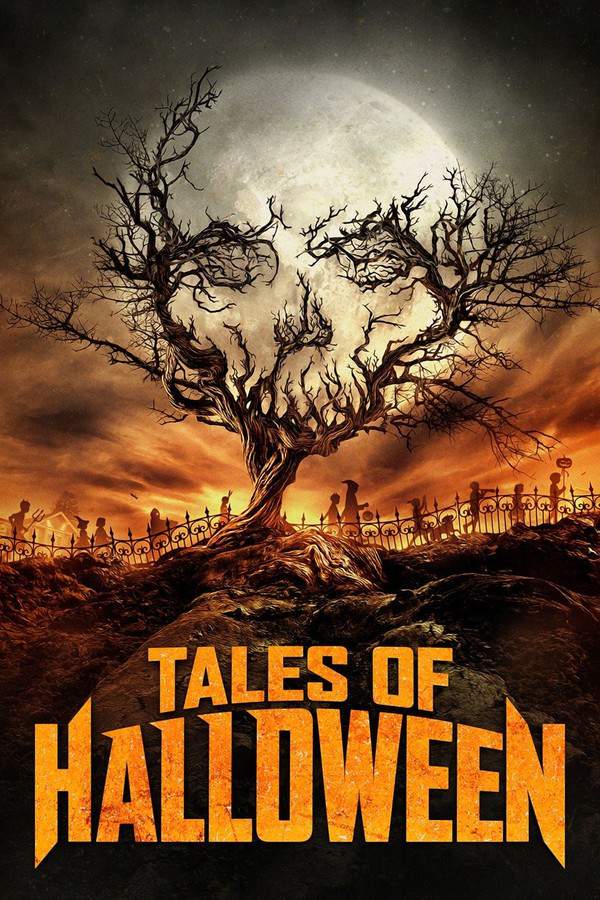
The film is a sharp, darkly comic horror anthology built around the eerie phenomenon of the Killroy graffiti, the phrase Kilroy was here weaving through each tale like a malevolent thread. At its center, a frame story follows a teenage babysitter who tries to scare a child by knitting together legends about Killroy, cautioning that his name must never be spoken three times.
In the frame, the babysitter named Wendy Wendy spins a web of cautionary tales, setting the mood for a night where superstition and fear collide. The stories that follow tread a fine line between satire and terror, each one riffing on how communities engage with legends to police behavior, control children, or justify darker impulses.
The first tale unfolds as a mother pursues a long-running charity scam by poisoning her daughter, using the guise of benevolence to coax donations from churches and the press. The daughter, confused and frightened by the strange turn of events, probes the plant ingested in the tea and discovers its poisonous nature. During a church fundraiser where her mother is stoking fear and sympathy to harvest funds, the daughter reveals the truth to the crowd and, overwhelmed, dies by suicide—an act that summons Killroy, who then moves through the building and kills everyone present.
The second story shifts to a school setting, where a teacher dreams of directing a play at an elementary school while a child warns that another performer keeps attempting to summon Killroy. As the teacher digs into the legend, she confronts a town that has weaponized Kilroy as a tool to frighten children into obedience. She sneaks into the school and uncovers a sprawling reservoir of drawings and stories about Killroy, a chilling archive that points to a prank orchestrated by the Janitor Janitor. Yet the payoff is darker: once a year, students vanish, and to save themselves, other students strike a grim bargain with Killroy—summoning him to lure an adult into a sacrificial trap. Killroy erupts into the room, killing the teacher and gaining an even more terrible sense of power.
The third segment pivots to a road trip with a priest driving children toward a campsite, only for the journey to twist when the priest is caught smoking and a gas-station cashier warns that anything bad happens, he should be summoned. The route deviates, delivering them to a motel where the priest is revealed to be part of a pedophilia ring that traffics immigrant children. As the boys summon Killroy to intervene, Killroy swiftly ends the priest’s threats and asserts his own terrible authority.
The final story unfolds as found footage: a southern live-streamer lures gay men for sex, publicly shaming them on camera while viewers watch and laugh. After a victim’s suicide following the livestream, the streamer hosts a celebratory stream to toast the tragedy. The streamer is later kidnapped and tied to a tree, only to learn that the victim’s wife has tracked the stream and intends revenge by feeding him to alligators. Before his death, the streamer summons Killroy, who appears and binds the wife to the same tree, delivering a fatal ending.
Returning to the frame, the babysitter discovers her own personal life unravelling as her boyfriend cheats on her. She tricks the child into believing he is Killroy, prompting the boy to kill him. But when the child realizes what has happened, she summons Killroy for real, who then kills the babysitter. The child seizes Killroy’s hand, and he leads her into the nearby dark forest, with their fate left unknown, leaving a chilling, unresolved end.
This anthology blends dark humor with grisly horror, using Killroy as a symbol of fear used and misused by adults, institutions, and communities to control, punish, or endanger the vulnerable. The film’s tone shifts between eerie whispers, unsettling humor, and shocking payoffs, all while weaving a common thread of consequence that follows anyone who tries to weaponize a local legend.