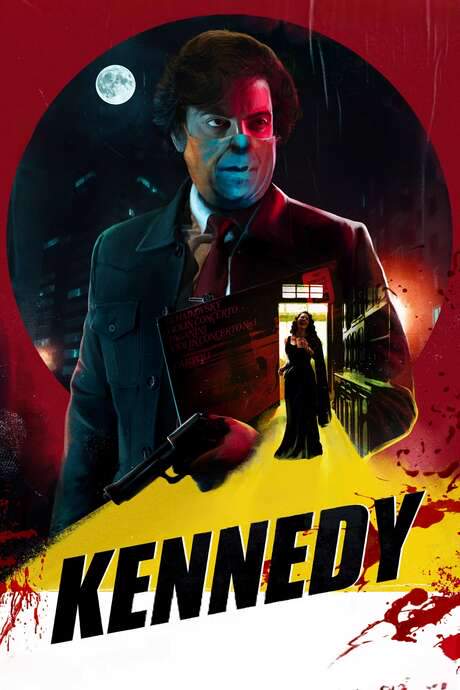
Kennedy is an insomniac ex-Cop, long thought to be dead, still operating for the corrupt system, while looking for redemption.
Warning: spoilers below!
Haven’t seen Kennedy yet? This summary contains major spoilers. Bookmark the page, watch the movie, and come back for the full breakdown. If you're ready, scroll on and relive the story!
Read the complete plot breakdown of Kennedy (2023), including all key story events, major twists, and the ending explained in detail. Discover what really happened, and what it all means.
Uday Shetty, a former Mumbai Police officer presumed dead for six years, secretly lives under the name Kennedy. During the COVID-19 pandemic, he works as a cab driver by day and as a contract killer for corrupt Police commissioner Rasheed Khan by night. Six years earlier, Rasheed and Sub-Inspector Abhijit Kaale arranged for Uday to disappear from the police force, with Uday willingly participating in the scheme. Since then, Rasheed has used him for murders, extortion, and other illegal operations. Kennedy, a psychopath who enjoys killing, keeps belongings taken from his victims as souvenirs.
On one assignment, Kennedy kills Kabir, a businessman who lives in a Mumbai apartment building. Shortly afterward, he picks up Charlie, a woman living in the same building, and she reveals that Kabir was her boyfriend and had bought her apartment. She suspects Rasheed ordered Kabir’s murder because Kabir refused to cooperate with his demands. Kennedy later secretly sews a camera into his jacket and installs another in his car to record their crimes.
Rasheed is under pressure to recover the large bribe he paid to obtain his position as commissioner. With businesses struggling during the pandemic, he orders his officers to increase their extortion collections. He targets a powerful businessman known by the sobriquet “Big Papa” and plans to frighten him with a staged terrorist attack. Rasheed orders Kennedy to obtain a vehicle and rig it with explosives, intending to use the threat to extort money. Kennedy also asks Rasheed to help him locate Saleem Kattawala, a gangster with whom he has a personal feud. The plan goes wrong when the vehicle explodes at a luxury hotel. Rasheed had instructed Kennedy not to detonate the explosives, but Kennedy carries out the attack himself. Around the same time, Kennedy murders a politician and his family after the politician refuses a bribe and poses a risk to the scheme of changing the state government by a vote of no confidence. The killings create a major scandal and put Rasheed’s position at risk.
After the politician’s and his family’s killing, Kennedy secretly breaks into his own former home. He eats some pudding from the fridge. He leaves gifts for his daughter, who claims to have eaten the pudding to her mother to cover up for him. He later follows her and texts her when she goes out with her friends, observing her from a distance. It is revealed that Kennedy has also installed cameras in the house, allowing him to watch his family while in hiding.
Kennedy’s history with Saleem is gradually revealed. In 2014, Uday led a police raid on the home of actress Gunjan, who was romantically involved with Saleem. During the raid, Uday killed Gunjan’s brother Chandan despite having no evidence that he knew Saleem’s whereabouts. The incident damaged Uday’s reputation and earned him the label of a “killer cop”. Saleem retaliated by arranging the killing of Uday’s young son, Adi. Uday subsequently disappeared, with the police allowing the world to believe that he was dead. His wife blamed him for their son’s death and ordered him to leave.
In the present, Saleem continues to evade Uday while communicating with Rasheed. Rasheed promises Kennedy that he will help him find Saleem while manipulating both men. Charlie eventually learns that Kennedy killed Kabir. Rasheed now considers Kennedy a liability and orders one of his men, a sub-inspector and Kennedy’s frequent partner in extortion collections, to deal with him.
Saleem confronts Kennedy in Kabir’s empty apartment and uses Charlie as leverage. Kennedy kills Saleem and Gunjan, then gives ₹1.4 million to Charlie to give to his daughter. Suspecting that Rasheed gave Saleem his family’s whereabouts, Kennedy returns to his apartment while the police raid it. He drives past and shoots Rasheed on the shoulder before escaping from the police and returning home.
Kennedy then sends an email to the government detailing his and Rasheed’s crimes. He resumes texting his daughter and apologizes for not being present in her life. She correctly realizes that he is her father and that he is still alive. She repeatedly calls him, but he does not answer. As the phone continues to ring, Kennedy commits suicide by shooting himself in the mouth.
Last updated: August 25, 2026 at 00:23
Explore frequently asked questions about Kennedy (2023) with spoiler-rich answers covering the full plot summary, major story beats, character motivations, hidden details, and ending meaning. This movie summary FAQ helps explain confusing scenes, plot twists, and narrative decisions in clear, searchable detail.
Uday, a former Mumbai Police officer, voluntarily participated in a scheme orchestrated by Commissioner Rasheed Khan and Sub-Inspector Abhijit Kaale to make him 'disappear' from the force. In exchange for going into hiding, Uday became Rasheed's covert enforcer, carrying out murders, extortion, and other illegal operations for six years while the world believed he was dead.
Rasheed ordered Kennedy to rig a vehicle with explosives as part of a staged terrorist attack meant to extort a powerful businessman called Big Papa, but explicitly told him not to detonate it. Kennedy, who is established as a psychopath who enjoys killing, chose to carry out the attack himself. The unsanctioned bombing triggered a national scandal that ultimately threatened Rasheed's position as commissioner.
In 2014, Uday led a police raid on the home of actress Gunjan, who was romantically linked to gangster Saleem Kattawala, and killed her brother Chandan even though there was no evidence he knew Saleem's whereabouts. The incident earned Uday the 'killer cop' label, and Saleem retaliated by arranging the murder of Uday's young son Adi. Adi's death destroyed Uday's family and pushed him into the shadowy life as Kennedy.
The politician refused to accept a bribe and threatened to expose Rasheed's scheme of toppling the state government through a no-confidence vote. Kennedy murdered the politician, his wife, and their children to eliminate the political risk. The massacre backfired by creating a massive national scandal that put Rasheed's entire operation in jeopardy.
After Adi's murder, Kennedy's wife blamed him for their son's death and ordered him to leave, so he cannot openly be part of his daughter's life. Driven by guilt and longing, he sneaks into the house to eat pudding from the fridge, leave gifts for his daughter, and follow her when she goes out. He also discovers hidden cameras already installed in the home, which allow him to monitor his family remotely while staying in hiding.
Kennedy sewed a hidden camera into his jacket and installed another in his car to build a private archive of the criminal activity he participated in and witnessed. The recordings served as both leverage and insurance, and they eventually became the evidence he uses to expose Rasheed's corruption by emailing the government near the end of the film.
The hidden camera in Kennedy's jacket is introduced early in the film, well before the climactic email that exposes Rasheed.
After years of working as Rasheed's enforcer and losing his son to the violence he helped enable, Kennedy appeared to be seeking a final form of redemption. He emailed the government a detailed record of his own crimes and Rasheed's corruption, ensuring the institutional rot that destroyed his life would be exposed. The email, combined with the suicide, frames the ending as a deliberate act of self-destruction in exchange for accountability.
By the climax, Kennedy had killed Saleem and Gunjan, shot Rasheed, and was being hunted by the police, leaving him with no way out. He also could never safely return to his daughter without endangering her or facing the law. By exposing the crimes and taking his own life, he ensured the corruption was brought to light and that his daughter would at least receive the money he left for her, even though he could never be part of her life.
The film implies that Rasheed leaked Kennedy's family's location to Saleem as part of his strategy to keep both men dependent on him. By pitting Kennedy and Saleem against each other while feeding information to both, Rasheed maintained leverage over Kennedy, who had become a liability he wanted eliminated. This betrayal is what drives Kennedy to shoot Rasheed during the police raid.
After killing Saleem and Gunjan in Kabir's apartment, Kennedy asked Charlie to deliver the money to his daughter. He trusted her because she was a civilian with no ties to his criminal world, and he had no other way to reach his family without exposing them. The money was his way of providing for his daughter, knowing he could never raise her himself.
Kennedy suspected that Rasheed had been feeding information to Saleem about his family's location, effectively using them as leverage against him. When a police raid on Rasheed's operation unfolded, Kennedy took the opportunity to shoot Rasheed in the shoulder as a personal act of revenge before escaping back to his apartment.
Kennedy's cover as a publicly dead ex-cop gave him total anonymity, and the COVID-19 pandemic added another layer of cover through lockdowns and reduced public scrutiny. He also held a legitimate day job as a cab driver, giving him a plausible reason to move around Mumbai at all hours. Rasheed's influence inside the police force further protected him, since no one within the system had any incentive to investigate the work of a 'dead' officer.
Kennedy is explicitly described as a psychopath who enjoys killing and keeps trophies taken from his victims, showing a complete lack of empathy toward anyone outside his family. His love for his daughter is genuine, but it exists alongside his cold-blooded violence. The film portrays him as a man whose capacity for paternal love and his capacity for murder are not contradictions but coexist in the same deeply damaged person.
Adi, Kennedy's young son, was murdered in retaliation for Uday's killing of Gunjan's brother Chandan during the 2014 police raid. Kennedy's wife held Uday directly responsible because his violent actions as a cop triggered the revenge killing. Overwhelmed by grief and anger, she banished him from the home, which was the final push that led him to fake his death and disappear into the life of Kennedy.
Discover curated groups of movies connected by mood, themes, and story style. Browse collections built around emotion, atmosphere, and narrative focus to easily find films that match what you feel like watching right now.
Broken assassins who kill for a living but cling to one last chance at salvation.Explore dark character dramas featuring morally corrupt protagonists who kill professionally while secretly yearning for redemption. These movies like Kennedy blend contract killing, family estrangement, and haunting personal loss, often ending in bleak self-destruction. If you liked Kennedy's tragic anti-hero and the devastating cost of his choices, these films will grip you just as hard.
The narrative typically follows a seasoned killer or corrupt enforcer whose professional life is steeped in violence, surveillance, and moral compromise. Early scenes establish both his competence and his emptiness. A personal trigger—often the death of a child, an estranged daughter, or a long-buried trauma—forces him to confront what he has become. The middle act pulls him between the criminal world that defines him and the fragile human connection that still tempts him. By the climax, he attempts one last meaningful act: exposing corruption, protecting a loved one, or confessing the truth. Redemption, if it arrives, is always incomplete. The protagonist usually dies, disappears, or destroys himself, leaving behind a loved one who must live with the wreckage.
These films share a melancholic, suffocating atmosphere where the central figure is both a believable threat and a sympathetic, grief-stricken human. The stories use dual timelines, surveillance imagery, and slow-burn pacing to build dread, while their endings refuse easy comfort. What binds them is the central question: can someone who has caused immeasurable harm ever earn back their humanity? The answer is almost always no—but the attempt itself is where the drama lives.
Grim urban crime stories where corruption is total and escape feels impossible.Dive into dark, brooding crime thrillers that feel like the city itself is closing in. These movies like Kennedy pair political corruption and criminal underworlds with heavy emotional weight, multiple timelines, and devastating conclusions. If you loved Kennedy's suffocating pandemic-era atmosphere and morally bankrupt institutions, you'll find your next obsession here.
These stories usually open in a familiar urban setting that is slowly revealed to be more decayed and dangerous than it appears. The protagonist—often a cop, ex-cop, or low-level operative—discovers a conspiracy that stretches from the police force to the politicians above them. Multiple timelines and surveillance footage fill in a picture of how the rot began and how it has been hidden. Personal tragedy is woven into the institutional one, so the protagonist's quest to expose the truth is inseparable from his own grief. The middle act deepens the paranoia and the body count, while the climax attempts a final act of exposure or resistance. Even when some truth comes out, the ending is bleak: the system absorbs the blow, the protagonist pays with his life or sanity, and the world remains fundamentally unchanged.
The shared DNA is the sense of suffocation: a city under pandemic, under economic collapse, under surveillance, or under the weight of its own history. The films rely on layered storytelling, flashbacks, and political subtext to make corruption feel systemic rather than personal. The endings refuse to offer catharsis, instead underscoring that the institutions are too broken and the personal costs too high. What unifies them is tone: dark, brooding, gritty, and unflinching.
Don't stop at just watching - explore Kennedy in full detail. From the complete plot summary and scene-by-scene timeline to character breakdowns, thematic analysis, and a deep dive into the ending - every page helps you truly understand what Kennedy is all about. Plus, discover what's next after the movie.
Track the full timeline of Kennedy with every major event arranged chronologically. Perfect for decoding non-linear storytelling, flashbacks, or parallel narratives with a clear scene-by-scene breakdown.
Discover the characters, locations, and core themes that shape Kennedy. Get insights into symbolic elements, setting significance, and deeper narrative meaning - ideal for thematic analysis and movie breakdowns.
Discover movies like Kennedy that share similar genres, themes, and storytelling elements. Whether you’re drawn to the atmosphere, character arcs, or plot structure, these curated recommendations will help you explore more films you’ll love.
Kennedy (2023) Scene-by-Scene Movie Timeline
Kennedy (2023) Movie Characters, Themes & Settings
Kennedy (2023) Spoiler-Free Summary & Key Flow
Movies Like Kennedy – Similar Titles You’ll Enjoy
McCanick (2014) Spoiler-Packed Plot Recap
Knuckledust (2020) Story Summary & Characters
Knox Goes Away (2024) Movie Recap & Themes
McBride: Fallen Idol (2006) Detailed Story Recap
Keaton’s Cop (1990) Complete Plot Breakdown
Blood on the Badge (1992) Full Movie Breakdown
Kiss of Death (1995) Movie Recap & Themes
Ruby (1992) Story Summary & Characters
Frame Of Mind (2009) Complete Plot Breakdown
The Terrorist (1995) Full Summary & Key Details
Newman’s Law (1974) Full Summary & Key Details
Kansas City Confidential (1952) Spoiler-Packed Plot Recap
Murder at Midnight (1931) Plot Summary & Ending Explained
The American Trap (2008) Detailed Story Recap
Killer (1997) Full Summary & Key Details