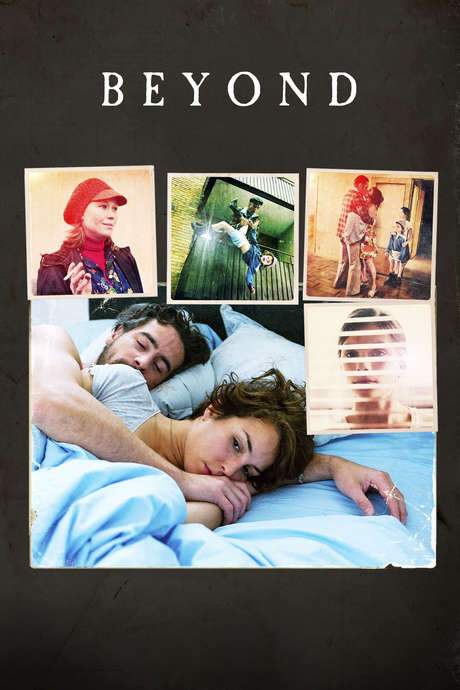
Henry, Josh Bolt is a 15-year-old boy haunted by the death of his father in the Second World War. Guided by his grandmother, Gran, Sheila Hancock he becomes fixated on a mystery that binds his family to a classmate’s. He learns that the father of a classmate was the man who killed his own father, a revelation that fractures the fragile sense of safety he has built around his home life. The moment is sharpened by a clash with a pacifist teacher, leading to a disciplinary row that unsettles him further. At the center of this upheaval is Mrs Beaumont, the head of class discipline, a figure whose beliefs about duty and duty’s price become a touchstone for Henry’s restless mind. Amid the tension, a new friendship with Grace, Charlie Clarke ignites as they both navigate the murky waters of loyalty, guilt, and growing attraction.
As Henry and Grace grow closer, a photograph taken during a school outing—developed with a camera entrusted to Henry by Mrs Beaumont—offers a chilling glimpse: a man who bears a striking resemblance to the father Henry has long mourned. Grace, Charlie Clarke in fact, becomes a spark for both curiosity and danger as Henry’s mother, Maureen, Elaine Cassidy collapses in shock at the vision. The image foreshadows a revelation that could upend everything Henry believes about his family. Henry’s trust in his grandmother wavers as he suspects she might have played a role in pushing Paul Jeffries, the classmate treated as a pariah along with his mother, from their home. The quiet, tense atmosphere at home thickens as Maureen confronts the implications of the photograph and the possible return of a man whose appearance could redefine their lives.
On the gravesite, where Henry honors his father, a figure from the past steps into their world. The man in the photograph approaches, unsettling Henry and forcing a confrontational moment that tests every promise he has made to those he loves. Maureen’s reaction blends disbelief and a stubborn insistence on her own version of reality, accusing Henry of telling lies even as she trembles with the weight of what might be true. That night, Maureen urges Henry to fetch Bill, her partner and a steady presence in Henry’s life, from work, signaling a shift in who might raise him when the truth finally comes to light.
In the weeks that follow, Henry’s relationship with Grace deepens through shared outings and long conversations in dim cinema rooms, where the glow of the screen reflects their uncertain futures. Yet Grace and Mrs Beaumont, Barbara Flynn behind the scenes, keep pressing for answers, guiding Henry toward a truth that could absolve or ruin them all. As Henry becomes entangled in a web of suspicion surrounding his father’s past, he discovers disturbing facts about stolen goods and disguised identities. The police begin to close in, and Maureen must face the possibility that her own marriage—if the man she believed to be her husband is not—the marriage she hopes to protect—could be legally compromised by a complicated web of deceit and bigamy.
The household grows tenser when Joey, Stephen Campbell Moore the estranged father figure who believes he has a rightful claim to Henry’s family, returns in a fury. Battling over control of their lives, Joey and Maureen clash in a brutal confrontation that tests the limits of every member of the family. Henry, who has clung to a belief in his father’s supposed virtues, starts to see a harsher truth: the man he long believed to be a heroic figure may be a deserter with troubling motives. The grandmother’s stance hardens, and the film tracks a family’s struggle between protecting their dignity and facing the consequences of years of secrecy.
In a turning point, the police intervene as more light is shed on the past. Gifts once given to Henry by his biological father are revealed to be stolen, and the investigation centers on Walter Briggs, an alias used by the man Henry thought he knew. Maureen must decide whether to allow an exhumation of a body in a grave—an act that would settle questions about the man they believed to be Henry’s father. The truth surfaces: the body in the grave is that of Ronald Jeffries, the absentee father of Paul, but the revelation throws the entire family into a new storm. As the family confronts this upheaval, Joey, aided by the grandmother’s reluctant blessing, commits a violent act to seize what he believes is rightfully his, abducting Maureen and Henry and locking them in an abandoned warehouse.
In the warehouse, with cold air and the threat of dawn, Henry uses his newly forged resolve to protect his mother. He learns that his father’s criminal pattern had started long before Henry’s birth, and the confrontation culminates in a desperate moment where Henry must decide whom to protect. The police close in as Joey faces a gunfight, and he is killed in the ensuing shootout, marking a violent end to his rebellion. Ronald Jeffries is reburied with military honors, a quiet restoration of a family name that had been dragged through scandal. Joey’s grisly fate and the grandmother’s attempted reformation leave the household to confront its own demons, but in the end, a new sense of belonging begins to take root.
As the dust settles, Henry, now more secure in his sense of belonging, calls Bill, whom he has come to regard as a father, by the word that truly matters: dad. The film closes on a hopeful note as Henry, Dean Andrews and Grace, Charlie Clarke move toward a future that blends art, work, and love. Henry accepts an apprenticeship in a photography shop, a quiet tribute to the father he once feared and the father he has learned to understand. He and Grace share a kiss in the theater they frequented together, a final promise that love and memory can coexist with truth, resilience, and a family rebuilt from the ashes of long-buried secrets.