Plot Explained Spoilers guaranteed!
Plot Explained

Browse by genre

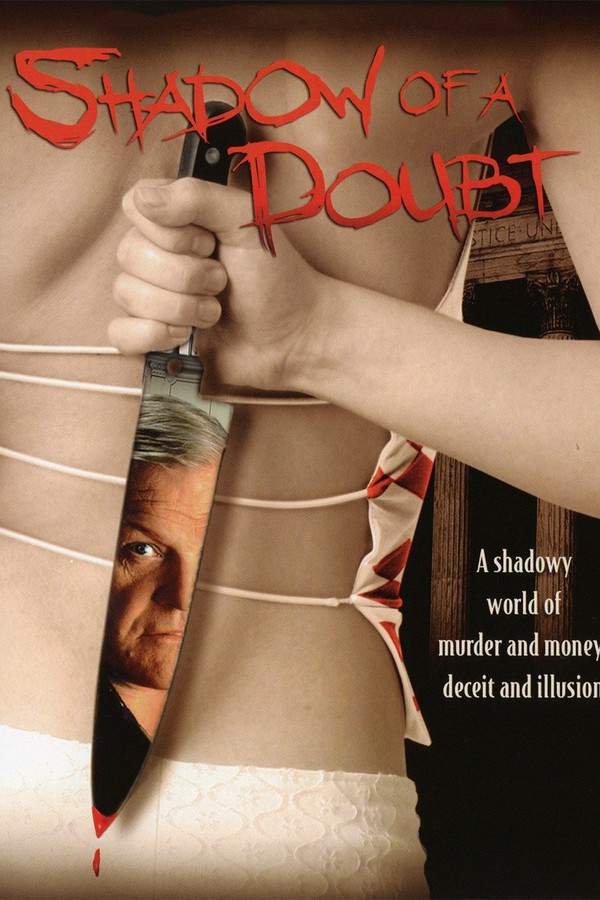
Shadow of a Doubt (1943) movie poster

Plot Summary

Shadow of a Doubt (1943) Plot Summary Explained

Release, runtime and language
1943 · 1 h 48 m · English
JustWatch #7,004 15
Directed by
Alfred Hitchcock
Starring
Hume Cronyn, Joseph Cotten, Irving Bacon, Teresa Wright, Henry Travers, Wallace Ford

Young Charlotte is thrilled when her charming Uncle Charlie comes to visit, captivated by his wit and charisma. However, as unsettling rumors about his past begin to circulate, she becomes increasingly suspicious. Torn between her admiration and growing doubts, Charlotte investigates, uncovering a web of secrets and lies. She must confront the terrifying possibility that the man she idolizes may be a dangerous criminal, and her family's safety hangs in the balance.

On this page (6)
  1. 1 Where to watch
  2. 2 What happens: full plot
  3. 3 Plot questions answered
  4. 4 Movie threads
  5. 5 Movies like Shadow of a Doubt
  6. 6 Every angle

Where to watch

Where to Watch Shadow of a Doubt (1943)

Where can you watch Shadow of a Doubt? Stream, rent or buy it in the US, including on Darkroom, Amazon Video and Apple TV Store: current JustWatch availability with up-to-date prices.

Streaming availability powered by JustWatch

Full plot summary · contains spoilers

What Happens in Shadow of a Doubt: Full Plot Summary

The whole story of Shadow of a Doubt (1943) explained, from the opening scene to the final frame: every key event, every twist and what it all adds up to. Read it as a quick recap before the sequel, to check a scene you missed, or to finally understand what really happened.

Couples adorned in costumes reminiscent of the 1900s whirl around a room, elegantly swaying to the melodic strains of The Merry Widow waltz by Franz Lehár. Amidst this festive atmosphere lies a man, deep in contemplation, dressed in a suit, sprawled across a bed. Bills of money clutter both his dresser and the floor nearby. The landlady, Mrs. Martin, knocks and enters the room, informing “Mr. Spencer” (Joseph Cotten) that two men are inquiring about him. Following his previous instructions, Mrs. Martin claims to have told them he is not available, though they remain agitatedly waiting outside at the corner.

Spencer, whose real identity is revealed to be Oakley, rises from the bed, gathers the scattered money, and stealthily exits past the two men, who offer no reaction but begin to shadow him at a distance. He moves hastily, navigating corners until he successfully retreats atop a building, observing them from a safe vantage point to ensure he has evaded their pursuit. The scene transitions to a payphone, where Oakley sends a telegram to his sister, informing her of his impending visit to Santa Rosa, California, signing off as Uncle Charlie.

Meanwhile, in Santa Rosa, a teenager named Charlotte "Charlie" Newton (Teresa Wright) lies frustrated in bed, lamenting to her father, Joseph "Joe" Newton, the mundane existence that envelops her family life. Yearning for excitement and adventure, Charlotte resolves to invite her beloved Uncle Charlie, feeling a deep familial bond with him that transcends ordinary understanding. To her delight, at the telegraph office she discovers that he has indeed communicated his arrival, all the while humming a cheerful melody that seems to uplift her spirits.

The rest of the Newton family anticipates Uncle Charlie's visit with giddiness. Charlotte’s mother, Emma "Emmy" Oakley-Norton, radiates joy at this prospect, even echoing her daughter’s humming. As the train approaches, Oakley takes meticulous care to remain hidden behind the Pullman curtains, presenting himself as a frail old man upon disembarking. His ruse is reinforced when the train clerk (Clarence Muse) and a concerned couple (Edward Fielding and Sarah Edwards) offer assistance, only to receive gruff rejections from him. Once his family arrives, however, his demeanor shifts entirely, as he greets them with boisterous warmth.

The reunion is filled with joy and laughter, punctuated by the presents Oakley brings, including a special ring for Charlotte featuring a prominent emerald. Young Charlie’s youthful curiosity shines through when she comments on how similar she and her Uncle Charlie are, noting his penchant for secrecy. When she questions him about some engraved initials found in the ring, Oakley dismissively attributes it to a mistake made by the jeweler.

During dinner, the air is thick with mystery as Charlotte repeatedly hums her tune, trying to draw recognition from her family. When Oakley suggests it might be The Blue Danube, Charlotte barely masks her excitement as she prepares to declare The Merry Widow. However, Oakley’s clumsiness leads to a spill, causing the family to share a laugh amidst the tension building between Charlotte's subconscious suspicions and her uncle’s charm.

Unbeknownst to the Newton family, discussions between two men – Herbert "Herbie" Hawkins (Hume Cronyn) and Joe – center around hypothetical scenarios of murder and evasion. Oakley, ever the cunning schemer, turns to the local newspaper and identifies a story that particularly resonates with him. He begins teaching the younger children, Ann (Edna May Wonacott) and Roger (Charles Bates), to fold a newspaper into a house, cleverly tearing out pages for doors and windows while concealing the remnants in his coat pocket.

However, as the days turn into unnerving interactions, it becomes clear that Uncle Charlie is harboring dark secrets. Worry escalates as Charlotte discovers newspapers hinting at her uncle's involvement with a serial killer, known as the "Merry Widow Murderer", who seduces wealthy widows only to dispose of them for their money. The tension mounts as Jack Graham (Macdonald Carey), a detective posing as a visitor, reveals chilling truths about her uncle's past.

Charlotte grapples with the burgeoning realization that her cherished and idolized Uncle Charlie could possibly be implicated in unspeakable crimes. The intelligent strikes of sympathy begin to break down as dinner conversations hint at Oakley’s disdain for riches, and Charlotte’s once-safe admiration begins to crumble.

The story spirals into a thrilling crescendo as attempts on her life seem increasingly targeted. A narrow escape in a garage reveals the true villainy lurking within Oakley as familial affection clashes with sinister motivations. Charlotte's frights evolve into an audacious confrontation, leading to a climactic struggle aboard a departing train, where his desire to eliminate the last living evidence of his misdeeds culminates in a desperate act.

The community mourns Uncle Charlie’s death, as many breathe a sigh of relief without knowing the dark undertones that made their lives dizzyingly intense. Jack finds solace with Charlotte, who grapples with the burden of her silence; their bond strengthens amidst the backdrop of a chilling family secret, leaving them resolved to keep Uncle Charlie’s gruesome truths concealed from the world.
Last updated: January 19, 2025 at 18:49

Was this helpful?

Plot questions answered

Shadow of a Doubt Plot Explained: Your Questions Answered

The questions people ask most about Shadow of a Doubt (1943): what happens in the confusing scenes, why the characters do what they do, the twists, hidden details and what the ending means. Each answer contains spoilers.

Q1

Why does Uncle Charlie decide to visit the Newton family in Santa Rosa?

Uncle Charlie is fleeing from two men who are pursuing him in the city. He uses his sister as a safe hideout, sending a telegram from a payphone and adopting the identity of 'Uncle Charlie' to blend in with his family while evading capture.

Foreshadowing: The film opens with Oakley escaping his pursuers on city rooftops, establishing his need for refuge.

  • uncle charlie
  • santa rosa
  • escape
  • fugitive
  • newton family
Q2

What are the Merry Widow murders that Uncle Charlie is connected to?

The Merry Widow murders are a series of killings committed by a serial killer who seduces wealthy widows and murders them for their money. The killer earned this nickname because the victims are wealthy women and the theme music is 'The Merry Widow' waltz.

Foreshadowing: The opening scene features the Merry Widow waltz playing while Oakley counts money in his room.

  • merry widow murders
  • serial killer
  • wealthy widows
  • method of killing
Q3

How does Charlotte discover that Uncle Charlie is a murderer?

Charlotte finds newspaper articles about the Merry Widow murders in her father's papers. She also learns the truth when Detective Jack Graham, who is investigating the case, visits the Newton home and reveals her uncle's criminal past directly to her.

Foreshadowing: During dinner, Charlotte hums the Merry Widow tune, and Uncle Charlie becomes visibly uncomfortable and spills his wine.

  • charlotte
  • newspaper
  • detective jack graham
  • discovery
  • investigation
Q4

Why does Uncle Charlie try to kill Charlotte?

After Charlotte discovers his true identity and threatens to expose him, Uncle Charlie sees her as the last living witness who could link him to his crimes. He attempts to eliminate her to protect his freedom and prevent her from telling anyone what she knows.

Foreshadowing: Earlier, Uncle Charlie tears out newspaper pages to hide evidence of his crimes, showing his willingness to do anything to conceal his past.

  • uncle charlie
  • charlotte
  • murder attempt
  • garage
  • motive
Q5

What happens in the garage scene with Charlotte?

Uncle Charlie traps Charlotte in a garage filled with carbon monoxide fumes from a running car, attempting to kill her silently. She manages to cry out for help just in time, and her family rescues her before she succumbs to the poisonous gas.

Foreshadowing: Earlier scenes show Uncle Charlie teaching the children to fold newspapers into houses and hide pieces in his pocket, demonstrating his capacity for hidden, sinister actions.

  • garage
  • carbon monoxide
  • murder attempt
  • charlotte
  • escape
Q6

How does Uncle Charlie die in the train scene?

During a struggle on a moving train, Uncle Charlie attempts to push Charlotte off the train to eliminate her as evidence. In the physical confrontation, Charlotte fights back, and Uncle Charlie loses his balance, falling from the train to his death.

Foreshadowing: The film shows Uncle Charlie presenting himself as a frail old man when he first arrives, hiding his true physical capability.

  • train
  • struggle
  • uncle charlie death
  • charlotte
  • climax
Q7

Why does Charlotte decide to keep Uncle Charlie's crimes a secret?

Charlotte chooses to protect her family's reputation and shield them from the scandal of learning their beloved Uncle Charlie was a serial killer. She also wants to preserve the memory of the uncle she once idolized, and perhaps protect her own family from the trauma of knowing the truth.

Foreshadowing: Throughout the film, Charlotte struggles between her love for Uncle Charlie and the growing evidence of his crimes, showing her internal conflict about family loyalty.

  • charlotte
  • secret
  • family loyalty
  • cover up
  • resolution
Q8

What is the significance of the emerald ring Uncle Charlie gives Charlotte?

The emerald ring Uncle Charlie gives Charlotte contains engraved initials that hint at one of his victims. When Charlotte notices the initials and asks about them, Uncle Charlie dismisses it as a jeweler's mistake, but this detail becomes a disturbing piece of evidence linking him to his crimes.

Foreshadowing: Charlotte comments on how similar she and Uncle Charlie are, noting his penchant for secrecy, establishing their shared observant nature.

  • emerald ring
  • initials
  • evidence
  • gift
  • charlotte
Q9

Why does Uncle Charlie specifically target wealthy widows?

Uncle Charlie harbors a deep contempt for wealthy widows, viewing them as parasitic and deserving of punishment. He believes he is entitled to their wealth and sees murder as a way to take what he feels is rightfully his while eliminating those he considers worthless.

Foreshadowing: During dinner conversations, Uncle Charlie makes dismissive remarks about rich people, revealing his underlying resentment toward wealth.

  • wealthy widows
  • motive
  • hatred
  • money
  • targets
Q10

Why does Charlotte feel such a strong connection to Uncle Charlie?

Charlotte feels a special bond with Uncle Charlie because they share similar personalities - both are secretive, observant, and feel constrained by their surroundings. She sees him as the exciting, sophisticated relative who understands her dissatisfaction with small-town life.

Foreshadowing: When Charlotte complains about her boring life and yearns for excitement, she immediately decides to invite Uncle Charlie, suggesting she views him as her escape from normality.

  • charlotte
  • uncle charlie
  • bond
  • 相似
  • connection
Q11

Who is Detective Jack Graham and what is his role in the story?

Detective Jack Graham is a police investigator who tracks Uncle Charlie to Santa Rosa under the pretense of being a visitor. He reveals the truth about the Merry Widow murders to Charlotte, and at the film's end, he offers her emotional support, with them deciding together to keep his crimes hidden.

Foreshadowing: Jack's arrival coincides with Charlotte's growing suspicions, providing external validation of her fears.

  • detective jack graham
  • police
  • investigation
  • charlotte
  • romantic interest
Q12

How does Uncle Charlie disguise himself when arriving at the train station?

Uncle Charlie carefully hides behind the Pullman curtains on the train, presenting himself as a frail old man to the train clerk and helpful passengers. Once he sees his family waiting, he drops the act and greets them with warmth and energy, revealing his deceptive nature.

Foreshadowing: The opening scenes establish Oakley as a master of evasion and disguise, outsmarting his pursuers on rooftops.

  • disguise
  • train
  • acting
  • uncle charlie
  • deception

Movie threads

More Movies Like Shadow of a Doubt, by Mood & Story

Curated lists built around what makes Shadow of a Doubt tick: the same mood, the same kind of story or the same emotional payoff. Each list explains why these movies belong together.

Thrillers about small town secrets like Shadow of a Doubt

Where darkness hides behind a familiar, comforting facade. If you liked the way Shadow of a Doubt builds tension from a trusted figure's hidden darkness, you'll appreciate these movies. This collection features thrillers and dramas where a peaceful community or family is disrupted by a sinister secret, focusing on the psychological impact of discovering evil in a familiar place.

  • unsettling
  • suspenseful
  • paranoid
  • dark
  • claustrophobic
  • anxious
  • Tone: tense, unsettling, dark
  • Pacing: steady, methodical
Why these movies?

The story pattern: The narrative typically begins with an idealistic setting—a loving family, a quiet town—that is gradually poisoned by the revelation of a hidden threat. The protagonist, often young or naive, undergoes a journey from blissful ignorance to grim knowledge, investigating and confronting the danger despite personal cost and emotional turmoil.

Why they belong together: Movies are grouped here for their shared focus on the clash between surface normality and underlying menace. They create a specific kind of tension rooted in the fear of the familiar becoming threatening, often featuring a central character's painful awakening to a harsh reality.

Movies about shattering illusions like Shadow of a Doubt

Stories about the painful discovery of a loved one's true, dark nature. For viewers who appreciated the heavy emotional journey in Shadow of a Doubt, this list features films with similar arcs of moral disillusionment. These stories focus on characters who must grapple with the terrifying realization that a charismatic, trusted figure is not who they seemed to be.

  • dark
  • suspenseful
  • anxious
  • heavy
  • unsettling
  • psychological
  • Tone: tense, heavy, bittersweet
  • Pacing: steady, escalating
Why these movies?

The story pattern: The plot follows a character's investigation into a cherished individual, moving from admiration to suspicion and finally to horrified confirmation. The central conflict is internal—the struggle to accept reality while grappling with betrayal and the need to act, often leading to a bittersweet or somber resolution where safety is restored but innocence is lost.

Why they belong together: These films are connected by their exploration of a specific character arc: the painful transition from idealization to knowledge. They share a heavy emotional weight, a tense tone driven by psychological conflict, and a focus on the consequences of uncovering a deeply disturbing truth.

If you liked this

Movies Like Shadow of a Doubt

Similar movies to Shadow of a Doubt: the same genre, themes or kind of story. Each one comes with its own plot summary, timeline and ending explained.

Browse all movie summaries

Every angle

Shadow of a Doubt (1943) Explained: Plot, Timeline & Characters

Everything about Shadow of a Doubt in one place: what happens in the plot summary, the timeline in chronological order, the characters and meaning and a spoiler-free summary. What's After the Movie adds the cast, box office and post-credit scenes.

Coming soon on iOS and Android

The Plot Explained Movie Summary App

Plot summaries, endings explained and timelines on your phone. Catch up on any movie in minutes, save your favorites and never miss a twist again.

Be the first to know when we launch. Your email stays private, always.

Learn more about the app