Plot Explained Spoilers guaranteed!
Plot Explained

Browse by genre

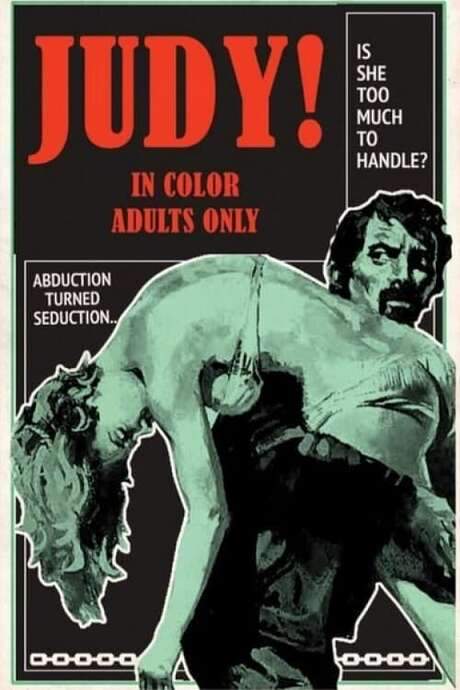
Judy (1970) movie poster

Timeline

Judy (1970) Timeline Explained – Every Event in Order

Release, runtime and language
1970 · 75 mins · English
Loading streaming availability…
Directed by
David W. Hanson, George Meadows
Starring
Toula Flambouris, Karen Beglan, Sandy O'Hara, Dave Haller, Garry Achzieger, Judith Lowe

A depraved sex killer stalks women of ill repute in Boston’s red‑light district. When the predator attacks the daughter of wealthy businessman Fairchild, the hard‑nosed, maverick private investigator Gunner Sloan is hired to track him down, turning an abduction into a twisted game of seduction and revenge.

On this page (6)
  1. 1 Where to watch
  2. 2 Events in order (11)
  3. 3 Timeline questions answered
  4. 4 Movie threads
  5. 5 Movies like Judy
  6. 6 Every angle
Loading streaming availability…

11 events in order · contains spoilers

Judy Timeline: Events in Chronological Order

Every key event of Judy (1970) in order, scene by scene, with when and where it takes place. Use it to untangle flashbacks, time jumps and parallel storylines, to refresh your memory before the sequel or to find the exact scene you are thinking of.

  1. Judy's Childhood and Early Career at MGM

    The film begins with a young Judy Garland on the set of The Wizard of Oz, where Louis B. Mayer emphasizes her unique voice to her, contrasting it with other girls' appearances. She expresses a wish to experience a normal life, which Mayer dismisses, highlighting her early struggles with fame and pressure. The scene sets the stage for her lifelong conflict between childhood innocence and Hollywood demands.

    When
    Late 1930s
    Where
    MGM Studios
  2. Young Judy Eats Fries with Mickey Rooney

    A flashback shows teenage Judy having lunch with Mickey Rooney, where they share a playful moment over fries, hinting at their close companionship. Mickey jokes about their 'date,' but studio staff remind Judy of her diet and control her eating habits, reflecting the pressures she faced even as a teenager. This scene symbolizes her early experience with Hollywood's control and her desire for normalcy.

    When
    Late 1930s
    Where
    Studio set
  3. Judy's Struggles in Her Career

    As an adult, Judy performs at the Palace Theatre in 1968, receiving a modest paycheck and facing financial instability. Her confrontations with her ex-husband Sidney Luft over her children’s stability reveal her ongoing battles to provide for her family amid her turbulent career. She longs for stability but remains caught in the cycle of touring and performing.

    When
    1968
    Where
    New York, Palace Theatre
  4. Judy’s Emotional Difficulties and Flashbacks

    Throughout her career, Judy experiences emotional distress, including flashbacks of childhood trauma, such as being pressured to lie about her birthday and jump into a pool while being supervised by MGM. Scenes depict her feeling trapped, dealing with physical and emotional exhaustion, and the heavy toll of her Hollywood upbringing.

    When
    Late 1930s to 1960s
    Where
    Studio sets and MGM facilities
  5. Relationship with Mickey Deans and Marriage Proposal

    In London, Judy meets Mickey Deans at a party, and their connection deepens. She confesses her feelings and proposes marriage, which Mickey accepts. Their relationship symbolizes a moment of vulnerability and hope amidst her career and personal struggles, offering a glimpse of her search for love and stability.

    When
    Late 1968
    Where
    London
  6. Judy’s London Concert Series and Performances

    Judy begins her concert series in London, performing with emotional intensity and renewed vitality. Scenes of her singing better than ever overlay with her resting and preparing backstage, indicating her resilience and desire to reconnect with her audience despite her personal issues.

    When
    1968
    Where
    London, Palace Theatre
  7. Conflict with Sidney Luft and Family

    Judy’s conflicts with her ex-husband Sidney Luft intensify as they argue over her stability and her children’s well-being. Sidney emphasizes the need for stability and expresses concern about her lifestyle, adding emotional strain. Judy, determined, insists she's working hard to provide a better future for her family.

    When
    Late 1968
    Where
    Sidney Luft’s home and London
  8. Judy’s Health and Doctor Visits

    Judy visits a doctor in London, who reveals that her vocal cords are weakened due to a past tracheotomy. The doctor advises her to take care of herself, hinting at her physical deterioration and the toll her career and personal struggles have taken on her health.

    When
    Late 1968
    Where
    London, Doctor’s office
  9. Mickey Deans and Marriage

    Judy and Mickey walk through London, discussing her future and potential career deals. Judy proposes marriage to Mickey, which he agrees to, symbolizing her pursuit of personal happiness and a sense of stability through love amid her turbulent life.

    When
    Late 1968
    Where
    London streets
  10. Judy’s Final London Performances and Emotional Decline

    During her last performances, Judy sings with passion but begins to break down emotionally on stage, overwhelmed by her struggles. A poignant scene shows her unable to finish ‘Over the Rainbow,’ symbolizing her exhaustion and the toll of her life’s hardships.

    When
    Early 1969
    Where
    London, Palace Theatre
  11. Judy Reflects on Her Journey and Audience Farewell

    Judy leaves the stage after her final song, expressing her love for performing and her hope not to be forgotten. She reflects on how the journey matters more than the destination, sharing her vulnerability and desire for her audience’s remembrance, closing her story with emotional sincerity.

    When
    Early 1969
    Where
    London stage

Last updated: August 19, 2025 at 05:13

Was this helpful?

Timeline questions answered

Judy Timeline Explained: Your Questions Answered

When does it happen, and why in that order? The questions people ask about the chronology of Judy (1970): time jumps, flashbacks, cause and effect between scenes and the correct order of events, each answered with spoilers.

Q1

Why was Judy Garland financially struggling despite her legendary status?

Despite her immense fame and talent, Judy was earning very little for her performances. In 1968, she received only $150 for a performance at New York's Palace Theatre. Her financial troubles were compounded by decades of being underpaid by studios, the costs of raising her children, and the expenses of a touring career. Additionally, her hotel room was released due to unpaid bills, leaving her homeless at times.

  • judy garland financial struggles
  • money
  • paycheck
  • palace theatre
  • poverty
Q2

Why did Judy Garland marry Mickey Deans?

Judy met Mickey Deans at a party in London and was immediately captivated by his charm. They spent the entire night talking and joking together. Mickey offered Judy emotional support and stability that she desperately needed amid her turbulent life. She eventually proposed marriage to him, and he accepted. Their relationship represented her search for love, stability, and a sense of normalcy away from the constant touring and emotional turmoil.

  • mickey deans
  • marriage
  • judy garland relationship
  • love
  • proposal
Q3

Why was Judy Garland fighting for custody of her children?

Judy was deeply devoted to her two youngest children, Lorna and Joey, and wanted them with her despite her unstable lifestyle. Her ex-husband Sidney Luft argued that the children needed a secure environment and stable home, which Judy felt she could provide by working hard and continuing her career. The conflict represented Judy's lifelong struggle between her desire to be a present mother and the demands of her career that kept her constantly touring.

  • lorna garland
  • joey luft
  • sidney luft
  • custody
  • children
  • family
Q4

What caused Judy Garland's breakdown during her London performances?

Judy's breakdown on stage was the result of accumulated emotional and physical exhaustion from decades of pressure. She had been dealing with the toll of her Hollywood childhood, manipulation by studio executives like Louis B. Mayer, substance dependency to cope with anxiety, financial struggles, and the strain of constant touring. During her final performances, these burdens became overwhelming, leading her to collapse emotionally and physically on stage.

Foreshadowing: The film foreshadows this through flashbacks depicting Judy's childhood trauma, her strict studio schedule, and the degrading remarks from Louis B. Mayer that continued to haunt her.

  • breakdown
  • collapse
  • stage
  • emotional breakdown
  • exhaustion
  • performance
Q5

Why was Judy Garland dependent on pills throughout her career?

Judy was prescribed pills by studio doctors to cope with the extreme exhaustion and anxiety caused by her grueling schedule as a child star. MGM staff and studio bosses like Louis B. Mayer encouraged her use of pills to maintain her demanding performance schedule. The film shows flashbacks of young Judy trying to sleep while dealing with the pressure of studio demands. This evolved into a lifelong dependency that worsened as she faced the psychological toll of her childhood exploitation.

Foreshadowing: The film depicts Louis B. Mayer making degrading remarks about Judy's body and implying she was replaceable, showing the toxic environment that drove her to substance use.

  • pills
  • addiction
  • medication
  • studio
  • exploitation
  • louis b mayer
Q6

Why did Louis B. Mayer control and manipulate Judy Garland?

Louis B. Mayer, the MGM studio boss, saw Judy as a valuable asset worth millions and was determined to protect his investment. He manipulated her by offering both encouragement and warnings, reminding her that while other girls might be prettier, her unique voice was her selling point. He also made degrading remarks about her appearance and body, insidiously suggesting she was replaceable. This control was part of Hollywood's systemic exploitation of young stars, trapping Judy in a cycle of dependency on the studio system.

  • louis b mayer
  • studio
  • manipulation
  • exploitation
  • mgm
  • control
Q7

Why couldn't Judy finish singing 'Over the Rainbow' at her final performance?

During her final London performance, Judy began singing 'Over the Rainbow', the song forever linked to her, but became overwhelmed by emotion and started crying, unable to finish. This moment symbolized the weight of her entire journey: the牺牲 of her childhood, the relentless pursuit of fame, her personal struggles, and her longing for the simple life she sang about in the song. The audience responded by joining in and singing along with her, creating a poignant shared moment.

Foreshadowing: The film opens with Judy's early scene on the set of The Wizard of Oz, establishing 'Over the Rainbow' as her signature song tied to her dreams and sacrifices.

  • over the rainbow
  • final performance
  • crying
  • singing
  • audience
  • london
Q8

What happened to Judy Garland's voice that affected her performances?

A doctor in London revealed that Judy's vocal cords had been weakened due to a previous tracheotomy. Despite this physical limitation, she continued performing, demonstrating her determination to connect with her audience even as her body was deteriorating. The weakened voice added to the emotional weight of her performances, as audiences witnessed her fighting through physical decline to deliver her art.

  • voice
  • vocal cords
  • tracheotomy
  • health
  • doctor
  • singing
Q9

Why did Judy Garland visit Liza Minnelli at the party?

Judy visited her eldest daughter Liza Minnelli at a party to show support for Liza's upcoming show. The visit was bittersweet for Judy, she felt proud of her daughter's success but also wistful about her own career and the time she spent in the industry. This moment highlights the complex relationship between Judy and Liza, as well as Judy's reflection on her own legacy in entertainment.

  • liza minnelli
  • daughter
  • party
  • support
  • career
Q10

How did Judy's childhood experiences affect her adult life?

Judy's childhood at MGM set the foundation for her lifelong struggles. From a young age, she was subjected to intense pressure, strict diet control, manipulation by studio executives, and forced to maintain an unrealistic image. These experiences led to her dependency on pills, difficulties with personal relationships, financial instability, and constant search for validation. The film uses flashbacks throughout to show how childhood trauma directly shaped her adult emotional and physical struggles.

  • childhood
  • trauma
  • flashbacks
  • mgm
  • adulthood
  • impact
Q11

What was the significance of the audience joining Judy during her final song?

When Judy broke down crying while singing 'Over the Rainbow,' the audience spontaneously began singing along with her. This moment transformed what could have been a tragic failure into a powerful shared experience. It symbolized the deep connection between Judy and her fans, showing how her vulnerability and authenticity moved people. The audience's participation demonstrated that her legacy and impact on people's lives outweighed her personal struggles.

  • audience
  • singing along
  • support
  • connection
  • final performance
  • moment

Movie threads

More Movies Like Judy, by Mood & Story

Curated lists built around what makes Judy tick: the same mood, the same kind of story or the same emotional payoff. Each list explains why these movies belong together.

Melancholic Portraits of Faded Stardom like in Judy

Bittersweet explorations of artists haunted by their own legacy and the cruelty of fame. Movies like 'Judy' that explore the dark side of fame and artistic genius. If you were moved by the story of Judy Garland's exploitation and resilient talent, you'll find similar emotionally heavy biographical dramas and character studies about the cost of celebrity.

  • melancholic
  • nostalgic
  • vulnerable
  • somber
  • heartfelt
  • anxious
  • Tone: melancholic, bittersweet
  • Pacing: variable, reflective
Why these movies?

The story pattern: Stories in this thread often follow a troubled artist looking back on their life, weaving together flashbacks of early success and exploitation with a present-day narrative of addiction, financial ruin, and a desperate search for connection. The central conflict is often between their immense talent and the personal tragedy that fame has wrought.

Why they belong together: They are grouped by their shared melancholic tone, heavy emotional weight, and focus on the psychological toll of celebrity. These films create a specific, poignant atmosphere of nostalgia mixed with present-tense anguish, capturing the bittersweet feeling of acknowledging great talent while mourning a life lost to systemic pressures.
Slow Burn Psychological Crime Thrillers like in Judy

Character-driven thrillers where tension builds from psychological torment and grim urban settings. If you liked the grim investigation and oppressive atmosphere of 'Judy', explore similar psychological crime thrillers. These movies share a melancholic tone, variable pacing, and a focus on the psychological damage inflicted on both hunter and hunted within a corrupt urban landscape.

  • oppressive
  • somber
  • anxious
  • gritty
  • psychological
  • moral ambiguity
  • Tone: melancholic, oppressive, tense
  • Pacing: variable, slow burn
Why these movies?

The story pattern: The narrative pattern involves a flawed protagonist, often a detective or investigator, being drawn into a dark, exploitative underworld. The investigation is less about procedural detail and more about the psychological descent, blurring the lines between the pursuer and the pursued. The story unfolds with a slow, deliberate burn, leading to a conclusion that offers little catharsis and highlights the pervasive nature of the decay.

Why they belong together: These films share a specific mood blend: a melancholic and oppressive tone, high psychological intensity, and a variable pacing that allows for deep character study. The focus is on the emotional and moral cost of violence and exploitation, rather than the acts themselves, creating a consistently somber and anxious viewing experience.

If you liked this

Movies Like Judy

Similar movies to Judy: the same genre, themes or kind of story. Each one comes with its own plot summary, timeline and ending explained.

Browse all movie summaries

Every angle

Judy (1970) Explained: Plot, Timeline & Characters

Everything about Judy in one place: what happens in the plot summary, the timeline in chronological order, the characters and meaning and a spoiler-free summary. What's After the Movie adds the cast, box office and post-credit scenes.

Coming soon on iOS and Android

The Plot Explained Movie Summary App

Plot summaries, endings explained and timelines on your phone. Catch up on any movie in minutes, save your favorites and never miss a twist again.

Be the first to know when we launch. Your email stays private, always.

Learn more about the app