Plot Explained Spoilers guaranteed!
Plot Explained

Browse by genre

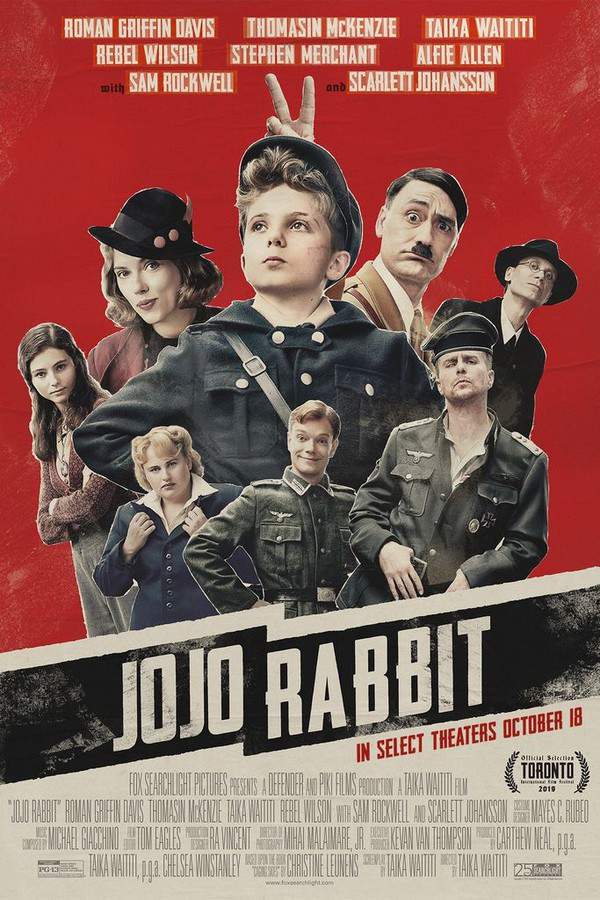
Jojo Rabbit (2019) movie poster

Timeline

Jojo Rabbit (2019) Timeline Explained – Every Event in Order

Release, runtime and language
2019 · 108 min · English
Echo score 80
Loading streaming availability…
Starring
Rebel Wilson, Scarlett Johansson, Taika Waititi, Alfie Allen, Sitara Attaie, Thomasin McKenzie
Budget
$14M

During World War II, a young German boy named Jojo, raised in a fanatical Nazi household, begins to question his beliefs when he discovers a Jewish teenager living in his attic. Guided by his imaginary friend, a bombastic and absurd version of Adolf Hitler, Jojo embarks on a journey of self-discovery and moral awakening, confronting the harsh realities of the war and the dangers of blind obedience.

On this page (7)
  1. 1 Where to watch
  2. 2 Events in order (15)
  3. 3 Timeline questions answered
  4. 4 The book behind the movie
  5. 5 Movie threads
  6. 6 Movies like Jojo Rabbit
  7. 7 Every angle
Loading streaming availability…

15 events in order · contains spoilers

Jojo Rabbit Timeline: Events in Chronological Order

Every key event of Jojo Rabbit (2019) in order, scene by scene, with when and where it takes place. Use it to untangle flashbacks, time jumps and parallel storylines, to refresh your memory before the sequel or to find the exact scene you are thinking of.

  1. Jojo's Life in Nazi Germany

    Johannes 'Jojo' Betzler is introduced as a ten-year-old boy navigating the challenges of living in Nazi Germany during the final stages of World War II. He lives with his mother, Rosie, while grieving the loss of his sister, Inge, due to influenza, highlighting the personal impact of the war on his life.

    When
    1940s
    Where
    Nazi Germany
  2. Imaginary Conversations with Adolf Hitler

    Jojo frequently engages in conversations with his imaginary friend, a naive version of Adolf Hitler. This interaction reflects Jojo's indoctrination and the fervent patriotism of his environment, complicating his understanding of morality and empathy.

  3. Hitler Youth Camp Experience

    At a Hitler Youth camp led by the one-eyed Captain Klenzendorf, Jojo's principles are challenged when he is ordered to kill a rabbit. After showing compassion instead, he is mocked by his peers and is given the nickname 'Jojo Rabbit', marking a pivotal moment in his loss of innocence.

    Where
    Hitler Youth Camp
  4. A Reckless Decision

    Under pressure and motivated by his imaginary Adolf, Jojo throws a Stielhandgranate, leading to an accidental explosion that injures him, resulting in physical scars. This incident marks a turning point in Jojo's development, forcing him to confront the realities of war.

  5. Jojo's Menial Tasks

    Following his recovery, Jojo is assigned to perform menial tasks for the war effort, such as distributing propaganda and collecting scrap metal. This assignment represents his ongoing indoctrination and the small ways in which he is being molded as a soldier.

  6. Discovery of Elsa Korr

    While alone at home, Jojo discovers Elsa Korr, a Jewish girl hiding in his home and a classmate of his deceased sister. Initially tempted to betray her to the authorities, Jojo's conflicted feelings lead him to choose compassion and protect her from harm.

    Where
    Jojo's Home
  7. Learning About Elsa's Life

    As Jojo interacts with Elsa, he learns of her longing to reunite with her boyfriend Nathan after the war. This newfound understanding challenges Jojo's perceptions and deepens his emotional connection to Elsa, complicating his previous beliefs.

  8. Conflicts with Imaginary Adolf

    Jojo's relationship with Elsa leads to conflicts with his imaginary Adolf, who views Elsa as a threat. This internal struggle symbolizes Jojo's growing realization of the evils of the Nazi ideology he was raised in, pushing him to re-evaluate his beliefs.

  9. Gestapo Raid

    A Gestapo raid on Jojo's home creates a moment of chaos and fear. As Klenzendorf arrives to help, Elsa cleverly impersonates Jojo's deceased sister Inge to evade capture, showcasing her quick thinking and the dire stakes involved.

    Where
    Jojo's Home
  10. The Loss of Jojo's Mother

    Jojo tragically discovers that his mother has been hanged in the town square, a result of her opposition to the regime. Overwhelmed with grief and anger, he lashes out at Elsa, marking a point of emotional collapse and highlighting the human cost of war.

    Where
    Town Square
  11. Meeting Yorki and News of Hitler's Death

    Jojo encounters his friend Yorki, who reveals the shocking news of Hitler's suicide and the approaching Allies. This news signifies a turning point in the war and sets the stage for Jojo’s further transformation away from Nazi ideology.

  12. Confrontation with Klenzendorf

    As the battle escalates, Jojo finds himself alongside remaining German forces and eventually confronts Klenzendorf. Klenzendorf's sacrificial act to save Jojo demonstrates a deeper humanity that transcends their previous roles in the conflict.

  13. Jojo's Fabricated Message

    In an attempt to keep Elsa from leaving, Jojo fabricates a message claiming Nathan is alive and willing to help her escape. This deception illustrates his deepening feelings for Elsa and his desperate desire to protect her despite the grim reality.

  14. Confrontation with Imaginary Adolf

    Jojo confronts his imaginary Adolf, who criticizes him for siding with Elsa. In a symbolic act of rebellion against the ideology he once embraced, Jojo banishes this harmful figure, signifying his growth and newfound beliefs.

  15. Celebration of Compassion

    As the Allies celebrate their victory, Jojo leads Elsa outdoors where they encounter the reality of their situation. In this poignant moment, they share a dance in the streets, symbolizing the triumph of love and compassion over prejudice and hatred.

    Where
    Streets

Last updated: November 03, 2024 at 23:16

Was this helpful?

Timeline questions answered

Jojo Rabbit Timeline Explained: Your Questions Answered

When does it happen, and why in that order? The questions people ask about the chronology of Jojo Rabbit (2019): time jumps, flashbacks, cause and effect between scenes and the correct order of events, each answered with spoilers.

Q1

Why does Jojo refuse to kill the rabbit at Hitler Youth camp?

Jojo cannot go through with killing the rabbit because he feels genuine compassion, which conflicts with the brutal ideology being drilled into him. This moment represents his first act of rebellion against the Nazi teachings and establishes his underlying humanity that later emerges more fully. The other boys mock him and give him the nickname "Jojo Rabbit" for his weakness, but this failure plants the seed for his eventual moral awakening.

Foreshadowing: Earlier scenes show Jojo's loneliness after losing his sister Inge, hinting that he still possesses emotional sensitivity beneath the patriotic facade.

  • hitler youth camp
  • rabbit
  • compassion
  • jojo rabbit
  • indoctrination
Q2

How did Elsa get hidden in Jojo's house?

Elsa Korr was a classmate of Jojo's late sister Inge, and Rosie secretly hid her in the attic to protect her from being sent to a concentration camp. Rosie made the dangerous decision to harbor a Jewish refugee while Jojo was at the Hitler Youth camp, keeping the secret even from her own son initially. When Jojo discovers Elsa, she warns him that his mother would be executed for harboring her, which is what compels Jojo to keep the secret.

Foreshadowing: The timeline shows Rosie imploring Captain Klenzendorf to include Jojo, suggesting her manipulative efforts to protect him from the worst of the regime.

  • elsa korr
  • attic
  • hidden
  • rosie
  • gestapo
Q3

Why does Jojo decide to protect Elsa instead of turning her in?

Jojo initially intends to turn Elsa in to the Gestapo, but when she warns him that his mother would hang for harboring her, he chooses to protect her instead. His primary motivation at first is extracting "Hebrew secrets" for his propaganda work, which he finds amusing. However, as he spends more time with Elsa, his understanding of Jewish people shifts dramatically, and he develops genuine empathy that overrides his indoctrination.

Foreshadowing: The rabbit incident already showed Jojo's capacity for compassion, making his choice to protect Elsa a natural progression of his character arc.

  • protect elsa
  • betrayal
  • mother rosie
  • hebrew secrets
Q4

Why was Jojo's mother Rosie executed?

Rosie was hanged in the town square for her resistance activities against the Nazi regime. Earlier, Jojo had seen her secretly distributing anti-Nazi pamphlets advocating for a "free Germany," which confirmed her dissident activities. The Gestapo eventually caught her, and her execution serves as the film's most devastating moment, showing Jojo the true cost of the war and his mother's hidden courage.

Foreshadowing: Jojo glimpses his mother handing out pamphlets during one of his rallies, foreshadowing her eventual fate.

  • rosie hanged
  • execution
  • resistance
  • town square
  • gestapo
Q5

What happened to Jojo's father?

Jojo's father is said to be serving on the Italian Front, but he is never actually shown or confirmed to be alive. Throughout the film, Jojo has no contact with him and grieves the recent loss of his sister instead. The film leaves his father's fate ambiguous, though the absence of any contact or return suggests he may have died or deserted. This emptiness contributes to Jojo's vulnerability to the Nazi ideology as a substitute father figure.

Foreshadowing: Jojo's reliance on his imaginary Hitler as a father figure hints at the void left by his absent real father.

  • father
  • italian front
  • absent
  • missing
Q6

Why does Jojo forge a letter from Nathan to Elsa?

Jojo forges a letter from Elsa's boyfriend Nathan because he has developed feelings for her and wants to prevent her from leaving once the war ends. The first letter contains a breakup message, which Jojo writes hoping to make Elsa stay. After overhearing her devastated reaction, he feels guilty and writes a retraction, showing his growing emotional connection to her despite his confused motivations.

Foreshadowing: Elsa mentions Nathan multiple times, establishing his importance to her and Jojo's jealousy.

  • nathan letter
  • forgery
  • elsa feelings
  • breakup
Q7

What happened to Nathan, Elsa's boyfriend?

Nathan, Elsa's boyfriend, was killed during the war. Jojo initially fabricates a message claiming Nathan is alive and wants to help her escape, trying to keep her from leaving. The truth eventually comes out when Elsa reveals Nathan's fate, leading to an emotional moment between her and Jojo.

Foreshadowing: Jojo's desperate lie about Nathan being alive foreshadows the painful revelation of his death.

  • nathan killed
  • boyfriend
  • war casualty
Q8

Why does Jojo banish his imaginary Hitler?

Jojo banishes his imaginary Hitler after the Nazi regime collapses and he chooses to side with Elsa over the ideology he was raised in. When his imaginary Adolf scolds him for helping a Jewish girl, Jojo finally rejects the hateful ideology that represented. This symbolic act marks his complete transformation from a brainwashed child soldier to someone who values compassion and humanity over fascist doctrine.

Foreshadowing: Throughout the film, Jojo's conflicts with imaginary Adolf increase as his empathy grows, building toward this breaking point.

  • imaginary hitler
  • banish
  • ideology
  • rejection
  • character transformation
Q9

Why does Captain Klenzendorf sacrifice himself for Jojo?

Captain Klenzendorf, despite being a committed Nazi officer throughout most of the film, undergoes a transformation when he sees Jojo in danger during the final battle. He shoots the fanatical young soldier about to kill Jojo and is himself killed in the process. This sacrifice reveals that Klenzendorf had developed some humanity beneath his military facade, possibly influenced by his growing awareness of the war's futility and his connection to Jojo after being demoted.

Foreshadowing: Klenzendorf's demotion and his plea to Rosie about wanting to feel like he matters hint at his underlying insecurities and potential for change.

  • klenzendorf sacrifice
  • death
  • redemption
  • german soldier
Q10

Why does Elsa respond to Jojo's confession "in a fraternal manner"?

Elsa reciprocates Jojo's romantic feelings in a brotherly way because she recognizes his immaturity and the fact that he is still a child. While she appreciates his bravery in protecting her and his genuine transformation, she does not view him as a romantic partner. Her response acknowledges their bond without encouraging a romantic relationship, maintaining the complexity of their connection.

Foreshadowing: Elsa's fabrication of "Hebrew powers" and her patient teaching moments show her role as a mentor rather than a lover.

  • elsa
  • brother
  • confession
  • feelings
  • relationship
Q11

What is the significance of the final dance scene?

The final dance scene represents Jojo and Elsa's celebration of freedom and the triumph of compassion over prejudice. After everything they've been through, Elsa's hiding, Jojo's transformation, the loss of Rosie, they share a dance in the streets filled with Allied soldiers. This moment symbolizes Jojo's complete break from his ideological programming and his embrace of love, hope, and humanity.

Foreshadowing: Rosie's earlier message that "love is the strongest thing" directly foreshadows this moment of choosing love over hatred.

  • final dance
  • celebration
  • freedom
  • streets
  • allies
Q12

How does Elsa escape the Gestapo raid?

During the Gestapo raid, Elsa saves herself by impersonating Jojo's deceased sister Inge. When Captain Deertz questions her, she recites false details about Inge's life that Jojo had previously shared with her. However, she makes a mistake when she can't remember the color of Inge's coffin flowers, creating a tense moment. Jojo covers for her, and she narrowly escapes detection, though this close call adds to the film's tension.

Foreshadowing: Earlier conversations between Jojo and Elsa about his sister establish the details that Elsa later uses for her disguise.

  • gestapo raid
  • inge impersonation
  • escape
  • captain deertz
  • disguise

Movie threads

More Movies Like Jojo Rabbit, by Mood & Story

Curated lists built around what makes Jojo Rabbit tick: the same mood, the same kind of story or the same emotional payoff. Each list explains why these movies belong together.

Satirical Dramedies with a Heavy Heart like Jojo Rabbit

Films that use sharp satire and humor to explore profoundly serious themes. Discover movies similar to Jojo Rabbit that use comedy to cut through dark themes. If you liked the blend of satire and heartfelt drama in Jojo Rabbit, you'll find more films here that balance sharp wit with emotional weight, offering a unique perspective on serious subjects.

  • satirical
  • heartfelt
  • tragic
  • quirky
  • unsettling
  • thought-provoking
  • Tone: satirical, bittersweet, unsettling
  • Pacing: steady, character-driven
Why these movies?

The story pattern: Stories in this thread often follow characters confronting grim realities through a lens of absurdity or satire. The narrative uses comedic relief not to diminish the darkness but to highlight its absurdity, leading to moments of profound clarity and emotional resonance as the characters' illusions are shattered.

Why they belong together: These films are grouped together because they share a distinct tonal balancing act: they are funny without being frivolous, and heavy without being relentlessly bleak. The shared experience is one of thoughtful provocation, where laughter and sorrow coexist to illuminate complex truths.

Movies about Moral Awakening like Jojo Rabbit

Stories of characters shedding indoctrination to discover their own humanity. Find films with narratives similar to Jojo Rabbit, where a character's beliefs are challenged leading to a moral awakening. If you enjoyed Jojo's journey from indoctrination to empathy, explore these stories about losing innocence and finding compassion within corrupt societies.

  • hopeful
  • tragic
  • thought-provoking
  • heartbreaking
  • inspiring
  • loss of innocence
  • Tone: hopeful, tragic, bittersweet
  • Pacing: steady, psychological
Why these movies?

The story pattern: The narrative pattern follows a protagonist, often young or naive, who is deeply embedded in a flawed system. Through a series of personal encounters and revelations that contradict their upbringing, their worldview unravels. The central conflict is internal, pitting ingrained dogma against emerging empathy, culminating in a choice that defines their new moral compass.

Why they belong together: These movies are connected by the powerful and specific arc of ideological deconstruction. They share a focus on the psychology of belief, the pain of cognitive dissonance, and the ultimate triumph of individual conscience over systemic pressure, resulting in a deeply impactful character-driven story.

If you liked this

Movies Like Jojo Rabbit

Similar movies to Jojo Rabbit: the same genre, themes or kind of story. Each one comes with its own plot summary, timeline and ending explained.

Browse all movie summaries

Every angle

Jojo Rabbit (2019) Explained: Plot, Ending, Timeline & Characters

Everything about Jojo Rabbit in one place: what happens in the plot summary, the timeline in chronological order, the characters and meaning, the ending explained and a spoiler-free summary. What's After the Movie adds the cast, box office and post-credit scenes.

Coming soon on iOS and Android

The Plot Explained Movie Summary App

Plot summaries, endings explained and timelines on your phone. Catch up on any movie in minutes, save your favorites and never miss a twist again.

Be the first to know when we launch. Your email stays private, always.

Learn more about the app