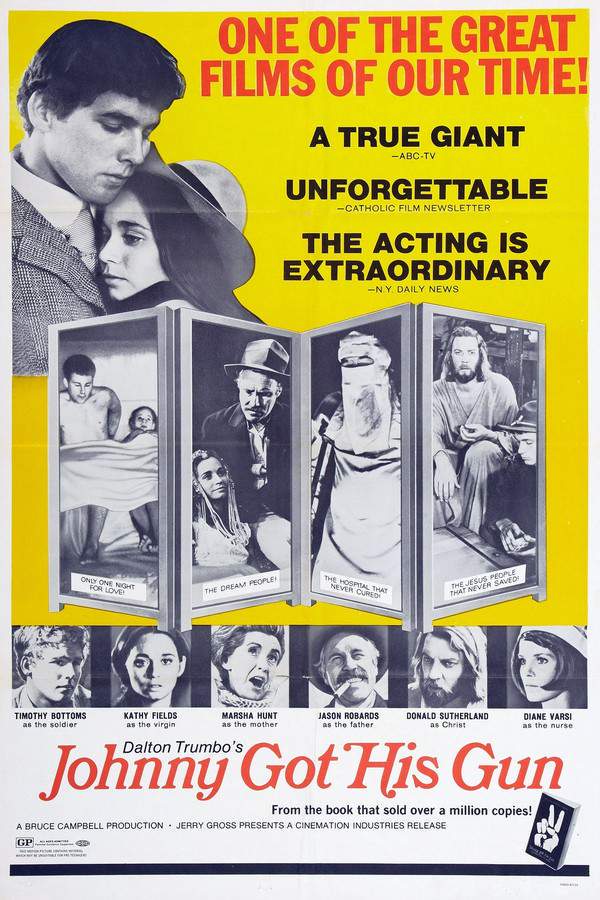










Year: 2008
Runtime: 75 min
Language: English
Director: Rowan Joseph
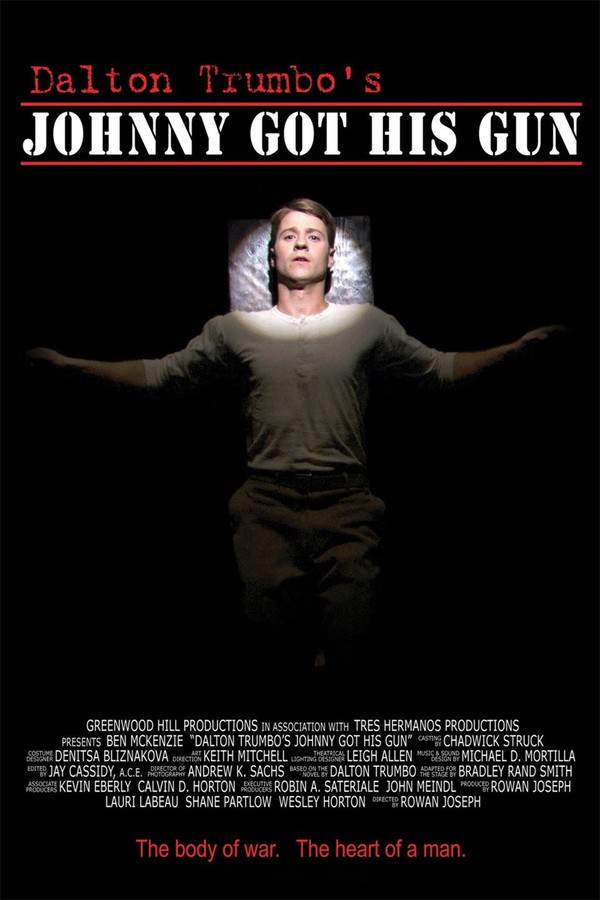
During wartime, a soldier named Joe Bonham suffers devastating injuries, leaving him a quadruple amputee with his mind intact. Isolated and unable to communicate, he exists within the confines of his own consciousness, desperately trying to connect with the outside world. Joe attempts to convey his thoughts and feelings, longing for an end to the conflict and a release from his suffering, ultimately using Morse code to reach out.
Get a spoiler-free look at Johnny Got His Gun (2008) with a clear plot overview that covers the setting, main characters, and story premise—without revealing key twists or the ending. Perfect for deciding if this film is your next watch.
In the grim aftermath of a world torn apart by conflict, a young American soldier awakens to a reality stripped of flesh and sensation. The story opens within the stark walls of a makeshift hospital, where the echo of artillery still lingers in the air and the machinery of care hums with a clinical detachment. The atmosphere is heavy with the weight of war‑time bureaucracy, yet it is also a quiet, almost reverent space where the line between life and a living death blurs.
Joe Bonham finds his consciousness intact while his body has been rendered a silent cage. Inside his mind, memories drift like fragile photographs—scenes of a close‑knit Christian Science family, moments of youthful optimism, and the warmth of his beloved, Kareen. These recollections clash with the stark present, creating a tapestry of yearning that underscores his desperate need to be seen, heard, and understood beyond the sterile confines of his surroundings.
The hospital staff, bound by routine and regulation, treat him as a case rather than a person, yet a young nurse senses the depth of his hidden anguish. Their brief, wordless connection becomes a fragile thread of humanity threading through the mechanized environment. With only his mind and a limited means of expression, Joe turns to the rhythm of Morse code, tapping out his thoughts in a quiet plea for acknowledgment, hoping the faint clicks will bridge the abyss between his internal world and the exterior that has moved on without him.
The film’s tone is hauntingly introspective, balancing the bleakness of isolation with fleeting moments of fragile hope. It invites the audience to contemplate the profound resilience of the human spirit when stripped of all physical agency, and to feel the unsettling tension between silence and the desperate yearning to be heard. This atmospheric portrait sets the stage for an emotional journey that lingers long after the final note fades.
Last Updated: August 10, 2025 at 09:06
Discover curated groups of movies connected by mood, themes, and story style. Browse collections built around emotion, atmosphere, and narrative focus to easily find films that match what you feel like watching right now.
Characters trapped in psychological prisons, desperate to connect with an outside world.If you were captivated by the profound isolation in Johnny Got His Gun, you'll find similar experiences here. This list curates movies about characters trapped in extreme confinement, struggling to communicate and maintain their sanity, offering similarly intense and introspective viewing.
These narratives often follow a linear, focused descent into a single character's internal world. The plot is driven by their attempts to overcome a state of complete powerlessness, using memory, imagination, and sheer will as their only tools. The conflict is less external and more about the battle for selfhood in the face of annihilation.
Movies in this thread are united by a core premise of extreme physical or mental confinement. They share a high-intensity, bleak tone and a slow, deliberate pacing that immerses the viewer in the protagonist's claustrophobic reality, exploring themes of communication, human spirit, and existential horror.
Stories that focus on the profound, lasting trauma inflicted by armed conflict.For viewers seeking more films like Johnny Got His Gun that explore war's devastating aftermath. These selections prioritize the physical and psychological trauma of soldiers and civilians, offering bleak, heavy dramas about the true price of conflict.
The narrative pattern often involves a character's life being irrevocably broken by war, focusing on their struggle to cope with severe injury, PTSD, or a fundamental loss of innocence. The journey is one of survival, but often devoid of triumph, emphasizing the enduring nature of the scars left behind.
These films are grouped by their unflinching portrayal of war's consequences. They share a heavy emotional weight, a bleak or bittersweet tone, and a straightforward to moderate narrative complexity that keeps the focus squarely on the human suffering and ethical questions arising from conflict.
Don't stop at just watching — explore Johnny Got His Gun in full detail. From the complete plot summary and scene-by-scene timeline to character breakdowns, thematic analysis, and a deep dive into the ending — every page helps you truly understand what Johnny Got His Gun is all about. Plus, discover what's next after the movie.
Read a complete plot summary of Johnny Got His Gun, including all key story points, character arcs, and turning points. This in-depth recap is ideal for understanding the narrative structure or reviewing what happened in the movie.
Track the full timeline of Johnny Got His Gun with every major event arranged chronologically. Perfect for decoding non-linear storytelling, flashbacks, or parallel narratives with a clear scene-by-scene breakdown.
Discover the characters, locations, and core themes that shape Johnny Got His Gun. Get insights into symbolic elements, setting significance, and deeper narrative meaning — ideal for thematic analysis and movie breakdowns.
Visit What's After the Movie to explore more about Johnny Got His Gun: box office results, cast and crew info, production details, post-credit scenes, and external links — all in one place for movie fans and researchers.