









Plot Explained Spoilers guaranteed!
Plot Explained

Browse by genre

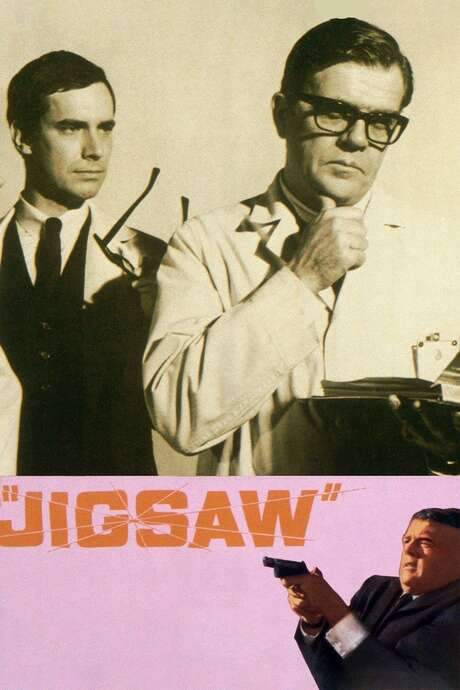
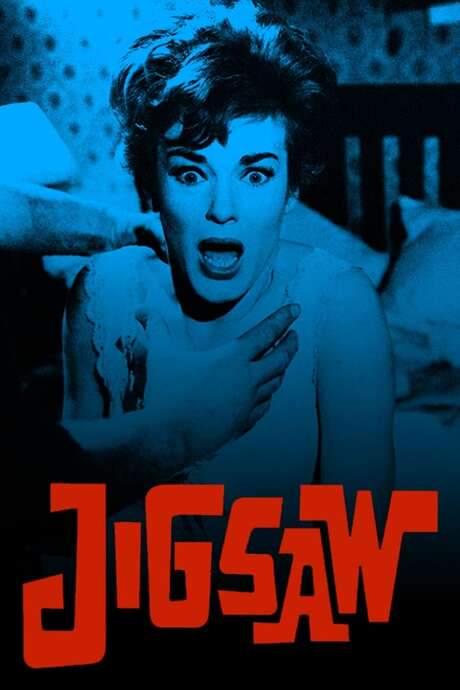
Jigsaw (1962) movie poster

Timeline

Jigsaw (1962) Timeline Explained – Every Event in Order

Release, runtime and language
1962 · 107 mins · English
Directed by
Val Guest
Starring
Jack Warner, Brian Oulton, John Le Mesurier, Moira Redmond, Geoffrey Bayldon, Timothy Bateson

A woman is discovered murdered in a seaside house on the coast near Brighton, East Sussex, England. Detective Inspector Fred Fellows and Detective Sergeant Jim Wilks lead the investigation, methodically pursuing leads and clues across Brighton, Hove and beyond. The plot is based on Hillary Waugh’s novel “Sleep Long My Love” and inspired by the real Brighton Trunk Murders of the late 1930s.

On this page (6)
  1. 1 Where to watch
  2. 2 Events in order (12)
  3. 3 Timeline questions answered
  4. 4 Movie threads
  5. 5 Movies like Jigsaw
  6. 6 Every angle

Where to watch

Where to Watch Jigsaw (1962)

Where can you watch Jigsaw? Stream, rent or buy it in the US, including on Fawesome, Kanopy and Tubi TV: current JustWatch availability with up-to-date prices.

Streaming availability powered by JustWatch

12 events in order · contains spoilers

Jigsaw Timeline: Events in Chronological Order

Every key event of Jigsaw (1962) in order, scene by scene, with when and where it takes place. Use it to untangle flashbacks, time jumps and parallel storylines, to refresh your memory before the sequel or to find the exact scene you are thinking of.

  1. Discovery of dismembered remains in Saltdean

    A woman's remains are found dismembered and incinerated inside a small furnace at Saltdean near Brighton. The scene also contains a knife and a hacksaw, indicating a brutal disposal of the body. This grisly discovery triggers a murder investigation by two local detectives.

    When
    Night of discovery
    Where
    Saltdean, near Brighton
  2. Initial investigation spurred by a burglary

    Two local detectives investigate a minor burglary of leases at an estate agent's office, hoping it will illuminate the crime. As they chase the odd burglary pattern, the case widens beyond the scene and points toward a possible murder in Brighton and surrounding towns. The burglary pattern becomes a keystone linking to the dead woman’s fate.

    When
    Early investigation
    Where
    Brighton area (estate agent's office)
  3. Suitcase initials point toward a name

    The dead woman is initially unidentified, but a suitcase with the initials JS is found at the scene. Police speculate the victim could be Jean Sherman based on the matching initials, though confirmation is still needed. The case tightens around the possibility that Sherman is connected to the murder.

    When
    Soon after discovery
    Where
    Crime scene (Saltdean)
  4. Alias John Campbell rents the murder house

    The main suspect is a man who used the alias John Campbell to rent the house where the woman was discovered. His false identity becomes a central thread investigators follow to uncover motive and opportunity. The rented residence anchors the link between the crime and the persons involved.

    When
    Prior to discovery
    Where
    The rented house (Brighton area)
  5. Handwriting sample links Sherman to the scene

    DI Fellows visits Jean Sherman's house to obtain a name and address for a handwriting sample. The sample turns out to match handwriting found at the victim's house, providing a concrete connection to Sherman. This breakthrough pivots the investigation toward her.

    When
    Early investigation
    Where
    Jean Sherman's house
  6. Flashbacks reveal Sherman–Campbell connection

    The film presents flashbacks about Miss Sherman, excluding the man John Campbell from view. She recalls a one-night stand with Campbell, hinting at a possible motive rooted in a personal history. The flashbacks complicate the trail and keep Campbell's identity ambiguous.

    When
    Backstory before the murder
    Where
    Miss Sherman's memories (flashback)
  7. Arrest of a suspect with a plausible alibi

    Investigators locate and arrest a suspect described by several witnesses as the man who occupied the house. He claims to be a door-to-door salesman who was with the victim but denies murdering her, and his story initially checks out. The inquiry must sift truth from a plausible alibi.

    When
    During investigation
    Where
    Brighton area (house/office vicinity)
  8. Victim identified; parents informed

    After the dead woman is positively identified, the veteran inspector must tell her parents of the loss. The identification sharpens the focus on suspects and intensifies the emotional toll on the family. This moment marks a turning point in the case.

    When
    After identification
    Where
    Parents' home / inspector's briefing room
  9. Wild theory shifts focus to a new suspect

    The lead inspector develops a 'wild idea' about another suspect named Tenby and orders a standard procedure to test the theory. The method is non-standard, reflecting the detective's willingness to bend conventional rules to get results. The aim is to uncover a hidden link that explains the murder.

    When
    Following identification
    Where
    Police station
  10. Tenby admits knowledge of the death

    Tenby is interviewed and admits knowledge of the death, but claims it was accidental. He seems confident in that account until new inconsistencies emerge. His admission widens the conflict and keeps the case unresolved.

    When
    During interrogation
    Where
    Police station interview room
  11. Tenby's alibi flaw revealed

    Detectives discover Tenby has lied about buying something on a Monday bank holiday, a detail critical to supporting his accident theory. The falsified alibi undermines his entire narrative and points to a deliberate involvement. The lie becomes the turning point that challenges his credibility.

    When
    Interrogation ongoing
    Where
    Police station
  12. Investigation narrows to Tenby

    With Tenby's credibility shattered, detectives close in on him as the likely killer. The combination of challenging alibis, investigative persistence, and cross-checking leads from Brighton to Lewes and Greenwich leads to a resolution. The case demonstrates the detectives’ methodical approach and how a single false detail can unravel a murderer.

    When
    Final stages of investigation
    Where
    Brighton, Lewes, and Greenwich area

Last updated: October 09, 2025 at 12:32

Was this helpful?

Timeline questions answered

Jigsaw Timeline Explained: Your Questions Answered

When does it happen, and why in that order? The questions people ask about the chronology of Jigsaw (1962): time jumps, flashbacks, cause and effect between scenes and the correct order of events, each answered with spoilers.

Q1

Why did the police think the victim was Jean Sherman?

The police found a suitcase at the crime scene with the initials JS. Since the victim was initially unidentified, they speculated that the victim could be Jean Sherman based on matching the initials. This initial lead drove much of the early investigation, sending detectives to pursue her as a potential victim before discovering she was actually alive.

  • jean sherman
  • suitcase initials
  • js
  • victim identification
  • brighton murder
Q2

How did the handwriting sample help the investigation?

DI Fellows visited Jean Sherman's house and obtained both a name and a handwriting sample. The handwriting matched the handwriting found at the victim's house, providing a crucial concrete link between the living Jean Sherman and the crime scene evidence.

  • handwriting sample
  • di fellows
  • evidence
  • forensic investigation
  • jeane sherman
Q3

Why was Campbell's identity hidden in the flashbacks?

The film deliberately kept the man named Campbell hidden from view during flashbacks showing Miss Sherman's story. This was a narrative device to heighten the mystery and underscore how complex the truth was that the detectives were trying to uncover - Campbell was the key figure yet remained visually obscured.

  • campbell
  • flashbacks
  • mystery
  • suspect identity
  • narrative device
Q4

Who was the man named Campbell to Jean Sherman?

Jean Sherman revealed during the investigation that she had a one-night stand with the man described as Campbell. This detail added another layer to the web investigators had to untangle, suggesting a possible personal motive connected to Campbell that might explain the murder.

  • campbell
  • jean sherman
  • one night stand
  • suspect
  • motive
Q5

What was the inspector's 'wild theory' about Ray Tenby?

After identifying the victim, the veteran inspector developed an unconventional hunch about Ray Tenby as a suspect. He ordered a standard procedure to be applied in an unorthodox fashion to test this theory. This bold approach ultimately paid off by forcing the truth into the open.

  • ray tenby
  • inspector fellows
  • wild theory
  • suspect
  • breakthrough
Q6

How did the police finally catch Ray Tenby?

Detectives discovered that Tenby had lied about buying an item on a Monday bank holiday - he claimed to have made this purchase but had not actually done so. This critical falsified detail undermined his entire accident story and revealed he had been deliberately covering up his involvement.

  • ray tenby
  • alibi
  • monday bank holiday
  • lie
  • confession
  • murder case
Q7

Why did Ray Tenby claim the death was an accident?

When confronted, Tenby admitted knowing about the woman's death but maintained it was an accident. This claim initially resisted refutation until investigators uncovered the crucial lie about his alibi, which exposed his attempt to downplay deliberate involvement in the murder.

  • ray tenby
  • accident claim
  • interrogation
  • murder confession
  • criminal motive
Q8

Who rented the house where the body was found?

The main suspect used the alias John Campbell to rent the house where the woman's dismembered remains were discovered. This false identity became a central thread investigators followed to uncover the motive and opportunity behind the murder.

  • john campbell
  • alias
  • rented house
  • suspect
  • brighton
  • murder location
Q9

How did the burglary investigation lead to the murder case?

The investigation began with two detectives looking into a minor burglary of leases at an estate agent's office. As they pursued this odd burglary pattern, the case widened and pointed toward the murder in Saltdean near Brighton, with the burglary becoming a key connection that launched the murder inquiry.

  • burglary
  • estate agent
  • leases
  • brighton
  • investigation
  • murder case
Q10

Why was informing the victim's parents significant in the investigation?

Once the dead woman was positively identified, the veteran inspector had to deliver the devastating news to her parents. This emotionally weighty moment marked a turning point in the case, sharpening the focus on suspects and intensifying the detectives' determination to solve the murder.

  • victim identification
  • parents
  • inspector fellows
  • emotional scene
  • murder investigation

Movie threads

More Movies Like Jigsaw, by Mood & Story

Curated lists built around what makes Jigsaw tick: the same mood, the same kind of story or the same emotional payoff. Each list explains why these movies belong together.

Gritty police procedurals like Jigsaw

Stories that follow detectives as they meticulously unravel a grim crime. For viewers who liked Jigsaw, this section features movies with a similar focus on realistic police work and methodical detection. These crime stories and murder mysteries share a steady pace and a tense, investigative atmosphere, offering a compelling look at the process of solving a grim case.

  • investigative
  • methodical
  • gritty
  • tense
  • procedural
  • realistic
  • Tone: tense, serious
  • Pacing: steady, deliberate
Why these movies?

The story pattern: Stories in this thread typically follow a linear or semi-linear progression from the discovery of a crime to its resolution. The narrative is driven by clues, leads, and the deductive reasoning of the investigators, often involving setbacks and false trails that test their resolve before the final breakthrough.

Why they belong together: Movies are grouped here based on their shared commitment to depicting the authentic, grinding process of a criminal investigation. They prioritize intellectual puzzle-solving over action, creating a tense and absorbing experience rooted in realism and meticulous detail.

Somber crime investigations like Jigsaw

Grim detective stories with a somber mood and a morally complex resolution. If you appreciated the grim atmosphere and mixed emotions of Jigsaw, explore these similar movies. This collection features dark thrillers and murder mysteries that share a somber mood, medium emotional weight, and endings that feel more complex than purely happy or sad.

  • somber
  • grim
  • atmospheric
  • tense
  • melancholic
  • dark
  • Tone: somber, tense
  • Pacing: steady, atmospheric
Why these movies?

The story pattern: The narrative journey in these films is as much about the emotional toll of the crime as it is about solving it. The discovery of the victim and the impact on those involved set a bleak tone. The conclusion often reveals morally grey areas or a sense of profound loss that overshadows the procedural success.

Why they belong together: These films are grouped by their shared somber atmosphere and the lingering emotional impact of the central crime. They balance the intellectual satisfaction of a solved case with a heavy, often melancholic, tone that resonates long after the credits roll.

If you liked this

Movies Like Jigsaw

Similar movies to Jigsaw: the same genre, themes or kind of story. Each one comes with its own plot summary, timeline and ending explained.

Browse all movie summaries

Every angle

Jigsaw (1962) Explained: Plot, Timeline & Characters

Everything about Jigsaw in one place: what happens in the plot summary, the timeline in chronological order, the characters and meaning and a spoiler-free summary. What's After the Movie adds the cast, box office and post-credit scenes.

Coming soon on iOS and Android

The Plot Explained Movie Summary App

Plot summaries, endings explained and timelines on your phone. Catch up on any movie in minutes, save your favorites and never miss a twist again.

Be the first to know when we launch. Your email stays private, always.

Learn more about the app