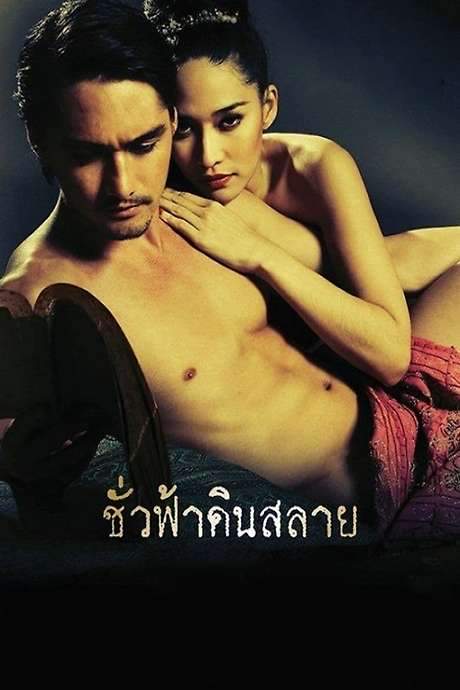
Set in 1930s Siam, the story centers on Jan Dara, Egkarat Sarasook a boy born into a wealthy, dysfunctional family where sex and power ripple through every relationship. Jan’s father, Luang Wissanandacha, embodies a dangerous appetite that blinds him to tenderness, and he views his son as cursed because Jan’s mother died giving birth. To care for the child, Jan’s mother’s sister, Aunt Waad Wipawee Charoenpura, is brought into the house, bringing a complicated blend of care and manipulation. The estate becomes a furnace where desire, loyalty, and rumor collide, and the young Jan is exposed to a world far beyond his childhood naïveté.
Within this charged environment, Jan grows up under the watchful eye of a patriarch whose lust threads through the household. He forges a tentative friendship with Ken Krathingthong’s Ken Krathingthong character, the cook’s son, who conceals a secret romance with Kaew’s nanny Saisoi Sukanya Kongkawong. Ken introduces Jan to sex through Saisoi, a first awakening that tugs at his feelings for Hyacinth Sasithorn Panichnok. As a teenager, Jan also becomes entangled with Kaew’s world, even as Waad’s protective instincts pull him back from the more dangerous corners of his father’s infatuations.
Luang’s long-time mistress, the sophisticated Boonlueang Christy Chung Lai-Tai, moves into a guesthouse on the estate. Her presence brings a strange warmth to Jan’s life, and the two begin a sexual relationship that complicates his growing sense of self. This illicit affair unsettles his budding feelings for Hyacinth and pushes him to write a goodbye letter, a sign that he is already learning how to choose and reject. Meanwhile, Kaew—the teenage daughter of Waad and Luang—struggles with her own awakening. She becomes drawn to Saisoi, and, upon discovering their clandestine relationship, she resents them and even accuses Jan of rape in a bid for revenge. Waad faces a brutal dilemma and ultimately defends Jan, but Luang’s authority reigns: he banishes Jan and Khen from the estate, ending a fragile chapter of Jan’s early life.
Years pass, and Jan returns to Bangkok a more complicated man. Kaew has become pregnant, and the family’s reputation compels a loveless arranged marriage between Jan and Kaew to smooth over the scandal. Jan agrees to the marriage so he can secure the estate, and he begins to piece together the tangled web of paternity and power. He suspects Luang might be the father of Kaew’s child, and he uses that knowledge to secure leverage over his father and Kaew, while also rekindling his relationship with Boonlueang. In the background, Hyacinth’s memory lingers, and Jan learns that she has died of typhoid during his absence, a loss that casts a pall over his renewed ambitions.
The wedding night marks a stark turn in Jan’s arc. In a moment of defiance and desperation, he engages in sex with a maid in front of a portrait of his mother, a raw confrontation with the cycle of lust and domination that has shadowed his life. Kaew’s child, born with Down syndrome and named Pree [Sarawut Matrakul], becomes a living symbol of the family’s complicated legacy, and Luang, already crippled by age and guilt, slides into a catatonic state. Waad eventually leaves the estate to become a nun, seeking peace after years of bearing witness to the family’s turmoil. Jan discovers that Kaew has secretly continued an affair with Boonlueang, and he proposes a dangerous arrangement: share Kaew and press for more children for legacy’s sake. Kaew’s abortion, performed under stress and fear, becomes a pivotal moment that fractures trust and reshapes the household’s power dynamics.
As the years grind on, the fragility of the old order becomes evident. Luang’s impotence mirrors the breakdown of the patriarchal system that once ruled the house, and the estate’s center of gravity shifts away from domination toward a frail, uncertain balance. Kaew maintains a stubborn authority within the walls, while Luang remains trapped in a liminal stupor. Waad’s decision to leave for a life of contemplation intensifies the sense that the family’s former glamour has dissolved. Jan, now a ruler who once coveted power, is left to reflect on his lineage and the elusive question of who his real father might be, a question that haunts him as he stands at the threshold of a future shaped by the choices of those who came before him.
In this sweeping saga, every relationship—be it between parent and child, lover and beloved, or rival and ally—carries the weight of secrets kept, betrayals endured, and the unspoken costs of a society built on wealth and propriety. The film’s pacing, richly drawn characters, and unflinching portrayal of desire offer a portrait of a family undone by its own appetites, while also tracing the uneasy path toward personal agency and legitimacy in a world where power is often a private habit, passed down through generations.