






Plot Explained Spoilers guaranteed!
Plot Explained

Browse by genre

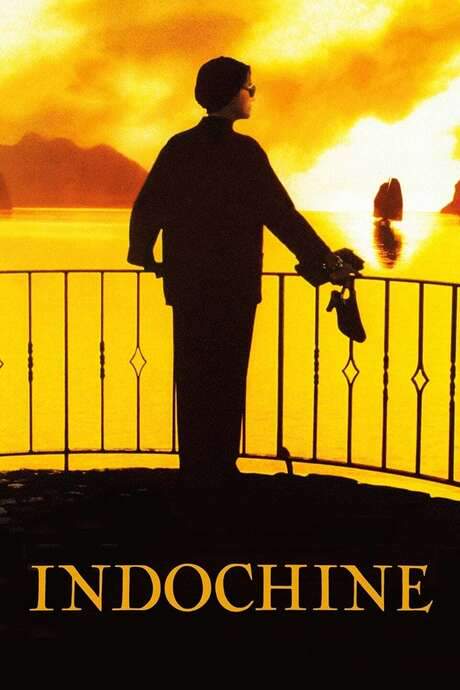
Indochine (1992) movie poster

Timeline

Indochine (1992) Timeline Explained – Every Event in Order

Release, runtime and language
1992 · 159 mins · French
JustWatch #18,218 3
Directed by
Régis Wargnier
Starring
Catherine Deneuve, Thibault de Montalembert, Vincent Perez, Andrzej Seweryn, Eric Nguyen, Linh Dan Pham

Set in colonial French Indochina from the 1930s through the 1950s, the film follows French plantation owner Éliane Devries and her adopted Vietnamese daughter Camille as their lives become entangled with the growing Vietnamese nationalist movement, highlighting personal and political upheaval during the era.

On this page (6)
  1. 1 Where to watch
  2. 2 Events in order (15)
  3. 3 Timeline questions answered
  4. 4 Movie threads
  5. 5 Movies like Indochine
  6. 6 Every angle

Where to watch

Where to Watch Indochine (1992)

Where can you watch Indochine? Stream, rent or buy it in the US, including on fuboTV, Amazon Video and Apple TV Store: current JustWatch availability with up-to-date prices.

Streaming availability powered by JustWatch

15 events in order · contains spoilers

Indochine Timeline: Events in Chronological Order

Every key event of Indochine (1992) in order, scene by scene, with when and where it takes place. Use it to untangle flashbacks, time jumps and parallel storylines, to refresh your memory before the sequel or to find the exact scene you are thinking of.

  1. Éliane's plantation and Camille's upbringing

    In 1930, Éliane Devries runs her rubber plantation in colonial Indochina and becomes the adoptive mother of Camille, the daughter of her late friends from the Nguyễn dynasty. The plantation relies on indentured labor, shaping the world Camille grows up in. This setup establishes the power dynamics that drive later conflicts.

    When
    1930
    Where
    Indochina (rubber plantation)
  2. Auction bid and public challenge

    Éliane and Jean-Baptiste Le Guen bid on the same painting at an auction, and he publicly challenges her, testing her resolve and freedom. The moment foreshadows the confrontational tension that will define their relationship. The auction scene cements the initial clash between a plantation matriarch and a daring naval officer.

    When
    1930
    Where
    Auction house, Indochina
  3. Affair begins between Éliane and Jean-Baptiste

    Days after the auction, Jean-Baptiste visits Éliane's plantation and they begin an affair, despite their social differences. His interest in a boy linked to his opium-arson case becomes a pretext for closer ties. The affair deepens secrets that will destabilize both their lives.

    When
    1930s
    Where
    Éliane's plantation, Indochina
  4. Jean-Baptiste transferred to Haiphong

    Éliane leverages her Navy connections to transfer Jean-Baptiste to Haiphong, moving him away from her and Camille. The shift marks a turning point in their relationship as distance complicates their bond. The colonial power structure adds a layer of inevitability to their separation.

    When
    1930s
    Where
    Haiphong, Indochina
  5. Christmas party confrontation and punishment

    At a Christmas party, Jean-Baptiste publicly slaps Éliane, revealing the volatile mix of desire and power between them. For this act, he is punished and sent to Dragon Islet, a remote French military base. The punishment isolates him from Éliane and Camille.

    When
    1930s
    Where
    Christmas party; Dragon Islet (Hòn Rồng)
  6. Camille engaged to Thanh

    Éliane arranges for Camille to become engaged to Thanh, a pro-Communist Vietnamese youth expelled from France for his support of reform. The engagement ties Camille to dangerous political currents. The arrangement foreshadows the journeys Camille will take with Jean-Baptiste.

    When
    1930s
    Where
    Indochina
  7. Camille imprisoned on Dragon Islet

    Camille, seeking Jean-Baptiste, travels north and is imprisoned with a Vietnamese family on Dragon Islet. The captors subject the travelers to torture and murder, revealing the brutal realities of colonial border policing. The incident sets the stage for a daring escape.

    When
    1930s
    Where
    Dragon Islet, Indochina
  8. Escape with Jean-Baptiste

    In the ensuing firefight, Camille shoots an officer and Jean-Baptiste defies his superiors to protect her, allowing them to flee together. The pair begin a perilous journey away from Dragon Islet. Their bond deepens under life-threatening strain.

    When
    1930s
    Where
    Dragon Islet, Indochina
  9. Refuge with a Communist theater troupe

    After days adrift in the Gulf of Tonkin, Camille and Jean-Baptiste are taken in by a Communist theater troupe and find shelter in a secluded valley. They live among performers who offer them safety and anonymity. The valley becomes a temporary sanctuary for their growing family.

    When
    1930s
    Where
    Gulf of Tonkin; secluded valley, Indochina
  10. Camille becomes pregnant

    Months after finding refuge, Camille is pregnant with Jean-Baptiste's child, cementing the stakes of their exile and increasing the urgency to leave for safety. The pair prepare for a future that is increasingly uncertain. Thanh's political role continues to loom over their fate.

    When
    1930s-1940s
    Where
    Secluded valley, Indochina
  11. Smuggled into China

    Thanh, now a high-ranking Communist operative, arranges for the theater troupe to smuggle Camille and Jean-Baptiste into China. The escape succeeds, plunging them into a broader revolutionary movement. Their identities as lovers and fugitives become entwined with the region's political upheaval.

    When
    1930s-1940s
    Where
    China (via theatre troupe)
  12. Baptism and ambush

    Near the Chinese border, Jean-Baptiste baptizes their newborn son Étienne in a river before French soldiers ambush him. Camille evades capture and the troupe escapes; Jean-Baptiste is jailed in Saigon and Étienne is handed over to Éliane. The line between family and politics blurs as loyalties fracture.

    When
    pre-1950s
    Where
    River near border; Saigon jail
  13. Jean-Baptiste's death and Camille's imprisonment

    The Navy plans a court-martial to avoid a public Indochina trial, granting Jean-Baptiste a final 24-hour visit with Étienne. He is found dead in his bed with a gun in hand, and the official ruling is suicide; Camille is captured and sent to Poulo-Condor prison. The tragedy cements decades of sacrifice and separation.

    When
    late 1940s-1950s
    Where
    Saigon; Poulo-Condor
  14. Five-year release and departure

    Five years after Camille's imprisonment, the Popular Front comes to power and liberates political prisoners, including Camille. Éliane and Camille reunite, but Camille declines to return to her mother and son, choosing to continue Vietnam's independence with the Communists. Éliane sells the plantation and leads Étienne away from Indochina.

    When
    circa 1940s-1950s
    Where
    Poulo-Condor; Indochina
  15. Geneva Conference and 1954 partition

    In 1954, Éliane and a grown Étienne visit Switzerland where Camille serves as a Vietnamese Communist Party delegate at the Geneva Conference. The crowded negotiators' hotel makes it difficult to spot him, but he tells her he sees her as his mother. France's Indochina becomes independent and Vietnam is partitioned.

    When
    1954
    Where
    Geneva, Switzerland

Last updated: October 09, 2025 at 10:45

Was this helpful?

Timeline questions answered

Indochine Timeline Explained: Your Questions Answered

When does it happen, and why in that order? The questions people ask about the chronology of Indochine (1992): time jumps, flashbacks, cause and effect between scenes and the correct order of events, each answered with spoilers.

Q1

Why did Éliane have Jean-Baptiste transferred to Haiphong?

Éliane used her Navy connections to transfer Jean-Baptiste away from her plantation because their affair had become publicly complicated and threatened her reputation. Additionally, Camille had fallen in love with Jean-Baptiste after he rescued her from a prisoner escape attempt, creating a painful love triangle that forced Éliane to remove him from the situation to protect both her family dynamics and social standing.

Foreshadowing: Their earlier rivalry at the auction hinted at the volatile tension between them that would later spiral out of control.

  • Éliane
  • Jean-Baptiste
  • Haiphong
  • transfer
  • affair
Q2

Why did Jean-Baptiste slap Éliane at the Christmas party?

Jean-Baptiste publicly confronted Éliane after being transferred away, revealing the volatile mix of desire, resentment, and wounded pride he felt. The slap was both a personal act of revenge for humiliating him and a dramatic expression of the power struggle between them, a moment that cost him dearly as it led to his punishment and deployment to the remote Dragon Islet.

Foreshadowing: Their charged encounter at the auction established the combative sexual tension that would eventually erupt into this public confrontation.

  • Jean-Baptiste
  • Éliane
  • Christmas party
  • slap
  • punishment
Q3

How did Camille get imprisoned on Dragon Islet?

Camille traveled north to Dragon Islet searching for Jean-Baptiste after he was sent there as punishment. She was captured and imprisoned along with a Vietnamese family by French colonial forces enforcing border control. The captors subjected them to torture and murder, making her imprisonment a dangerous ordeal that set the stage for the violent escape.

Foreshadowing: The engagement to Thanh, who had pro-Communist convictions, placed Camille in proximity to dangerous political currents that would eventually lead her northward.

  • Camille
  • Dragon Islet
  • imprisonment
  • escape
Q4

Why did Jean-Baptiste help Camille escape from Dragon Islet?

Despite being a French officer ordered to contain the prisoners, Jean-Baptiste defied his superiors to protect Camille because he had fallen in love with her. During the ensuing firefight, Camille shot a French officer, and Jean-Baptiste chose to aid her escape rather than fulfill his duty, prioritizing their personal connection over his military obligations.

Foreshadowing: Their earlier meeting when Jean-Baptiste rescued Camille from the prisoner escape attempt had already planted the seeds of their mutual attraction.

  • Jean-Baptiste
  • Camille
  • escape
  • love
  • defection
Q5

Was Jean-Baptiste's death really a suicide?

Jean-Baptiste was found dead in Éliane's Saigon residence with a gun in his hand and a bullet to his temple, officially ruled a suicide. The circumstances were highly suspicious, his death occurred during a 24-hour visitation window with his infant son Étienne before he was to be sent to Brest for a potential court-martial. Both families and authorities harbored doubts about whether he truly took his own life or whether it was orchestrated to prevent a public trial.

Foreshadowing: The tension between his military duty and personal loyalties had been building throughout the narrative, culminating in this ambiguous end.

  • Jean-Baptiste
  • death
  • suicide
  • Saigon
  • mystery
Q6

Why did Camille choose to remain with the Communist cause instead of returning to her son?

After being released from prison when the Popular Front came to power, Camille reunited with Éliane but chose not to return to her mother and young son Étienne. Instead, she decided to continue fighting for Vietnamese independence with the Communist movement that had once endangered her. This choice reflected her deep commitment to the political cause and perhaps a sense that she could not return to the colonial world that had imprisoned her and killed the man she loved.

Foreshadowing: Camille's engagement to Thanh, a pro-Communist student expelled from France, had already shown her alignment with the independence movement.

  • Camille
  • Communist
  • independence
  • Étienne
  • choice
Q7

How did baby Étienne end up with Éliane?

After Jean-Baptiste was ambushed by French soldiers near the Chinese border, Camille escaped but Jean-Baptiste was arrested and jailed in Saigon. Their newborn son Étienne was handed over to Éliane, who took responsibility for the child. When Jean-Baptiste was granted a 24-hour visit before his court-martial, Éliane brought Étienne to him at her Saigon residence, the final time the three would be together before his death.

Foreshadowing: The ambush at the river baptism had already separated the family, with Éliane taking the child as the only viable option for his care.

  • Étienne
  • Éliane
  • Jean-Baptiste
  • Saigon
  • arrest
Q8

What happened when Éliane and Étienne met Camille at the Geneva Conference?

In 1954, during the Geneva Conference that would partition Vietnam into North and South, Éliane and her grown son Étienne traveled to Switzerland where Camille served as a Vietnamese Communist Party delegate. The crowded negotiators' hotel made it difficult for Étienne to find his mother, but when he finally located her, he told Camille he saw her as his mother, acknowledging both Éliane's raising of him and Camille's biological connection to him, though they remained separated by the political divide.

Foreshadowing: The 24-hour visitation scene in Saigon had plant the emotional seeds for this eventual but bittersweet reunion.

  • Geneva Conference
  • Camille
  • Éliane
  • Étienne
  • 1954
Q9

Why did Éliane sell her plantation and leave Indochina?

Éliane sold her rubber plantation and departed Indochina after Camille chose to remain with the Communist cause, leaving her and Étienne behind. With the political situation deteriorating as France lost control and Vietnam moved toward independence and partition, Éliane made the painful decision to return to France with her adopted grandson, carrying the weight of her family's complicated legacy across continents.

Foreshadowing: The plantation had been central to Éliane's identity and power throughout the film, so its sale represented the end of an era.

  • Éliane
  • plantation
  • departure
  • Indochina
  • Étienne
Q10

What happened to Thanh after helping Camille and Jean-Baptiste?

Thanh was a Vietnamese student with pro-Communist leanings who had been expelled from France for his political stance surrounding the 1930 Yên Bái mutiny. He arranged Camille's engagement to her as a way to protect her, then helped arrange for the Communist theater troupe to smuggle Camille and Jean-Baptiste into China. He later became a high-ranking Communist operative, facilitating their escape into the broader revolutionary movement.

Foreshadowing: His expulsion from France for political activism foreshadowed his eventual rise within the Communist hierarchy.

  • Thanh
  • Communist
  • smuggling
  • China
  • political
Q11

Why did Camille shoot the French officer during the Dragon Islet escape?

Camille shot a French officer during the chaotic escape from Dragon Islet because she was trapped in a life-threatening situation with other prisoners being tortured and murdered by the captors. The violence erupted when tensions escalated during the prisoner transfer, and she acted in desperation to break free from the brutal colonial detention facility.

Foreshadowing: Her dangerous journey northward to find Jean-Baptiste had already placed her in increasingly volatile circumstances.

  • Camille
  • officer
  • shoot
  • Dragon Islet
  • escape
Q12

What was the role of the Communist theater troupe in the story?

The Communist theater troupe provided crucial sanctuary to Camille and Jean-Baptiste after they escaped Dragon Islet and drifted for days in the Gulf of Tonkin. The performers took them into a secluded valley where they lived for months until Camille became pregnant. Thanh later arranged for this same troupe to smuggle the couple into China, making them instrumental to their survival and eventual fate.

Foreshadowing: The tuồng performances at the end of the film show how this troupe preserved their legend in Vietnamese theatrical tradition.

  • theater troupe
  • refuge
  • China
  • smuggling
  • tuồng

Movie threads

More Movies Like Indochine, by Mood & Story

Curated lists built around what makes Indochine tick: the same mood, the same kind of story or the same emotional payoff. Each list explains why these movies belong together.

Epic Forbidden Romances like in Indochine

Passionate romances threatened by historic conflict and societal divides. If you enjoyed the sweeping, tragic love story in Indochine, explore more films where passionate romances are set against major political upheavals. These movies blend intense personal relationships with the grand drama of historical change, resulting in powerful, bittersweet narratives.

  • epic romance
  • forbidden love
  • political drama
  • tragic
  • sweeping
  • historical
  • Tone: romantic, melancholic, intense
  • Pacing: variable, building to climactic turning points
Why these movies?

The story pattern: These narratives typically follow a passionate, often forbidden, romance that becomes entangled with a larger political conflict or revolution. The central relationship is tested and ultimately reshaped by external forces, forcing characters to choose between personal happiness and political ideals or survival.

Why they belong together: These films are grouped together because they share a core structure of intertwining a grand-scale historical drama with a deeply personal love story. They consistently deliver a powerful emotional mix of high romance and heavy political tension, culminating in endings that reflect the costs of love in turbulent times.

Sweeping Melancholic Historical Dramas like Indochine

Grand, character-driven stories reflecting on loss and the end of eras. Discover movies similar to Indochine that capture the grand scale and reflective tone of historical epics. These complex dramas use personal journeys to examine the end of eras, often featuring heavy emotional weight, melancholic moods, and a bittersweet sense of loss and change.

  • sweeping
  • melancholic
  • historical
  • epic
  • tragic
  • reflective
  • Tone: melancholic, reflective, tragic
  • Pacing: variable, with contemplative stretches
Why these movies?

The story pattern: The narrative pattern involves following characters over a significant timespan, often decades, as they navigate a world in decline or radical transformation. The plot is complex, weaving personal destinies with historical events, and leads to a reflective conclusion that emphasizes the emotional and psychological impact of change over simple victory or resolution.

Why they belong together: This thread groups films that share a specific atmospheric blend: a grand historical setting, a complex and character-focused narrative, a dominantly melancholic and reflective tone, and a pacing that allows for contemplation. The experience is defined by a profound sense of witnessing the passing of time and the personal cost of history.

If you liked this

Movies Like Indochine

Similar movies to Indochine: the same genre, themes or kind of story. Each one comes with its own plot summary, timeline and ending explained.

Browse all movie summaries

Every angle

Indochine (1992) Explained: Plot, Timeline & Characters

Everything about Indochine in one place: what happens in the plot summary, the timeline in chronological order, the characters and meaning and a spoiler-free summary. What's After the Movie adds the cast, box office and post-credit scenes.

Coming soon on iOS and Android

The Plot Explained Movie Summary App

Plot summaries, endings explained and timelines on your phone. Catch up on any movie in minutes, save your favorites and never miss a twist again.

Be the first to know when we launch. Your email stays private, always.

Learn more about the app