Plot Explained Spoilers guaranteed!
Plot Explained

Browse by genre

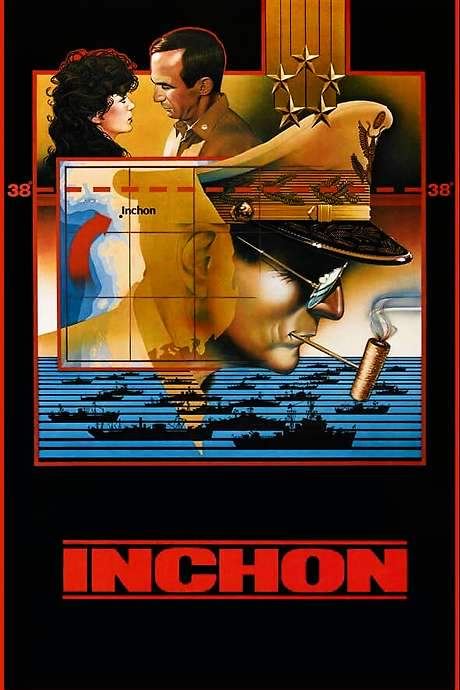
Inchon (1981) movie poster

Characters & Themes

Inchon (1981) Characters, Setting & Themes Explained

Release, runtime and language
1981 · 140 mins · English
Directed by
Terence Young
Starring
Toshirô Mifune, Jacqueline Bisset, Laurence Olivier, Richard Roundtree, Omar Sharif, Anthony Dawson
Budget
$46M

LOVE. DESTINY. HEROES. War Changes Everything. Gen. Douglas MacArthur leads a Korean War campaign, and the war tests a married couple’s relationship.

On this page (7)
  1. 1 Characters explained (9)
  2. 2 Where & when it takes place
  3. 3 Themes & meaning (4)
  4. 4 Character & meaning questions
  5. 5 Movie threads
  6. 6 Movies like Inchon
  7. 7 Every angle

9 main characters · contains spoilers

Inchon Characters Explained: Who Is Who

The main characters of Inchon (1981), heroes and villains: what drives them, how they change over the course of the story and what each of them reveals about the film's bigger ideas.

  • Barbara Hallsworth (Jacqueline Bisset)

    A U.S. Army major’s wife who is displaced by the North Korean invasion. She is chauffeured to Seoul, then drives five South Korean children to safety after her chauffeur is killed, ultimately reaching a protected location. On her harrowing path, she shoots a North Korean soldier, demonstrating quick thinking and courage under danger.

    • 👩‍✈️ Heroine
    • 🧭 Courage
    • 🗺️ War-torn Korea
  • Maj. Frank Hallsworth (Ben Gazzara)

    Barbara’s husband, who heads north to locate her while wrestling with a complicated personal life. His efforts reflect duty and determination in the face of danger. His pursuit intersects with the larger conflict and moral choices around loyalty and fidelity.

    • 🛡️ Duty
    • 💞 Relationships
    • 🗺️ War context
  • Saito-San (Toshirô Mifune)

    Barbara’s father, depicted as a pragmatic elder who is aware of his daughter’s affair and does not disapprove. He embodies familial ties and traditional authority navigating the upheavals of war.

    • 👨‍👦 Family
    • 🧭 Honor
    • 🗺️ War context
  • Gen. Douglas MacArthur (Laurence Olivier)

    Commander of the Allied forces who masterminds the Inchon landing, a turning point in the war. He withdraws from a public press conference, reflecting the tension between leadership and media. The film closes with him reciting the Lord’s Prayer, signaling a moral compass amid strategic chaos.

    • 🎖️ Leadership
    • 🧭 Strategy
    • 🗺️ War hero
  • Lim (Karen Kahn)

    A South Korean woman who has an affair with Frank. She contributes to the personal dimension of the wartime landscape and dies during the lighthouse signaling battle, symbolizing the human cost of conflict.

    • 💔 Romance
    • 🧭 Survival
    • 🗺️ Korean War
  • David Feld (David Janssen)

    A journalist at a Tokyo press conference, representing media presence in wartime reporting. His observations help frame how events are conveyed to the public and influence international perception.

    • 📰 Journalism
    • 🎯 Truth
    • 🗞️ War reportage
  • Park (Nam Koong-won)

    A Korean journalist who, along with Feld and Longfellow, attends the press briefing in Tokyo. Park embodies the local perspective within wartime media coverage.

    • 📰 Journalism
    • 🗺️ War coverage
  • Longfellow (Rex Reed)

    Another journalist present at press events, contributing to the film’s lens on media and the portrayal of wartime events to a broader audience.

    • 📰 Journalism
    • 🗞️ Public perception
  • Jean MacArthur (Dorothy James)

    MacArthur’s wife, who shares a personal perspective on the general’s public persona and private resolve during the wartime crisis.

    • 👩‍✈️ Spouse of leader
    • 🕊️ Moral support

Last updated: October 04, 2025 at 12:44

Was this helpful?

Setting

Where and When Does Inchon Take Place?

The setting of Inchon (1981): the year and time period, the places and locations, and how they shape the characters, the mood and the tension of the story.

Time period

1950

The events take place during the early Korean War in 1950. The invasion of the North Koreans in June gives way to the Inchon landing in September, shaping the campaign’s momentum. The timeline interweaves battlefield action with political decisions and media presence throughout that year.

Location

Incheon, Seoul, Tokyo

The story centers on the Korean War era, focusing on the Inchon landing as a pivotal turning point. Action unfolds across border towns near the 38th parallel, the port city of Inchon, and the city of Seoul as civilians flee from conflict. Tokyo serves as a staging ground for planning and media coverage surrounding the operation.

  • 🗺️ War setting
  • 🌍 Asian theatre
  • 🚢 Amphibious operation

Last updated: October 04, 2025 at 12:44

Was this helpful?

4 major themes

Inchon Meaning: Themes & Message Explained

What is Inchon (1981) really about? The emotional, social and philosophical themes the film keeps returning to, its symbolism and the message beneath the surface.

  • War

    The film portrays the brutality and complexity of war, highlighting a turning-point operation that requires courage under fire. It shows civilians displaced by the fighting and individuals risking their lives in acts of quick thinking and endurance. The Inchon landing is presented as both a strategic feat and a human trial, testing loyalties and moral choices.

  • Leadership

    Leadership under pressure is a central thread, shown through strategic planning, bold decisions, and the burden of command. The narrative explores how leaders balance public perception with wartime realities, culminating in moments that define a commander’s resolve. The closing moments reflect a moral anchor that guides decisive action amid uncertainty.

  • Displacement

    The invasion drives mass movement of people fleeing danger, underscoring the human cost of war. Personal stories—families split, refugees seeking safety, and civilians adapting to peril—ground the conflict in everyday resilience. The theme emphasizes the fragility of home in the face of sudden upheaval.

  • Media

    Journalists and press reporting frame the war for the public, highlighting the relationship between information and power. The film juxtaposes on-the-ground action with media briefings, illustrating how narratives are shaped in wartime. The absence of MacArthur from a key press event and the final newsreel underscore the media’s influence and limits.

Last updated: October 04, 2025 at 12:44

Was this helpful?

Character & theme questions

Inchon Characters & Meaning: Your Questions Answered

The questions people ask about Inchon (1981): who the characters really are, their relationships, what the symbols mean, where it takes place and what the movie is really about. Each answer contains spoilers.

Q1

Where is the movie set?

Inchon takes place during the Korean War, primarily in the port city of Inchon, the capital Seoul, and border towns near the 38th parallel. Tokyo serves as a staging ground for military planning and media coverage. The story follows the 1950 Inchon landing operation, a major amphibious assault that became a pivotal turning point in the war.

  • incheon
  • seoul
  • tokyo
  • korean war setting
  • 38th parallel
Q2

What year is the film set in?

The film is set in 1950 during the early Korean War. The timeline follows the North Korean invasion in June through the Inchon landing in September of that year. The narrative weaves together battlefield action with political decisions and media coverage throughout that pivotal year.

  • 1950
  • korean war
  • historical setting
  • 1950s
Q3

What are the main themes in the movie?

The film explores four major themes: War (the brutality and complexity of conflict), Leadership (the burden of command and strategic decision-making), Displacement (civilians fleeing danger and the human cost of war), and Media (how journalists frame wartime events for the public). These themes intersect to show both the military and human dimensions of the Inchon campaign.

  • war theme
  • leadership theme
  • displacement theme
  • media theme
  • korean war themes
Q4

What does the War theme represent in the film?

The War theme portrays the brutality and complexity of conflict, highlighting the Inchon landing as both a strategic feat and a human trial. It shows civilians displaced by fighting and individuals risking their lives through quick thinking and endurance. The theme tests loyalties and moral choices under extreme pressure.

  • war brutality
  • korean war
  • civilian impact
  • military strategy
Q5

How does the Leadership theme develop in the movie?

Leadership under pressure is shown through strategic planning, bold decisions, and the burden of command. The film explores how leaders balance public perception with wartime realities, particularly through General MacArthur's character. The narrative culminates in moments that define a commander's resolve, with the closing scenes emphasizing a moral compass guiding decisive action.

  • general macarthur
  • military leadership
  • command
  • strategic decisions
Q6

Who is Barbara Hallsworth?

Barbara Hallsworth is the wife of U.S. Army Major Frank Hallsworth, portrayed by Jacqueline Bisset. She is displaced by the North Korean invasion and undertakes a harrowing journey to safety. After her chauffeur is killed, she drives five South Korean children to safety, demonstrating quick thinking and courage under danger.

  • barbara hallsworth
  • jacqueline bisset
  • major's wife
  • civilian protagonist
Q7

Who is General MacArthur in the film?

General Douglas MacArthur, portrayed by Laurence Olivier, commands the Allied forces and masterminds the Inchon landing operation. He represents the strategic leadership of the Korean War campaign. The film shows him navigating the tension between leadership and media, culminating in a closing moment where he recites the Lord's Prayer, symbolizing moral compass amid strategic chaos.

  • general macarthur
  • laurence olivier
  • allied commander
  • inchon landing commander
Q8

What was the Inchon landing?

The Inchon landing was a major amphibious military operation that took place in September 1950 during the Korean War. It involved United Nations forces landing at the port city of Inchon to recapture Seoul from North Korean forces. Considered a bold strategic gamble, the operation succeeded and became a major turning point in the war, shifting momentum against North Korean forces.

  • incheon landing
  • amphibious operation
  • korean war battle
  • 1950 military operation
Q9

How does the Displacement theme appear in the movie?

The Displacement theme drives mass movement of people fleeing danger, showing the human cost of war through families split apart and refugees seeking safety. Personal stories of civilians adapting to peril ground the conflict in everyday resilience. The theme emphasizes how quickly home can become fragile in the face of sudden upheaval.

  • refugees
  • civilian evacuation
  • korean civilians
  • war displacement
Q10

How is Media portrayed in the film?

Journalists and press reporting frame the war for the public, highlighting the relationship between information and power. The film juxtaposes on-the-ground action with media briefings in Tokyo, illustrating how wartime narratives are shaped. Key moments include MacArthur's absence from a press conference and newsreel footage that underscores the media's influence and limitations.

  • journalists
  • wartime media
  • press coverage
  • tokyo press conference
Q11

What is Barbara and Frank Hallsworth's relationship like?

Barbara and Frank Hallsworth are a married couple whose relationship is tested by the Korean War. Frank heads north to locate Barbara while wrestling with personal complications. Their story reflects themes of duty, determination, and loyalty amid the danger of war. The conflict strains their marriage while also forcing them to make courageous decisions under pressure.

  • frank hallsworth
  • married couple
  • korean war love story
  • relationship tested
Q12

Why is the Inchon landing historically significant?

The Inchon landing is considered one of the most daring amphibious operations in military history. Taking place on September 15, 1950, it caught North Korean forces by surprise and succeeded against steep odds due to tidal conditions and enemy positioning. The victory allowed UN forces to recapture Seoul and push North Korean forces back toward the Chinese border, fundamentally changing the war's trajectory.

  • historical significance
  • amphibious assault
  • military history
  • korean war turning point

Movie threads

More Movies Like Inchon, by Mood & Story

Curated lists built around what makes Inchon tick: the same mood, the same kind of story or the same emotional payoff. Each list explains why these movies belong together.

Bittersweet War Epics like Inchon

Stories where military triumphs are shadowed by profound human cost. Explore similar movies like Inchon that blend grand military campaigns with heavy personal dramas. This collection features emotionally charged war stories where the triumph of battle is undercut by sacrifice, offering a somber and resonant viewing experience.

  • grim
  • tense
  • melancholic
  • sacrificial
  • somber
  • epic
  • Tone: dark, somber, bittersweet
  • Pacing: variable, epic
Why these movies?

The story pattern: These narratives typically follow multiple perspectives—high-level commanders, soldiers on the ground, and civilians caught in the crossfire—interweaving their fates around a pivotal historical event. The plot builds towards a strategic victory, but the emotional climax centers on the personal sacrifices made, creating a poignant and reflective conclusion.

Why they belong together: Movies are grouped here for their shared focus on the duality of war: the necessity of victory and the inevitability of loss. They share a high-intensity, dark tone and a variable pacing that shifts between chaotic action and deliberate character moments, all leading to a bittersweet emotional resolution.

Wartime Relationship Dramas like Inchon

Forbidden love and strained marriages tested by the chaos of war. If you liked the romantic tension and marital strain in Inchon, discover more movies about love and relationships tested by war. These films combine high-stakes drama with intimate character studies, focusing on how conflict reshapes human connection.

  • tense
  • melancholic
  • forbidden
  • oppressive
  • dramatic
  • sacrificial
  • Tone: tense, dramatic, melancholic
  • Pacing: variable, intense
Why these movies?

The story pattern: The narrative pattern centers on a romantic relationship—often forbidden or strained—that unfolds within a dangerous warzone. The external chaos and moral ambiguity of the conflict mirror the internal turmoil of the characters, creating parallel tensions. The relationship's fate is intrinsically tied to the outcome of the war, leading to significant emotional consequences.

Why they belong together: These films are connected by their focus on love as both a refuge and a source of conflict during wartime. They share a heavy emotional weight, a dark and tense tone, and a mix of intimate pacing for relationship scenes with variable pacing for the surrounding action and peril.

If you liked this

Movies Like Inchon

Similar movies to Inchon: the same genre, themes or kind of story. Each one comes with its own plot summary, timeline and ending explained.

Browse all movie summaries

Every angle

Inchon (1981) Explained: Plot, Timeline & Characters

Everything about Inchon in one place: what happens in the plot summary, the timeline in chronological order, the characters and meaning and a spoiler-free summary. What's After the Movie adds the cast, box office and post-credit scenes.

Coming soon on iOS and Android

The Plot Explained Movie Summary App

Plot summaries, endings explained and timelines on your phone. Catch up on any movie in minutes, save your favorites and never miss a twist again.

Be the first to know when we launch. Your email stays private, always.

Learn more about the app