Plot Explained Spoilers guaranteed!
Plot Explained

Browse by genre

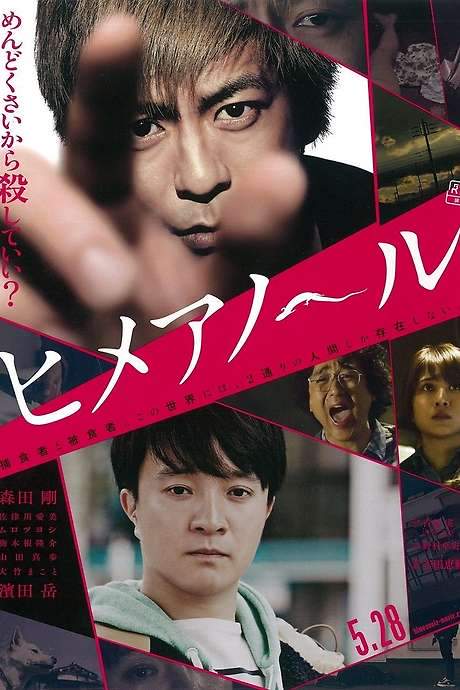
Himeanole (2016) movie poster

Timeline

Himeanole (2016) Timeline Explained – Every Event in Order

Release, runtime and language
2016 · 99 mins · Japanese
Loading streaming availability…
Directed by
Keisuke Yoshida
Starring
Gaku Hamada, Maho Yamada, Takuji Suzuki, Aimi Satsukawa, Go Morita, Ryusuke Komakine

An ordinary man plays matchmaker to his friend only to realize the girl being pursued is being stalked.

On this page (5)
  1. 1 Where to watch
  2. 2 Events in order (14)
  3. 3 Timeline questions answered
  4. 4 Movie threads
  5. 5 Every angle
Loading streaming availability…

14 events in order · contains spoilers

Himeanole Timeline: Events in Chronological Order

Every key event of Himeanole (2016) in order, scene by scene, with when and where it takes place. Use it to untangle flashbacks, time jumps and parallel storylines, to refresh your memory before the sequel or to find the exact scene you are thinking of.

  1. Ando Meets Okada

    Ando, a worker at a cleaning company, is assigned to mentor the clumsy newcomer, Okada. Despite forgetting his name and inadvertently calling him 'Okamura', the two slowly begin to form a friendship over time.

  2. Okada's Confession

    During their conversations, Okada shares his dissatisfaction with life, highlighting his lack of hobbies, a girlfriend, and a sense of purpose. Ando comforts him, expressing that dissatisfaction can be a driving force in life, while he himself chooses to live each day for love.

  3. Café Encounter

    Okada joins Ando at a cafe under the false pretense of introducing him to his girlfriend. When they arrive, it becomes clear that Okada's crush is on Yuka, the waitress, and Ando feels a mix of protectiveness and competition as he notices another man proactively engaging with her.

    Where
    Café
  4. Confronting Morita

    Ando urges Okada to be cautious of Morita, a high school classmate who seems to be showing interest in Yuka. Okada ends up talking to Morita, who denies knowing her and even gives Okada his phone number, leaving Ando skeptical of Morita's intentions.

  5. Yuka's Fears

    Okada decides to wait for Yuka after her shift to talk. She confides in him about her fears of being stalked, revealing unnerving experiences such as receiving harassing calls and missing mail. This deepens Okada's resolve to ensure her safety.

    When
    Evening
    Where
    Outside the café
  6. Daily Vigil

    The following day, Ando suggests they visit the café daily to keep an eye on Yuka's well-being. Okada shares their numbers with her, while Ando begins to rant about wanting to take Yuka on a date, signaling his burgeoning feelings.

  7. Morita's Dark Deal

    Meanwhile, Morita, a heavy smoker and pachinko player, demands $5,000 from Wagusa over the phone. Wagusa, feeling trapped, meets with his girlfriend Kumiko to scheme a plan to steal the money from their workplace.

  8. Revenge Motives

    Wagusa reveals his tormentor history with Morita, and one dark night before graduation, Morita confronted Wagusa, leading to a brutal act where Wagusa kills Morita as revenge for their high school bullying. This incident marks a turning point for Wagusa, who becomes Morita's financial puppet.

  9. Double Date Turns Awkward

    During an awkward double date with Okada, Ando, Yuka, and Ai, Ai bluntly tells Ando that he has no chance with Yuka, prompting Ando to encourage Okada to understand Yuka's feelings. Okada, confused and nervous, seeks Yuka out the next day.

  10. Unexpected Confession

    Okada finally approaches Yuka, only to discover that she likes him instead of Ando. Confused and shocked, Okada looks for hidden cameras, not believing that such a beautiful girl could genuinely like him, while Ando listens from the shadows, overwhelmed by emotion.

  11. Private Meeting

    After Ando's week-long absence from work, Okada and Yuka meet privately and discuss their feelings. Yuka persuades Okada to date her, unveiling a confident side that leads to intimate moments, breaking the ice of their initial awkwardness.

  12. Morita's Obsessed Vigil

    As Okada and Yuka's relationship develops, Morita lurks outside Yuka's house, obsessively watching them. Driven by jealousy and a need for vengeance, this obsession leads him to plan a malicious deed against Okada.

    Where
    Outside Yuka's house
  13. A Life in Danger

    Morita makes a call to Wagusa, begging for assistance to kill Okada as he feels threatened by his relationship with Yuka. Meanwhile, Kumiko persuades Wagusa to reconsider and target Morita instead, further complicating the dangerous web entangling them.

  14. Escalation of Violence

    The situation spirals out of control as Morita's obsession leads to disastrous consequences, marking a string of violence that endangers the lives of Okada and Yuka. Their once innocent relationship is threatened by the chaotic fallout from Morita's actions.

Last updated: September 20, 2026 at 15:55

Was this helpful?

Timeline questions answered

Himeanole Timeline Explained: Your Questions Answered

When does it happen, and why in that order? The questions people ask about the chronology of Himeanole (2016): time jumps, flashbacks, cause and effect between scenes and the correct order of events, each answered with spoilers.

Q1

Why does Morita deny knowing Yuka at the café?

Morita denies recognizing Yuka because he has secretly been stalking her, and admitting familiarity would expose his obsessive behavior. When Ando and Okada notice him watching her from outside the café, the denial becomes a deliberate attempt to maintain a casual facade while hiding his fixation. This lie is a key early sign that Morita is the source of the harassing calls and missing mail Yuka has been experiencing.

Foreshadowing: Ando's immediate suspicion toward 'the blond dude' and Morita's refusal to acknowledge Yuka together hint at his hidden obsession long before the stalking is confirmed.

  • morita
  • yuka
  • denial
  • stalking
  • café
  • lies
Q2

Why does Morita want to kill Okada?

Morita's murderous intent is driven entirely by obsessive jealousy over Yuka. After stalking her for some time, he watches her grow emotionally and physically close to Okada, which he interprets as a threat to his delusional possession of her. His unresolved trauma and broken psychology push him toward elimination rather than acceptance, prompting him to call Wagusa for help carrying out the attack.

Foreshadowing: Morita lurking outside Yuka's house as their intimacy develops signals that his obsession has already crossed from observation into violence.

  • morita
  • okada
  • jealousy
  • murder plot
  • obsession
  • yuka
Q3

Why does Okada dismiss Yuka's confession as a joke?

Okada's disbelief comes directly from the deep self-loathing he confesses to Ando earlier in Himeanole. Having spent his adult life feeling aimless, friendless, and unremarkable, he cannot accept that a woman like Yuka would genuinely choose him. He even scans the area for hidden cameras, convinced the moment must be staged, which makes the confession the emotional peak of his character arc.

Foreshadowing: Okada's earlier conversation with Ando about lacking hobbies, a girlfriend, and direction establishes the low self-worth that fuels his reaction.

  • okada
  • yuka
  • confession
  • self-loathing
  • insecurity
  • low self-esteem
Q4

How does Morita transform from a bullied youth into an extortionist?

Morita's transformation in Himeanole reflects the cyclical nature of unresolved trauma. Shaped by humiliation in his youth, he carries those patterns into adulthood by exercising the same kind of dominance over people like Wagusa, whom he once tormented in high school. His pachinko gambling, smoking, and escalating demands for money reveal a man whose only way of relating to others is through control and fear.

Foreshadowing: Wagusa's confession about being tormented before graduation explains the leverage Morita still holds years later.

  • morita
  • transformation
  • bullying
  • trauma
  • extortion
  • cycle of violence
Q5

What is the connection between Wagusa and Morita?

Wagusa and Morita share a high school history rooted in bullying, with Morita as the tormentor and Wagusa as the victim. That unresolved past gives Morita psychological leverage, allowing him to extort money from Wagusa as an adult. Wagusa remains trapped in the role of Morita's financial puppet, unable to escape the shadow of their shared history.

Foreshadowing: Kumiko's digging into the past reveals the bullying connection that explains why Wagusa feels cornered by Morita's demands.

  • wagusa
  • morita
  • bullying
  • high school
  • extortion
  • history
Q6

Why does Ando react so dramatically when he overhears Yuka's confession?

Ando had quietly developed his own feelings for Yuka, openly fantasizing about taking her on a date during their daily café visits. Hearing her confess to Okada destroys his unspoken hopes in an instant. His over-the-top reaction is the collapse of his romantic aspirations colliding with his loyalty to Okada, the friend he has been mentoring through his self-loathing.

Foreshadowing: Ando's earlier daydream about dating Yuka, despite knowing Okada's interest, sets up this inevitable emotional collision.

  • ando
  • yuka
  • okada
  • heartbreak
  • confession
  • unrequited love
Q7

Why does Kumiko convince Wagusa to target Morita instead?

Kumiko recognizes that Morita's pattern of bullying and extortion makes him a permanent danger to Wagusa and to herself. Rather than let Wagusa remain trapped as Morita's financial puppet, she pushes him to flip the dynamic and strike first. Her decision escalates the violence but shifts the power away from Morita, which is the only move she sees as survival.

Foreshadowing: Kumiko's earlier involvement in planning the workplace theft shows she is willing to take dangerous risks to escape Morita's reach.

  • kumiko
  • wagusa
  • morita
  • scheme
  • betrayal
  • self-defense
Q8

Why does Yuka confide her stalking fears to Okada?

Yuka opens up to Okada because he patiently waits for her after her shift and shows consistent concern for her safety. That quiet reliability builds a trust she does not yet feel with anyone else, allowing her to share the harassing calls and missing mail that have been tormenting her. Her vulnerability also explains why Ando insists they visit the café daily, since the routine is partly designed to keep her protected.

Foreshadowing: Ando's instinct to monitor the café every day implies Yuka's danger is more real than Okada initially understands.

  • yuka
  • stalking
  • fear
  • trust
  • okada
  • harassment
Q9

Why does Ai bluntly tell Ando he has no chance with Yuka?

Ai acts as a brutally honest outside voice during the double date, forcing Ando to face the reality that Yuka's heart is not available to him. Her blunt rejection pushes Ando to redirect his energy toward helping Okada, which directly leads to Okada approaching Yuka and hearing her confession the next day. Without Ai's intervention, the romantic turning point in Himeanole might never have happened.

Foreshadowing: Ai's warning about Yuka being in love with another man plants the idea that Ando's chances were never realistic.

  • ai
  • ando
  • yuka
  • double date
  • rejection
  • honesty
Q10

What does Ando mean by 'I live each day for love'?

When Okada confesses his aimlessness and dissatisfaction, Ando replies that he himself lives each day for love, suggesting that romantic pursuit gives his life direction. The line contrasts Okada's emptiness with Ando's chosen purpose, but it also foreshadows Ando's quiet feelings for Yuka that later surface during the double date. It is both a personal philosophy and a setup for his eventual heartbreak.

Foreshadowing: Ando's romantic self-image here contrasts sharply with his inability to act on his own feelings for Yuka later in the story.

  • ando
  • love
  • philosophy
  • meaning
  • purpose
  • romance
Q11

How does Ando's week-long absence push Okada and Yuka together?

With Ando suddenly missing from work for an entire week, Okada loses his mentor, sounding board, and emotional anchor. Left to navigate his own feelings, he meets Yuka privately and the two bond without Ando's mediating presence. That deepening intimacy, however, also draws Morita's obsessive gaze, accelerating the danger surrounding the couple in the final stretch of Himeanole.

Foreshadowing: Morita had already been watching Yuka, so any moment of closeness between her and Okada was bound to provoke him.

  • ando
  • absence
  • okada
  • yuka
  • relationship
  • escalation
Q12

Why does Yuka reveal a bold, sexual side during her private meeting with Okada?

Yuka's boldness emerges because her confession has finally broken through the shyness she showed at the café. With her feelings out in the open and Okada receptive, she feels safe enough to drop her guarded persona and pursue the relationship actively. This intimate turn is what makes their romance feel real, but it is also the trigger that pushes Morita's jealousy into murderous territory.

Foreshadowing: Yuka's growing boldness during their private meetings contrasts with the nervous girl at the café, signaling that Morita's stalking will not stay passive for long.

  • yuka
  • okada
  • intimacy
  • confidence
  • relationship
  • transformation

Movie threads

More Movies Like Himeanole, by Mood & Story

Curated lists built around what makes Himeanole tick: the same mood, the same kind of story or the same emotional payoff. Each list explains why these movies belong together.

Stalking, obsession and moral ambiguity like in Himeanole

Ordinary lives unravel as obsession, stalking, and moral rot take hold. Movies like Himeanole that explore obsession, stalking, and moral decay in tense dramas. These unsettling stories show how workplace friendships and fragile romances can be torn apart by jealousy, bullying, and extortion, leaving characters trapped in dangerous power games with no clean resolution. If you liked Himeanole, you'll find more gripping psychological dramas with heavy emotional weight and disturbing themes here.

  • obsession
  • stalking
  • unsettling
  • morally ambiguous
  • tense
  • brooding
  • Tone: dark, tense, morally ambiguous
  • Pacing: variable, slow burn to confrontation
Why these movies?

The story pattern: Movies in this thread follow a recognizable descent: a seemingly ordinary character or relationship becomes contaminated by obsession, stalking, or unresolved trauma. The narrative typically builds around morally ambiguous figures, often a bully who becomes a victim who becomes a perpetrator, or a loyal friend whose devotion curdles into something darker. Workplace dynamics, fragile romances, or chance encounters serve as the entry point into an escalating web of harassment, extortion, or threat. Resolution tends to be bleak, ambiguous, or violently cathartic, with no easy redemption for anyone involved.

Why they belong together: These films share a preoccupation with the slow poisoning of ordinary life by obsession and moral compromise. They blend workplace intimacy or fragile friendship with creeping menace, prioritize psychological tension over action, and leave viewers unsettled by the way normal social bonds curdle into threat. Heavy emotional weight, disturbing content warnings around stalking and implied violence, and ambiguous or tragic endings are common threads that tie them together.


Dark workplace slow burn dramas like in Himeanole

Office friendships and quiet routines that quietly curdle into something dangerous. If you liked Himeanole, you'll love these dark workplace slow burn dramas. Movies like Himeanole begin with awkward coworker friendships and gentle character building before sliding into tense, ominous territory. The pacing shifts from comedic or mundane moments to high-stakes confrontation, while fragile relationships buckle under jealousy, bullying, or stalking. Expect brooding atmospheres, variable pacing, and emotional weight that lingers.

  • workplace
  • slow burn
  • brooding
  • awkward
  • ominous
  • fragile
  • Tone: ominous, brooding, dark
  • Pacing: variable, slow build to crisis
Why these movies?

The story pattern: Stories in this thread typically open with the small rituals of work life: greetings between coworkers, inside jokes, tentative romantic interest among colleagues, and the gentle awkwardness of people trying to connect. As the plot progresses, something in this familiar texture begins to curdle. A stranger lingers near the office, a colleague becomes fixated, a fragile relationship attracts a predator. The workplace, rather than offering safety, becomes the trap. By the final act, the social safety net has dissolved and the characters face a confrontation that feels both inevitable and shocking.

Why they belong together: These movies share a defining tonal contrast: an opening act of awkward, sometimes gently comedic workplace bonding that gradually darkens into high-stakes threat. They use ordinary social settings as a stage for extraordinary menace, blending character-driven pacing with sudden shifts toward confrontation. Heavy atmosphere, dark subject matter, emotionally complicated relationships, and the slow revelation that danger was always hiding inside the routine tie them together.

Every angle

Himeanole (2016) Explained: Plot, Timeline & Characters

Everything about Himeanole in one place: what happens in the plot summary, the timeline in chronological order, the characters and meaning and a spoiler-free summary. What's After the Movie adds the cast, box office and post-credit scenes.

Coming soon on iOS and Android

The Plot Explained Movie Summary App

Plot summaries, endings explained and timelines on your phone. Catch up on any movie in minutes, save your favorites and never miss a twist again.

Be the first to know when we launch. Your email stays private, always.

Learn more about the app