





Plot Explained Spoilers guaranteed!
Plot Explained

Browse by genre

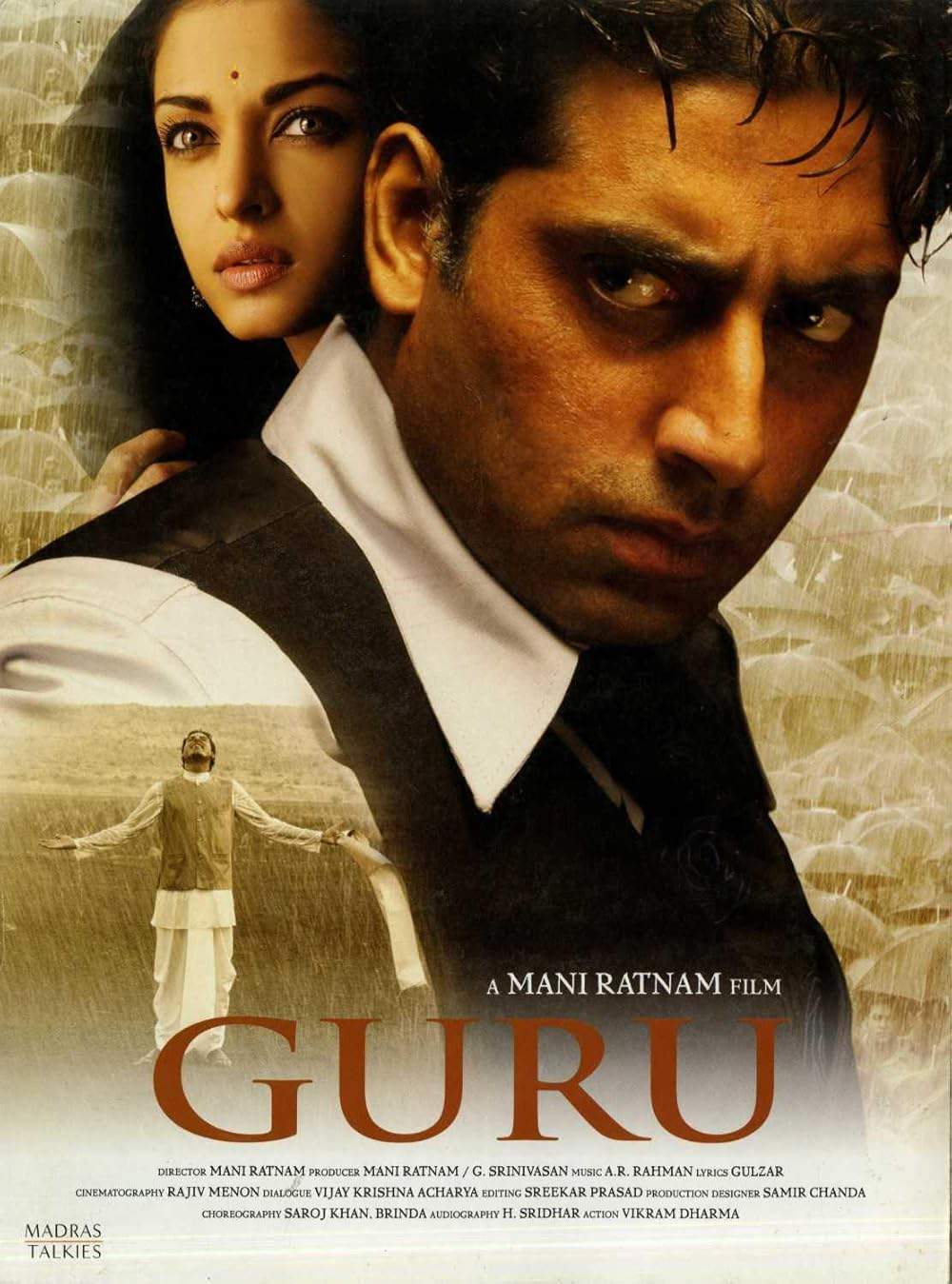
Guru (2007) movie poster

Timeline

Guru (2007) Timeline Explained – Every Event in Order

Release, runtime and language
2007 · 166 min · Telugu
JustWatch #17,886 7
Directed by
Mani Ratnam

A veteran boxing coach nearing retirement finds unexpected motivation when he begins training a driven young woman who works as a fisherwoman. As they work together, their bond deepens while they overcome personal challenges and pursue success both inside and outside the boxing ring.

On this page (6)
  1. 1 Where to watch
  2. 2 Events in order (15)
  3. 3 Timeline questions answered
  4. 4 Movie threads
  5. 5 Movies like Guru
  6. 6 Every angle

Where to watch

Where to Watch Guru (2007)

Where can you watch Guru? Stream, rent or buy it in the US, including on Netflix, Netflix Standard and Apple TV Store: current JustWatch availability with up-to-date prices.

Streaming availability powered by JustWatch

15 events in order · contains spoilers

Guru Timeline: Events in Chronological Order

Every key event of Guru (2007) in order, scene by scene, with when and where it takes place. Use it to untangle flashbacks, time jumps and parallel storylines, to refresh your memory before the sequel or to find the exact scene you are thinking of.

  1. Introduction to Guru

    In 1951, we meet Gurukant Desai in the quaint village of Idar, Gujarat. His aspirations for success clash with the pessimism of his father, Kantilal, who discourages him from dreaming big.

    When
    1951
    Where
    Idar, Gujarat
  2. Failing Exams

    After failing his school exams, Guru feels a strong pressure to find employment and begins to contemplate a significant change in his life. This moment marks his first step toward redefining his future.

  3. Journey to Turkey

    Guru embarks on a transformative journey to Turkey, where he enters the spice trade. Eventually, he lands a job at Burmah Shell, marking his first foray into the working world.

    Where
    Turkey
  4. Return to Idar

    Upon returning to Idar, Guru is determined to start his own business. He seeks initial funding from his friend Jignesh, but faces an obstacle when Jignesh's father refuses to invest.

    Where
    Idar, Gujarat
  5. Strategic Marriage

    To secure the necessary funding for his business, Guru marries Sujata, strategically using her dowry as seed money. This move sets the stage for their relocation to Bombay to pursue their dreams.

    Where
    Idar, Gujarat
  6. Entering the Cloth Business

    In Bombay, Guru aims to dive into the cloth trading business. However, he soon learns that entry barriers exist, controlled by Arzan Contractor, head of the traders' association.

    Where
    Bombay
  7. Meeting Arzan Contractor

    Guru approaches Arzan Contractor with hopes of securing entry into the trading market. However, his application is rejected, prompting feelings of frustration and determination to find a way in.

    Where
    Bombay
  8. Revealing Arzan's Monopoly

    With help from Manik Dasgupta, a newspaper publisher, Guru exposes Arzan's monopolistic control through a revealing article. This action leads to Arzan's resignation from the traders' association.

    Where
    Bombay
  9. Rise of Shakti Corporation

    Guru experiences rapid success by trading polyester, filling a gap in the market dominated by cotton. His determination and strategic moves help him establish the Shakti Corporation.

  10. Conflict with Jignesh

    As Shakti Corporation flourishes, tensions arise between Guru and Jignesh over personal and business decisions, particularly regarding Sujata. This conflict tests their friendship and partnership.

  11. Illness of Meenu

    While Guru's business grows, his friend Manik’s granddaughter, Meenu, suffers from multiple sclerosis, showcasing the personal struggles that parallel Guru’s professional challenges.

  12. Government Scrutiny

    As Guru's empire expands, so do his illegal dealings, leading to scrutiny from authorities. An exposé on his corrupt practices puts immense pressure on him and his company.

  13. Personal Crisis

    The publication of Shyam Saxena's exposé triggers a series of personal crises, including an attempted suicide by Guru's mentor Ghanshyam and the birth of Guru's twins amidst constant stress.

  14. Government Inquiry

    On October 16, 1980, Guru faces a government inquiry regarding his dealings. In a desperate moment, he defends his actions, arguing that he was forced into criminality by a corrupt system.

    When
    October 16, 1980
  15. Resolution and Legacy

    The government drops most charges against Guru, allowing him to maintain his position. He addresses shareholders, inspiring them to chase their dreams and defy limitations, cementing his legacy.

Last updated: November 03, 2024 at 21:15

Was this helpful?

Timeline questions answered

Guru Timeline Explained: Your Questions Answered

When does it happen, and why in that order? The questions people ask about the chronology of Guru (2007): time jumps, flashbacks, cause and effect between scenes and the correct order of events, each answered with spoilers.

Q1

Why did Gurukant marry Sujata?

Guru married Sujata primarily for strategic financial reasons. After failing to secure the 15,000 rupees he needed from his friend Jignesh (whose father refused to invest), Guru realized he needed another source of capital. Marrying Sujata gave him access to her dowry, which provided the seed money necessary to start his business in Bombay.

Foreshadowing: Earlier, Guru's father warned him that dreams never come true, suggesting Guru would take drastic measures to prove him wrong.

  • dowry
  • marriage
  • Sujata
  • Bombay
  • business funding
Q2

How did Guru break into the traders' association?

After Arzan Contractor rejected his trading permit application, Guru connected with Manik Dasgupta, a newspaper publisher who lived near Arzan. With support from Mathura Das, Manik published an exposing article that revealed Arzan's monopolistic control over the traders' union. This public exposure forced Arzan to resign, allowing Guru to secure his permit and open his cloth trading office.

Foreshadowing: Guru's earlier rejection by Arzan set up the need for an alternative strategy to enter the market.

  • Arzan Contractor
  • traders association
  • Manik Dasgupta
  • monopoly
  • newspaper
Q3

Why did Jignesh betray Guru?

Jignesh felt increasingly excluded from the business as Shakti Corporation grew. His resentment intensified when Guru planned an IPO without including him in the decision-making. Additionally, Jignesh had long resented that Guru married Sujata primarily for her dowry, and he used this knowledge to criticize Guru's intentions, creating a final break in their partnership.

Foreshadowing: The trio initially moved to Bombay together, Guru, Sujata, and Jignesh, but the seeds of resentment were planted early when Guru strategically married Sujata for money.

  • Jignesh
  • betrayal
  • Shakti Corporation
  • IPO
  • friendship
Q4

What led Ghanshyam Das to attempt suicide?

Ghanshyam Das, Guru's mentor who had encouraged him to pursue his dreams, was devastated when reporter Shyam Saxena published an exposé revealing Guru's illegal market manipulation and duty evasion. The exposure of corruption by the man he had mentored directly caused Ghanshyam's despair and suicide attempt.

Foreshadowing: Ghanshyam had followed Guru from Turkey to India, believing in his potential, making his later disillusionment more impactful.

  • Ghanshyam Das
  • suicide
  • Shyam Saxena
  • exposé
  • corruption
Q5

How did Guru survive the 1980 government inquiry?

During the October 16, 1980 inquiry, Guru delivered a passionate defense. He presented himself as a simple villager whose ambitions were crushed by a corrupt system that forced him into dishonest practices to succeed. This narrative resonated with the authorities, leading the government to drop most charges against him, leaving only a fine.

Foreshadowing: Guru's earlier confrontation with IAS officer KR Menon, where he threatened to expose Menon's own vulnerabilities, established his willingness to challenge corrupt officials.

  • government inquiry
  • 1980
  • court
  • charges
  • defense
Q6

Why did Guru turn to illegal business practices?

Guru claimed he was forced into corruption by a systemic reality. After building his empire through legitimate means, he faced constant obstacles from Arzan's monopoly, corrupt officials like KR Menon, and competitive pressures. To survive and grow, he began manipulating markets and evading duties, believing it was the only way to compete in a dishonest system.

Foreshadowing: His father's original pessimism about dreams coming true in a corrupt world planted the idea that success might require compromising ethics.

  • corruption
  • smuggling
  • market manipulation
  • system
  • ethics
Q7

What happened to Meenu's multiple sclerosis?

Meenu, Manik Dasgupta's granddaughter and Guru's friend, suffered from multiple sclerosis throughout the film. Her illness progressed as Guru's empire grew, representing the personal costs and emotional weight that coexisted with his professional success. She did not recover, the illness remained a constant personal tragedy in Guru's life.

Foreshadowing: Manik became a father figure to Guru, and Meenu's illness created emotional stakes beyond business achievements.

  • Meenu
  • multiple sclerosis
  • Manik Dasgupta
  • illness
  • health
Q8

How did Shakti Corporation become successful so quickly?

Guru found a market gap by trading in polyester at a time when the textile market was dominated by cotton. This strategic positioning, combined with his bold confrontation of corrupt officials like KR Menon (threatening to expose all raw materials if enforcement continued), allowed Shakti Corporation to grow rapidly into a massive empire.

Foreshadowing: Guru's early job at Burmah Shell gave him business experience, while his confrontation style was established early when he faced his father's pessimism.

  • Shakti Corporation
  • polyester
  • cotton
  • business growth
  • monopoly
Q9

What caused Guru's stroke?

Guru suffered a debilitating stroke as a result of overwhelming professional and personal stress. The combination of Shyam Saxena's exposé revealing his illegal dealings, his mentor Ghanshyam's suicide attempt, stakeholders turning against him labeling him a smuggler, and his wife Sujata giving birth to twins all at once pushed his body beyond its limits.

Foreshadowing: The mounting pressure from multiple fronts, legal, financial, and personal, had been building throughout the film's second half.

  • stroke
  • health
  • stress
  • twins
  • exposé
Q10

Who was Arzan Contractor and why was he important?

Arzan Contractor was the president of Bombay's cloth traders' association who controlled all access to the trading market. He initially blocked Guru's entry by rejecting his permit application. After Guru exposed his monopoly through Manik's newspaper, Arzan resigned, but his father later attempted to purchase Shakti Corporation, revealing the continuing competitive threat from the Contractor family.

Foreshadowing: Arzan's early rejection established the barrier to entry that Guru had to overcome, setting the entire conflict in motion.

  • Arzan Contractor
  • traders association
  • monopoly
  • cloth business
Q11

Why did Sujata separate from Guru?

Sujata left Guru during the period when he was planning the IPO for Shakti Corporation. The separation occurred after Jignesh criticized Guru's intentions toward Sujata, suggesting he only married her for her dowry. This personal conflict, combined with business tensions, led to their temporary separation before Guru eventually won her back.

Foreshadowing: The marriage had always been strategically motivated, creating an underlying vulnerability in their relationship.

  • Sujata
  • separation
  • marriage
  • dowry
  • reconciliation
Q12

How did Nanaji respond to Guru's illegal activities?

Nanaji (Arzan's father) learned about Guru's corrupt methods, market manipulation and duty evasion. Rather than supporting his son Arzan in the fight, Nanaji attempted to buy Shakti Corporation outright. When Guru refused and exposed the Contractor family's corruption in newspapers, Nanaji's approach failed, but the exposure also drew attention to Guru's own illegal practices.

Foreshadowing: Nanaji's attempt to purchase the company represented the ultimate validation of Guru's success, but it came with strings attached.

  • Nanaji
  • Contractor family
  • corruption
  • purchase
  • expose

Movie threads

More Movies Like Guru, by Mood & Story

Curated lists built around what makes Guru tick: the same mood, the same kind of story or the same emotional payoff. Each list explains why these movies belong together.

Epic stories of ambition and moral compromise like Guru

Ambitious journeys where success comes at a deep ethical and personal cost. If you liked the tense, high-stakes journey of Guru, you'll find similar narratives here. This collection features movies about ambitious figures whose relentless drive for success leads to ethical dilemmas and personal sacrifices. Explore other dramatic epics where building a legacy comes at a heavy price.

  • ambitious
  • tense
  • dramatic
  • morally complex
  • driven
  • triumphant
  • Tone: tense, dramatic
  • Pacing: steady, epic
Why these movies?

The story pattern: The narrative typically follows a linear or epic-scale progression, charting a protagonist's ascent from humble beginnings to a position of immense power. Central conflicts arise from the ethical corners they must cut, the rivals they must crush, and the personal relationships they strain or break in their single-minded pursuit of a goal.

Why they belong together: Movies in this thread are united by their focus on the complicated relationship between ambition and morality. They share a heavy emotional weight, a tense tone from constant high-stakes conflict, and a bittersweet or critical perspective on the nature of success.

Intense dramas of personal downfall like Guru

Intense character studies where external success masks a deep internal unraveling. For viewers who appreciated the heavy emotional toll and dramatic tension in Guru, this section highlights movies with similar themes. Discover stories where professional triumphs are intricately woven with deep personal struggles, betrayals, and physical or emotional collapse, creating a powerful and reflective viewing experience.

  • dramatic
  • melancholic
  • anxious
  • reflective
  • intense
  • driven
  • Tone: tense, melancholic
  • Pacing: steady, character-driven
Why these movies?

The story pattern: These narratives often use a steady, methodical pace to juxtapose a character's public ascent with their private decline. Key plot points involve betrayals by close associates, the strain on personal relationships, and a culminating health crisis or moral reckoning that forces a re-evaluation of their entire life's work.

Why they belong together: These films are grouped by their shared atmosphere of high drama and intense emotional weight. They feature a tense tone driven by internal and external conflict, a steady pacing that allows for deep character exploration, and a focus on the devastating cost of ambition on the human spirit.

If you liked this

Movies Like Guru

Similar movies to Guru: the same genre, themes or kind of story. Each one comes with its own plot summary, timeline and ending explained.

Browse all movie summaries

Every angle

Guru (2007) Explained: Plot, Timeline & Characters

Everything about Guru in one place: what happens in the plot summary, the timeline in chronological order, the characters and meaning and a spoiler-free summary. What's After the Movie adds the cast, box office and post-credit scenes.

Coming soon on iOS and Android

The Plot Explained Movie Summary App

Plot summaries, endings explained and timelines on your phone. Catch up on any movie in minutes, save your favorites and never miss a twist again.

Be the first to know when we launch. Your email stays private, always.

Learn more about the app