Plot Explained Spoilers guaranteed!
Plot Explained

Browse by genre

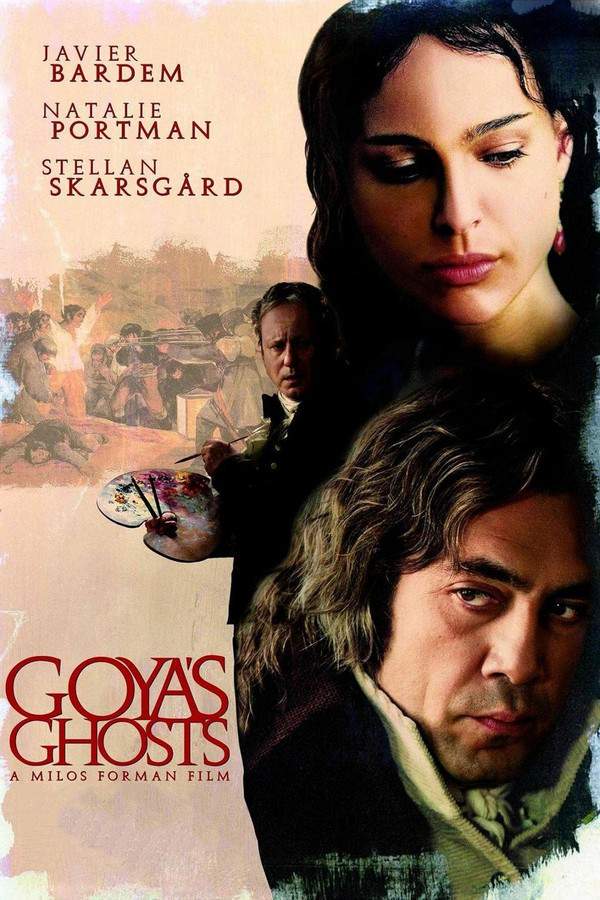
Goya's Ghosts (2007) movie poster

Timeline

Goya's Ghosts (2007) Timeline Explained – Every Event in Order

Release, runtime and language
2007 · 113 min · English
Loading streaming availability…
Directed by
Milos Forman
Starring
Javier Bardem, Natalie Portman, Stellan Skarsgård

During Napoleon's invasion of 18th-century Spain, the life of artist Francisco Goya is profoundly affected by the conflict and its impact on the nation. As he documents the beauty and violence surrounding him, Goya becomes entangled in a complex mystery when his muse, Ines, is wrongly accused of heresy. A shadowy and enigmatic Brother Lorenzo leads the accusations, drawing Goya into a dangerous web of intrigue and forcing him to confront the dark side of human nature.

On this page (5)
  1. 1 Where to watch
  2. 2 Events in order (15)
  3. 3 Timeline questions answered
  4. 4 Movie threads
  5. 5 Every angle
Loading streaming availability…

15 events in order · contains spoilers

Goya's Ghosts Timeline: Events in Chronological Order

Every key event of Goya's Ghosts (2007) in order, scene by scene, with when and where it takes place. Use it to untangle flashbacks, time jumps and parallel storylines, to refresh your memory before the sequel or to find the exact scene you are thinking of.

  1. The Turbulent Year of 1792

    Spain is deeply affected by the upheaval caused by the French Revolution, leading to widespread unrest. The political turmoil influences many aspects of society, including art, as Francisco Goya, the celebrated painter, finds himself caught in the crossfire.

    When
    1792
    Where
    Spain
  2. Goya Becomes Official Court Painter

    Goya is designated the Official Court Painter and is tasked with capturing the likenesses of elite Spanish figures. His art, however, becomes contentious as it incites the ire of the Spanish Inquisition due to its provocative nature.

    Where
    Royal Court, Spain
  3. Brother Lorenzo's Intervention

    Brother Lorenzo Casamares intervenes to defend Goya against the criticism from the Spanish Inquisition. He suggests that Goya's art merely reflects the darker sides of humanity, arguing for a more lenient stance towards the artist.

    Where
    Spain
  4. Inés's Arrest

    Shortly after Lorenzo's portrait sitting with Goya, Inés, the daughter of merchant Tomás Bilbatúa, is arrested by Holy Office spies for allegedly 'Judaizing.' Her situation quickly deteriorates as she is subjected to torture until she reluctantly confesses.

    Where
    Spain
  5. Goya is Approached for Help

    Tomás Bilbatúa, desperate to free his daughter Inés from imprisonment, turns to Goya for assistance. This marks a turning point, as Goya's role transitions from a mere artist to a pivotal figure in the fight against the oppressive Inquisition.

    Where
    Spain
  6. Dinner Conflict

    During a dinner hosted by the Bilbatúa family, a heated argument erupts over the use of torture by the Inquisition. Lorenzo defends these brutal practices, while Goya and Bilbatúa contend that coerced confessions are not indicative of guilt, underscoring the ethical divide between them.

    Where
    Bilbatúa's Residence, Spain
  7. Lorenzo's Torment

    In a twisted act of irony, Tomás Bilbatúa turns Lorenzo's own endorsement of torture against him by subjecting him to the same brutal treatment he justifies. This ordeal forces Lorenzo to make ridiculous confessions, igniting a new understanding of his own moral contradictions.

    Where
    Inquisition Torture Chambers, Spain
  8. Lorenzo's Unspeakable Act

    In a horrific display of power, Lorenzo visits Inés in her cell under the guise of prayer but instead commits rape. This act further complicates the web of exploitation and manipulation surrounding their characters, deeply impacting Inés's fate.

    Where
    Dungeon Cell, Spain
  9. The Fall of the Inquisition

    As fifteen years pass, Goya has grown deaf and reaches the height of his artistic prowess. The French invasion leads to the disbanding of the Inquisition, allowing many former prisoners, including Inés, to finally regain their freedom.

    When
    Fifteen years later
    Where
    Spain
  10. Inés's Suffering

    Inés, still trapped in her traumatic experiences, struggles with severe mental decline in the dungeon. After giving birth, she is devastated to find her family dead, driving her to seek Goya's help in locating her missing child.

    Where
    Dungeon, Spain
  11. Lorenzo's Deceit

    To hide his shame, Lorenzo commits Inés to an asylum, blocking any chance of reconciliation between her and their child. This act of betrayal reveals Lorenzo’s willingness to sacrifice others for his own protection, encapsulating his moral decline.

    Where
    Asylum, Spain
  12. Goya's Compassion

    Goya encounters a young prostitute named Alicia who resembles Inés and feels compelled to help reunite Inés with her daughter. His compassion pushes him into a tumultuous situation where he risks confronting Lorenzo’s authority.

    Where
    Park, Spain
  13. The Raid

    Lorenzo orchestrates a raid on a tavern where Goya is striving to help Inés escape. The chaos leads to the capture of several prostitutes, revealing the stark danger posed by Lorenzo’s position and the reckless brutality of the times.

    Where
    Tavern, Spain
  14. Lorenzo's Downfall

    As the tides of war shift back against the French, Lorenzo is captured and brought to trial. He faces execution, with the former Inquisitor-General ironically urging him to repent, marking a glaring role reversal and poetic justice.

    Where
    Spain
  15. Final Moments

    On the gallows, Lorenzo faces his end while Inés, now with a child she believes to be theirs, appears amidst the crowd. His defiance resonates with her anguished revelation, finalizing a cycle of tragedy and lost hopes as Goya watches, heartbroken.

    Where
    Gallows, Spain

Last updated: November 15, 2024 at 20:31

Was this helpful?

Timeline questions answered

Goya's Ghosts Timeline Explained: Your Questions Answered

When does it happen, and why in that order? The questions people ask about the chronology of Goya's Ghosts (2007): time jumps, flashbacks, cause and effect between scenes and the correct order of events, each answered with spoilers.

Q1

Why was Ines arrested by the Spanish Inquisition?

Ines was arrested for allegedly "Judaizing" - a charge based on her refusal to eat pork, which was observed by Holy Office spies trained by Brother Lorenzo. This accusation was enough to warrant her detention and subsequent torture until she reluctantly confessed to the fabricated crime.

  • inquisition
  • heresy
  • judaizing
  • ines arrest
  • torture
Q2

Why did Brother Lorenzo defend Goya's controversial art?

Lorenzo defended Goya's work by arguing that the paintings merely reflect the darker aspects of humanity rather than promoting malicious intent. This defense served his larger agenda - by appearing compassionate toward Goya, he gained the artist's trust and access to his circle, which ultimately allowed Lorenzo to pursue his own political ambitions within the Inquisition.

Foreshadowing: Lorenzo's defense of Goya precedes his request to paint his portrait, giving him opportunity to observe Ines.

  • goya
  • lorenzo
  • inquisition
  • art
  • defense
Q3

Why did Brother Lorenzo become a French revolutionary after the Inquisition fell?

When the French invaded Spain and abolished the Inquisition, Lorenzo fled to France and transformed into a fervent supporter of the French Revolution, prosecuting his former comrades. This dramatic ideological shift mirrors the historical figure Juan Antonio Llorente, who similarly turned against the Inquisition after its collapse, trading one form of religious authority for another.

  • lorenzo
  • french revolution
  • inquisition
  • ideological shift
  • spain
Q4

What happened to Ines's daughter?

Ines gave birth to a daughter while imprisoned in the dungeon. The child was taken from her at birth and her fate remained unknown throughout the film. Lorenzo, who fathered the child through his rape of Ines, learned from the Inquisitor-General that any child born in captivity would likely have been abandoned. Ines later found her family dead and desperately searched for her missing child.

  • ines daughter
  • child
  • lost child
  • captivity
  • birth
Q5

Why did Lorenzo rape Ines in her dungeon cell?

Lorenzo visited Ines under the pretense of offering spiritual comfort, but he was consumed by lust for her despite his religious position. In a horrific act of exploitation, he used his power over her imprisoned state to assault her. This crime resulted in Ines becoming pregnant with his child, a secret Lorenzo worked to conceal throughout the rest of the film.

Foreshadowing: Lorenzo's internal conflict over his lust for Ines was established during his earlier visits when he offered her comfort while struggling with his desires.

  • lorenzo
  • rape
  • ines
  • dungeon
  • abuse power
Q6

Why did the Inquisitor-General refuse to release Ines even after Bilbatua offered a large donation?

Father Gregorio, the Inquisitor-General, refused to release Ines despite the substantial donation from Bilbatúa because the Church maintained that financial compensation could not override the need for spiritual confession and penance. This refusal highlights the Church's rigid stance and the impossibility of buying freedom from the Inquisition's grip, setting up the tragic trajectory that follows.

  • inquisitor general
  • gregorio
  • donation
  • church
  • release
Q7

Why did Lorenzo orchestrate the raid on the tavern where Goya was helping Ines escape?

Lorenzo ordered the raid to prevent Goya from reuniting Ines with her daughter and to silence the prostitutes who might expose his crimes. Fearing that Ines's reunion with her child would reveal his rape and the child's existence, Lorenzo used his authority to orchestrate the attack, putting the lives of the women at risk and capturing many prostitutes.

Foreshadowing: Lorenzo's earlier decision to commit Ines to an asylum was driven by his need to conceal his shame and the truth about the child.

  • tavern raid
  • lorenzo
  • goya
  • ines
  • prostitutes
  • escape
Q8

Why did Goya feel compelled to help Ines after fifteen years?

Goya, now deaf and at the height of his artistic powers after the French invasion freed the prisoners, encountered Ines who had been released but was mentally deteriorated and searching for her missing daughter. Moved by compassion and their shared history, Goya attempted to reunite her with her child, having encountered Alicia the prostitute who bore a striking resemblance to Ines.

Foreshadowing: Goya's role as Ines's original muse established their connection years earlier, making his sense of responsibility more poignant.

  • goya
  • ines
  • help
  • daughter
  • reunion
  • compassion
Q9

What led to Lorenzo's capture and execution?

As the war turned against the French, Lorenzo was captured while attempting to escape Spain. He faced trial in a stark role reversal - the former Inquisitor-General now urged him to repent. Lorenzo was executed wearing a sanbenito with flames, symbolizing his damnation. His downfall represents the cyclical nature of justice, as the persecutor became the persecuted.

  • lorenzo
  • capture
  • trial
  • execution
  • inquisition
Q10

Why was Ines committed to an asylum?

After giving birth in the dungeon, Ines was mentally devastated to find her family dead and desperately sought her missing child. Lorenzo, fearful that the truth about his rape and the child's parentage would surface, committed her to an asylum to hide his shame and prevent any possibility of reconciliation between Ines and their daughter.

  • ines
  • asylum
  • mental health
  • lrenzo
  • shame
  • concealment
Q11

What happened when the confession document reached King Charles IV?

The ridiculous confession that Bilbatúa forced Lorenzo to make - including claiming he was a monkey - found its way to King Charles IV. The King found it amusing but promised to consider Ines's plight. However, this comedic revelation did not lead to Ines's release, and the King took no meaningful action to intervene with the Inquisition.

  • confession
  • king charles
  • document
  • monkey
  • humor
Q12

What does the ending mean when Ines appears with a child at Lorenzo's execution?

At the gallows, Ines emerges from the crowd carrying what she believes to be her lost daughter - though it's actually a newborn she found during the chaos of the raid, mistaking it for her child. This tragic moment represents the final irony: Lorenzo's child will now be raised by a woman whose mind has been broken by his actions, while the truth remains concealed. Goya watches heartbroken as Ines walks away with the cart carrying Lorenzo's body.

  • ending
  • execution
  • ines
  • child
  • tragic irony
  • resolution

Movie threads

More Movies Like Goya's Ghosts, by Mood & Story

Curated lists built around what makes Goya's Ghosts tick: the same mood, the same kind of story or the same emotional payoff. Each list explains why these movies belong together.

Historical dramas of trauma and injustice like Goya's Ghosts

Movies where history's cruelty breaks individuals, leaving deep emotional scars. If you were moved by the brutal depiction of injustice in Goya's Ghosts, you'll find similar emotional journeys here. These movies explore historical settings where individuals are crushed by oppressive systems, offering a sobering look at the human cost of power and dogma.

  • harrowing
  • somber
  • brutal
  • gritty
  • critical
  • oppressive
  • Tone: dark, harrowing, critical
  • Pacing: steady, methodical
Why these movies?

The story pattern: These stories often follow innocent characters who are victimized by an unjust institution—be it religious, political, or military. The narrative traces the long-term, devastating effects of this trauma on their lives, often spanning years to show the irreversible damage, while also exposing the hypocrisy of the powerful.

Why they belong together: They are grouped together by their unflinching look at historical cruelty, their oppressive and somber mood, and their focus on the heavy emotional toll of injustice on a personal level, rather than a sweeping national scale.


Movies about artists amidst turmoil like Goya's Ghosts

Stories of creators witnessing and documenting society's collapse. For viewers who appreciated the role of Francisco Goya as an observer and participant in a dark historical period. This thread gathers movies about artists whose lives and work are deeply intertwined with the political and social chaos surrounding them.

  • contemplative
  • historical
  • somber
  • gritty
  • moral conflict
  • artistic
  • Tone: somber, dark, contemplative
  • Pacing: steady, character-driven
Why these movies?

The story pattern: The narrative follows an artist whose perspective is shaped by the violence and corruption they witness. Their art becomes a form of testimony or resistance, but their proximity to power often forces them into complicity or direct danger, creating a central conflict between observation and action.

Why they belong together: They share a focus on the artist's unique viewpoint during times of crisis, blending themes of artistic expression with political and historical drama, resulting in a thoughtful yet intense experience that questions the role of art in the face of evil.

Every angle

Goya's Ghosts (2007) Explained: Plot, Timeline & Characters

Everything about Goya's Ghosts in one place: what happens in the plot summary, the timeline in chronological order, the characters and meaning and a spoiler-free summary. What's After the Movie adds the cast, box office and post-credit scenes.

Coming soon on iOS and Android

The Plot Explained Movie Summary App

Plot summaries, endings explained and timelines on your phone. Catch up on any movie in minutes, save your favorites and never miss a twist again.

Be the first to know when we launch. Your email stays private, always.

Learn more about the app