








Plot Explained Spoilers guaranteed!
Plot Explained

Browse by genre

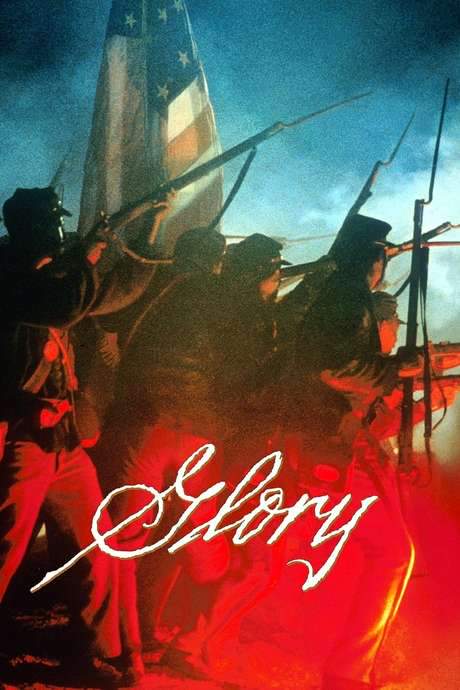
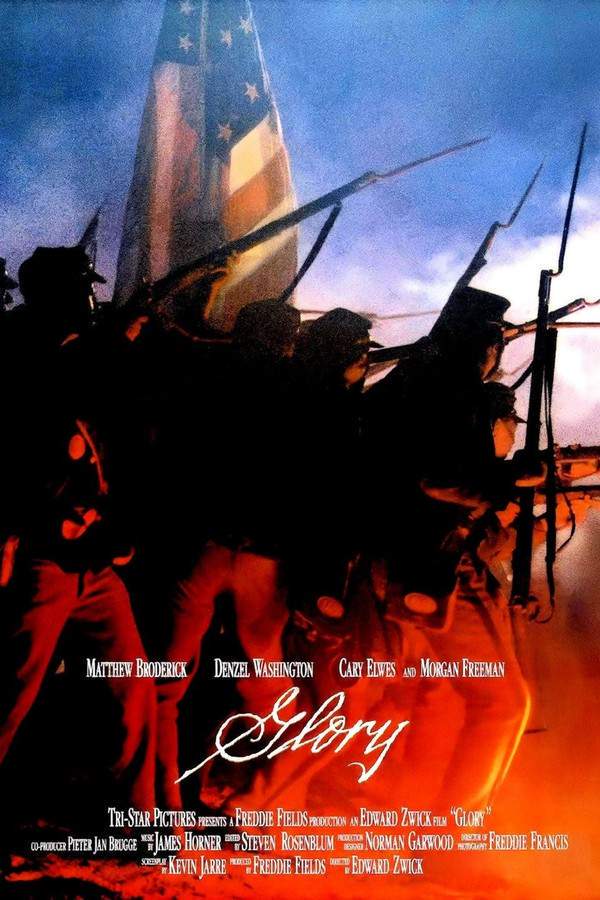
Glory (1990) movie poster

Timeline

Glory (1990) Timeline Explained – Every Event in Order

Release, runtime and language
1990 · 122 min · Bulgarian
JustWatch #1,822 100
Directed by
Edward Zwick
Starring
Morgan Freeman, Matthew Broderick, Denzel Washington, Cary Elwes

During the Civil War, Colonel Robert Gould Shaw is given a controversial assignment: to lead the 54th Massachusetts Infantry, a regiment composed of African-American volunteers. Facing discrimination and hardship from both the Union army and the Confederate forces, Shaw and his men must fight for acceptance and prove their bravery and dedication on the battlefield, striving to earn a lasting place in the nation's history.

On this page (6)
  1. 1 Where to watch
  2. 2 Events in order (15)
  3. 3 Timeline questions answered
  4. 4 Movie threads
  5. 5 Movies like Glory
  6. 6 Every angle

Where to watch

Where to Watch Glory (1990)

Where can you watch Glory? Stream, rent or buy it in the US, including on Tubi TV, Amazon Video and Apple TV Store: current JustWatch availability with up-to-date prices.

Streaming availability powered by JustWatch

15 events in order · contains spoilers

Glory Timeline: Events in Chronological Order

Every key event of Glory (1990) in order, scene by scene, with when and where it takes place. Use it to untangle flashbacks, time jumps and parallel storylines, to refresh your memory before the sequel or to find the exact scene you are thinking of.

  1. Battle of Antietam

    The Massachusetts Infantry Regiment engages Confederate forces in the bloody Battle of Antietam during the American Civil War. Captain Robert Gould Shaw is injured in the conflict and is initially thought to be dead.

    When
    1862
    Where
    Antietam, Maryland
  2. Rescue by Gravedigger

    After the Battle of Antietam, Captain Shaw is found alive by a gravedigger named John Rawlins. He is then sent to a field hospital for medical attention.

    Where
    Field Hospital
  3. Visit to Family in Boston

    While on medical leave in Boston, Shaw visits his family and reconnects with his roots. It is during this time that he meets the former slave and abolitionist, Frederick Douglass.

    Where
    Boston, Massachusetts
  4. Promotion to Colonel

    Shaw is offered a promotion to the rank of Colonel and is given command of the first all-black regiment, the 54th Massachusetts Volunteer Infantry. He accepts this significant responsibility, demonstrating a commitment to his new soldiers.

  5. Formation of the 54th Regiment

    Shaw recruits men for the 54th Regiment, including his childhood friend Major Cabot Forbes, who agrees to serve as his second-in-command. Among the first recruits is Thomas Searles, a bookish freeman with ambitions to fight.

  6. Harsh Training Regimen

    The new recruits undergo rigorous training under the strict supervision of Sergeant Mulcahy. Shaw faces a dilemma when he observes Mulcahy's harsh treatment of his friend, Thomas, but ultimately decides that all soldiers must endure the same training.

  7. Disciplinary Actions

    When Trip goes AWOL to find better footwear, Shaw orders him to be flogged in front of the troops. This actions expose the deep scars of Trip's past and leads Shaw to realize the dire lack of provisions for his men.

  8. Advocacy for Soldiers' Rights

    Shaw confronts the quartermaster to advocate for proper supplies for his men, learning that they were being denied basic necessities due to their race. His efforts reveal systemic issues within the military regarding racial equality.

  9. Pay Dispute

    During a dispute over pay, the federal government decides to compensate black soldiers less than their white counterparts. This leads Trip to organize a protest, where Shaw publicly supports his men, showcasing his commitment to justice.

  10. Transfer to General Harker

    The 54th receives orders to transfer under General Charles Garrison Harker. Shaw continues to press for combat opportunities, growing frustrated with the manual labor assignments forced upon his regiment.

  11. Destruction of Darien, Georgia

    While heading towards the front lines, the 54th is ordered to participate in the looting and destruction of the town of Darien. Shaw is initially resistant, but ultimately complies under duress from his commanding officers.

    Where
    Darien, Georgia
  12. First Battle on James Island

    The 54th engages in its first battle on James Island, South Carolina. Despite heavy casualties, the regiment exhibits remarkable courage, forcing the Confederate forces to retreat.

    Where
    James Island, South Carolina
  13. Campaign for Charleston Harbor

    General Strong briefs Shaw on a critical campaign to capture Battery Wagner in Charleston Harbor. Understanding the stakes, Shaw volunteers the 54th to lead the charge, demonstrating fierce determination.

    Where
    Charleston, South Carolina
  14. Charge on Battery Wagner

    In a harrowing assault on Battery Wagner, the 54th faces devastating artillery fire. Throughout the chaos, Shaw is shot and killed, while Trip bravely rallies the remaining soldiers to continue the charge.

    Where
    Battery Wagner, Charleston Harbor
  15. Legacy of Sacrifice

    Despite the loss of nearly half of the 54th in the assault, their bravery prompts the Union to recruit thousands of additional black soldiers into combat. Their sacrifice is later credited as a pivotal factor in the Union's ultimate victory.

Last updated: May 26, 2025 at 06:39

Was this helpful?

Timeline questions answered

Glory Timeline Explained: Your Questions Answered

When does it happen, and why in that order? The questions people ask about the chronology of Glory (1990): time jumps, flashbacks, cause and effect between scenes and the correct order of events, each answered with spoilers.

Q1

Why did Robert Shaw accept command of the 54th Massachusetts regiment?

Shaw was offered a promotion to Colonel and the opportunity to lead the first all-black regiment in the Union army. During his recovery in Boston after being wounded at Antietam, he met Frederick Douglass, a former slave and abolitionist, which deepened his commitment to the cause. He accepted the command to help prove that Black soldiers could be brave and effective fighters, despite facing discrimination from both the Union and Confederacy.

Foreshadowing: Earlier in Boston, Shaw's meeting with Frederick Douglass hints at his growing commitment to the abolitionist cause and racial equality.

  • robert shaw
  • colonel
  • 54th massachusetts
  • command
  • promotion
  • frederick douglass
Q2

Why was Trip flogged and what did Shaw discover afterward?

Trip went AWOL to find decent shoes to replace his worn-out pair, which he desperately needed for the upcoming battles. Shaw ordered him flogged in front of the regiment as punishment, which revealed the deep scars on Trip's back from his life as a slave. This brutal act led Shaw to discover that his men were being denied essential supplies by the quartermaster purely because of their race, prompting him to advocate more fiercely for his soldiers.

Foreshadowing: The flogging scene earlier in training establishes the harsh conditions the men face and Shaw's difficult position as their commander.

  • trip
  • flogging
  • awol
  • shoes
  • supplies
  • discrimination
Q3

What happened during the charge on Battery Wagner?

The 54th volunteered to lead the assault on the heavily fortified Battery Wagner in Charleston Harbor. The attack was extremely costly, Shaw was shot and killed on the beach, and nearly half the regiment was lost. Despite their bravery, the Union forces never took Battery Wagner. However, Trip raised the flag rallying the remaining soldiers before succumbing to his wounds.

Foreshadowing: General Strong's briefing about the treacherous assault with its narrow beach approach foreshadows the devastating casualties that would follow.

  • battery wagner
  • charge
  • assault
  • charleston harbor
  • flag
  • casualties
Q4

Why were Shaw and Trip buried together in a mass grave?

After the failed assault on Battery Wagner, the Confederate forces buried Shaw and Trip side by side in a mass grave, disregarding the social hierarchy of the time. This act, meant as an insult, instead symbolized the equality and brotherhood they had forged. Both had died leading the charge, and their shared fate represented the unified sacrifice of white officers and Black soldiers fighting together for a common cause.

Foreshadowing: The earlier scene where Trip saves Thomas and earns his respect demonstrates the bond forming between the men regardless of background.

  • burial
  • mass grave
  • confederate
  • equality
  • shaw
  • trip
Q5

What was the pay dispute between the 54th and the federal government?

The Federal government decided to compensate Black soldiers less than their white counterparts, sparking outrage among the 54th. Trip organized a protest against this discriminatory pay decision. Shaw publicly joined his men's cause for fair compensation, refusing to accept the unequal pay. This protest and Shaw's support helped instill a newfound pride in the regiment, leading the soldiers to don their Union uniforms with dignity.

Foreshadowing: The earlier discovery that supplies were being denied due to race establishes the pattern of systemic discrimination the men faced.

  • pay
  • protest
  • discrimination
  • federal government
  • trip
  • uniform
Q6

Why did the 54th participate in the destruction of Darien, Georgia?

While traveling toward the front lines, the 54th was placed under Colonel James Montgomery's command. Montgomery ordered his undisciplined men to loot and destroy the town of Darien, Georgia, which was largely populated by freed slaves. Shaw was coerced into participating in these illegal actions under threats that his command would be removed and his men would suffer worse treatment. This incident highlighted the moral compromises Black officers faced in the Union army.

Foreshadowing: Montgomery's introduction as a colonel leading freed slaves hints at his reckless and uncontrollable nature.

  • darien
  • georgia
  • montgomery
  • looting
  • destruction
  • coerced
Q7

Why did Thomas and Trip have tension, and how did their relationship change?

Thomas Searles, a bookish freeman who grew up with advantages, struggled with the harsh training compared to his comrades, including Trip, an escaped slave who had endured extreme suffering. Tension arose between them, but during the battle on James Island, Thomas was wounded but heroically saved Trip, earning his respect. Thomas then chose to stay with his comrades instead of taking medical leave, showing his transformation and commitment.

Foreshadowing: Earlier training scenes show Thomas struggling with the physical demands while Trip adjusts more easily, setting up their conflicting perspectives.

  • thomas searles
  • trip
  • tension
  • battle
  • james island
  • respect
  • wounded
Q8

Why did the 54th volunteer for the Battery Wagner assault despite knowing it would be deadly?

General George Strong informed Shaw of the campaign to capture Battery Wagner, which was essential for securing Charleston Harbor. The assault required crossing a narrow strip of beach with little protection, making it essentially a suicide mission. Shaw volunteered his regiment anyway because they had been denied combat opportunities throughout the war and were desperate to prove their bravery and worth as soldiers. The entire regiment chose to advance rather than receive honorable discharges.

Foreshadowing: Earlier scenes show Shaw constantly pushing for combat opportunities while being assigned manual labor, demonstrating the men's hunger to fight for recognition.

  • battery wagner
  • volunteer
  • assault
  • mission
  • brave
  • sacrifice
Q9

What motivated Shaw to fight for equal treatment for his soldiers?

Shaw's motivation came from his genuine belief in equality and his growing understanding of the systemic racism his men faced. After witnessing Trip's scars from slavery, discovering the denial of supplies, and experiencing the pay discrimination, Shaw became increasingly outspoken in advocating for his men. He confronted the quartermaster about supplies, joined the pay protest, and insisted on equal training standards because he believed his men's eagerness to fight warranted equal treatment.

Foreshadowing: Shaw's meeting with Frederick Douglass in Boston planted the seeds of his commitment to the abolitionist cause and racial equality.

  • shaw
  • equal treatment
  • advocacy
  • supplies
  • pay
  • discrimination
  • motivation
Q10

Did the 54th Massachusetts succeed in their mission at Battery Wagner?

The 54th failed to capture Battery Wagner, the fort remained in Confederate hands and was never taken by Union forces during the war. However, their sacrifice was not in vain. The heroic actions of the regiment, despite suffering nearly half their numbers killed, became a catalyst for increased recruitment of Black soldiers into the Union army. Their bravery was later acknowledged by President Abraham Lincoln as pivotal to the Union's ultimate victory.

Foreshadowing: The narrative framing early on establishes the 54th's historical importance as the first all-black regiment.

  • battery wagner
  • success
  • failure
  • union
  • confederate
  • recruitment
  • lincoln
  • legacy

Movie threads

More Movies Like Glory, by Mood & Story

Curated lists built around what makes Glory tick: the same mood, the same kind of story or the same emotional payoff. Each list explains why these movies belong together.

Bittersweet Historical Triumphs like Glory

Stories where profound sacrifice paves the way for a hopeful legacy. If you were moved by the sacrifice and legacy in Glory, explore more movies like it. These historical dramas depict tough battles for justice, where characters face immense hardship to secure a bittersweet but profoundly hopeful victory for future generations.

  • somber
  • bittersweet
  • resolute
  • uplifting
  • gritty
  • tense
  • Tone: dark, bittersweet, resolute
  • Pacing: steady, building
Why these movies?

The story pattern: Stories in this thread follow a clear, often linear progression where a marginalized group or principled leader takes a stand against oppression. The central conflict involves proving their worth and humanity in the face of intense prejudice, culminating in a costly but historically significant action that redefines their legacy.

Why they belong together: Movies are grouped here for their shared focus on a heavy, historically-grounded emotional journey. They blend a dark, gritty tone with a steady, building pace, leading to a climax that is both tragic and uplifting, leaving the viewer with a powerful sense of resolve and historical importance.


Military Brotherhood Stories like Glory

Unit-based stories where shared hardship creates unbreakable bonds. For viewers who appreciated the powerful unit dynamics in Glory, this collection features similar movies about brotherhood in arms. Discover other intense war films and dramas where a diverse group of soldiers must overcome differences and adversity to become a loyal family.

  • brotherhood
  • gritty
  • tense
  • somber
  • resolute
  • tragic
  • Tone: gritty, somber, uplifting
  • Pacing: steady, character-driven
Why these movies?

The story pattern: The narrative pattern begins with introducing a group of individuals, often from different backgrounds, who are initially at odds. Through a tough leader and shared hardship—be it brutal training or early failures—they learn to trust and rely on each other. The climax typically involves a mission or battle where their newfound unity is the key to their performance, even if the outcome is tragic.

Why they belong together: These films share a high-intensity, gritty vibe focused on the theme of brotherhood. They feature a steady pacing that allows for character development within the unit, a heavy emotional weight derived from shared sacrifice, and a tone that balances dark realities with the uplifting power of camaraderie.

If you liked this

Movies Like Glory

Similar movies to Glory: the same genre, themes or kind of story. Each one comes with its own plot summary, timeline and ending explained.

Browse all movie summaries

Every angle

Glory (1990) Explained: Plot, Timeline & Characters

Everything about Glory in one place: what happens in the plot summary, the timeline in chronological order, the characters and meaning and a spoiler-free summary. What's After the Movie adds the cast, box office and post-credit scenes.

Coming soon on iOS and Android

The Plot Explained Movie Summary App

Plot summaries, endings explained and timelines on your phone. Catch up on any movie in minutes, save your favorites and never miss a twist again.

Be the first to know when we launch. Your email stays private, always.

Learn more about the app