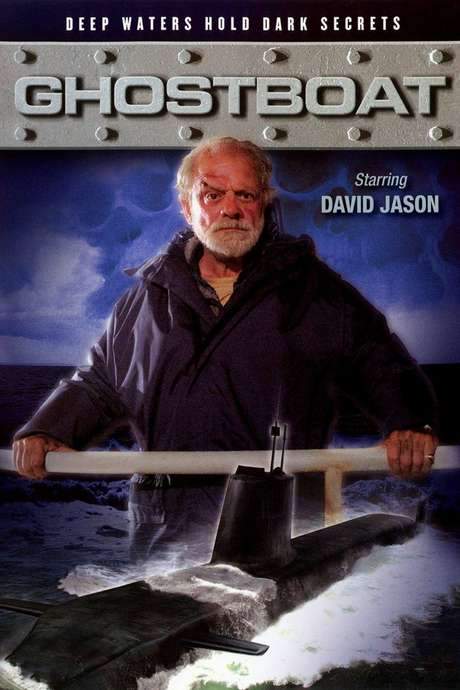
HMS Scorpion, a British submarine that had vanished in the Baltic Sea during the Second World War, unexpectedly surfaces in 1981, cutting across the path of a Soviet freighter. Captain Byrnes, Julian Wadham, returns the submarine to British custody, and Naval Intelligence grows curious about the anomaly — perhaps the first vessel to emerge from the so‑called Devil's Triangle of the North. The submarine opens her own hatch to admit an investigating team; inside, the hull appears perfectly preserved, yet there is no sign of the crew. The scene is clinical and eerie, a puzzle that begs for careful, methodical unraveling as investigators step aboard and begin to map the inexplicable.
Jack Hardy, David Jason, is the sole survivor of the original crew, rescued in 1943 by the German Kriegsmarine with no memory of the last days of the mission. He joins with Alan Cassidy, Tony Haygarth, one of the vessel’s designers, to accompany a Royal Navy crew on a mission to retrace Scorpion’s final days before she vanished. The team is led by Commander Travis, Ian Puleston-Davies, while Captain Byrnes maintains command of the submarine itself. The plan is practical: slip into the Baltic, reach Soviet waters, and coax answers from a history that refuses to stay buried. Accompanying the operation is HMS Oakland, a protecting escort whose presence underscores the tension between tradition and the unknown that now surrounds the Scorpion.
As the mission unfolds, the Scorpion begins to take on the personalities and identities of the dead crew. The boat seems to gain a will of her own, and the investigators feel that the past is pressing forward through the vessel. Communication with Oakland is suddenly lost, heightening the sense of being drawn into a force older than memory. The crew detects a Soviet submarine on radar, and through a confusing exchange of signals, the Scorpion fires and sinks the other vessel. When she surfaces to search for survivors, there is no debris and no trace of the foe, as if the event never left a mark on the surface world. Hardy is struck by a chilling realization: the past is leaking into the present in dangerous, tangible ways.
Cassidy, who supervised the fitting of practice torpedoes on the Scorpion, discovers that those inert munitions have become live weapons. Captain Byrnes attempts to abort the mission, but Travis pushes to continue, convinced that the key to understanding lies in following where the ship’s enigmatic pull is leading. Hardy learns that the true objective isn’t simply to learn what happened but to uncover and potentially exploit the power that preserved and delivered the Scorpion across decades of time. The tension between duty and the lure of a power beyond comprehension intensifies with each passing hour aboard the submarine.
In a desperate bid to prevent catastrophe, Hardy rewires the torpedo control system, forcing the weapons to explode inside their tubes. The explosion destroys Travis and sends the Scorpion spiraling toward the deep, taking Hardy with it as he clutches a photo of his wife in a final, solitary vigil. The sub sinks, and the scene closes on a quiet, haunting note of sacrifice and ambiguity.
Six months later, Soviet authorities locate the sunken Scorpion, her hull patched and decayed as if four decades had passed in a single night. Neither Hardy’s nor Travis’s bodies are found, and both sides of the Cold War tense up around the mystery. British intelligence intercepts the Soviet report, and a formal conclusion is reached: there was no Kaliningrad incident; it never happened. The Scorpion sank in 1943.