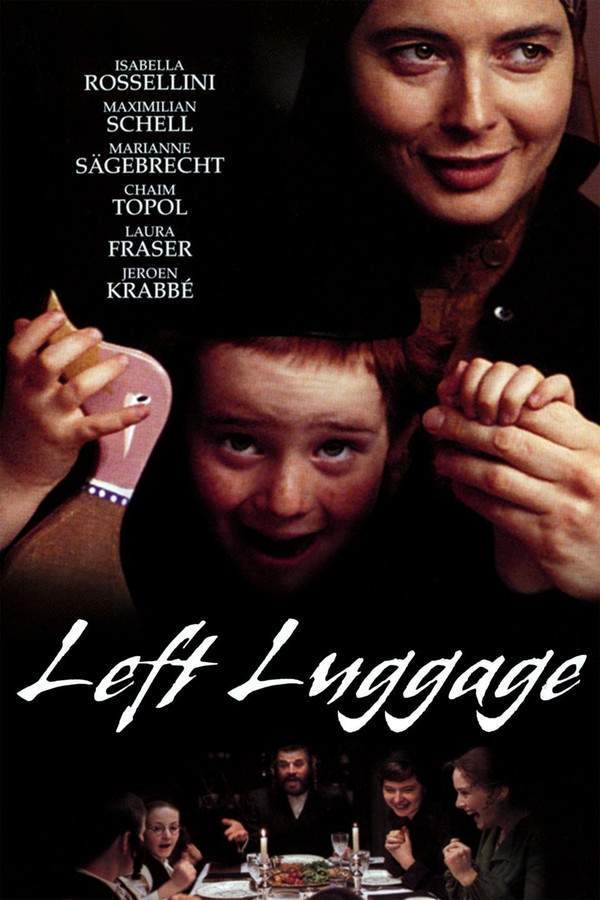
Year: 1991
Runtime: 103 mins
Language: Swedish
Director: Susanne Bier
On Rosha Cohen's 60th birthday, her children gather in Sweden: Angelique, nicknamed “Freud”; her gay brother from Florida; and her sister in an Orthodox Jerusalem family. Their mother is in hospital with an inoperable brain tumor. Angelique, shocked, begins an affair with a biker and insists Rosha be brought home to spend her final days with family.
Warning: spoilers below!
Haven’t seen Freud Leaving Home yet? This summary contains major spoilers. Bookmark the page, watch the movie, and come back for the full breakdown. If you're ready, scroll on and relive the story!
Read the complete plot breakdown of Freud Leaving Home (1991), including all key story events, major twists, and the ending explained in detail. Discover what really happened—and what it all means.
Three grown siblings gather at their family home in Stockholm to celebrate their mother’s 60th birthday, a milestone that uncovers the long-buried tensions simmering beneath the surface. The gathering centers on Rosha Cohen, a formidable Holocaust survivor who has long dominated the family with a sharp eye and a generous, charismatic presence. By her side is her husband, Ruben Cohen, an antiques dealer who anchors the household even as the personal storms swirl around them.
Their children orbit this tense, affectionate core: the daughter Angelique Cohen, who still lives at home and is known for her relentless psychoanalysis of every family member; and the son David Cohen, who is gay and lives in Miami with his partner, Mike. The family’s discomfort with David’s sexual orientation has never fully resolved, and a painful, unforgettable moment at Disney World lands squarely in the middle of the birthday celebrations when his father tells him to stop dancing around like a “ridiculous fag.” David retorts with quiet defiance: > But I am a ridiculous fag
Another child, Deborah Cohen, has charted a radically different path by embracing Orthodox Judaism and moving to Israel, a choice that intensifies the clash between tradition and personal freedom within the clan. The parents’ backstory adds depth to the present crisis: Rosha is a survivor who carried her memories into every room she inhabited, while Ruben’s work as an antiques dealer frames a house that is both a sanctuary and a battleground for unresolved loyalties.
As the birthday plans linger, Rosha drops a life-altering revelation: she has cancer and only weeks left. Her confession reframes the party from a mere celebration to a reckoning, and the idea of death itself becomes a catalyst for honest talk rather than a retreat into denial. She reveals that she had once contemplated marrying her husband’s brother, a confession that complicates the portrait of a devoted wife and mother who nonetheless walked a less-traveled path. Despite this, she insists on dying on her own terms—at home, after the party has concluded—refusing to surrender to the hospital’s sterile rules.
In her final days, Rosha nudges her family toward decisions they have avoided. She challenges Deborah to pursue the abortion she desires, urging her toward agency over her own body and future. To David, she repeats a message of unconditional love that transcends outward judgments, assuring him of her enduring affection regardless of society’s expectations. And with Freud’s looming independence—his eventual move out of the family home—Rosha signals a shift toward letting each child choose a path that fits who they are, even if it means watching them step into the world without her always-present guidance. She emboldens them to face what they are running from, to own their choices, and to redefine what family means when love, memory, and mortality press in from every side.
Last Updated: December 27, 2025 at 11:31
Discover curated groups of movies connected by mood, themes, and story style. Browse collections built around emotion, atmosphere, and narrative focus to easily find films that match what you feel like watching right now.
Scattered siblings reunite, confronting their past under the shadow of a family emergency.If you liked the powerful dynamics in Freud Leaving Home, explore more movies about siblings reuniting for a family crisis. These dramas feature tense gatherings, emotional confrontations, and moments of tender connection as characters face a shared pivotal moment.
The narrative begins with a disruptive event that forces a reunion. The middle section explores the friction and fragile connections between characters with differing lives and beliefs. The story arc typically moves toward a bittersweet resolution, where the crisis doesn't necessarily fix everything but leads to a new understanding and personal growth for each family member.
Movies in this thread share a focus on familial bonds tested by circumstance. They balance the heavy weight of the central crisis with the specific, often dramatic, personal journeys of each character, creating a multifaceted and emotionally resonant experience centered on reconciliation and acceptance.
Stories where profound loss leads to a poignant, life-affirming new beginning.Seeking more films like Freud Leaving Home that handle terminal illness with a bittersweet feeling? These movies balance the sadness of loss with hopeful character transformations, offering a reflective and ultimately life-affirming viewing experience.
The narrative revolves around a character or family facing an imminent death. Rather than focusing solely on the tragedy, the story weaves in subplots of personal awakening, rekindled relationships, or new directions inspired by the confrontation with mortality. The ending acknowledges the pain of loss while also highlighting the positive changes it sparked.
These films are grouped by their distinct emotional blend. They avoid being purely tragic or saccharinely hopeful, instead finding a truthful middle ground where sadness and hope coexist. The viewing experience is emotionally substantial but not crushing, leaving the audience with a sense of reflective melancholy and forward momentum.
Don't stop at just watching — explore Freud Leaving Home in full detail. From the complete plot summary and scene-by-scene timeline to character breakdowns, thematic analysis, and a deep dive into the ending — every page helps you truly understand what Freud Leaving Home is all about. Plus, discover what's next after the movie.
Track the full timeline of Freud Leaving Home with every major event arranged chronologically. Perfect for decoding non-linear storytelling, flashbacks, or parallel narratives with a clear scene-by-scene breakdown.
Discover the characters, locations, and core themes that shape Freud Leaving Home. Get insights into symbolic elements, setting significance, and deeper narrative meaning — ideal for thematic analysis and movie breakdowns.
Get a quick, spoiler-free overview of Freud Leaving Home that covers the main plot points and key details without revealing any major twists or spoilers. Perfect for those who want to know what to expect before diving in.
Visit What's After the Movie to explore more about Freud Leaving Home: box office results, cast and crew info, production details, post-credit scenes, and external links — all in one place for movie fans and researchers.
Discover movies like Freud Leaving Home that share similar genres, themes, and storytelling elements. Whether you’re drawn to the atmosphere, character arcs, or plot structure, these curated recommendations will help you explore more films you’ll love.
Freud Leaving Home (1991) Scene-by-Scene Movie Timeline
Freud Leaving Home (1991) Movie Characters, Themes & Settings
Freud Leaving Home (1991) Spoiler-Free Summary & Key Flow
Movies Like Freud Leaving Home – Similar Titles You’ll Enjoy
Left Luggage (2000) Film Overview & Timeline
The Comedy (2012) Detailed Story Recap
Family Idiots (2018) Ending Explained & Film Insights
Façades (2017) Spoiler-Packed Plot Recap
Let Yourself Go (2017) Spoiler-Packed Plot Recap
Everything’s Fine, We’re Leaving (2000) Full Movie Breakdown
At Home with the Rozes (2003) Spoiler-Packed Plot Recap
Obscene: The Case of Peter Herzl (1981) Spoiler-Packed Plot Recap
Portnoy’s Complaint (1972) Plot Summary & Ending Explained
Left Luggage (1998) Plot Summary & Ending Explained
Family Life (1971) Full Movie Breakdown
Friend of the Family (1995) Full Summary & Key Details
Adult Behaviour… It’s All in the Mind (1999) Full Movie Breakdown
Sigmund Freud: Analysis of a Mind (1996) Film Overview & Timeline
The Last Woman (1976) Complete Plot Breakdown